



AT THE recent Asean Summit in Kuala Lumpur this year, the regional bloc leaders signed off on two new human rights declarations, including the the Asean Declaration on Promoting the Right to Development and the Right to Peace Towards Realising Inclusive and Sustainable Development. It is an ambitious step, putting peace and development side by side as rights that Asean must protect. But what does this mean in practice, and how will it shape the lives of people across the region?
The declaration comes at a time when Asean countries are already under pressure from global uncertainties and intensifying climate change. Most are still developing, trying to grow their economies while protecting the environment and human rights. The challenge is clear – how to ensure that the development is also inclusive, in terms of civil, social and cultural progress?
Peace is just as urgent. Tensions in the South China Sea continue to simmer, raising questions about sovereignty and security. And closer to home, the renewed hostilities between Thailand and Cambodia have caused fatalities and displacement among the civilians.
These conflicts show how fragile peace can be and how quickly development gains can be undone.
This is where the Asean Intergovernmental Commission on Human Rights (AICHR) comes in. As Asean's human rights body, it now has to turn the declaration into action: finding ways to prevent conflict, protect communities, and involve civil society in shaping solutions.
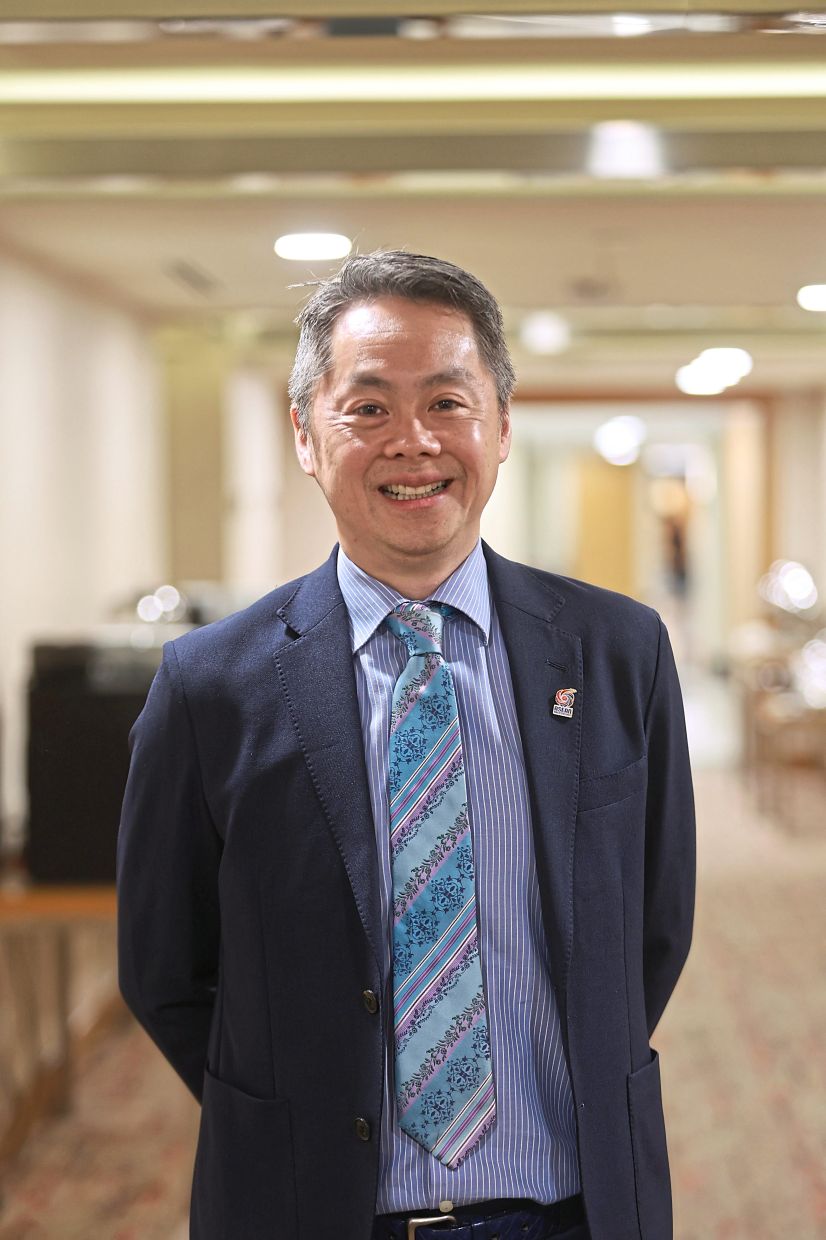
Speaking to Sunday Star, AICHR chair for 2025, Edmund Bon, shares how Asean can move beyond words and build mechanisms that make peace and development real for its people.
> From AICHR's perspective, how will this declaration be translated into concrete mechanisms within Asean institutions?
This region has many developmental pressures, especially when most of our countries are developing nations. How do we balance economic development with sustainability for the environment while protecting human rights? At the same time, how do we ensure that we do not only focus on GDP growth but other types of development such as civil political, social and cultural development?
We are grappling with these questions and we need a mechanism for our 11 countries to adopt a common regional outlook first. Once we have that baseline only then can we have one plan of action to concretise the implementation. We have an idea for a high-level development dialogue that should materialise into a human rights reporting method to see where our progress and challenges are.
> With ongoing clashes between Thailand and Cambodia along the border, how does AICHR envision applying the declaration's principles to mediate and de-escalate conflicts while simultaneously protecting the right to development for affected communities?
Interstate conflict is actually a new problem that AICHR is facing and we do not have an Asean mediation and peacekeeping mechanism to handle it. We have been developing one since Malaysia was chair in 2025. We have done six workshops but have yet to find a consensus.
Nevertheless, we have been receiving accounts by survivors of the conflict and I have suggested for AICHR to do a human-rights needs assessment on the ground to report and take action. But it can only be done if both countries agree. Finding pathways to peace requires us to talk and we have been having difficult discussions on the conflict at AICHR, but coming to joint solutions has been more difficult. Once we agree to talk, the non-interference principle does not apply.
Regional peace is a challenge. It is a sub-national, national and regional challenge. At times, it is an international challenge.
The reality is that there are continuing conflicts and threats to peace in Asean due to a host of reasons. We cannot hide or run away from this fact. And to discuss peace and human rights, we need to discuss conflict. Spillover conflict issues that become region-centric issues cannot always be considered internal affairs of Asean member states.
This is reflected in the Asean Community Vision 2045 and Asean's initiatives on conflict prevention, and civilian and human rights protection. Further, to ensure that the text of the 2007 Asean Charter will mean something to us in our lived experiences and realities, we need to create and enlarge a safe civil space to discuss and confront complex issues, including conflict and peace, deeply. Given AICHR’s overarching mandate as Asean's Charter body, it is well-placed and sufficiently flexible to platform and address peace and peacebuilding efforts.
The right to development, the right to peace and the right to a safe, clean and sustainable environment are the three "add-value" rights distinguishing the Asean Human Rights Declaration 2012 (AHRD) from the Universal Declaration of Human Rights 1948. These rights reflect the unique regional context and priorities of Asean nations, emphasising the interdependence of peace, development, and environmental protection in the promotion and protection of human rights.
Peace cannot last without both negative and positive peace. Positive peace requires addressing the root causes of conflict, ensuring inclusive and sustainable development, protecting human rights, and fostering societies where individuals can thrive with dignity and security.
While efforts to promote peacebuilding, preventive diplomacy, and community resilience are ongoing, economic disparities, and differing cultures and political systems within Asean continue to pose significant hurdles. Without mechanisms able to provide early warning signs and rapid responses, and at the same time, enhanced remedy and grievance channels through which affected people and communities can invoke the right to peace directly – the right risks becoming "illusory".
> Does AICHR plan to strengthen Asean's early warning and preventive diplomacy mechanisms?
Malaysia will continue its work on developing the peace pathways in 2026 which we started in 2025.
We were really concerned about the situation in Myanmar and that while is an intra-state conflict has now been compounded by the inter-state conflict, so the peace pathways mechanism which includes good scenario planning and early warning needs to be holistic.
Our framework should be actionable for any Asean member state to use when there is a conflict, and any survivor or victim to access for remedies. There should also be a dashboard to show conflict "hotspots" and the reasons for them so that our local agencies can act pro-actively.
> Asean has historically emphasised non-interference in domestic affairs. How does AICHR reconcile this principle with the declaration's call for advancing rights and peace, especially when sovereignty claims – like those around the Preah Vihear Temple – directly undermine regional stability?
There is no conflict to the principle because both sides want peace; the question is how do we achieve it. Of course, Asean does not have boots on the ground to do peacekeeping aligned with the responsibility to protect principle, and we are left with diplomacy as the main means to get the issue resolved.
Having a third party, neutral mediator or adjudicator to look into the issue is the way forward but again, it depends on whether both countries agree. I think the principles that negative and positive peace is required for development is well-settled, it is how these are to be implemented and AICHR will be having a working group to come up with an actionable plan to implement the declaration.
> The declaration explicitly aligns with the "UN 2030 Agenda for Sustainable Development and Asean 2045: Our Shared Future". How will AICHR ensure that Asean's commitments are not only regionally relevant but also consistent with international human rights standards, particularly in areas where Asean states appear to diverge from global norms such as capital punishment or freedom of expression?
Depending on the issue, we need to align our indicators with the sustainable development goals, and also where the SDGs (sustainable development goals) do not have such goals we complement them.
Then we need a reporting mechanism to see where we have fallen behind. The world is still far away from our 2030 targets and it is worrying. That is why the declaration attempts to accelerate our work.
There are some human rights however that need to be immediately recognised such as issues on the right to life and prohibition of torture, while economic rights are subject to the maximum available of resources. So there are different pathways for different rights when it comes to the SDGs.
> The declaration also emphasises "inclusive and sustainable development". How will AICHR involve civil society, grassroots organisations, and marginalised communities in shaping peace and development agendas, especially in conflict-affected border regions where trust in state institutions may be low?
At AICHR, we have continually emphasised the need for CSOs (civil society organisations) to be engaged. We accredited 30 CSOs already and they continue to work with us.
As part of our programmes we have an annual interface with them and locally many CSOs work with the Representatives of the respective countries. One plan is for an Asean high-level dialogue with CSOs to look into the cases we have received and hear from them.
We receive these cases in writing but also sometimes we engaged with the CSOs representing the survivors and victims for more information and joint action. If there are capacities to work together some of us Representatives have also gone down to the ground with the CSOs and gather inputs for our work. A lot of development work requires resources and the aim also is that more international and regional cooperation through assistance can be provided by government and businesses.
> What indicators or benchmarks does AICHR propose to measure progress under this declaration – for example, will success be tracked through reduced conflict incidents, improved cross-border cooperation, or enhanced human rights protections; and how will Asean hold member states accountable if they fall short?
We map them based on the points of the declaration agreed: negative and positive peace, health, education, law enforcement, transport, utilities, digital rights, environment, and others, and must have qualitative and quantitative indicators. There will also be process and outcome-driven designs to meet our goals. Development is broad-ranging and we need Asean to come together to look at these indicators meaning all our agencies need to cooperate and not work in silos.
A robust mechanism for protection is also required where there can be access to people who need AICHR mechanism to provide remedies. Thus a cross-pillar joint technical working group among political-security, sociocultural and economic sectors in Asean are important.
Already this year under Malaysia's chairship, AICHR has been regularly engaging on current and emerging human rights issues in Asean through the sharing of information and updates by AICHR Representatives at our AICHR meetings and the annual Asean Human Rights Dialogue, as well as through joint statements of concern on human rights.
Pursuant to our mechanism since 2019, AICHR has received 131 communications, out of which 53 were received from 2022 to July 2025. This practice reflects AICHR’s commitment to protecting human rights.
AICHR has accredited 30 civil society organisations with consultative status (CSOs), and there is an increasing number of pending applications. AICHR hosted the sixth interface meeting with the CSOs in July 2025, further strengthening its engagement and consultative relationship with civil society stakeholders.
To optimise and scale up our people-facing coordination efforts, these are some proposals we have made:
(a) have a regular bulletin to disseminate information and provide timely updates on recent developments in our respective sectors and areas for potential cooperation;
(b) increase in resource support for the establishment of joint technical working groups to implement inter-sectoral Asean declarations and plans of action;
(c) have a rapid response knowledge-sharing and coordination protocol for emergencies and crises that includes technical and sectoral Asean experts on standby for advisory and technical guidance services, briefings, and confidential consultations in support of Asean member states as required;
(d) have a dedicated channel or pathway for people and communities in vulnerable situations to access Asean bodies for remedies and to have "Meet-the-People" sessions; and
(e) publish an annual Asean Human Rights Report to document Asean achievements, progress and challenges on human rights.
