



THIS YEAR, Malaysia stands at a crossroads on media freedom.
The government continues to promise democratic reform, vowing to strengthen free expression and public access to information.
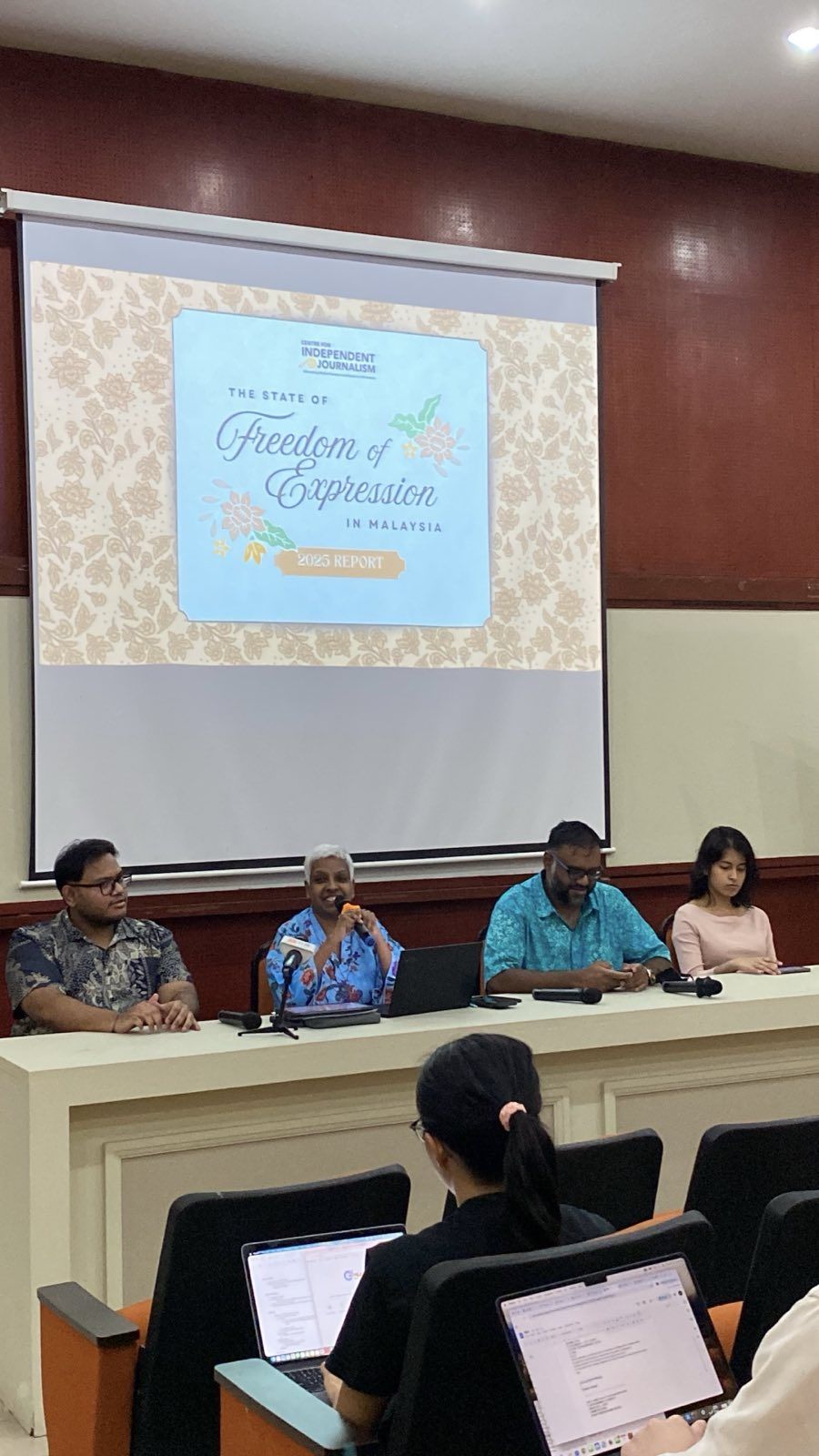
Yet, for many journalists, activists and citizens, the daily reality feels less promising, according to the Centre for Independent Journalism's (CIJ) latest report – The State of Freedom of Expression in Malaysia 2025 – which paints a picture of reform pledged but control maintained, where political commitments to openness are overshadowed by laws that still silence dissent.
According to the report, this contradiction lies in Malaysia's legal landscape. While Prime Minister Datuk Seri Anwar Ibrahim reiterated earlier this year that freedom of expression would be upheld, authorities continue to enforce restrictive laws.
The Communications and Multimedia Act 1998 (CMA), Sedition Act 1948 and Printing Presses and Publications Act 1984 (PPPA) remain active tools to police speech, especially online criticism and political commentary.
CIJ's monitoring shows that reliance on these laws has not decreased – it has intensified. Between January and November, authorities invoked restrictive legislation 233 times, a 23% rise compared with the previous year. Section 233 of the CMA alone accounted for more than half of all cases, underscoring its position as the government's primary mechanism for regulating digital expression.
Contradiction
Reforms introduced by the government appear to signal progress.
The passage of the Malaysian Media Council (MMC) Act in March was widely seen as a milestone, creating a body aimed at strengthening media governance. Plans for a Federal Freedom of Information Bill were announced as well, although the tabling has been deferred to 2026.
Yet, CIJ notes that these reforms have arrived with new concerns. The MMC Act allows the Communications Minister to appoint two government representatives to the Council's board – a provision that raises questions about independence.
"However, the legislation still permits the appointment by the (Communications) Minister of two government representatives to the Board of the Council.
"This has raised concerns among civil society and media practitioners regarding the extent of the MMC's independence in practice, particularly regarding political influence, appointment processes and the safeguards to ensure media autonomy."
Meanwhile, amendments to the CMA in February 2025 expanded investigative powers and introduced harsher penalties, including fines of up to RM1mil. Critics argue that these measures entrench control rather than align Malaysia's framework with international human rights norms.
"I think there are two situations happening. The political context is very critical because there is no 100% stability - it's a unity government and there are a lot of negotiations and compromises that need to happen within the government and the Cabinet itself.
"Some of these laws are still very critical for them," says CIJ executive director Wathshlah G. Naidu at the report's launch.
Stagnation?
The report states that key laws affecting freedom of expression remain unchanged; or have been amended in ways that make them more restrictive and vague.
"The CMA, which was amended last year and entered into force in February 2025, saw the usage of overtly vague terms such as 'grossly offensive' and the sudden increase of fines up to RM500,000 for those in violation of Section 233, ignoring pleas from both civil society and media representatives.
"As such, Malaysia's freedom of expression trajectory in 2025 remains partially restricted and largely stagnant, with emerging signs of regression rather than the reform that had been promised."
International human rights bodies have repeatedly highlighted Malaysia's reliance on outdated and overly broad legislation.
"The UN High Commissioner for Human Rights, Volker Türk, during his visit to Malaysia in 2024, urged Malaysia to amend or reconsider colonial-era and archaic laws, particularly the Sedition Act 1948, and raised serious concerns regarding the ongoing use of the CMA, the Peaceful Assembly Act 2012, and the PPPA."
The report notes Türk's emphasis that such laws have curtailed expression, narrowed civic space and silenced human rights defenders.
"According to Türk, people in democratic societies must be able to express dissenting views without fear of reprisal, and restrictive laws must not be allowed to hinder Malaysia's progress towards a more open and rights-respecting future."
CIJ also reports a sharp rise in the use of the Sedition Act in 2025, with incidents increasing from 19 in 2024 to 36 this year – an 84% surge.
Of the 42 individuals investigated, the majority were ordinary members of the public or netizens (55%), followed by politicians (14%), student activists (14%), bloggers or influencers (12%) and activists (5%).
Recommendations
Among its key demands, CIJ calls for comprehensive, rights-based amendments to restrictive laws, including the CMA, Sedition Act, Peaceful Assembly Act, PPPA and Official Secrets Act.
"(The same goes for the) overly broad Penal Code provisions such as Sections 298A, 500, 504 and 505, to guarantee that these laws are not applied in selective and arbitrary ways that create fear and suppress public participation.
"Any restrictions to freedom of expression must uphold international standards of legitimacy, necessity and proportionality."
CIJ also urges the government to enact the Federal Freedom of Information Act without delay, with safeguards such as an independent information commission, clear timelines for disclosure and narrow exemptions.
"Repeal the Official Secrets Act (OSA) 1972 and Section 203A of the Penal Code to ensure it is aligned with Right to Information standards.”
The organisation reiterates that the MMC must be adequately resourced and operate independently, "with safeguards against ministerial or political influence."
It also calls for reforms to protect artistic freedom, academic expression and peaceful assembly from punitive enforcement, urging authorities to stop using overlapping laws to criminalise speech or symbolic protest.
"Decriminalise artistic expression and establish clear, rights-based guidelines for cultural content that avoid vague 'morality' standards.
"(And) end the misuse of PPPA and content takedowns as tools to censor artistic, gender or identity-related content."
