



PILAR Tomas stepped out of her stone house and walked towards the scene of a killing that has hung over Tor, Spain, like a cloud for three long decades.
The rain was coming in sideways, cold and needling. She pointed at another stone house just a few metres away.
“They found him there,” she said.
The dead man was Josep Montane, 70, known to everyone simply as Sansa.
His killing in 1995 – the third in Tor in 15 years – was grisly, strange and instantly myth-making.
The electric cable looped around his neck. The decomposed body hauled into his kitchen. And underneath it all, a backstory of smugglers, dubious deals and an ugly feud over mountain ownership.
The bizarre murder caught the eye of a young Catalan television reporter named Carles Porta.
He broadcast his first investigation in 1997, then followed it with a book in 2005, a smash-hit podcast in 2018 and a wildly popular true-crime documentary series last year.
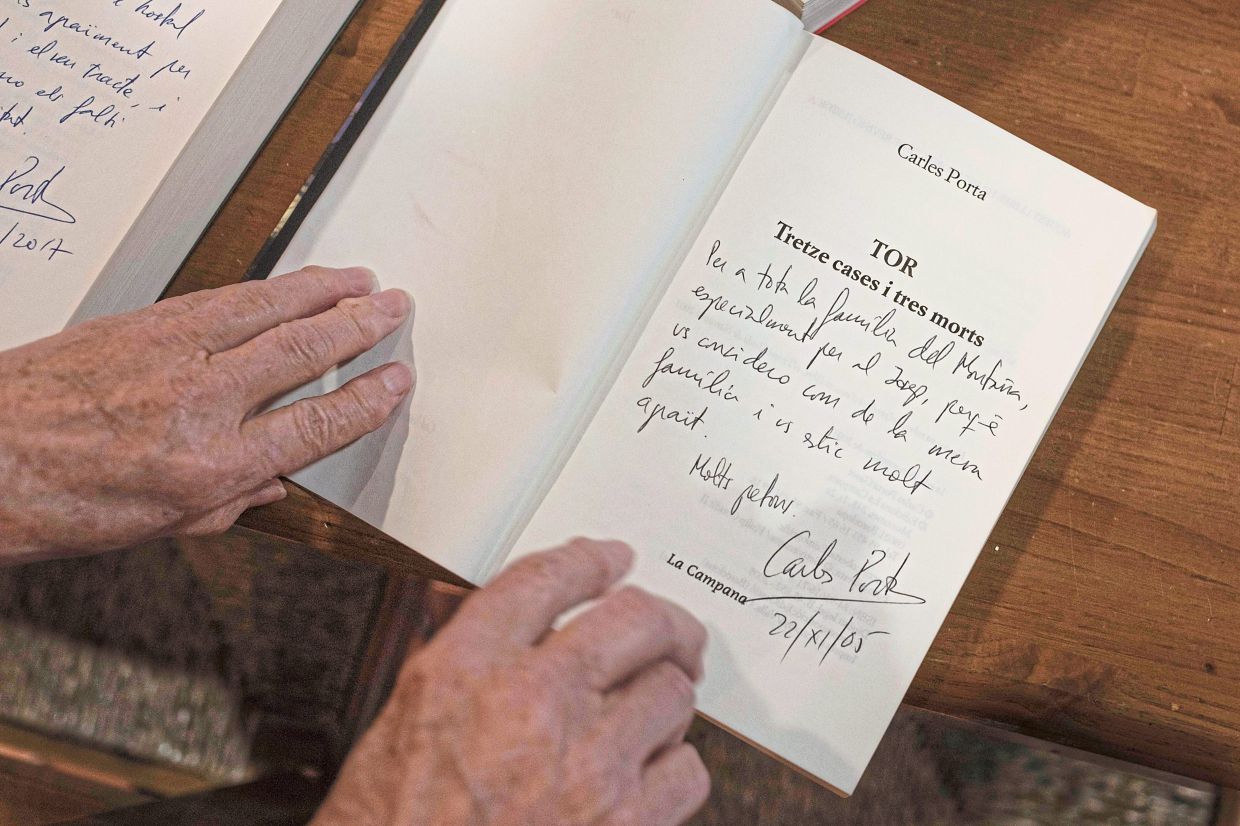
His obsession with Tor lit a fuse. Ever since, the mountain hamlet – a place of just 13 homes wrapped in Pyrenean mist – has been transformed into the country’s unlikely capital of true crime.
Each summer brings a procession of unsolved-mystery pilgrims: visitors eager to poke around Sansa’s former home, now repurposed into the “Tor Experience”; curious couples staging macabre getaways in abandoned cabins; and, in perhaps the most ghoulish example, thrill-seekers re-enacting the killing by wandering the village with electric cables around their necks.
For Tor’s dwindling band of permanent residents, the attention has become exhausting.
Their quiet Catalan idyll – where brown cows graze beside icy streams and the mountains cast long, blue shadows – has been recast as the set of Spain’s own Only Murders in the Village.
It wasn’t always like this.
In 1896, the heads of 13 families signed an agreement declaring joint ownership of Tor mountain, one of the highest points in the Pyrenees and the last stop before the border with the tiny tax haven of Andorra.
Their pact was strict: only year-round residents who kept their hearths lit could claim the mountain.
By the 1980s, the arrangement had soured.
Sansa and other descendants tried to control the lucrative smuggling routes used to carry cheaper goods from Andorra into Spain.
They hired local muscle, levied “tolls” – sometimes paid in cash, sometimes in whisky – and eventually recruited itinerants they called “hippies”, who menaced non-paying smugglers by rolling huge stones into the road.
But the deeper rift was over the mountain’s future.
Sansa wanted a ski resort and had opened talks with Andorran investors. His rival, a man known as El Palanca, fought to preserve the pastures and the peace.
Bad blood stewed for years. Court cases piled up. Then, in 1995, a judge declared Sansa the sole owner.
Five months later, he was dead. Bludgeoned or strangled – investigators were never sure – but almost certainly dragged into his kitchen afterwards.
The house, the investigators complained, was too filthy to yield decent clues.
“The problem is everyone wanted to kill Sansa; everyone can be the killer,” Porta said.
Porta spent summer holidays investigating the case, dragging along a wife and children who, he admits, were not thrilled.
“Probably I started true crime in Spain with Tor,” he said.
Today, his face adorns the walls of Hostal Montana in the nearby village of Alins. He has even inspired a special batch of Ratafia, his favourite local liqueur, with one of his book’s lines on the bottle: all fires are small when they start.
Merce Turallols, 38, works at the family-run hotel and remembers the shock of 1995.
She says police seemed more interested in her aunt Pili’s cooking than the crime scene.
True-crime tourism has helped business, she admits, but Tor’s patience has frayed.
“One freaky came with a rope tied around his neck,” she said. This past summer, parking was impossible; eccentrics ruled the lanes.
Now, after the tourist season, the village is mostly quiet again.
“Welcome to Tor,” said Antonio Zamorano, 38, a local guide, as he swerved his jeep around a suspicious car with foreign plates and a flat tyre.
He pointed out smuggling paths, herbs believed to end unwanted pregnancies and grim markers of death.
“This is the place where they dragged the body,” he said, gesturing at Sansa’s yard. A little farther up the road: “In this house, a hippie killed himself.” Another mysterious fall happened “here on the left”.
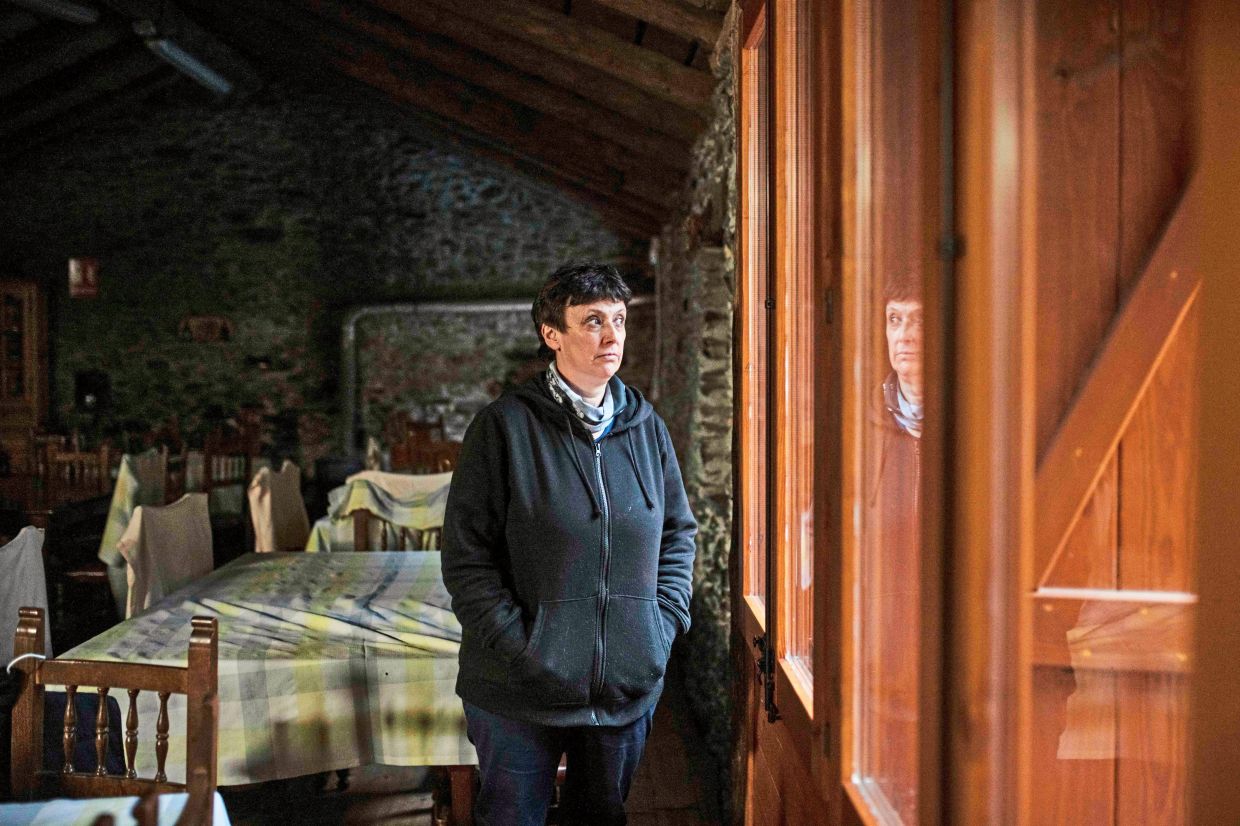
Back in town, Tomas was cooking soups and meats in her home-restaurant, where Andorran businessmen warmed themselves by the fire with bottles of wine and Ratafia.
Joan Clotet, 60, an executive from the Andorran ski resort that once courted Sansa, said the village had squandered a major opportunity simply because no one could agree.
Any hope of a resort, he said, died with Sansa – “because of the murder”.
Porta, meanwhile, has moved on to a new true-crime project for Disney, about abandoned children. But he still chases new leads on Tor.
He says the trail now points towards a hitman “living in Miami” and is planning more trips to Florida.
Might his ex-wife enjoy those more than the summers spent in Tor?
“We separated more than a decade ago,” he said. “She was fed up with me.”
Plenty in Tor feel the same.
Tomas wonders if Porta might at least fund a mobile phone tower with his proceeds.
She’d happily give up the crowds, the merchandise sales, the attention – all of it – just to have the village back.
But that won’t happen, she says, until he finds the killer. “People need an ending.”
Still, as she walked past wet dogs dozing on stone thresholds, she admitted that the truth would likely never emerge.
One thing, though, she insisted she knew for certain about Sansa’s killer.
“It’s not me!” — ©2025 The New York Times Company
This article originally appeared in The New York Times
