




WHEN Sanna Marin became prime minister of Finland in 2019, she was at 34 the world’s youngest sitting prime minister and had a toddler at home. She also successfully led her country through extraordinarily trying times, keeping the death toll low during the coronavirus pandemic, and shepherding Finland to join Nato’s ranks after Russia’s full-scale invasion of Ukraine.
So it infuriates her that two years after she left office, she is still better known for her dance moves. Leaked videos of her partying with friends, shimmying and vamping for the camera like a teenager, set off a scandal in 2022.
“That night was, maybe, six hours of my life,” said Marin, who turned 40 this month, in a recent interview in Helsinki, the capital. “I was a prime minister for four years.”
Now she is wielding the scandal like a battle cry, using a new memoir, “Hope in Action,” to reclaim her legacy. In it she argues that she has fought to build “a world where you can, yes, dance freely when the day’s work is done.”
Even her critics acknowledge that she broke barriers representing Finland, a country of about 5.6 million people that often punches above its weight.
“She was an icon,” said Emilia Palonen, a political scientist at the University of Helsinki, noting how much she elevated the national brand. “This is a country where young women can be in power.”
A humble beginning
Marin had an unlikely profile for a politician. She was raised by her mother and her mother’s girlfriend in the outskirts of Tampere, Finland’s third-largest city. They were a “poor family,” Marin said. She was the first in her family to graduate from high school.
And even in Finland, which has long been a socially liberal country, openly gay families were rare. “We didn’t have the same rights,” she said. “We weren’t recognised as a real family.”
In her early 20s, Marin dove into local politics. At 27, she became the chair of the Tampere City Council. Two years later, in 2015, she was elected to parliament. In June 2019, she was named the transportation and communications minister.
And in December of that year, after the prime minister resigned in a governmental crisis, she was chosen by the Social Democratic Party of Finland to succeed him.
Months later, the coronavirus struck.
She quickly earned praise for decisively imposing restrictions and for being transparent with the country in the midst of the crisis.
She would write and rewrite her briefings to make sure she was using the simplest language, said Matti Niemi, one of her top advisers.
“That was the true show of leadership,” he said.
Finland emerged from the pandemic among the countries with the lowest death rates in Europe. Marin emerged with the trust of her people.
‘It’s not safe anymore’
Russia’s invasion of Ukraine in February 2022 sent shock waves through Finland. The country shares an 830-mile-long border with Russia — and a strained history: Finland had to cede territory to the Soviet Union in World War II. Wary of angering its powerful eastern neighbor, Finland had tried to stay militarily nonaligned and avoided joining the North Atlantic security pact Nato.
But then Russian tanks closed in on Kyiv.
“The whole country’s mind shifted overnight,” Marin said of Finland. “We saw it’s not safe anymore not to join.”
President Sauli Niinisto of Finland led the talks, while Marin worked closely with Sweden’s prime minister, Magdalena Andersson, to coordinate the two countries’ applications.
In May 2022, Finland and Sweden jointly announced that they would apply to join Nato.
‘How can she behave like that?’
Just months later, the dancing videos leaked.
The images ricocheted around the world. Some were impressed by her uninhibited joy. Others, horrified. Either way, no one had ever seen a prime minister like her, body-rolling in a tank top.
Serious questions soon arose. Had she taken drugs? Marin, outraged but fighting for her reputation, took a drug test. It was negative.
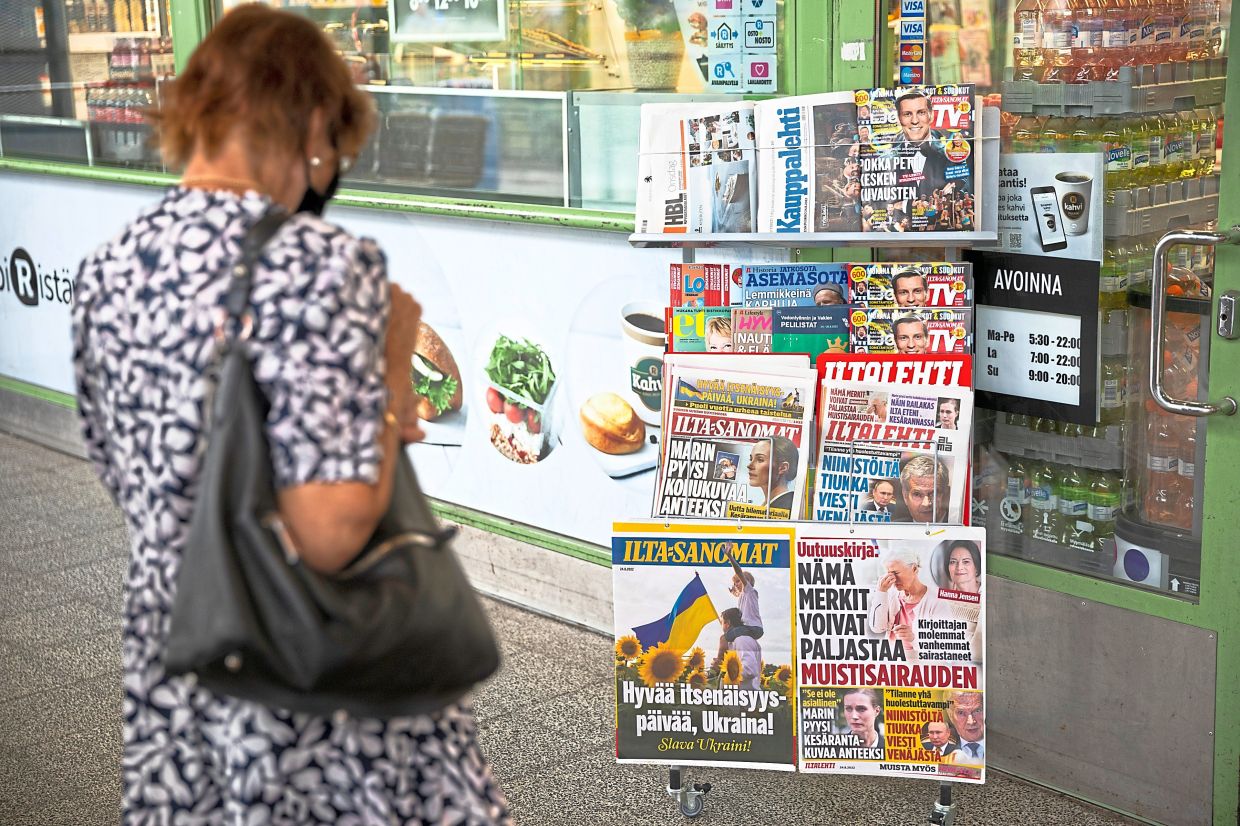
Today, Marin is still raw at what she called a “layer of misogyny” in the uproar. The scandal was never about corruption or abuse of power. Her only offense, she said, was that she did not look or act like traditional male politicians.
“‘How can she behave like that?’” she said, mimicking the criticism. “‘Is that appropriate?’”
She flatly rejects the notion that the media would have treated a similar video of a male politician with a similar uproar.
“Nobody ever asked a male leader: ‘How can you come to work today and be that professional you, when you yesterday went to a pub with your guy friends?’” she said.
But there is no denying that the scandal gave her a global profile much larger than that of most Finnish leaders. Women across the world, including Hillary Clinton, shared shimmies of solidarity.
“Before, she was just a prime minister of a Nordic country,” said Essi Poyry, who researches political marketing at the University of Helsinki. Afterward, Marin started being compared in terms of international recognition to Justin Trudeau or Barack Obama. “It was a major turning point.”
‘I lived that for four years’
She campaigned hard for a second term, but in April 2023, Marin’s party came in third place in an election. Finnish voters favoured the centre right, which argued that the country’s debt was too high and public spending should be cut.
Raine Tiessalo, the executive director of Toivo, a center-right think tank that is close to the governing National Coalition Party, said of Marin, “As a person, she has done a good job to promote Nordic values,” and enhanced Finland’s standing on the world stage.
But he said, “She was catastrophic for the Finnish economy.”
Marin defended her economic record, arguing that during her tenure employment “reached record highs” despite the burdens caused by the pandemic, the war in Ukraine and the long-planned purchase of fighter jets.
Soon after her party’s loss, Marin filed for divorce from her husband, Markus Raikkonen, whom she had dated since she was 18 and married while in office.
Her job had drained her energy and destroyed their relationship, she writes: “We lived under the same roof, but it felt like we were just passing by each other without ever stopping.”
She left politics in September 2023, hoping that people would remember her for steady leadership that elevated women: She had led a coalition government with five women at the head of parties and also stewarded social reforms, like equal parental leave.
She joined the Tony Blair Institute for Global Change, a think tank led by the former British prime minister, where her work includes support for Ukraine.
“We need their lessons learned to make sure that Europe will be prepared,” she said.
But some Finns have started to wonder, as they look at her second career as a jet-setting speaker, whether she is just profiting off her celebrity, like other well-known politicians. Her former interest in issues like climate change is now mostly absent from her Instagram account, where she largely posts to her one million followers about her advocacy for Ukraine, alongside glamorous vacation photos.
“It feels like she has lost or forgotten her social democratic roots,” said Hanna Ylostalo, the head of gender studies at Tampere University. She seems more focused on giving “inspirational speeches to political elites,” she added.
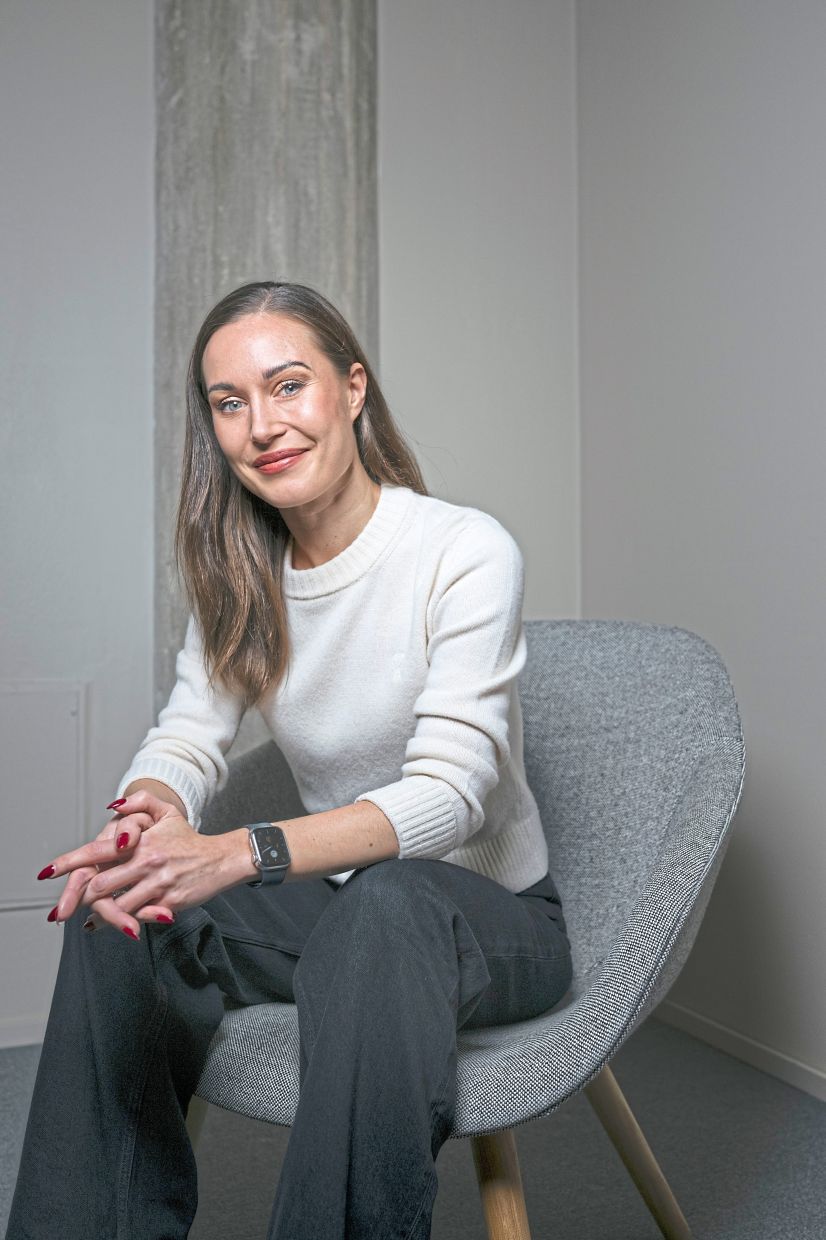
Marin thinks that it is no one’s business how she spends her time after office.
For the first time, she has something like a normal life with Emma, her seven-year-old daughter.
“When I was in office, I never had time to take my daughter to day care or to pick her up, or maybe to be there when she went to sleep,” Marin said, her eyes filling with tears. “And I lived that for four years of her life.”
She took a deep breath.
“Now, I have that possibility,” she said. “For me, it is just important to just be there.”
She has not ruled out a return to politics. But not any time soon.—©2025 The New York Times Company
This article originally appeared in The New York Times.
