

LEBANON’s army has blown up so many Hezbollah weapons caches that it has run out of explosives, as it races to meet a year-end deadline to disarm the Syiah militia in the country’s south under a ceasefire agreed with Israel, two sources said.
The shortage, not previously reported, has not slowed the army’s inspection missions to uncover hidden arms near the border, the sources said.
“They’re sealing off sites instead of destroying them,” one security source noted, as the army awaits fresh supplies from the United States.
It would have been unthinkable for Lebanon’s military to challenge Hezbollah at the height of its power just a few years ago.
But Israel’s war last year devastated the group, killing thousands of fighters and senior leaders, including long-time chief Hassan Nasrallah.
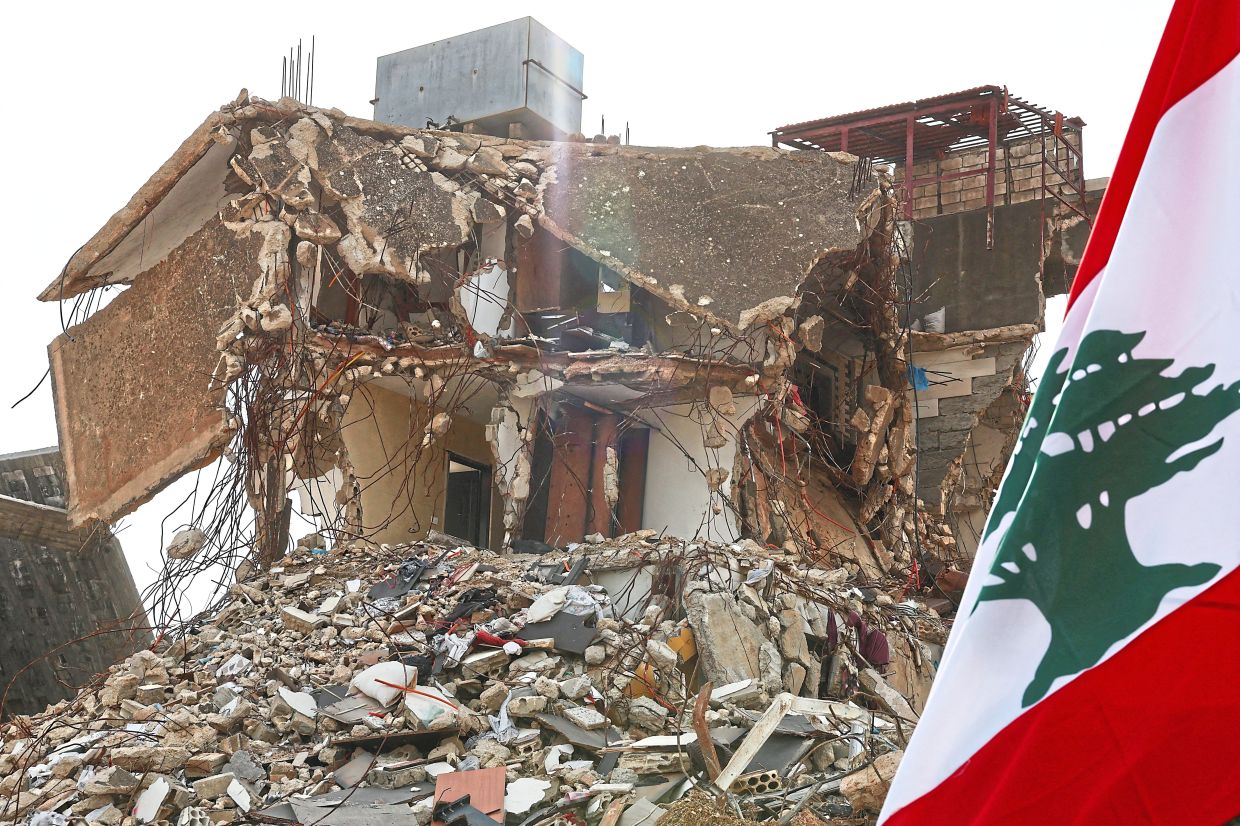
The conflict also killed more than 1,100 civilians and levelled large parts of southern and eastern Lebanon.
Washington has pressed Beirut to move quickly. President Donald Trump’s deputy Middle East envoy, Morgan Ortagus, visited Beirut recently to discuss progress on disarmament.
In September, the United States announced US$14mil in demolition charges and other military aid to help Lebanese forces “degrade Hezbollah”.
The Lebanese army’s work is part of a November 2024 ceasefire deal stipulating that only state security forces may bear arms.
Hezbollah, though not a signatory, has said the requirement applies only to the south.
In September, Lebanon’s cabinet adopted a five-phase plan to extend the state’s monopoly on arms, beginning in the south and moving north and east.
The army has pledged to clear the south by December but has avoided setting a timeline for the rest of the country, wary of reigniting sectarian divisions.
“It’s a Lebanese answer to disarmament,” said Ed Gabriel, head of the American Task Force Lebanon.
He said the army’s cautious approach reflects fears of unrest if it acts too quickly beyond the south.
Hezbollah has so far tolerated the seizures of unmanned caches and refrained from firing on Israel since the truce.
But its leaders have warned against efforts to seize weapons elsewhere.
“The rest – that depends on a political settlement, which we don’t yet have,” said a Lebanese official close to the group.
Hezbollah deputy leader Naim Qassem recently described the army’s approach as “good and balanced” but warned against “clashing with the Syiah community”.
The military, which fractured during Lebanon’s 15-year civil war, is wary of internal splits if tensions rise.
Officials say progress in the rest of the country depends on political consensus – something still elusive.
The army lacks detailed intelligence on Hezbollah’s stockpiles and relies heavily on information provided by Israel to a truce committee known as “the Mechanism”, chaired by the United States and including France, Israel, Lebanon and UN peacekeepers.
Reports flowed in so quickly earlier this year that the army struggled to keep up.
Troops have destroyed or sealed off dozens of tunnels and depots, keeping any usable ammunition for their own use.
But by June, they had exhausted their demolition supplies. In August, six soldiers were killed while attempting to dismantle an arms depot.
Operations by the UN peacekeeping force Unifil have uncovered tunnels stretching dozens of metres and large quantities of unexploded ordnance.
Several Lebanese soldiers have also been wounded by Israeli fire during inspection missions, officials said, while Unifil reported incidents of Israeli drones dropping grenades near peacekeepers.
The army says Israel’s occupation of five hilltops inside Lebanese territory has delayed full clearance of the south.
When troops tried to erect a basic watchtower near the border, Israel objected, and the structure remains unmanned.
The United States wants Lebanon to maintain its pace and begin disarmament elsewhere once the southern sweep is done.
American envoy Tom Barrack has warned of possible Israeli action if the deadline is missed.
Washington views the campaign as a “historic decision to disarm Hezbollah,” a State Department spokesperson said.
“The region and the world are watching carefully.”
Even so, Hezbollah’s position remains fluid.
Publicly, it has rejected surrendering its weapons, but some insiders have hinted the group could discuss its arsenal if Israel observes a “real ceasefire” and reconstruction of Syiah areas begins.
Others within the movement have insisted that there will be no disarmament under any circumstances.
“The army is betting on time,” said the Lebanese official close to Hezbollah.
For now, the army’s slow but steady advance in the south marks an extraordinary shift in a country where Hezbollah once dominated both politics and the battlefield.
Yet the next stages – moving north and east – will test whether Lebanon’s fragile state can finally assert control over its own guns. — Reuters
