
REBUILDING was never really up for debate.
The glacier collapsed on a Wednesday in May, a roaring mix of boulders, ice and water that tore through the Swiss village of Blatten. Homes and farms that had stood for generations were swallowed in barely 30 seconds.
By the following week, officials were already sketching out plans for a new village in the same valley, even as the warming world that caused the disaster loomed over every decision.
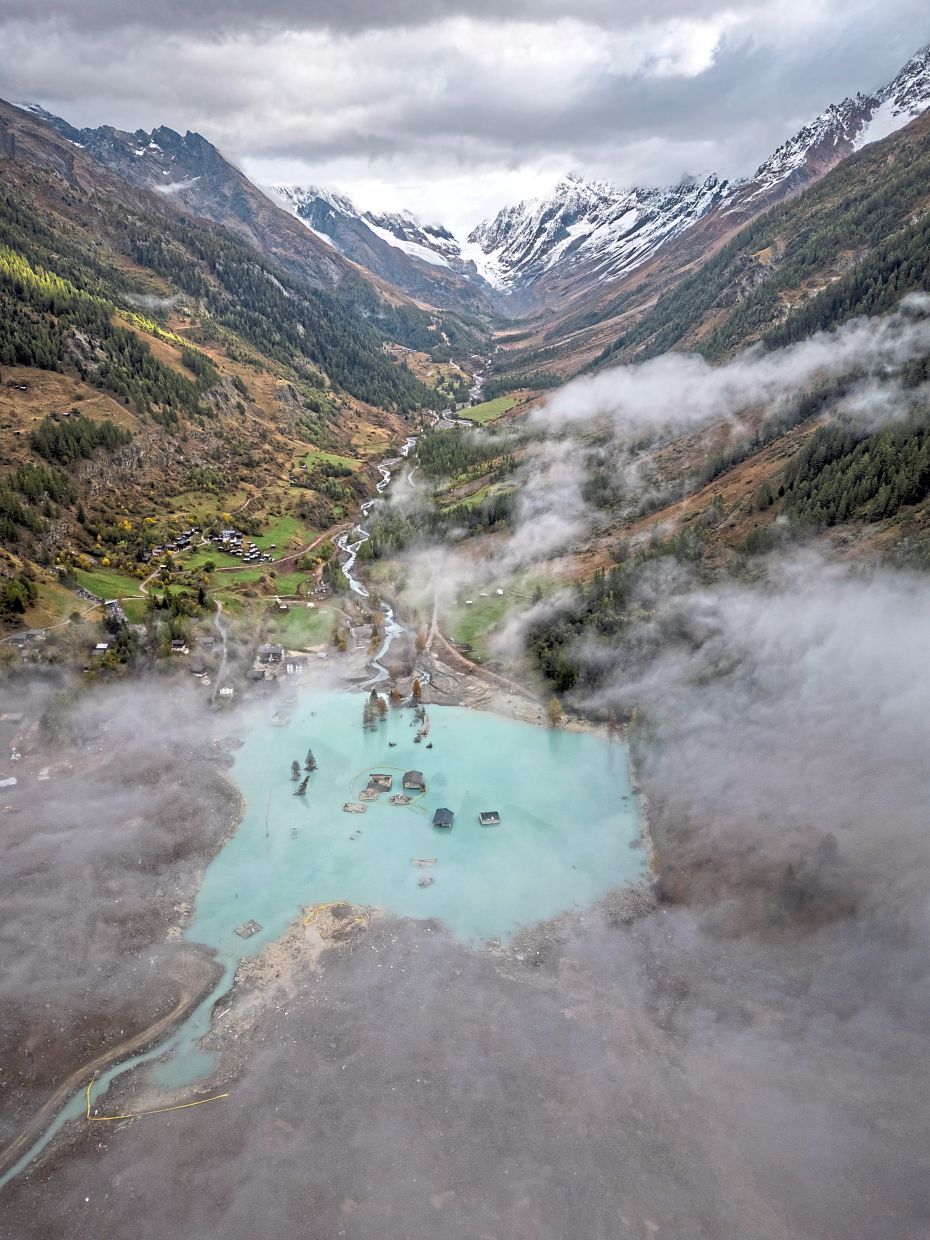
Before the collapse, Blatten was home to 300 people. Some families had been rooted there for centuries.
No one knows yet exactly where the new town will sit, but officials estimate the cost to taxpayers will surpass US$100mil. Insurance payouts are expected to cover another US$400mil.
For a small Alpine community, the bill is staggering. For Europe, it is one more sign of the financial, physical and emotional losses piling up as the climate shifts.
Months later, the questions in the Lotschental Valley still hang heavy.
How fast can Switzerland slice through planning rules to get people rehoused? How many residents will choose to rebuild their lives in the new Blatten? And how do they deal with the glacier that still sits above the ruins like a wounded animal, melting, groaning and constantly reshaping the risks on the mountainside?
The one question no one is raising: should they leave the Alps altogether? For the Swiss, that borders on sacrilege.
“Our heart is here,” said Daniel Ritler, a lifelong Blatten resident who lost his home, his farm and the guest rooms he rented to tourists. “It was our paradise.”
Franziska Biner, who heads the energy and finance department of Valais canton, is overseeing the rebuild.
“We cannot say everyone needs to leave the places that are dangerous,” she said. “Because then we need to leave the canton.”

Scientists have been warning for years that mountain regions like the Alps are being hit harder and faster by climate change.
Switzerland has warmed at twice the global average. Rising temperatures are dissolving the permafrost that binds mountainsides together, triggering more landslides and rockfalls.
Ski resorts are seeing fewer good powder days, slicing into tourism income. And though less snow might reduce avalanche risk in decades to come, no one is celebrating that sort of trade-off.
Switzerland’s glaciers lost more than 40% of their ice volume from 1980 to 2016. They shed another 10% in just 2022 and 2023. Austria and France are on the same trajectory.
In Valais alone, 80 glaciers are now considered potentially dangerous to lives and property.
The Birch Glacier had loomed over Blatten for as long as anyone can remember. But it was melting fast, the permafrost above it was thawing and rockfalls were piling pressure on the ice.
Researchers monitoring the glacier spotted signs of trouble in spring and ordered the evacuation of the village.
A few days later, Lars Gustke, who runs the cable car on the opposite side of the valley, watched the glacier collapse.
The sliding ice, rock and soil crushed homes and blocked the river, forming a lake that overflowed into more buildings downstream.
At the valley’s tourism board office beneath the cable car station, colleagues Nicole Kalbermatten and Lilian Ritler felt their lights flicker.
Lilian opened a window. A pressure wave slammed into the building, the shock from the glacier’s fall.
Ritler rushed to Kalbermatten. “Blatten,” she said, “is gone.”
Gone were the three small hotels that served hikers and skiers. Gone were the old barns in the village centre. Gone too was the communal bread oven that had anchored social life for generations.
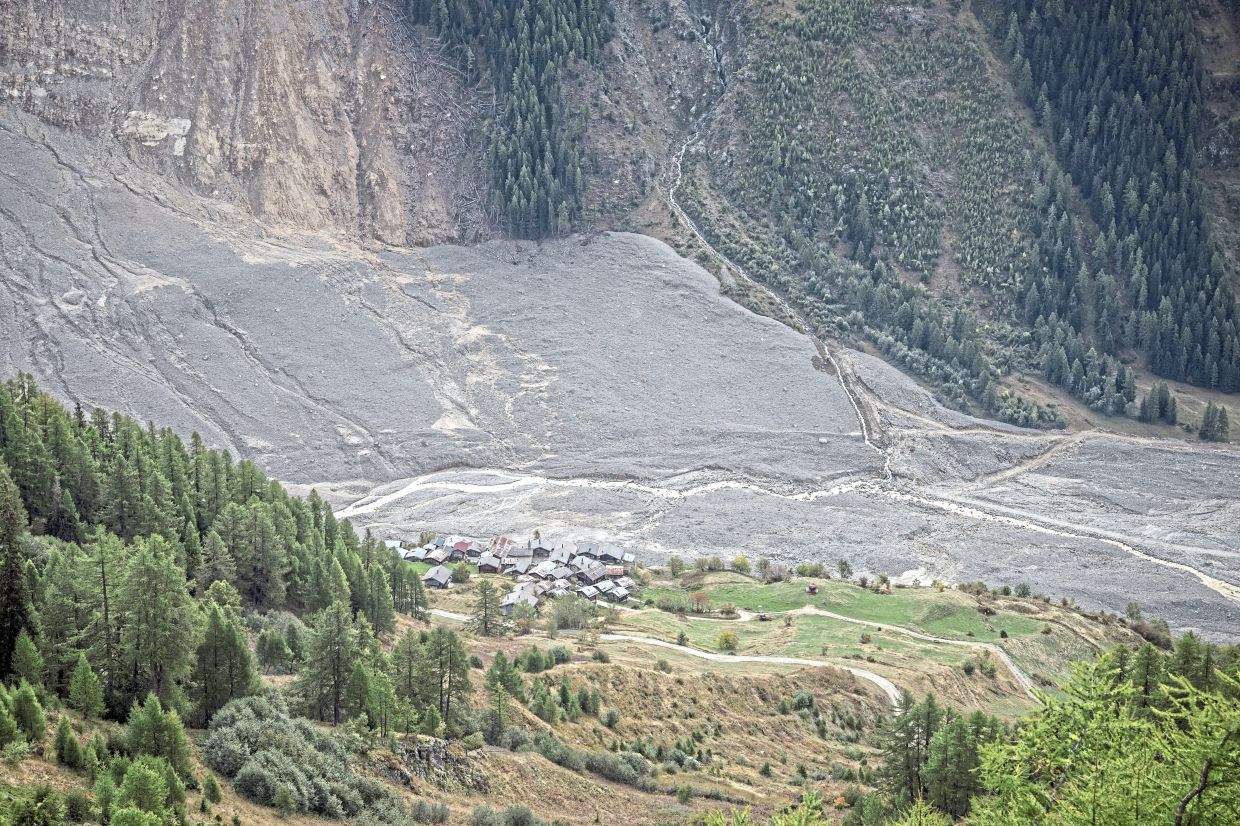
The evacuation saved lives. Only one resident died, a blessing in a disaster of such scale. But the psychological blow was immense.
Newly homeless residents found space with friends in neighbouring villages or stayed in spare holiday homes offered by strangers.
Then came the grief.
“You don’t just lose the house,” Ritler said. “You lose the lanes, the church and your childhood.”
Within a week, the canton’s governing council agreed that Blatten must be rebuilt. A plan was presented in September: a five-year timeline, with the first families moving into homes possibly as early as next year.
The funding has flowed quickly. Around US$75mil has come from private donors, non-profits and government bodies. The state pledged about US$125mil. Insurance companies are expected to cover roughly US$400mil.
“The new Blatten will be a different Blatten. The memories have been evacuated along with the people,” mayor Matthias Bellwald said at the end of what used to be the village road.
“It will certainly be a modern village. It will be a beautiful village.”
Whether it will feel safe is another matter. The ruins remain buried and partly underwater, and residents who have visited the site describe the experience as deeply upsetting.
The disaster also slashed the valley’s summer tourism and will likely hurt winter revenue too, hitting nearby communities where displaced residents work.
Villagers are now weighing whether to move into the new Blatten or settle permanently where they are. Few are contemplating life outside the mountains.
Daniel Ritler and his wife, Karin, briefly considered leaving the Alps altogether.
In the end, they chose to stay in a neighbouring village, where they are refurbishing an old hotel in a bid to help revive local tourism.
They know the risks of living here, Ritler said, but the mountains are stitched into their identity.
“I told Karin, ‘If you’re afraid, we need to talk about it,’” he said. “For me, it’s not a problem.”
“We must have respect for nature,” he added. “We are lucky we were evacuated. And we are lucky that we are healthy and have two hands. And with these two hands, we want to achieve something.” — ©2025 The New York Times Company
This article originally appeared in The New York Times