FOR over a century, the Nobel Peace Prize has been bestowed on champions of democracy and human rights who have stood up to autocrats and challenged some of the worst atrocities, from sexual violence to war crimes.
For Venezuela, a country marked by systematic human rights abuses and rigged elections, the question is how materially the prize awarded on Oct 10 to opposition leader María Corina Machado will advance her cause.
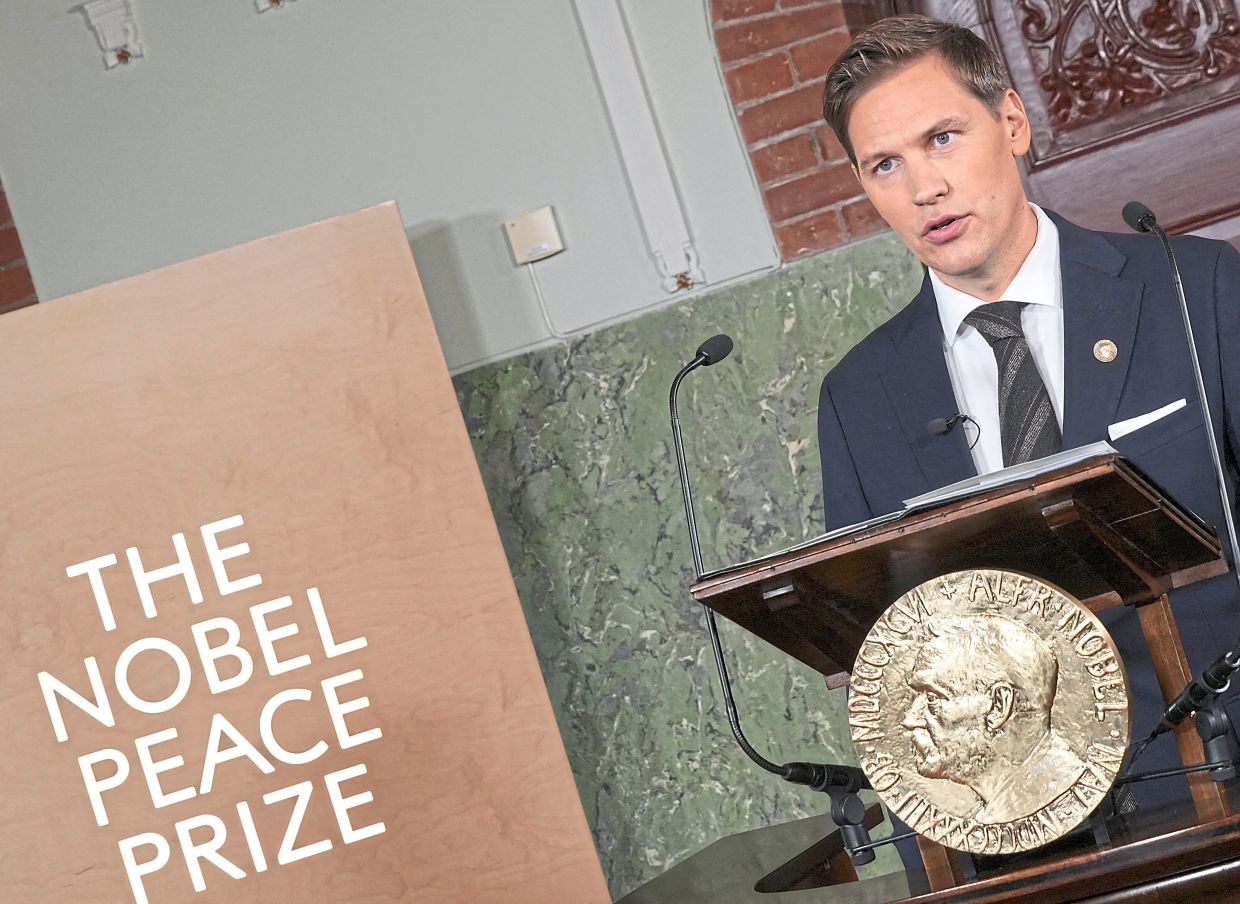
In the past, winning the Peace Prize has helped some laureates to stage political campaigns or attract the world’s gaze to their causes. Yet in many cases, scholars say, winners have stayed imprisoned by repressive governments or gained only short-term attention that fizzles out.
“Domestic rights advocates very rarely get the boost from the prize they hope for or expect,” said Ronald Krebs, a University of Minnesota political science professor. Winning, he added, can lead “repressive regimes to crack down more intensely”.
At first, there is what Krebs called a “mini-explosion” of attention. But those who are honoured for campaigning for rights within repressive countries are “structurally disadvantaged”, he said, and struggle to translate the Nobel into long-term political change.
Machado, for example, has been living in hiding for more than a year. Liu Xiaobo, the 2010 winner for his freedom campaign in China, died serving his prison sentence.
Narges Mohammadi of Iran, the 2023 prize winner, and Ales Bialiatski of Belarus, who won the year before, have been imprisoned by their home countries for their human rights work.
Aung San Suu Kyi, awarded the prize in 1991, has tumbled from grace after downplaying the murderous campaign against the Rohingya Muslim minority in Myanmar.
In other cases, the role of the prize is more ambiguous. Lech Walesa, who won in 1983 for leading the Solidarity movement in Poland, went on to become the country’s president. But it’s unclear, Krebs said, whether the prize helped Walesa’s campaign for freedom to organise or contributed to the fall of the communist regime.
The 2014 prize amplified Malala Yousafzai’s renown as a champion of women’s rights and education, after she survived an attack by a Taliban gunman. But gender inequality remains high in her native Pakistan and has not improved markedly in the last decade.
According to one study published in the Cambridge University Press, the Nobel Prize can increase support for women’s rights activists, but the “changes are short-lived”.
Krebs said that is partly because their movements are often “not backed by the kind of tangible support those actors need” to drive long-term change. That, he said, has become increasingly the case as winners have broadened not just to include figures who contribute to the traditional conceptions of peace, but “increasingly to domestic campaigners, of rights or democracy, especially in the context of autocracy.” — ©2025 The New York Times Company