HUSNA Taleb wakes before dawn each morning in a modest flat on the outskirts of Klang, juggling two part-time jobs and the emotional weight of raising her children – 10-year-old Aiman and 14-year-old Sara (not their real names) – on her own.
The 42-year-old single mother, who was retrenched from a manufacturing company last year, is grateful for the monthly financial aid she receives from a government agency. But the support, she admits, does little to ease her overall struggles.
With no access to affordable childcare, no paid leave and dwindling savings, Husna fears there is little hope for her family to build a better life.
When asked what more could be done to help her situation, Husna is clear: “I’m not asking for handouts. I just want policies that see me not as a statistic, but as a mother trying to hold everything together.”
Husna is among thousands of Malaysians whose daily struggles remain unaccounted for in national planning, according to a memorandum submitted to the government. It urges “bold and transformative investments” in gender equality for Budget 2026.
The memorandum was drafted by the Gender Budget Group (GBG) – a coalition of civil society organisations and experts – which argues that gender-responsive budgeting is not only a moral imperative but also a strategic move to help Malaysia achieve its goal of becoming a high-income, inclusive nation.
Despite existing government efforts, the GBG notes that progress on gender equality remains slow, with persistent gaps in political representation, economic participation, and protection from violence especially affecting women and marginalised communities, such as persons with disabilities.
At the same time, the group stresses that disability inclusion must be mainstreamed across all budget areas rather than treated as an afterthought. Only then, it says, can inclusivity become a lived reality in Malaysia’s national development.
Seeking true empowerment
The call for gender-responsive budgeting (GRB), says GBG founder Omna Sreeni-Ong, continues because there is a pressing need for a more intersectional approach in the country’s budget allocation and policymaking processes.
According to the group, GRB is a process that ensures equitable distribution of resources to different groups of women and men to provide equal opportunities for everyone.
“It is grounded in data collection and analysis to develop evidence-based policies. As such, resource allocations for ministries are essential to collect sex and gender-disaggregated data and, through gender impact assessments, understand the lived realities and needs of different populations,” the memorandum reads.
Omna says that despite government efforts, progress has been slower than expected. Issues like the poor representation of women in leadership (political, private, and grassroots sectors); persistent gender-based violence which has permeated online spaces, risking it spiralling out of control; and the care and home responsibilities women shoulder which inhibit their well-being and contribution to the country’s development, all still persist and are holding women back.

She points out that international agencies project that, at the current rate, it will take seven generations for South-East Asia to achieve gender parity.
Omna calls for several game changer measures, including addressing the root causes that perpetuate gender inequalities – which are primarily driven by deeply entrenched patriarchal social norms.
“A strong mandate is needed to address this and prevent the current deficit of 50% of our talent and resources.”
Equally crucial, she says, is a whole-of-government approach to implementing and monitoring gender mainstreaming and responsive budgeting across all projects and programmes – with accountability ensured through transformative, outcome-based reporting that measures not just participation numbers, but how challenges were resolved and lives improved.
“Malaysia, particularly in the context of the Madani governance and economic framework, is poised to fully integrate it into the government system. Political will is key – and in this regard, the Penang and Selangor governments are rigorously building capacity in local governments on gender mainstreaming and gender-responsive budgeting.”
She stresses that coherent and broad disaggregated data has become both indispensable and central to evidence-based policymaking.
“The Finance Ministry has been progressive in prescribing the use of gender data and gender analysis in its annual Budget Call Circular.
“Widely disaggregated data will allow us to conduct a realistic and thorough situation analysis, understand lived realities, and design targeted and sustainable solutions. Undertaking this can prevent cycles of repeated budget allocations which may not produce desired results.”
Enabling inclusivity
What are the most overlooked intersections between gender and disability in current fiscal planning – and how should these be addressed to ensure inclusivity becomes more than a slogan?
Beatrice Leong, founder of the Autism Inclusive Direct Action Group (Aida), highlights several areas that need urgent attention, particularly those involving disabled women in the workforce and gender-based violence.
“Disabled women are invisible in labour force numbers. There is less than 1% in participation and many are unpaid carers whose work is never counted.
“I think of how often women I meet say they have to leave work to care for a disabled child – yet if they are disabled themselves, there is no support at all. Repro-ductive health rarely considers disabled women, and safe schooling for autistic girls or girls with psychosocial disabilities is hardly ever mentioned or considered holistically.”
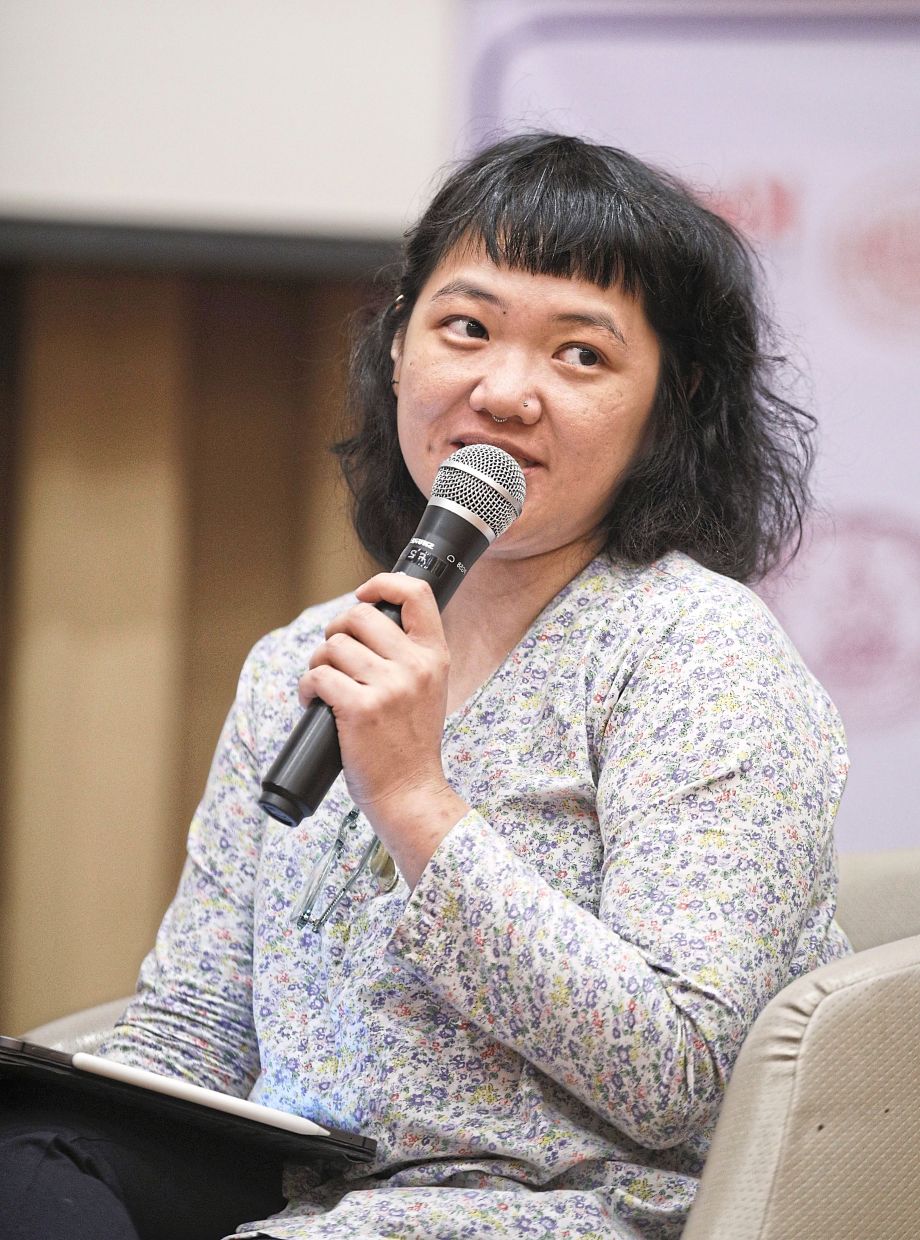
Leong says studies show that as many as 80% of women with disabilities experience some form of violence in their lifetime – yet the country’s systems of justice and reporting remain inaccessible.
“A deaf woman cannot call a helpline, and a text service is not the same as being able to sign her own report. How does a blind woman report rape and verify her report independently? And what about those with psychosocial or intellectual disabilities?”
Leong, who is also a GBG member, says the group’s memorandum calls for ring-fenced funding to employ disabled women in the care sector, subsidies for their own care costs, and proper inclusive classrooms with augmentative and alternative communication (AAC) tools.
(Ring-fence funding is restricted to a particular purpose and cannot be used for anything else.)
“And the AAC must be understood beyond just the hardware or infrastructure. It is also about communication that is accessible – with easy-read materials, plain language, and information that people with learning disabilities can actually use.
“The largest number of registered persons with disabilities are those with learning disabilities, yet they are often excluded when we talk about access. Inclusive classrooms must recognise this and provide for it. If it is not in the budget, it will not happen. Without it, women and girls with disabilities will continue to be shut out of progress.”

Political will
With so many changes that could be implemented to ensure a gender-responsive budget, what structural reforms or budgetary commitments are most urgent to close the gaps in Budget 2026?
Omna says the answer lies in bolstering women’s leadership, which brings diverse perspectives that better reflect societal realities, promotes inclusive policymaking and advances gender equality and social justice.
“When women lead, policies tend to address broader issues such as healthcare, education, family support, and human rights – creating more balanced and effective governance.”
She adds that high-level political will must be backed by genuine, sustained commitment, demonstrated through clear and enforceable actions.
“It must be visible in rhetoric, policies, budget and resource allocations, and practical measures that dismantle systemic barriers and empower women to lead alongside men at all levels – in government, legislature, private sector, and community.”
Penang Women’s Development Corporation chief executive officer Datuk Ong Bee Leng says much more can be done to improve Malaysian women’s standing in politics.
“According to the Inter-Parliamentary Union’s August 2025 report, Malaysia is ranked 151 out of 184 countries. Among Asean countries, Malaysia is in 8th position.
“Women hold only 13.5% of seats in Parliament [below the 30% benchmark]. At the sub- national level, only 72 (11.56%) out of 623 state assemblypersons are women,” says Ong.
Echoing the sentiment, Liza Liew, LeadWomen’s consulting and client services manager, says representation of women on boards of government-linked and investment companies remains inconsistent.
“While there exists a one-woman-on-board mandate for listed companies, the policy remains unevenly enforced – and even more so in reaching the recommended 30% minimum of women on boards for effectiveness.”
In this aspect, they recommend reserved or top-up seats specifically allocated for women, nominating women candidates in winnable positions on party lists; and conducting voter education and awareness campaigns to encourage public support for women candidates, among others.
They also call for progress towards more effective boards by making the 30% women representation legally binding, while emphasising that this is about better governance – not tokenism or quota-filling at the expense of merit.
Truly inclusive
Omna says a truly inclusive budget should reflect the principles of Ekonomi Madani, which focus on raising living standards, sustaining economic growth and driving governance reforms with inclusivity at the core.
“Such a budget allocates significant resources to vulnerable populations – including women and disabled communities – ensuring their needs are visible and actionable through targeted social welfare, housing, education, and employment programmes. In essence, ‘Leaving No One Behind by Reaching the Farthest First’.”
She adds that while there may be growing awareness of inequality and the need to address not only poverty but the broader wellbeing of Malaysians, the actual impacts of budget measures are not always evident.
“The quantitative measurement of beneficiaries needs to be weighed against how their lives have improved, remained status quo, or regressed.
“What complementary or conflicting factors, including social forces, contributed to their current situation? What disaggregated data have been gathered to understand their realities, beyond ticking boxes of receipt of services, grants, and employment?
“All these are subsumed in the considerations of a gender- responsive budgeting process.”