FOR nearly half a century, UN peacekeepers have patrolled the tense frontier between Israel and southern Lebanon – territory long dominated by the Iranian-backed Hezbollah militia.
Now their mission is finally being wound down.
The UN Security Council voted unanimously recently to extend the UN Interim Force in Lebanon (Unifil) only until the end of 2026.
After that, the peacekeepers – currently around 10,000 strong – will embark on a one-year-long withdrawal. The stated goal: to leave “Lebanon fully in charge of southern security”.
A buffer with limits
Created in 1978 during Lebanon’s civil war, Unifil has served as a buffer between Israel and Hezbollah, though without authority to use force beyond self-defence. Its troops can only monitor and report ceasefire violations.
That limited mandate has drawn sharp criticism from both sides. Hezbollah supporters see them as sympathetic to Israel, while Israelis regard them as toothless, accusing them of ignoring Hezbollah’s military build-up.
“The UN force completely failed to prevent Hezbollah’s entrenchment,” Israel’s foreign ministry said after the council vote, hailing the “orderly and gradual withdrawal” as a step toward regional stability.
Lebanon’s new government, fearing an immediate wind-down, welcomed the extension, saying it would use the additional time to consolidate control of the border.
But European officials warn that a sudden vacuum could be dangerous.
“The situation is still fragile,” Brig-Gen Nicola Mandolesi, a senior Unifil commander, said during a recent patrol.
The realities on the ground
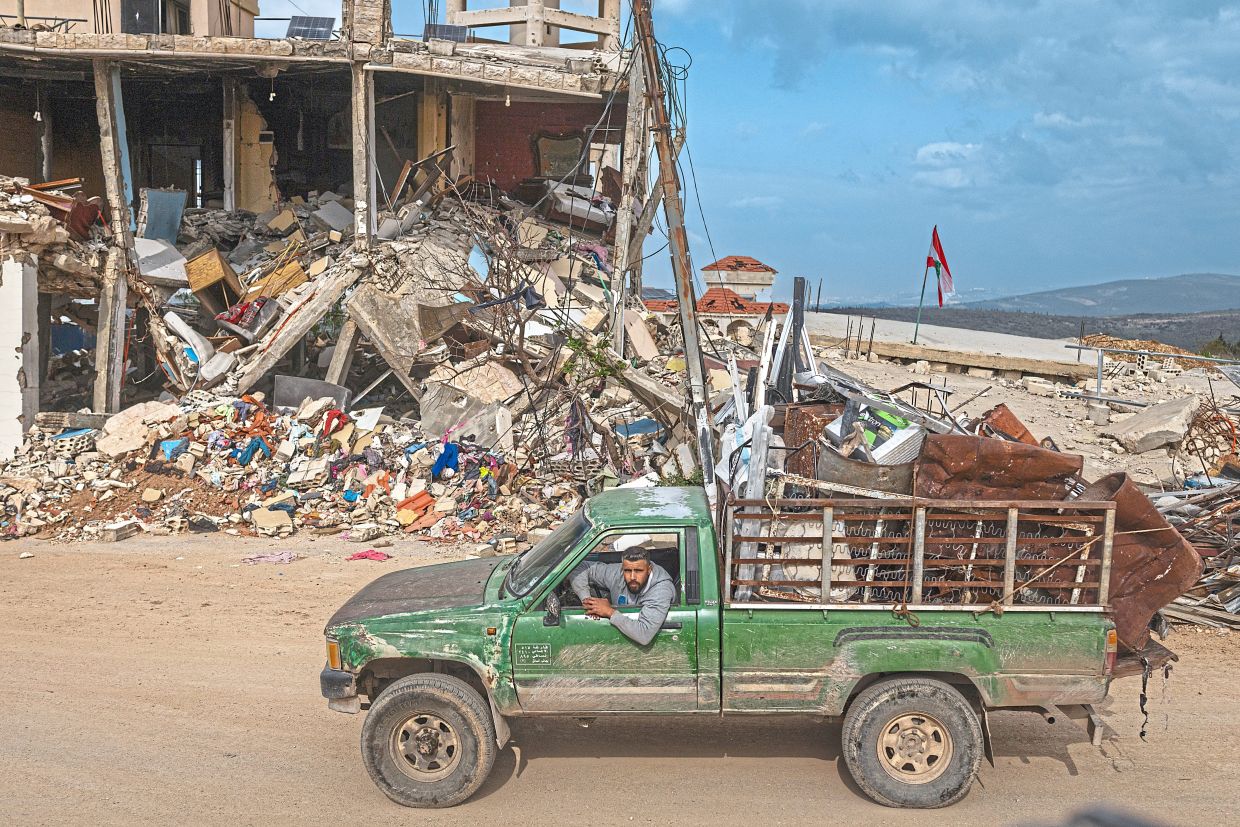
Southern Lebanon today is a landscape of ruins. Israeli airstrikes last year levelled villages, killing much of Hezbollah’s leadership and thousands of fighters and civilians.
“We used to stop at this shop for a drink or a chat,” recalled Lt-Col Enrico Massaria, an Italian peacekeeper, pointing to the site of a drone strike. “Now it’s gone.”
UN convoys thread their way through cratered roads, past collapsed homes flying yellow Hezbollah flags and hand-painted slogans: “Glory to the martyrs.”
Peacekeepers steer around unexploded rockets, often relying on Slash, their bomb-sniffing dog, to check for booby traps.
Relief swept one patrol when Slash’s discovery turned out to be only the tail fin of a mortar round.
Stuck between two fires
The dangers are not only from Hezbollah. The UN has accused Israel of firing on its peacekeepers and injuring dozens. Two Lebanese soldiers were killed recently while inspecting a downed Israeli drone.
At a checkpoint flattened by an Israeli bulldozer, Lebanese officer Lt Khalil Abdel Rida pointed to shrapnel scars.
“Dozens of my comrades died here,” he said.
Under the ceasefire that ended last year’s war, Hezbollah and Israel were supposed to withdraw from the border zone, leaving the Lebanese Army – backed by Unifil – to secure it.
In practice, violations abound: Israel keeps outposts inside Lebanon; Hezbollah resists pressure to disarm.
“The Lebanese armed forces are the key to regaining full control of southern Lebanon,” Gen Mandolesi said. But the army is overstretched and underfunded, and many fear it will not be ready.
A mission under fire
In New York, the United States and Israel pushed hardest for an exit, arguing that “interim” must mean temporary. Britain and France voiced unease.
“A premature withdrawal would risk fostering a security environment Hezbollah can exploit,” said James Kariuki, Britain’s deputy UN representative.
Even Paul Salem of the Middle East Institute, who says Lebanon should not need foreign troops forever, cautioned that “a sudden withdrawal would leave a dangerous vacuum.”
Between war and waiting
Back at Unifil bases, the dissonance is stark. Soldiers return from shattered villages to compounds with gyms, pizzerias and bars – a veneer of normality. Many count the days until rotation.
“I have two little girls and one little boy waiting for me,” said Capt Giuseppe Falossi. “I try not to think about them worrying.”
Their mission, however, is ending. What comes after remains unclear.
By 2027, the blue helmets will be gone, leaving Lebanon’s army – and the fragile ceasefire – to stand on their own. — ©2025 The New York Times Company
This article originally appeared in The New York Times.
Fragile ceasefire
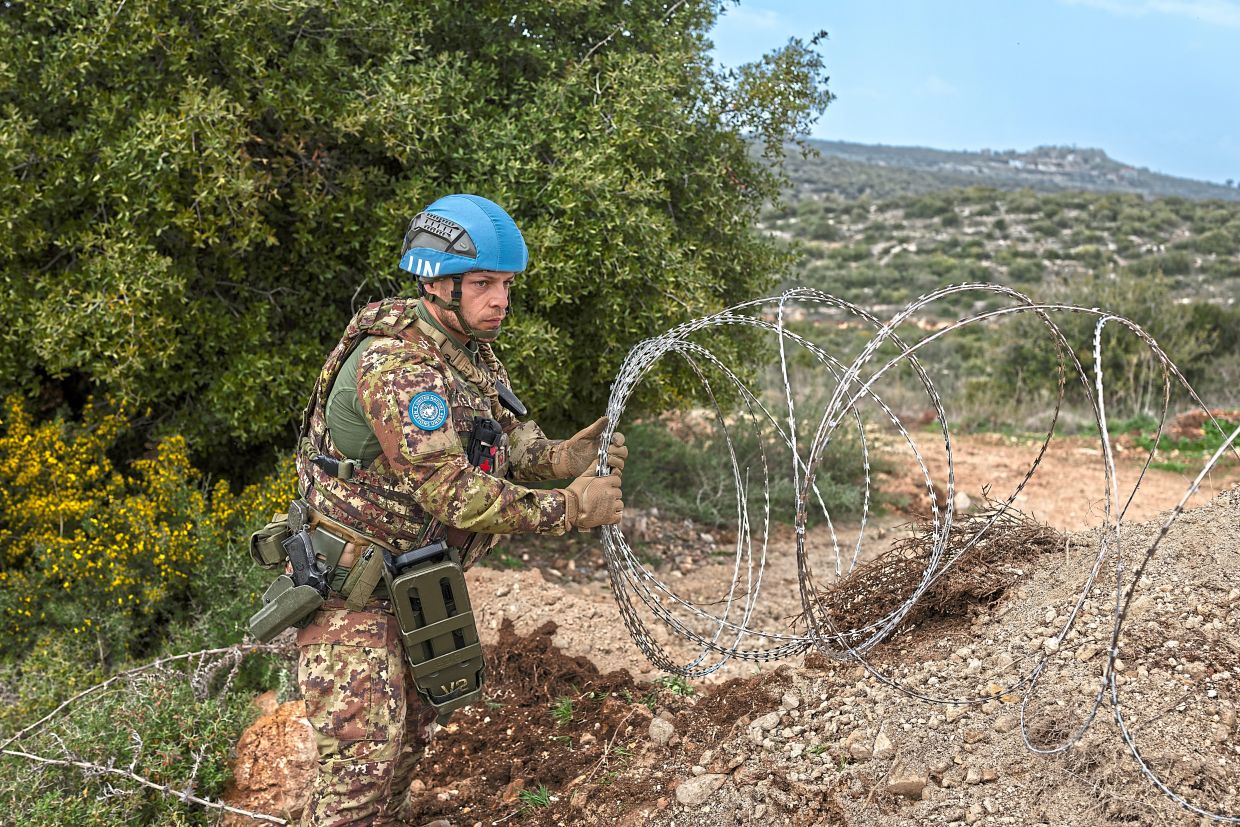
A UN peacekeeper removing a wire roadblock set up by the Israelis a few weeks earlier after inspecting the area for explosives in Tayr Harfa. — Diego Ibarra Sanchez/The New York Times
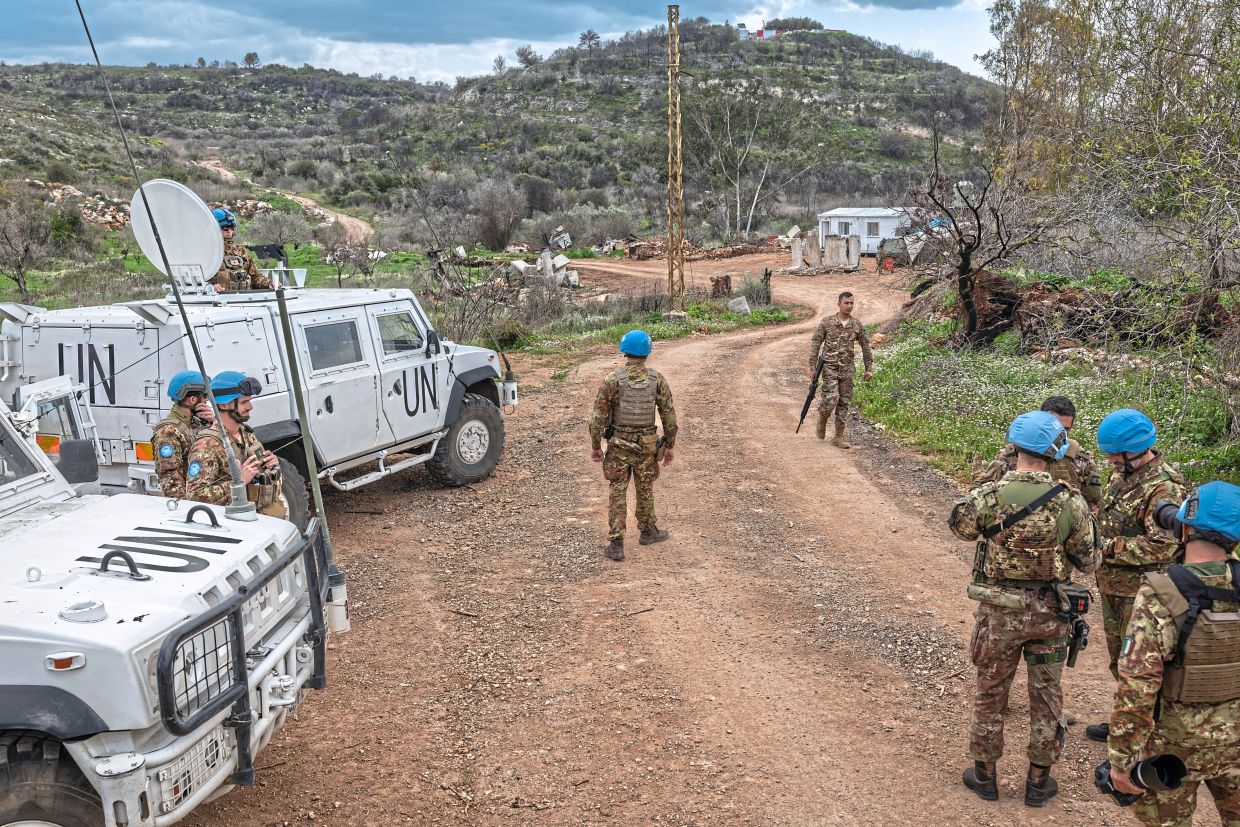
a UN peacekeeper speaking with a soldier at a Lebanese Army checkpoint in southern Lebanon. — Diego Ibarra Sanchez/The New York Times
A Lebanese civilian in the devastated border town of Tayr Harfa. — Diego Ibarra Sanchez/The New York Times