WHAT happens when you gather 100 young climate activists from across the Asean region into one room?

In a historic first, children and youth delegates of ACYCS 2025 were given the rare opportunity to present their Asean Children and Youth Statement on Climate Action, also known as the Langkawi Declaration, directly to the ministers within the AMME proceedings. Facilitated by Unicef Malaysia, this marked a significant step towards embedding meaningful child and youth participation in shaping climate policies.
Usually playing a participant role at such conferences, this time I found myself in the strange shoes of being part of the summit secretariat team. This provided me with a rare, front-row seat to the ins and outs of the climate conference.
The 100 young delegates at the summit were selected through an open application process and nominations from Unicef country offices. The cohort comprised of indigenous youth, community leaders, and climate advocates, all of whom are driving change in their communities.
Observing the delegates – who hailed from the 10 Asean member states – over the three-day summit was a humbling experience. I marvelled at the conservation work being done at the Langkawi Unesco Global Geopark. It made me beam with pride and feel evermore grateful for Malaysia’s diverse flora and fauna.
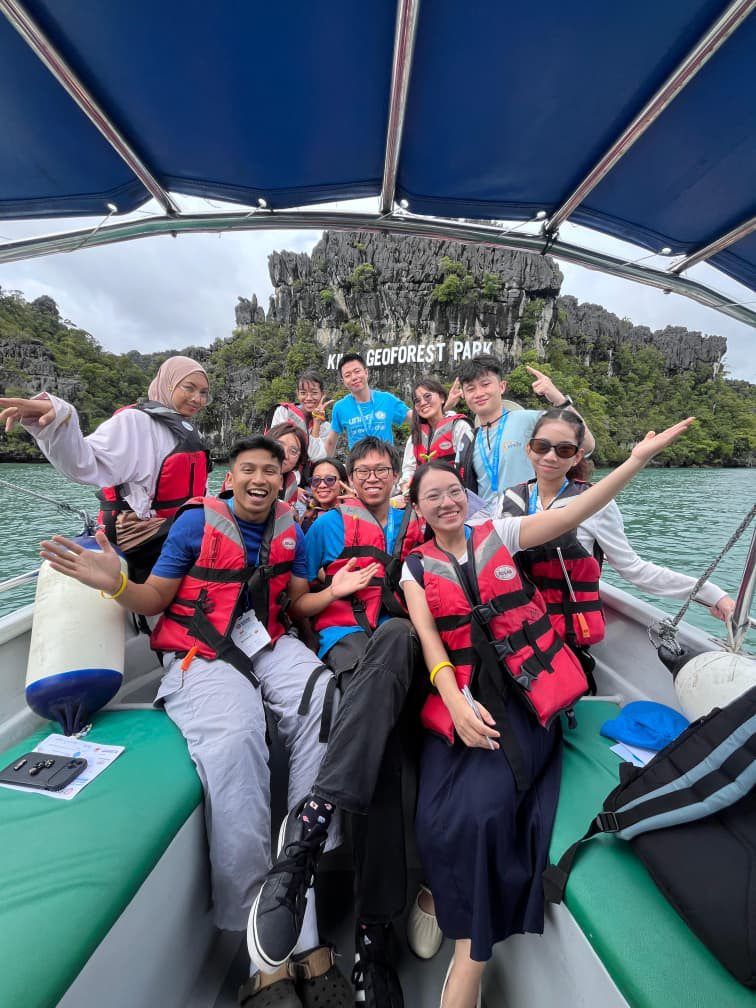
More importantly, I saw these young people huddling around tables as they discussed climate solutions, deliberating late into the night over the details of the Declaration, and sharing about their projects with brimming enthusiasm.
The work of these young climate warriors back in their home countries is truly inspiring and sparks imagination on what can be achieved by young people. Their projects range from restoring mangroves and turning waste into compost to leading local climate education campaigns.
The range and scale of the projects on display showed that no effort was considered too small in the fight for a clean, healthy, and sustainable environment. Rather, each action has become a call for the broader public to participate and recognise that collective change begins with individual steps.
The summit also places pressure on our policymakers to act with resolve. The inclusion of a young people’s intervention session at a high-level regional meeting signifies a recognition of the urgency of the climate crisis and a right step in young people’s involvement within policymaking.
And they must be included. Climate change is a real and felt crisis in Asean. According to Unicef, around 40% of children in the region face five or more overlapping climate and environmental shocks, nearly triple the global average.
ACYCS 2025 hammered home the point that children and youth are the most affected by climate change despite contributing the least to it, and will continue to bear the heaviest consequences in the years to come.
That urgency was captured in the Langkawi Declaration, which called for concrete steps ranging from stronger climate education and financing to accelerating a just energy transition. It was a set of actionable priorities that, if taken seriously, could shape how Asean responds to the crisis in the years ahead.
For me, this felt unprecedented for Asean. Unlike the European Union, which has long institutionalised youth forums, or the African Union, which created its African Youth Charter, Asean has often confined youth engagement to side events. Allowing young delegates to address ministers directly inside AMME therefore marks a significant departure from tradition.
Yet, I am only cautiously optimistic. These declarations are non-binding, and history tells us that youth engagement can sometimes serve more as performance than policy. There is a risk of “youth-washing”, where young people are showcased on stage but excluded from the hard decisions made behind closed doors.
The question, then, is whether Asean will move from listening to acting. Youth were allowed to speak in Langkawi; the real challenge is ensuring their words carry weight in policy implementation.
For this to happen, Asean must go beyond ad hoc opportunities and institutionalise youth participation as a permanent feature of its climate governance. Just as the region has established mechanisms for business councils and intergovernmental dialogues, it should create standing platforms for young people to help shape policy, whether through a Youth Climate Council, structured consultation processes, or a permanent youth track within the AMME.
Ultimately, the true measure of success will lie in what comes after. Will these 100 delegates be meaningfully engaged in Asean processes beyond the summit? Could Asean consider creating a standing platform for youth on climate change (and possibly on other issues too), much like its mechanisms for business councils and intergovernmental dialogue?
Closer to home, how do we, as Malaysians, support and connect with these efforts? The lesson from Langkawi is that climate action does not rest on grand gestures alone. It starts with community projects and grows when these efforts are amplified and supported by institutions.
As part of the organising team, I left the conference with hope that the idealism of the youth and the realism of governance could find common ground, but only if institutions were willing to meet youth halfway and if young people remained persistent in pushing for their place at the table.
This is definitely something to think about as Malaysia prepares for the 47th Asean Summit next month.
So, returning to the question posed earlier, what happens when you bring 100 young Asean climate activists together?
I believe what you get is a collective force – one that is pressing leaders to act, and reminding the rest of us that the future is already knocking at the door.
Jonathan Lee Rong Sheng traces his writing roots to The Star’s BRATs programme. He is now a Malaysian youth advocate. The views expressed here are solely the writer’s own.