THERE’S more than one way of looking at the formal recognition of a Palestinian state by a clutch of Western nations. Even the most fervid optimists can’t pretend that this symbolic move could help impede the Gaza genocide unless words are followed by action.
Symbolism isn’t always useless. Even belated recognition by traditional Israeli allies, just as the occupying power is kiboshing the prospect of a Palestinian state, might carry some moral weight. But the gesture is meaningless as long as some of them continue to collude with the Israeli military. The United Kingdom, for one, has been directly complicit in the genocide.
The Netanyahu regime has responded to the recognition by threatening bilateral retaliation as well as West Bank annexation, which is informally proceeding apace.
An immediate arms embargo would be the logical response. But logic flounders where hypocrisy is the norm – and that includes flogging the dead horse of a ‘two-state solution’, not least at the Saudi-French conference coinciding with the 80th anniversary session of the UN General Assembly.
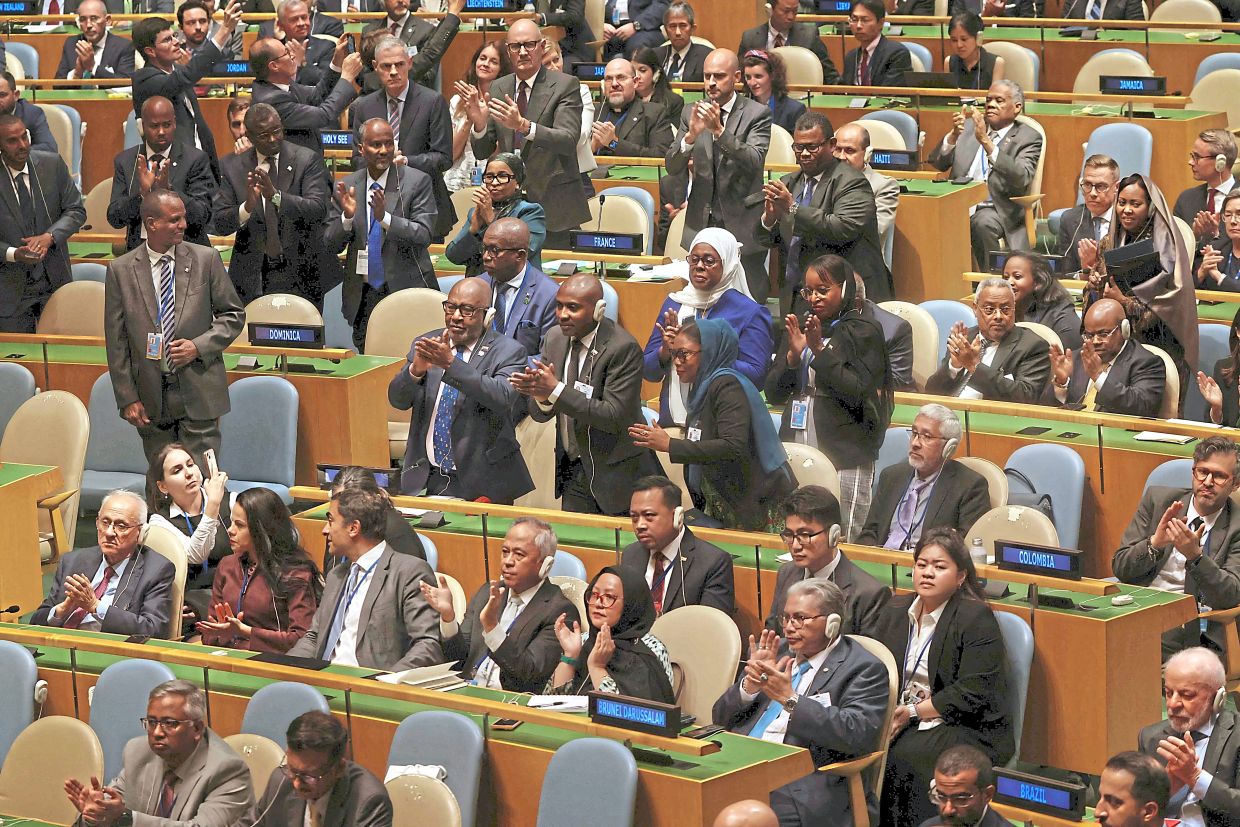
The United Nations has been struggling to uphold its relevance as an organisation set up in the aftermath of World War II and the accompanying genocide against European Jews “to save succeeding generations from the scourge of war”.
It has faced more failures than successes on that front, but a wide range of UN initiatives and organs continue to benefit humanity in various ways. Much of what is now known as the Global South, including the Indian subcontinent, was still colonised by European powers when the General Assembly was first convened.
The complexion of the UN drastically changed over the succeeding decades as a plethora of Afro-Asian states won liberation, and the global organisation ultimately played a key role in ridding South Africa of the scourge of apartheid after even the last holdouts – then, as now, the UK and United States – could no longer prop up the white-supremacist regime in Pretoria.
It took almost three decades for the anti-apartheid initiatives to bear fruit, and while the process was pockmarked by all manner of atrocities, there was no obviously genocidal agenda. Nonetheless, its recent history helps to explain why it was South Africa that placed Israel in the dock at the International Court of Justice. Any verdict in that case will come too late for the Palestinians who are being butchered every day, while the authors of the 1916 Sykes-Picot Agreement and the Balfour Declaration put up the pretence of humanitarian concerns even as they continue to aid the genocide.
A different way of looking at it is offered by Columbia University professor Joseph Massad, who argues that the real purpose of the recent recognitions “is to save Israel from itself by safeguarding its right to remain a Jewish-supremacist state” and that “Western recognition of a fictive Palestinian state hinges entirely on their long-standing recognition of the racist state of Israel alongside it. It is also engineered to shore up the collaborating Palestinian Authority as a reliable subcontractor of Israel’s colonial occupation of Palestinian land by christening it a ‘state’”.
The US prevented even the head of what Massad justifiably derided as “a loyal enforcer of Israel’s occupation since 1993” from appearing at the UN. Mahmoud Abbas, nine years older than the 80-year-old UN, denied a US visa, appeared on video link at the Saudi-French circus, and devoted much of his discourse to dissing Hamas.
It’s worth recalling that Hamas – flawed on many fronts, but more attractive to the average Palestinian than the compromised Fatah – won the last Palestinian parliamentary elections in 2006, but was evicted from a governing role by Israel and its Western allies, and thereby pushed into claiming Gaza as its domain after an Israeli-sponsored civil war with the Palestinian Liberation Organisation (PLO). Israel has subsequently thwarted every attempt at a reconciliation between Hamas and Fatah.
The current focus on Hamas as an obstacle to peace ignores its history as an anti-PLO initiative sponsored by the Zionist state. If Hamas and its resistance are anathema to those who are currently recognising Israel, what kind of alternative do they envisage? Can Hamas’ efforts entirely be divorced from its tendencies as the only viable resistance to the Zionist onslaught?
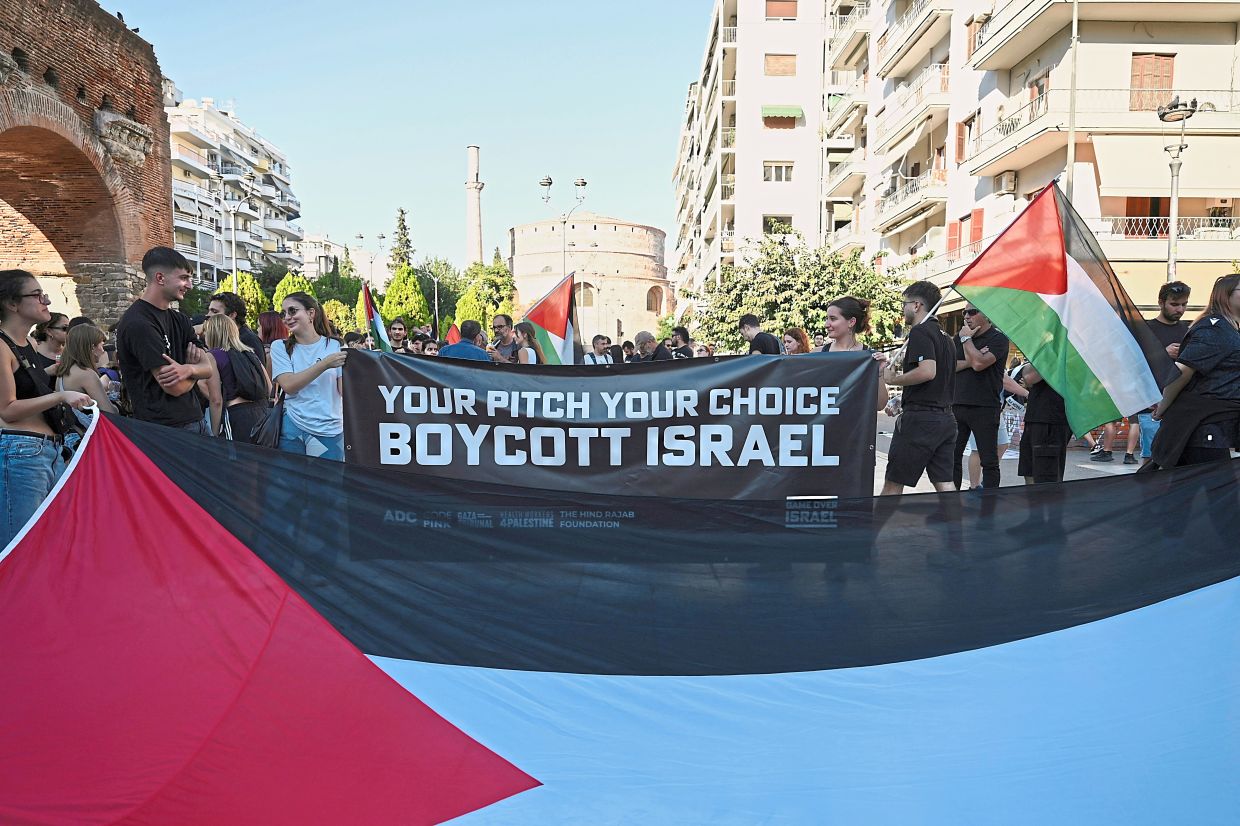
The truth is that not much will change until Israel’s chief sponsor shifts its trajectory. Nothing will come out of this unless the US and its president Donald Trump could somehow be persuaded that his chimera of a Palestinian-free Gaza Riviera is an unachievable travesty.
The UN’s struggles for relevance, meanwhile, might help to convince it of the follies it helped to perpetrate in 1948. – Dawn/Asia News Network