
IN several Gaza hospitals still barely functioning, nurses are fainting from hunger and dehydration.
Managers often can’t provide meals for patients or staff, doctors are out of formula for newborns – sometimes giving them water – and at least three major hospitals lack nutritional fluids for treating malnourished patients.
This is the new front line: hunger.
After months of warnings, international agencies and doctors say starvation is now sweeping the territory.
Scores of Palestinians have died of hunger in recent months, according to Gaza’s Health Ministry.
Seven doctors – four local, three foreign volunteers from Australia, Britain and the US – working at four hospitals, described how medics are collapsing in wards, revived only by saline and glucose drips.
And while trauma cases still flood in, there’s now a surge of patients wasted by hunger.
“We’re losing malnourished babies because we can’t give them what they need – not even safely,” said Dr Ambereen Sleemi, an American volunteer at Nasser Hospital in southern Gaza.
“They come in starving and we can’t bring them back.”
The very fluids needed to slowly feed and stabilise children are missing.
Rapid refeeding could kill them. But even the small amounts hospitals can safely give aren’t always enough.
Dr Nick Maynard, a British surgeon who recently left Nasser Hospital, described seeing a seven-month-old who looked like a newborn.
“Skin and bones doesn’t do it justice,” he said.
“This is man-made starvation. It’s being used as a weapon of war.”
Since late July, Israel began limited aid drops over northern Gaza and paused military activity in certain areas to allow land deliveries.
But the new aid distribution model, implemented after a total blockade from March to May, has proven dangerous and ineffective, doctors and rights groups say.
Food used to be distributed at hundreds of UN sites close to displaced families. Now, supplies arrive at a few large hubs, managed by Israeli-backed US contractors.
Reaching them requires walking kilometres through Israeli-controlled zones. Hundreds of Palestinians have reportedly been killed on those routes.
Israel says the change was to prevent Hamas from stealing aid.
Yet, military officials have admitted they have no proof the UN systematically lost aid to Hamas.
Doctors Without Borders recently reported that one in four children and pregnant women at their clinics were malnourished.
The World Food Programme says a third of Gaza’s population is going days without food.
Starvation is killing babies directly and weakening adults to the point where otherwise survivable injuries become fatal.
Miscarriages are rising, and more babies are born underweight and immuno-compromised.
Dr Hani al-Faleet, a paediatric consultant at Al-Aqsa Martyrs Hospital, put it bluntly: “The baby doesn’t get enough to eat – and neither does the mother.”
Even when aid arrives, it’s too expensive for many.
Hanin Barghouth, 22, can’t walk to the new aid points. Her husband never reaches them before supplies run out.
Their three-month-old baby girl, Salam, was born after the blockade began. She weighs just 4kg – well underweight.
“I’ve lost 13kg since the war started,” said Hanin.
“I breastfeed when I can. When I can’t, I give her formula – but only if I have it.”
A tin of formula now costs about US$120 – more than twice what it sells for outside Gaza.
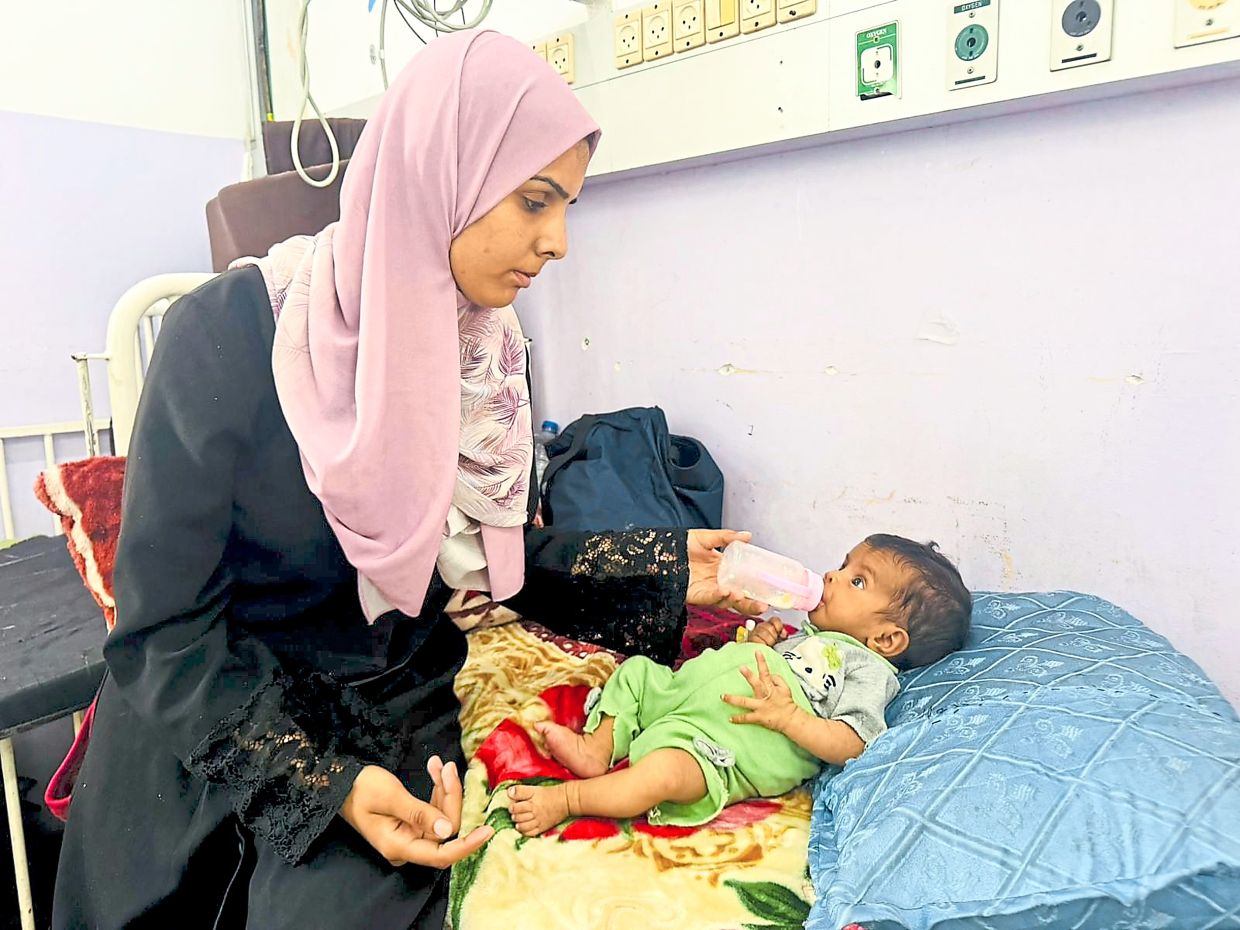
While Salam still receives some care in central Gaza, access is even worse farther north.
Two-year-old Yazan Abu al-Foul, skeletal and silent, lives near the beach in Gaza City.
His family can’t afford food, and hospitals have told them they don’t have the resources to admit him.
“There is nothing,” said Dr Mohammad Abu Salmiya, director of Shifa Hospital.
“No supplements, no infant formula, no IV nutrition. These children need the basics to live – and we don’t have them.”
Even hospital staff are collapsing on duty.
“Some faint in the emergency ward or the OR because they haven’t eaten,” Mohammad added.
“The burden is immense.” — ©2025 The New York Times Company
This article originally appeared in The New York Times