



FOR over two decades, Suquamish tribal member Joshua George has dived into the emerald waters of the Salish Sea in Washington state looking for an unusually phallic clam that’s coveted thousands of kilometres away.
George is a geoduck diver. Pronounced “gooey-duck,” the world’s largest burrowing clam has been harvested in tidelands by George’s indigenous ancestors in the US Pacific Northwest since before Europeans arrived.
In recent years, it has also become a delicacy in China, with Washington sending 90% of its geoducks there, creating a niche yet lucrative American seafood export.
But the trade war between the US and China is now crippling an entire industry that hand-harvests geoducks, leaving divers without work, Seattle exporters without business and Chinese aficionados with fewer of these prized clams.
“It’s the first time in 24 years where I don’t know when or if we’ll be going back to work or if I have to find another job or what we’re going to do,” George said.
US President Donald Trump’s tariff-driven economic feud with China, which dates back to his first term in office, swiftly resumed in February within weeks of taking back the White House. By April, Trump had placed tariffs of at least 145% on China, which led China to retaliate with tariffs of 125% on the United States.
Last month, the United States and China agreed to slash their massive tariffs.
The United States agreed to drop the 145% tax Trump imposed last month to 30%. China agreed to lower its tariff rate on US goods to 10% from 125%.
But the tariffs remain.
Enter the geoduck, weighing about a kilogramme and so entrenched in local culture that it is the mascot for Evergreen State College in Olympia.
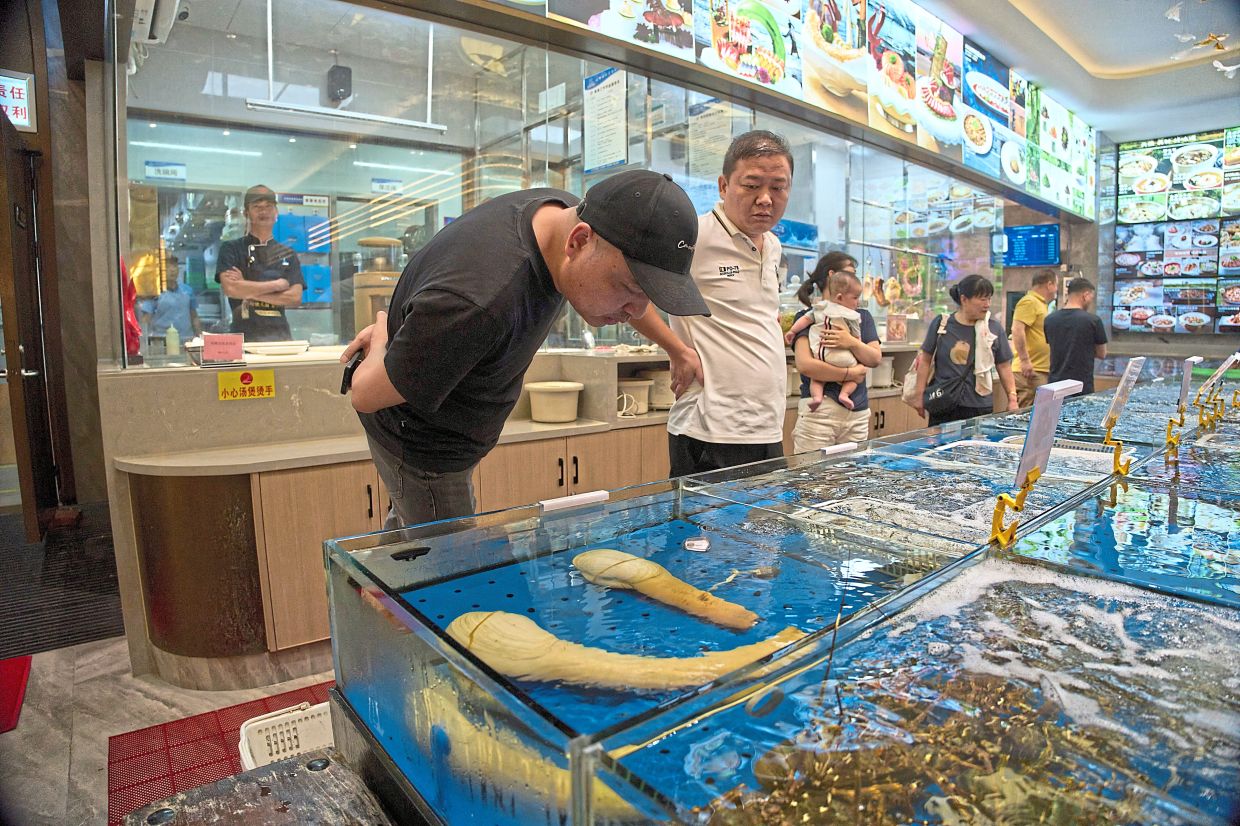
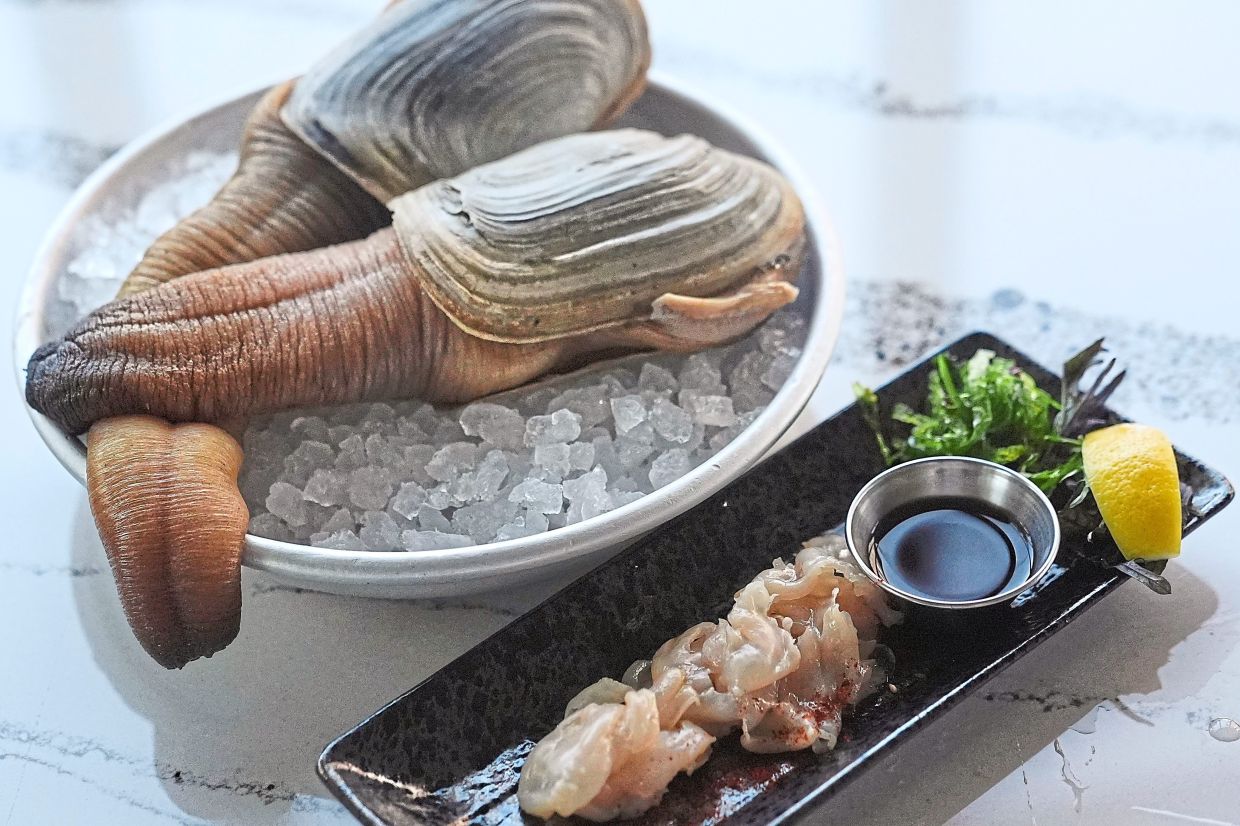
The meaty mollusk is best described as sweet and briny, and it’s often sliced raw for crisp sashimi out west while China consumers prefer it chewy in stir-fries or hot pot soups.
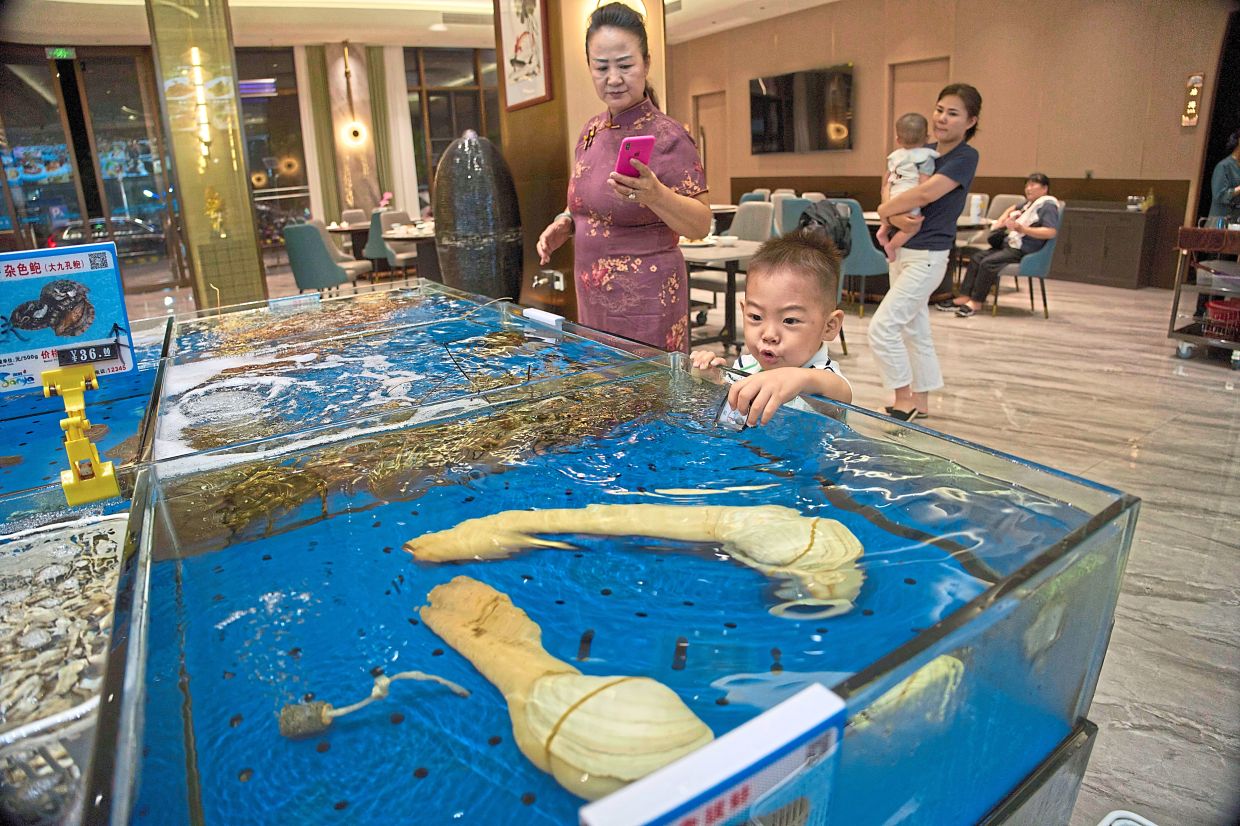
Pre-tariff costs were as high as US$100 for 500g in restaurants, so it’s a dish generally reserved for special occasions like Chinese New Year, or to celebrate a business gathering.
Unlike other products with long-lasting shelf life and standing inventory, the trade war has had an immediate, direct effect on the delicate geoducks, which are shipped alive the same day of harvest.
“The whole market, everybody just had to stop,” said Jim Boure, general manager of Suquamish Seafoods, an enterprise of the Suquamish Tribe. “We started getting phone calls from buyers saying orders are cancelled.”
The millions of kilogrammes of geoducks shipped annually to China come from two main sources: wild harvests on tracts of seafloor that are split between the Washington State Department of Natural Resources and Puget Sound Treaty Indian Tribes, and tideland farms. The state’s share is auctioned to private exporters that often hire contract divers to harvest them.
As of late April, Washington state divers had only pulled about half of the expected harvest from the state tracts, said Blain Reeves, an aquatic resources division manager for the state’s Department of Natural Resources.
Last year, the state and tribes collectively harvested about 1.5 million kilos of wild Washington geoduck for sale. The state generated US$22.4mil in revenue for their half of the clams, which went towards paying for aquatic restoration projects locally.
The state doesn’t track how much is harvested by private farmers.
“If only half the pounds that were contracted are harvested, then our revenue is halved,” Reeves said.
The Suquamish operation has no orders to harvest for at the moment, but it still must keep up with the maintenance to stay ready for business if and when the trade war ends.
In April, George’s team made a quick trip to collect a handful of the clams for state lab testing.
“When we’re doing the job, and it’s not all this other political stuff behind the scenes and everything else, we love this,” said George, adding that diving, which takes place early in the day so that the geoducks are on an airplane by evening, has allowed him to watch his kids grow up.
Fellow diver Kyle Purser said he cherishes his underwater job, but now fears it’s being taken away.
“When you’re watching your money disappear and you’ve got families to feed and not knowing when you’re going to get your next paycheck, (it’s) very stressful,” he said.
The geoduck import market was already facing weaker demand in recent years due to the loss in demand following the pandemic.
While the tariffs have only exacerbated troubles for geoduck sellers in Washington, there’s also been an unintended consequence: the American trade war has inadvertently boosted the Canadian geoduck business, which is facing a lower tariff rate.
Washington state in the US and Canada’s British Columbia province are the two primary places where the wild geoducks grow naturally for commercial harvest.
The two countries did healthy business primarily serving Chinese appetites for decades, in part because quantities are limited.
It’s a labour-intensive and heavily-regulated harvest, as divers must go several metres below the surface to dig for the clams.
“They love the fact that it tastes like the sea,” said James Austin, president of Canada’s Underwater Harvesters Association. “It’s a product that’s really a hit with the Chinese. It’s all about the wild coastline. It’s really prestigious.”
Austin said he expects there will be 1.25 million kilos of Canadian geoducks harvested in 2025, worth approximately US$43.4mil in revenue.
While demand has been relatively low but still steady for Canadian’s geoducks, Austin said they’re now the leading exporters for China, which has helped them negotiate higher prices as a result.
“We have no competitors right now,” Austin said.
Yang Bin at Beihai Huaxiashougang Health Industry Company in Beihai city of Guangxi province in China said their seafood wholesale important business no longer gets geoduck from the United States.
“We don’t care about US tariffs because we can get geoduck from other countries with stable prices,” Yang said.
On their first week back to work since the tariff fight brought business to a standstill in Washington state, Derrick McRae and his brother pulled up about 360kg of wild geoducks in just one April day.
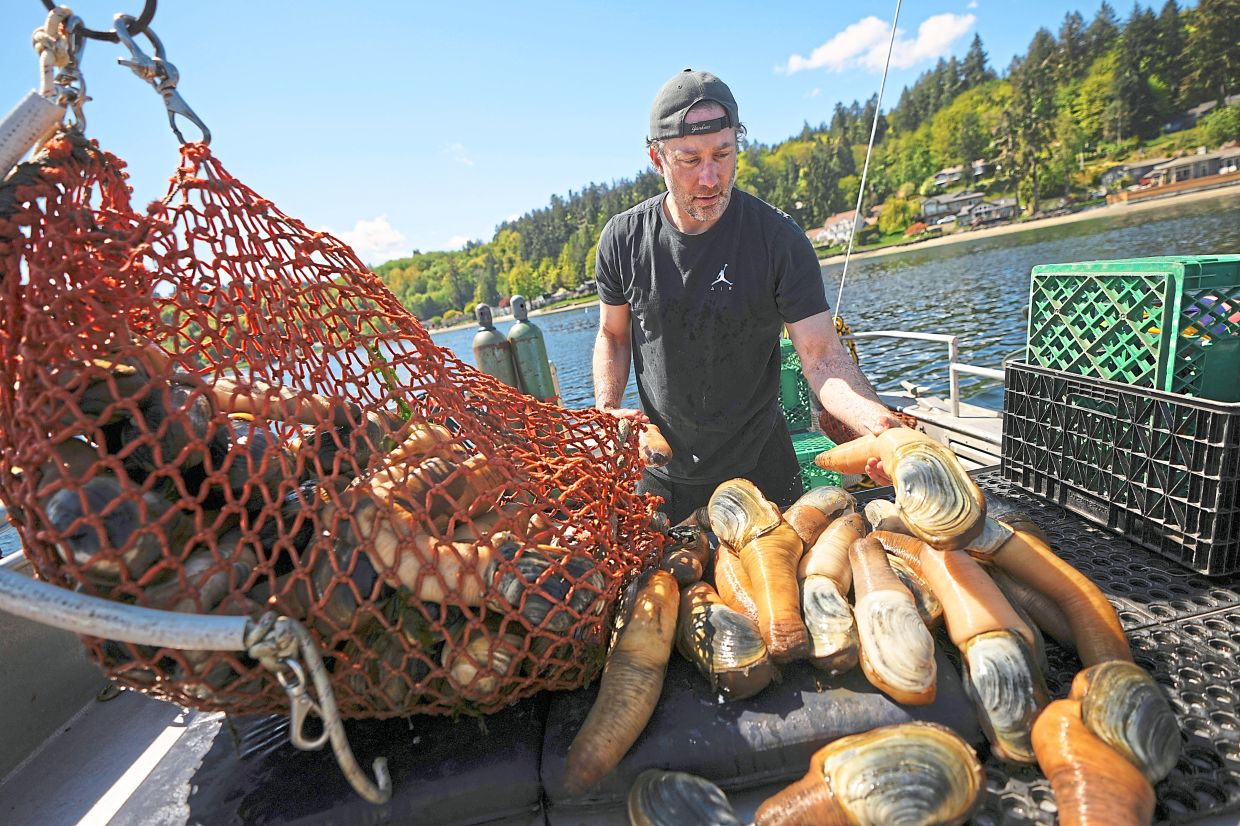
He donned a full-body diving outfit with an oxygen line tethered to his boat to dive under the cold waters of an inland sea channel west of Seattle.
Kneeled on the seafloor, McRae used a water spray gun to move the sand covering the geoducks. In the cloud of sediment, he felt for the neck with his hand, pulling the clam and stuffing it in a net attached to him.
“We’re just kind of waiting on the edge of our seats to see what happens next,” McRae said. — AP
