
THE Asean community celebrated with Vietnam as Ho Chi Minh City unveiled its first ever metro system last Sunday, nearly 17 years after the groundbreaking ceremony for Line 1 on Feb 21, 2008.
The rapid transit system is the first of such systems in Ho Chi Minh City, Vietnam’s most populous city, with the next line due to enter service in 2030 after work began in February 2024.
Further up north, capital city Hanoi is also on a metro-building drive, with plans for as many as eight lines. Hanoi’s first line, Line 2A, opened to service on Nov 6, 2021, while the first section of the second line, Line 3, opened on Aug 8, 2024.
The system will eventually consist of eight lines with a total length of 318km, with the initial passenger load expected to be around 200,000 passengers a day.
The ample investments earmarked for urban rail in Vietnam is a reflection of the growing acceptance that private vehicles is not the way to go when it comes to sustainability.
“At some point, city planners and policymakers will recognise, grudgingly or otherwise, that the right thing to do is to move people away from private vehicles and into shared modes such as trains and buses, with the last mile bridged by all forms of micromobility, including walking and cycling,” says transport consultant Goh Bok Yen, principal and founder of urban, land use, and transportation planning consultancy, MAG Technical & Develop-ment Consultants Sdn Bhd.
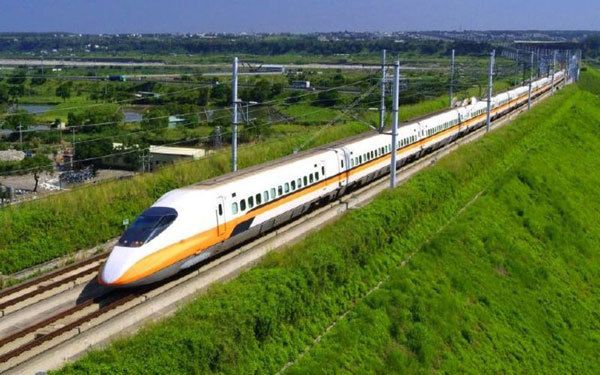
The government of Vietnam’s belief in rail extends also to intercity and long distance movements. On Nov 30, Vietnam’s National Assembly voted to proceed with its inaugural high-speed rail (HSR) project, a matter that has been under consideration for the past two decades.
According to the country’s state media reports, construction is expected to start in 2027, with hopes of running first trains by 2035, an ambitious goal by any standard.
The plan is for Vietnam’s inaugural HSR to facilitate rapid and sustainable socioeconomic development, along with supplying the obvious transport needs.
Starting from Hanoi in the north, the 1,541km twin-tracked railway will pass 20 provinces and cities before ending at Ho Chi Minh City in the south.
Designed to hit 350kph when conditions are optimal, the trains will call at up to 23 stations, with express trains stopping at fewer stations.
Limited-stop trains will bridge the distance between Hanoi and Ho Chi Minh City in just under six hours, a very competitive time compared with flying, which takes at least two hours excluding all the hassle of getting to the airport and checking in.
Expected to cost up to US$66.7bil (RM297bil), the line will also cater to cargo as its dual-track configuration will allow passenger trains to maintain their speed while ensuring cargo trains can still move relatively efficiently. Feasibility studies for this transformative project will begin in 2025.
The Hanoi to Ho Chi Minh corridor is currently served by a single metre-gauge (1,000mm between the two rails) track that requires trains to take up to 32 hours to cover the 1,726km between these two cities.
Like Japan and Indonesia, among others, Vietnam’s case illustrates the need to build a completely new line running on standard gauge (1,435mm), while retaining the old metre gauge network to provide backup capacity for sustainable growth over the long term.
Thailand’s moving apace too
Over in Thailand, much excitement has been generated this year by the commencement of direct trains from Thailand to Vientiane, the capital of Laos. While diesel trains currently chug faithfully along on metre-gauge tracks (similar to those operated by Malaysia’s KTM Bhd), construction of a HSR from Bangkok to Vientiane is ongoing, even if progress has been described as “slow” – as a Thai rail official admitted at an event in Kuala Lumpur earlier this year.
A recent survey by Sunday Star along the north-east corridor found that HSR construction sites for the North-East line are still active, with workers and machinery on the move to complete this huge piece of infrastructure that is based on standard gauge.
Connecting Bangkok with Vientiane means fast trains can operate out of Bangkok into China via Laos, and vice versa.
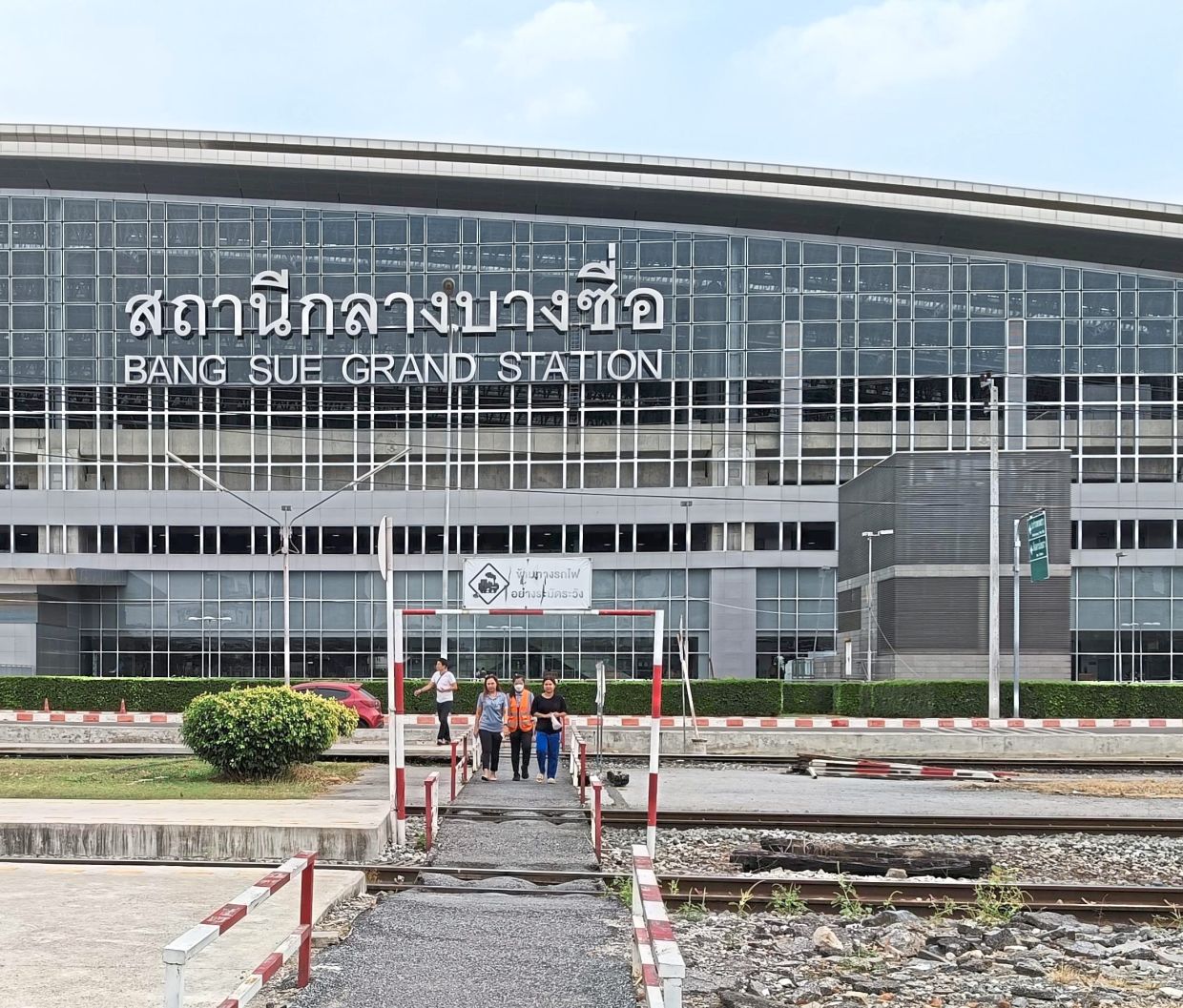
Thailand is envisioning having up to five HSR corridors eventually.
In October, the Thai government approved the Eastern HSR project that will connect its three airports, Suvarnabhumi and Don Mueang in Greater Bangkok, and U-Tapao near Pattaya.
The agreement with contractor Asia Era One, a subsidiary of Charoen Pokphand Group, should be signed anytime next month to allow construction to begin in the first quarter of 2025.
Estimated at US$8.3bil (RM37.3bil), this 220km-long rail line is a key component of Thailand’s tourism and economic growth, especially for its highly- touted Eastern Economic Corridor (EEC).
On its website, the EEC Office of Thailand says its vision is that “the completion of ready-to-implement regional development models helps to drive economic development and Thai society to the level of a developed country in accordance with the Thailand 4.0 policy”.
Indonesia’s extension plans
Since former Indonesian president Joko Widodo inaugurated the Jakarta-Bandung HSR on Oct 2, 2023, the US$7.3bil (RM32.63bil) project would have transported seven million passengers by the end of this year.
Nicknamed Whoosh, the line moved six million passengers when it marked its first year of operations. On Tuesday, the Karawang HSR station, one of the four stations on South-East Asia’s inaugural HSR line, was opened.
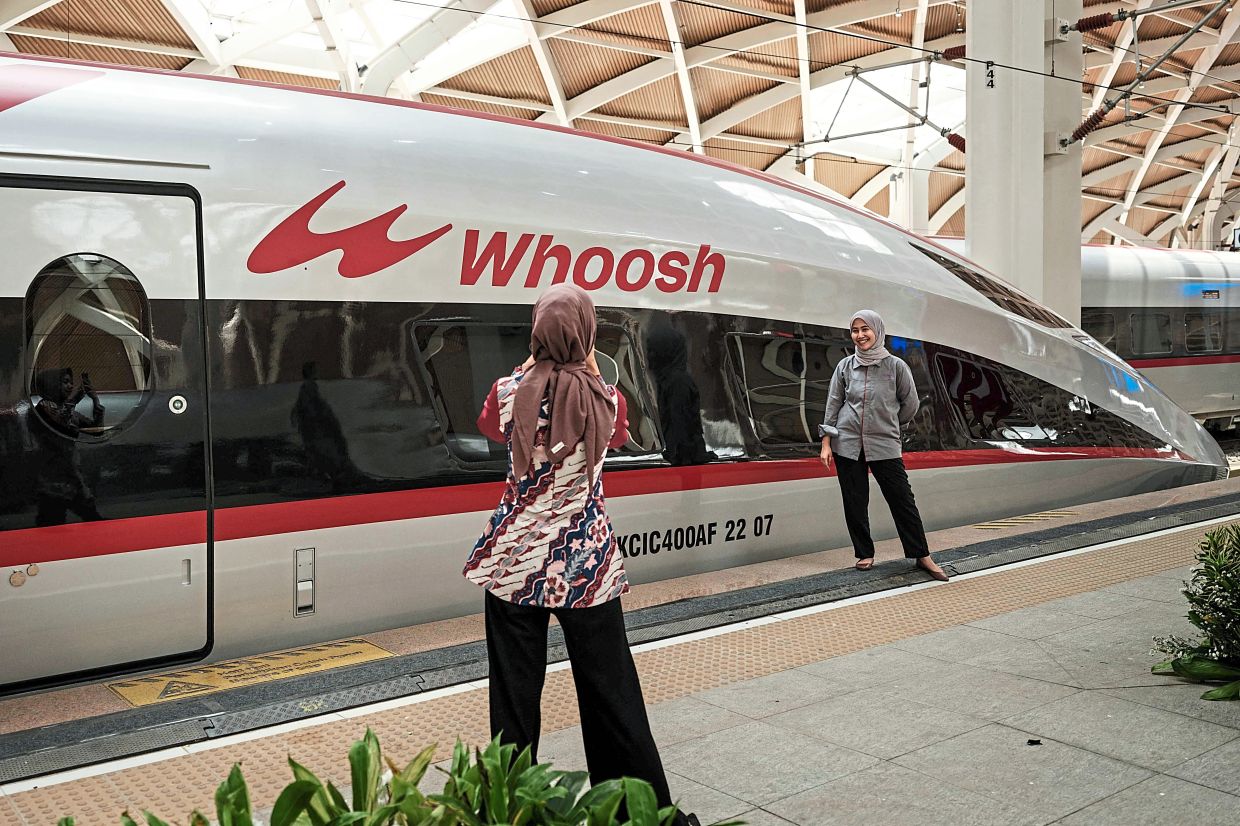
Indonesia is now working on extending the 143km line to Surabaya, another 587km away.
With the rolling stock hitting up to 350kph at some spots, the system has cut travel time between Jakarta and Bandung from over three hours using the diesel train to just 40 minutes.
No industry observer thinks that Indonesia will stop with just 143km of high speed tracks, as the best HSR has been shown to be very competitive against driving or flying, sometimes at distances beyond 1,000km.
Like Vietnam, the corridor from Jakarta to Surabaya via Bandung is already served by a 1,067mm gauge track for diesel passenger trains, which have to share tracks with cargo trains.
The fully electrified HSR running on a more optimised alignment will drastically cut down the journey time between Jakarta and Surabaya – 730km apart – and present a viable option to flying.
At the HSR Asia 2024 Confe-rence in Kuala Lumpur this year, an official from the company running Whoosh said with a smile that passengers have been complaining that “their coffee is still hot” when they have to disembark from the train.
What next for Malaysia?
The Kuala Lumpur-Singapore (KL-SG) HSR was initiated through the Economic Transformation Programme to move Malaysia from a low/medium income nation into a high-income nation by bridging two of Southeast Asia’s most vibrant and fast-growing economic engines.
In its original form, the KL-SG HSR has seven stations in Malaysia – Iskandar Malaysia, Batu Pahat, Muar, Ayer Keroh, Seremban, and Putrajaya, before terminating at Bandar Malaysia in Kuala Lumpur – while the lone Singapore station is at Jurong East.
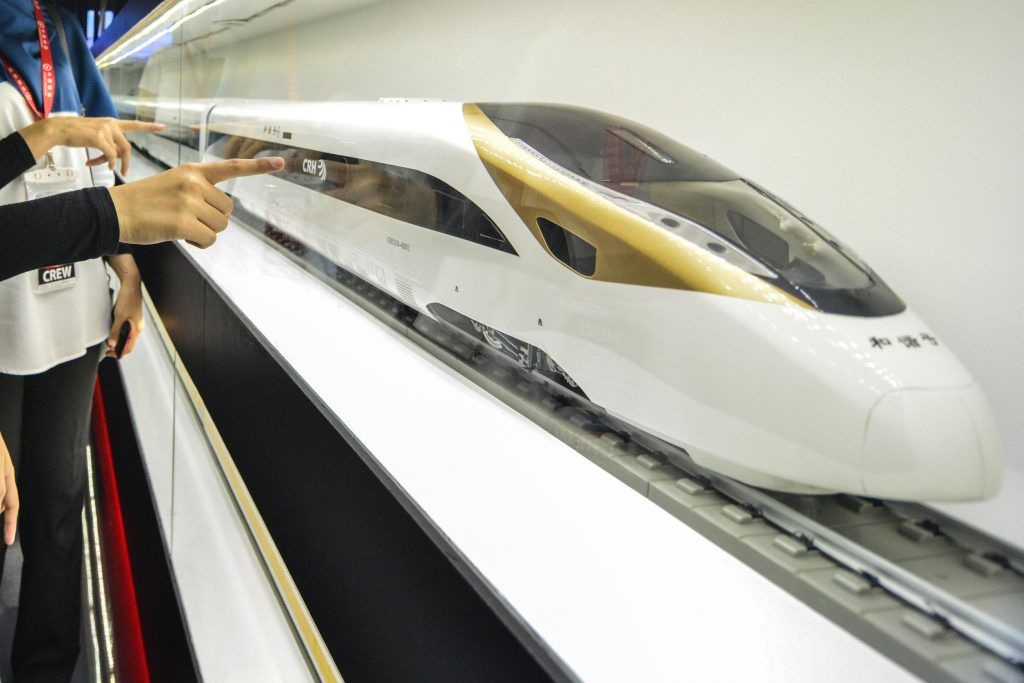
The same configuration that allows non-stop travel from Jurong East in Singapore to Kuala Lumpur’s Bandar Malaysia in 90 minutes will also allow a multiple-stop journey from Iskandar Malaysia, Johor, to Kuala Lumpur in just 120 minutes, or from Kuala Lumpur to Seremban and Alor Gajah in Melaka in just 20 and 40 minutes, respectively.
As for KTMB’s ongoing Gemas to Johor Baru double tracking project that is based on the metre gauge, ETS trains still need at least four hours to bridge the distance between JB Sentral and KL Sentral. This track also needs to be shared with cargo trains, Komuter services, as well as the intercity service to the east coast, thus restricting operating speeds and flexibility.
There are also concerns whether the government can procure enough ETS train sets in time to provide a satisfactory frequency of service for this line that is expected to be fully open by the end of 2025. Even then, this 192km-long KTMB alignment bypasses growth areas in the south such as Muar, Batu Pahat, Iskandar Malaysia, and Ayer Keroh.
Right now, attention is on the signing of the Johor-Singapore Special Economic Zone (JS-SEZ)agreement next month at the 11th Singapore-Malaysia Leaders’ Retreat, where significant announcements are expected on the progress of JS-SEZ that is envisioned as an integrated business and commerce zone.
Those in the business of regional development recognise that a modern rail network goes hand-in-hand with facilitating sustainable development. Also, the recent spate of bus and heavy vehicle accidents in Malaysia are prompting calls for more passenger and cargo movements to go on rail rather than on the already congested roads.
“Infrastructure must keep up with the times as the world moves forward in search of low-carbon solutions, especially with so much focus now on the ESG components of new developments,” says Goh, referring to the environmental, social, and governance framework.
He adds that Malaysia’s quest for its inaugural HSR network fits right in with the equation to spread growth beyond the Klang Valley.
“It is envisaged that HSR will catalyse the emerging conurbation stretching from Kuala Lumpur to Negri Sembilan to Melaka to Johor and Singapore in ways that are not possible through other modes of transport. Viewed from this perspective, this HSR project is so much more than just a mere mode of transport,” he says.