AS a child in the early years after Eritrea’s independence, Filmon Debru longed for the annual festivities celebrating the country’s newfound statehood, and the heroes who fought and died for it.
Parties, music and dancing lasted the entire month to commemorate Eritrea’s liberation from Ethiopian rule in May 1991, and its overwhelming support for independence in a UN-backed referendum two years later.
“There was true happiness... Everything seemed to be pointing upwards,” said the 37-year-old, who remembered “euphoria” as he sat on the shoulders of adults watching colourful parades roll by.
But he is no longer cheering as Eritrea marked its independence, which was formally declared on May 24, 1993.
The hope and possibility Filmon felt for his young country are gone, crushed by a regime so totalitarian and repressive that Eritrea is widely called “the North Korea of Africa”.
In the small and secretive one-party state, critics disappear into gulags and civilians are conscripted for life or forced into labour under an extreme policy of national service that has been likened to slavery. Elections have never been held and it has no free press, political opposition, or civil society.
A global pariah, the Red Sea nation has been sanctioned for meddling in regional conflicts, including most recently over abuses by its army in the Tigray war in Ethiopia. Hundreds of thousands of Eritreans desperate for jobs and freedom have fled the tiny country, including Filmon, who risked his life to leave behind the homeland he once so proudly loved.
“Honestly, what would I be celebrating?” said the software developer, who nearly lost both hands after being chained and tortured by people smugglers in the Sinai Peninsula.
He has lived in Germany since 2014.
“What kind of independence celebration would it be?”
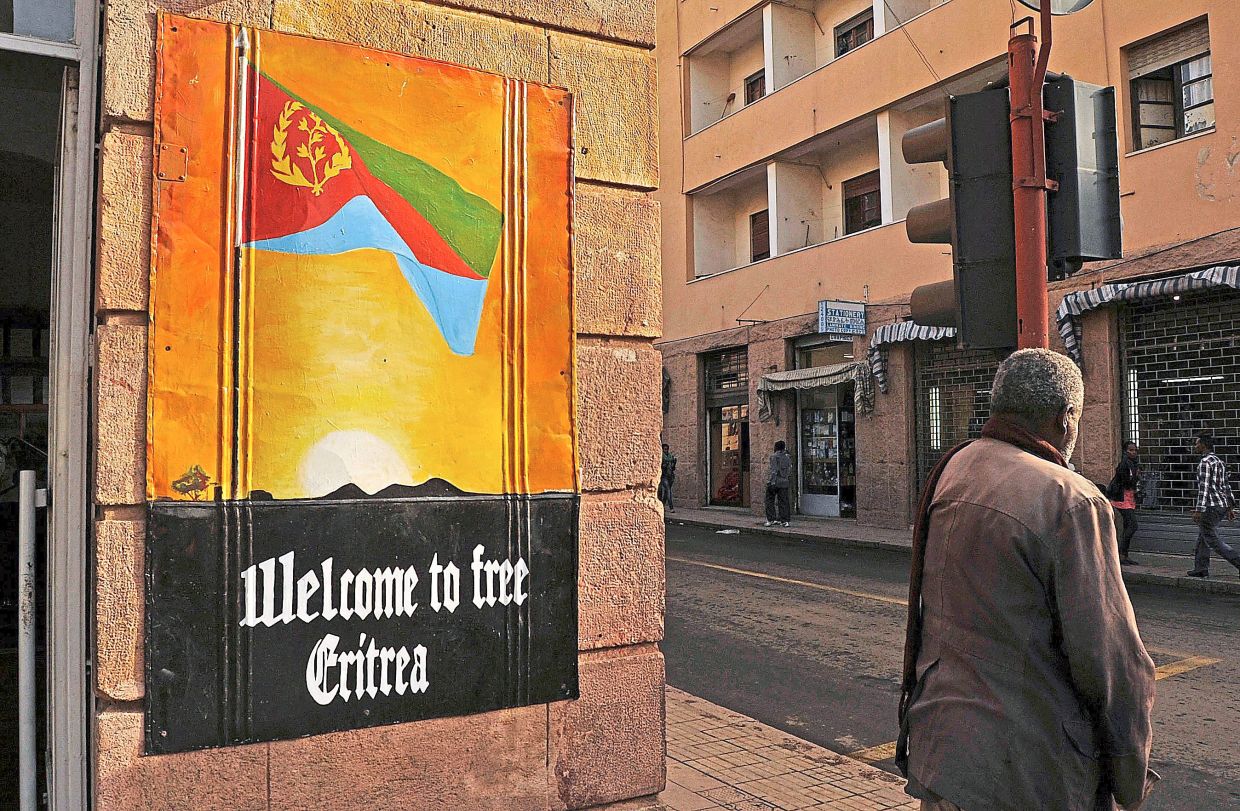
In Eritrea, public commemorations were well under way, with school children in colourful regalia singing patriotic songs along this year’s theme, “Heroic Feat Anchored on Cohesive Ranks”.
An “independence cup” had criss-crossed the nation, collecting “sacred soil” from the sites of legendary battles in Eritrea’s decades-long struggle against its much larger neighbour.
Propaganda aired on state-run Eri-TV throughout May hailed Eritrea’s freedom fighters but erased the heroism of independence icons who later criticised the regime, said Meron Estefanos, a Swedish-Eritrean journalist and activist.
Like many Eritreans, she lost family in the liberation war, and the exploitation of their sacrifice angers her year after year.
“What would they have said?” Meron said of her four uncles who died during Eritrea’s fight for self-rule. “This is what they paid their life for?”
Isaias Afwerki, who led the rebels to victory, became president after independence until elections could be held under a new constitution.
The early years were full of promise.
Parents named their newborns Netsanet (Freedom), Awet (Victory) and Selam (Peace), freedom fighters were mobbed in the street with flowers and kisses, and media flourished. But it was short-lived.
In 1998, Eritrea and Ethiopia began a war over a nondescript border town that lasted two years, ended in stalemate, and cost tens of thousands of lives.
Meron said it was the children of independence fighters – the generation upon whom Eritrea’s future was pinned – sent to die on the front.
“They danced for independence then... They were martyred for a meaningless war,” said Meron, whose younger brother was conscripted.
Any hope for democracy was extinguished in a brutal purge of the political opposition in 2001 that cemented Eritrea’s reputation as one of the world’s most draconian states, and Isaias its ruthless dictator. Private media was banned and Eritrea still sits near the bottom of global rankings for press freedom, as well as human rights, civil liberties and economic development.
Vanessa Tsehaye’s uncle, a respected journalist, disappeared in the 2001 crackdown.
But the 26-year-old activist said independence day was a chance to honour him and others who dreamed of a free Eritrea “by continuing the work they started and gave up so much for”.
“Independence day for me is a call to action,” said the Swedish-born campaigner, who founded One Day Seyoum, a rights movement named after her uncle.
Habte Hagos, who has spent most of his adult life outside Eritrea, said many in the diaspora “dream day and night of returning” and independence day was a painful reminder of the lost years.
But he said attitudes were hardening, particularly as young Eritreans continued to suffer like their forebears as refugees or foot soldiers in wars like Tigray.
“We’ve had more than 60 years of misery,” said Habte, who founded the respected advocacy group Eritrea Focus in 2014.
“Eritreans have had enough.” — AFP
Already a subscriber? Log in
Get 20% OFF The Star Digital Access
Cancel anytime. Ad-free. Unlimited access with perks.