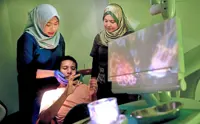
If you love science and have a flair for the arts but do not know which to choose, consider dentistry. After all, dentistry combines the science of healing with the art of aesthetics.
If a tooth has to be extracted, dentists will attempt to restore a patient’s smile using suitable materials, making it look and function as closely as possible to natural teeth.
Dental schools
There are currently 14 dental schools in Malaysia, six of which are in public universities, namely, Universiti Malaya (UM), Universiti Kebangsaan Malaysia (UKM), Universiti Sains Malaysia (USM), Universiti Teknologi Mara, International Islamic University Malaysia and Universiti Sains Islam Malaysia.
The three oldest dental faculties are in UM (established in 1972), UKM (1996) and USM (1997).
For public universities, undergraduate intakes are through UPU (University Admissions Unit) applications and are open only to Malaysians.
Interested students may also apply directly to private institutions. Each private faculty has its own setup, so you will have to do your homework.
What it takes
You need a cumulative grade point average of at least 3.5 in your Sijil Pelajaran Malaysia, Higher School Certificate or its equivalent.
On top of that, students must excel in Mathematics, Chemistry, Physics and/or Biology, depending on the criteria set by the Malaysian Dental Council (MDC) and the respective dental schools.
Entry into the programme is highly competitive regardless of whether it is a public or private dental school. Thus, your co-curricular involvement, leadership qualities and language competencies (Bahasa Malaysia and English) matter greatly.
Once accepted into a dentistry programme, you must pass all examinations covering theory, laboratory practical sessions, community and fieldwork experience, as well as clinical competency assessments.
These form the five-year local curriculum, which is monitored by the Malaysian Qualification Agency (MQA).
While the course content is somewhat the same across institutions, individual schools are allowed to adopt their own learning and teaching approaches, so long as they comply with standards set by the MDC and the MQA.
Dental education programmes usually comprise pre-clinical (four to five semesters) and clinical (not less than six semesters) phases. Students must pass the first phase before progressing to hands-on clinical training.
Treatment of real patients only begins in Year Three. Upon graduation, dental graduates join the Health Ministry as dental officers to complete a one-year compulsory service.
Malaysia is stringent in ensuring that only responsible dental professionals are allowed to practise.
Regardless of whether they work with the government or in the private sector, all graduates from recognised institutions must register with the MDC for a practising certificate, which is renewable annually.
This certificate is a passport for legal practice in the country. As the penalty for illegal practice is severe, aspiring dentists must check the MDC website before signing up for a dental programme.
What you will learn
Contrary to popular belief, dentistry is not only about treating teeth.
Dentists deal with the whole mouth, including the jaw, palate, soft tissues, tongue and parts of the skeletal head.
Externally, it involves treating the patient from below the eyes right down to the chin. There is also the need to understand a patient’s overall health condition.
As the mouth and the face are part of the human body, it is important for dental students to learn one part medicine and three parts dental science.
Hence, students learn alongside their medical peers in the first one to one-and-a-half years of the programme and apply relevant medical knowledge during the clinical phase.
Dental students must understand the characteristics of the many instruments and materials used, and how they function.
Most important is learning about social behaviour, as well as environmental and psychological aspects of human character. This is to prepare them to face their patients.
Job prospects
Being a dentist does not mean you are tied to the dental chair alone – the prospects are endless.
Graduates can specialise in areas like public dental health, orthodontics, endodontics, peadiatrics, periodontics, prosthodontics, and forensic dentistry.
You can also work in universities, research centres, industry, the armed forces, or even open your own private practice.
Dentistry is challenging, full of surprises and adventure. To be successful, you’ll need hard work and the right attitude.
PROF DR RAHIMAH ABDUL KADIR
Former dean
Faculty of Dentistry, UM
Prof Rahimah, currently the Asian Academy of Preventive Dentistry president, has 48 years of experience in dental education.