Cleaning up Malaysia


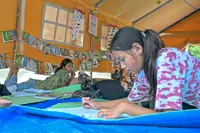
Community spirit: Janani taking part in her neighbourhood’s plogging activity.

Teens weigh in on new community service order, taking effect Jan 1

MALAYSIA’S new community service order is a strong start, but true impact lies in shaping habits, strengthening values and making cleanliness part of daily life, say three participants of the BRATs Young Journalist Programme run by The Star’s Newspaper-in-Education (Star-NiE) team.

On Sept 8, the Dewan Negara approved amendments to the Solid Waste Management and Public Cleansing Bill 2025, allowing courts to impose community service orders in addition to fines for littering offences in public spaces. The measure takes effect on Jan 1 next year.

Read on for the teens’ perspectives. For updates on the BRATs programme, visit facebook.com/niebrats.

Culture of care

ALLOWING courts to impose public service such as cleaning drains or washing public toilets, in addition to fines, represents a crucial shift away from transactional justice.

VinithaVinithaFines alone have proven ineffective; they are merely a cost of convenience that fails to connect the offender to the damage done.

The community service order, however, forces that connection. By requiring offenders to wear a distinctive vest and physically confront the mess they or others have created, the punishment becomes experiential.

It aims not merely to punish, but to educate, instil remorse and foster a sense of care for our environment in small ways, like cleaning up after oneself.

This order helps steer offenders in the right direction by playing upon two powerful psychological tools: exposure and social deterrence.

Exposure forces the litterbug to walk a mile in the shoes of a sanitation worker, creating empathy where none existed before.

Social deterrence, sometimes called “shaming”, taps into the deep Malaysian cultural value of maruah (dignity or reputation).

Forcing an offender to perform visible, corrective work in public makes littering socially costly, acting as a much stronger deterrent than a simple, private fine.

For this corrective measure to work, however, consistent and visible enforcement is key, proving that the law is not just a threat but a genuine consequence.

But to truly make cleanliness a part of Malaysian culture, the initiative must move beyond punishment and embed itself within our social fabric. I suggest a three-pronged approach:

> Systemic education and practice

Cleanliness must be integrated into the school curriculum not just theoretically, but practically.

Instituting daily, mandatory cleaning duties – similar to practices in countries like Japan, where students clean their own classrooms and toilets – teaches ownership and shared responsibility from a young age.

This establishes the norm that taking care of one’s shared space is as crucial as academic success.

> Infrastructure of convenience

The government must invest heavily in making it easier not to litter than to litter. This means increasing the number of attractive, well-maintained public bins, providing clear segregation facilities for recycling, and setting higher standards for the cleanliness of public facilities like rest stop toilets.

When public spaces are already clean and well-equipped, the moral barrier to littering becomes significantly higher.

> Reviving gotong-royong as a daily ethic

The spirit of communal cooperation should be actively revived as a spontaneous, daily ethic rather than an occasional event.

Public campaigns should empower gentle peer-to-peer correction, such as offering a tissue to someone who drops trash, making it socially acceptable to protect public cleanliness and shifting responsibility from only local authorities to all citizens.

Ultimately, cleanliness is not just a law, but also a lifestyle.

The new community service order provides the necessary enforcement foundation, but lasting cultural change will depend on cultivating an internal commitment. — By VINITHA PUTTAGUNTA, 15

From action to second nature

MALAYSIA’S introduction of the community service order for litterbugs is a crucial step towards fostering a sense of environmental consciousness within society.

Rather than relying solely on fines to tackle the issue, this initiative allows offenders to own up to their mistakes and contribute to the community. 

It also addresses inconsiderate individuals, such as those in my own housing estate who thoughtlessly toss their trash around, expecting others, particularly the dedicated group that goes plogging every week, to clean up after them.

By placing responsibility back on the offenders through community service, this measure directly challenges that sense of entitlement and encourages accountability within the community.

However, for this initiative to have a lasting impact, Malaysians must cultivate a broader culture of cleanliness and sustainability.

Environmental education, for instance, should be more heavily integrated into our school system.

As students, we learn about human impact on the environment in subjects such as Geography and Moral Studies, but more hands-on activities that promote cleanliness outside the classroom would be far more effective.

Most schools, like mine, host an annual gotong-royong to clean the school compound, but this programme is voluntary, making it rather ineffective. Many students choose not to participate, but a more rewarding, credit-based system could encourage greater involvement.

Integrating practical environmental activities into students’ daily lives would instil a sense of habit, familiarising young people with environmental stewardship from an early age.

To make cleanliness a social convention, we could treat picking up trash as a symbol of respect and civility, just like holding doors open for others or saying “please” and “thank you”.

In fact, this is already being practised by some in our communities. For example, in my residential area, a lady brings her two young grandchildren, aged three and five, to plogging sessions.

They wake up early, excited and eager, because the activity brings them joy. Picking up trash has become a positive, shared experience for them, showing that the value of cleanliness can be instilled from a young age. 

By normalising this small act in our lives, it would become second nature. Over time, people will come to view littering not only as an environmental issue, but also as a sign of poor manners.

Schools, workplaces and public spaces could encourage this by subtly reinforcing the idea that cleanliness is part of being a responsible, respectful member of society.

When it becomes woven into our cultural fabric, cleanliness will no longer be about rules or laws, but simply something we do to protect the environment we call home.

In doing so, it will become part of our identity, an essential trait that defines us as Malaysians. — By JANANI JSUDASS, 15


Change of heart

TO make cleanliness part of Malaysia’s culture, starting small can make a big difference.

Parents and teachers can lead by example, showing that keeping our environment clean is everyone’s responsibility.

EvangeleneEvangeleneSchools could also organise mini gotong-royong sessions to help students understand the impact of their actions.

Even small habits, like picking up litter instead of ignoring it, can create long-term change.

The new community service order for litterbugs is also a meaningful initiative. Instead of being punished solely with fines, offenders will serve the community and see the effort it takes to keep our surroundings clean.

When someone picks up trash or sweeps a public area, they begin to realise how their actions affect others, and that realisation can inspire genuine change.

Still, I hope this initiative will encourage compassion rather than resentment, because community service should come from the heart, not obligation.

My own experience with community service has taught me that it can change one in unexpected ways. It teaches patience, empathy, and the importance of working together.

In 2019, when I was 11, there was a major water disruption in my hometown of Melaka due to low water levels in dams and retention ponds.

Many neighbourhoods were affected, including mine. Fortunately, we had water stored at home, though we had to use it wisely.

One day, my mother brought me along to help at The Salvation Army, a non-governmental organisation that was distributing water to apartment complexes affected by the crisis.

We helped to load a small lorry with bottles of water. We were told that a few low-cost flats nearby were in urgent need of clean water. Some of the residents were senior citizens who couldn’t come downstairs.

It was tiring work, especially for someone my age, to deliver the bottles directly to the elderly residents, but the smiles I received made every trip up and down the stairs feel worthwhile.

That experience taught me more than any classroom lesson. Helping others isn’t about doing something big; it’s about showing care and understanding.

Looking back, I’m thankful my mum brought me along, even though I was reluctant at first. It opened my eyes, showing me the power of community spirit – a perspective I hope those assigned to community service for litte­­ring will gain as well. — By EVANGELENE TEOH, 17

With the theme of the article in mind, carry out the following English language activities.

1 As a class, create a short story from the perspective of a litterbug doing community service.

Take turns adding one sentence each until the story is complete, focusing on the character’s emotions, lessons learnt, and change in attitude.

2 List your own habits for maintaining cleanliness.

As each student shares theirs, add them to a class list.

Once complete, pin the list on the classroom noticeboard.

The Star’s Newspaper-in-Education (Star-NiE) programme promotes English language learning in primary and secondary schools nationwide. For Star-NiE enquiries, email starnie@thestar.com.my.

Follow us on our official WhatsApp channel for breaking news alerts and key updates!

Next In Education

Education Ministry abolishes its Training Management System to lighten teachers' workload
Mental health gap in schools
Academic: School safety a joint effort
NARROWING GAPS
Lexel campus to open in Gamuda Cove�
Looking forward to retirement?
Chan: Pupils must have say in safety policy
Dong Zong:�UEC recognition maintains Malay language status
Kasih Kanak-Kanak reaches 566 schools�
Asia rising�

Others Also Read