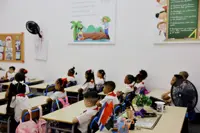
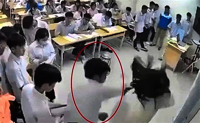
Early this year, a teacher was investigated for telling her student to “go back to China” because the latter did not understand Bahasa Malaysia. And just last month, two others were brought to court for caning their charges.
Once deemed a noble profession, teaching is now facing intense public scrutiny, often fueled by social media, where isolated incidents are amplified.
The erosion of professional esteem among educators, said Assistant Prof Dr Zaida Mustafa, who heads the education department at UCSI University’s Faculty of Social Sciences and Liberal Arts, is a significant and central reason why teaching is losing its lustre.
“Teachers in Malaysia used to be held in high regard by the community.
“Today, the perception among top-tier graduates is that the challenges, which include dealing with difficult parents, far outweigh the rewards,” she said, adding that this has led to the diminishing appeal of the teaching profession.
This is compounded by the heavy administrative workload which makes the profession look less like a respected academic career and more like a demanding clerical job, she added.
“Teachers also feel they have less professional autonomy and authority in the classroom due to rigid curriculum requirements and increased interference from parents and sometimes, even politicians,” she said.
She blames social media for making things worse.
“Every interaction, conflict, or mistake is amplified when it is recorded and shared on social media.
“Judgement is immediate, creating a narrative of teacher misconduct or a lack of professionalism, even if the incident is isolated,” she said, adding that with such content flooding their online feed, students feel empowered by the knowledge that they have the power to challenge authority by simply making a clip go viral.
This, she said, causes the power dynamic between student and teacher to shift.
Attitudes have also changed with modern parents often viewing education as a service they are entitled to, rather than something that are jointly responsible for.
“They see themselves as the client so they are quick to challenge and criticise the ‘service provider’ (the teacher).
“Additionally, the pressure to score in exams can reduce the teacher-student relationship to a transactional one (“I teach, you pass”), rather than a mentorship built on trust and mutual respect,” she said.
Adding on, Universiti Sains Malaysia School of Educational Studies Professor in Curriculum Studies and Education Policy Dr Hazri Jamil said this situation is unlike countries such as Japan, Finland, South Korea and China where teachers are still held in high regard.
“In Japan, for example, teachers are regarded as nation-builders; cultural norms emphasise respect for educators.
“And in South Korea, teachers enjoy high social status and structured career progression,” he shared.
He said in today’s world, societal emphasis on high-paying careers and rapid advancement has overshadowed a teacher’s value.
“When remuneration and career progression do not match the level of responsibility, talented individuals may opt for other fields,” he added.
National Union of Teaching Profession of Malaysia secretary-general Fouzi Singon said nowadays, teachers face stricter professional regulations and shifting social expectations as compared to their predecessors.
In the past, teachers were among the few academically educated individuals, especially in rural areas, and they often worked in the public sector, he said.
“As a result, they were highly respected and regarded as key drivers of social progress.
“However, in contemporary society, education has become more accessible, and many individuals — even in villages — now hold academic qualifications,” he said, lamenting
how the leadership role of teachers in society has since diminished.
In addition, teachers today face greater constraints as their authority, as well as disciplinary and motivational methods are now curtailed by legal, ethical, and societal norms.
What was acceptable before is no longer so today. Any perceived violation of regulations, circulars and directives can result in disciplinary action, he said.
Corporal punishment, for instance, can only be carried out by headmasters or designated teachers. Even then, there are strict guidelines, he added.
“If caning is done by those not authorised to do so, or if the use of force is excessive, teachers risk being sued by unhappy parents.
“In the past, a teacher’s pat on a student’s shoulder could be seen as a gesture of encouragement or appreciation, but today it may be misconstrued as an act of sexual harassment—especially when involving the opposite sex.
“Similarly, while teachers once kept students back after school for extra guidance,
such practices are now often met with complaints from
parents who view these sessions as an encroachment of their child’s personal time,” said Fouzi.
Universiti Malaya Faculty of Education Department of Language and Literacy Education head Dr Shanina Sharatol Ahmad Shah, however, believes that society still holds the teaching profession in high regard.
It’s the disproportionate attention given to negative stories involving teachers or schools that is creating the perception of the noble profession losing its shine.
Isolated incidents that go viral on social media often overshadow the good work teachers do daily.
“Students nowadays are also more aware of their rights, more vocal about their needs, and have multiple platforms to express their dissatisfaction and concerns.
“Thus, traditional approaches to discipline where authority was rarely questioned, are no longer effective nor appropriate.
“Modern education requires a more balanced approach; one that encourages students to think critically, express themselves, and participate actively, while being mutually responsible for their learning and respectful of boundaries,” said Shanina Sharatol.
Helicopter parenting
Then there are the helicopter parents to contend with. These parents “hover” over teachers, monitoring, questioning and even intervening on actions the teachers take on their children.
Malaysian Mental Health Association (MMHA) president and consultant psychiatrist Datuk Dr Andrew Mohanraj said helicopter parenting is becoming increasingly visible in Malaysia, particularly among urban, middle-class families.
“As academic competition intensifies and parents worry about their children’s future in an unpredictable economic environment, many unintentionally adopt an overprotective, overly involved style of parenting,” he said.
He added that this type of parenting can have unintended negative effects, including creating high anxiety in children as they may feel unable to cope without their parents’ help.
“When problems are solved for them, they struggle to handle setbacks and stress later in life.
“They may internalise the belief that they are not capable and may find difficulty in transitioning to adulthood,” he said.
Additionally, Mohanraj said parents need to respect the role of teachers in their methods of providing education which includes disciplining their child.
“Understanding the role of teachers and their own roles as parents, and maintaining boundaries, is key to raising well-developed children into confident, productive adults,” he said.
Shanina Sharatol added that parents should give teachers space to carry out their duties, including disciplining students within reason.
“While parents remain responsible for guiding their children, over-involvement or helicopter parenting would prevent children from learning self-discipline and taking responsibility for their actions.
Trusting teachers and allowing children to face the natural consequences of their behaviour helps them grow into responsible, independent individuals,” she said.
Zaida said schools should implement mandatory, structured sessions (like orientation or workshops) for parents at the start of the school year.
“These sessions must clearly define the roles and boundaries of the teacher and the parent, re-establishing the relationship as a respectful partnership, not a client-service dynamic,” she concluded.
I have had parents question me on why I gave their child an ‘average mark’ for the Academic Session Final Test (UASA), insisting that the student deserves a higher score and that I was biased. This was despite me explaining that their child failed to answer all the questions in the test. They treated me as if I did not know how to do my job. Dealing with such parents is very stressful. I have to turn off my phone when I am home with my family because they will not stop texting me.
Year Five teacher, Cheras
It is easier to get students, rather than their overzealous parents, to understand school rules. These regulations are set by the Education Ministry for a good reason. For example, some parents get worked up and lash out at teachers when their child is late for class. As adults they have to show respect when dealing with teachers. They need to trust us.
A secondary school discipline teacher, Subang Jaya
*The teachers spoke on condition of anonymity.