Beyond algorithms and apps, young innovators are demonstrating once again that meaningful technology begins with empathy.

Philippines took home the top prize with their project,
AidTrack, at the recent Bett Asia Schools Challenge 2025. The team, comprising Aldyne Ronquillo, 22, Sean Austine Simon, 22, John Mark Salas, 21, and Julianna Inah Culala, 21, developed an artificial intelligence
(AI)-powered system designed to make disaster relief distribution more transparent and efficient.
“Honestly, we still can’t believe that we actually won. “We thought that just being able to present our project was already an honour for our university.
But winning – it’s a completely different feeling, a whole new level of happiness,”
Ronquillo told StarEdu. Recognising the recurring issues of delays, mismanagement and lack of transparency in relief efforts, the team sought to bridge those gaps through technology.
What began as a university thesis has now grown into a promising real-world initiative. “AidTrack automates the distribution of relief using QR codes and AI. It helps local leaders automate and track relief operations in real time, ensuring that aid reaches affected communities faster and more fairly,” Simon explained.
Their motivation stems from the realities they witness at home as the Philippines is among the most disaster-prone countries in the world.
“When disasters strike, some people are left vulnerable. Their only way of surviving is through relief – and that’s what we’re trying to solve.
“We started the project in June, and it’s still ongoing. Right now, we’re gathering data, testing the system’s effectiveness and identifying any issues,” said Ronquillo.
Growing hope through smart farming
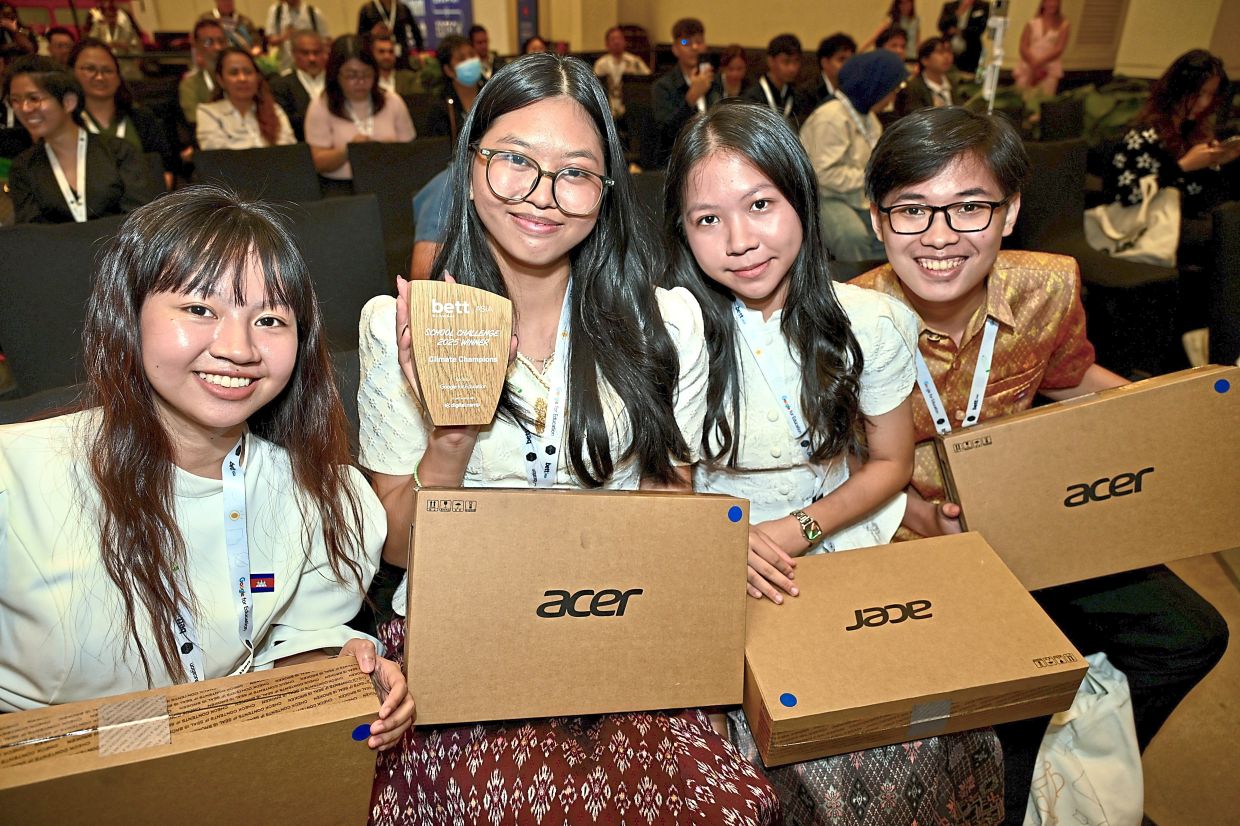
Meanwhile, in the K12 category, Team Conqueror from CAMASeAn Foreign Language School in Cambodia captured judges’ attention with their project,Agrio. The team, comprising 17-yearolds yave Reaksmeyniza, Hut
Meiling and Hut Haysin, created an AI-powered app designed to empower farmers and reduce post-harvest losses caused by shifting weather patterns.
“When we heard our (team) name being called, we tried to look calm but we were really excited. We had put so much effort into this project and faced many challenges, but we worked together, solved every problem, and delivered a strong presentation,” Reaksmeyniza said.
Meiling shared that the project was inspired by the struggles of farmers who often lose crops due to climate change and unpredictable weather. Agrio, she said, was created to help farmers plan better and reduce food waste.
Using AI and real-time weather data, Agrio offers crop care tips and customised planting schedules based on farmers’ locations and crop types. It also features a built-in marketplace that connects farmers directly with buyers and donation centres, promoting both sustainability and community support.
The journey to develop Agrio, said Reaksmeyniza, was far from easy. “Coding our project was really difficult. We didn’t know how to code at first, so we had to review everything over and over again until it worked,” she shared. despite the challenges, the experience has ignited a shared passion for innovation.
“In the future, we hope to make our idea into a reality. “Since some of us are majoring in computer science and software engineering, we really see a future for this app,” said Meiling.
The Bett Asia Schools Challenge 2025 was a competition that empowered students aged 13 and above across Asia to create technology-driven solutions addressing climate change and sustainability. Held on Oct 2, the live final presentation was evaluated by a distinguished panel of judges, including South-East Asian Ministers of Education Organisation (SEAMEO) Secretariat director Datuk Dr Habibah Abdul Rahim, UNICEF education specialist and lead Azlina Kamal, Digital Camp founder and chief executive officer Elena Branet, and Google for Education Asia Pacific Marketing head Stuart Miller. This year’s competition drew 170 submissions from schools and universities across 10 countries, including Brunei, Cambodia, Indonesia, Laos, Malaysia, Myanmar, the Philippines, Singapore, Thailand and Vietnam. Only six teams – three from the K12 category and three from the HE category – advanced to the finals in Kuala Lumpur, where they pitched their innovations to the judges.