Science is so much more than equations and theories; it carries wonder, and curiosity is the key that unlocks it.
This, said University of Oxford Savilian Prof of Astronomy Steven A. Balbus, is why cultivating curiosity from an early age is not just about training future scientists, but also about shaping minds that understand how the world works and why ideas matter.
“To people who are not exposed to it, having someone in front of them who’s knowledgeable about how things work and is able to demystify all the things that influence our lives is incredibly important.
“There’s a science side and there’s a technical side, but there’s also a philosophy behind understanding the power of logical and critical thinking,” he told StarEdu at the recent Hong Kong Laureate Forum (HKLF) 2025.
Science, he said, is not merely the pursuit of knowledge, but the art of connecting ideas.
“Ideas aren’t just a list of things you learn through homework.
“You bring ideas together and then another idea comes out that wouldn’t have been possible.
“That’s what gives rise to all the richness we see, from medicine to transportation to machines that take us to the moon,” he said, adding that science, technology, engineering, and mathematics (STEM) education is a gateway to empowerment.
“To understand the power of science and for kids at a very early age to pick that up, that’s incredibly important,” he stressed.
Prof Balbus was jointly awarded the Shaw Prize in Astronomy with John F. Hawley in 2013 for their discovery and study of the magnetorotational instability, and for demonstrating that this instability leads to turbulence and is a viable mechanism for angular momentum transport in astrophysical accretion disks.
The Shaw Prize is a set of three annual awards presented by the Shaw Prize Foundation in the fields of astronomy, medicine and life sciences, and mathematical sciences. It was established in 2002 in Hong Kong by Hong Kong entertainment mogul and philanthropist Run Run Shaw.
Inspiring discovery
Prof Balbus recalled how his own fascination with astronomy began not with stars, but with geometry.
“When I had my first geometry class, I didn’t have a concept of what a mathematical proof was.
“But my teacher was remarkable; he taught not just what was in the book, but also what the mathematical process meant,” he said, adding that the early sense of discovery – the moment when thinking itself becomes an adventure – is what should be nurtured in students.
“You need both the power of curiosity and rigorous thought,” he noted.
When asked how countries like Malaysia can ignite interest in astronomy among students, Prof Balbus said the fascination with the cosmos is universal, but it needs to be channelled effectively.
“Astronomy has never been more popular than it is now because people really love the planets and the idea of life beyond Earth. And, they’re intrigued by black holes!” he said.
These natural fascinations, he added, can become powerful entry points for teachers to leverage.
“If you could blend those things together – planets and the mystery of black holes – and use them to show how astronomy helps us ask questions about life and the universe, it can captivate bright kids,” he said.
Prof Balbus, however, stressed that nurturing curiosity requires an educational culture that allows exploration.
“There has to be a cultural shift allowing young children to pursue the things they really want, even if it’s not obvious at the start how it’s going to work out,” he said, adding that allowing them to follow their genuine interests will naturally lead to positive outcomes.
When young minds are allowed to explore boldly, he suggested, the next great discovery may not be far away.
Exploring the unknown
But curiosity, Prof Balbus emphasised, must be balanced with discipline.
“It’s valuable to let students explore questions without immediate answers, provided it’s not done sloppily,” he said.
He cited examples from the study of black holes, where scientists still grapple with theoretical possibilities that cannot yet be proven.
“Even if you can’t answer the question you started with, you can often apply that knowledge somewhere else and make progress if you continue to work at it.
“That’s the value of thinking rigorously about mysterious things,” he explained.
Prof Balbus also stressed the role of science communicators in bridging the gap between researchers and the public.
“The world needs people who can bridge that gap.
“I read Scientific American when I was a kid. It was good scientists and good communicators featured in the magazine that got me excited about the subject,” he said.
The real lessons of STEM
STEM education has trained me to think creatively and communicate clearly, but the most valuable skill I’ve gained is the ability to start even when I’m uncertain about the result. I often overthink before taking action because I want everything to be perfect on the first attempt. That mindset followed me even when I started to do research. Back then, I needed to model the cycling of material in galaxies. I spent months reading papers, hoping to know enough before starting. My supervisor eventually said, ‘Why don’t you start with this equation?’ Once I did, ideas began to flow and the path became clearer. From that moment, I realised that sometimes the path only reveals itself once you start walking. Now, I remind myself that progress often begins with imperfect first steps, and that willingness to start is valuable in any job, not just research.
University of Edinburgh postgraduate student Winky Hiu Laam Lee, 25
STEM is more than just a collection of subjects; it’s a way of thinking. It trains children to reason logically, ask questions and find solutions, instead of waiting for answers to be given to them. Through studying STEM, their curiosity deepens, and they learn how to break down problems and think through each step. That’s why STEM isn’t limited to science or technology alone; it applies to everyday life and shapes how we approach challenges in general. Research has the power to improve lives, which is why I find it so meaningful and deeply rewarding.
University of Hong Kong postgraduate student Zara Chui Siu Wa, 23
One of the most valuable skills that STEM education cultivates is learning to think beyond the textbook. It’s almost counterintuitive. We grow up believing that what’s written in textbooks represents the complete truth. But when you actually start doing research, you realise that much of what we were taught in school is simplified or generalised for easier understanding. When complex scientific or mathematical ideas are oversimplified, we often lose sight of the subtle but crucial details – the very details that can change outcomes in real research. For instance, one scientist mentioned that he couldn’t prove Einstein wrong partly because our early education tends to gloss over the intricate concepts that matter most at advanced levels. When you begin exploring a topic deeply, overlooking these details can prevent real breakthroughs. That’s why STEM education is so powerful. It trains you to think critically, to question the ‘why’ and the ‘how’, not just accept what’s given.
Hong Kong Polytechnic University postgraduate student Zainab Fayyaz, 21
All three students were among 210 exceptional young scientists representing fields such as astronomy, life sciences and medicine, and mathematical sciences, hailing from more than 20 countries and regions. They presented their research projects, shared fresh ideas, and received direct feedback from the Shaw Laureates and fellow participants – a rare opportunity to test their hypotheses, refine their findings, and engage in scientific dialogue with some of the brightest minds in the world.
Connecting future scientists
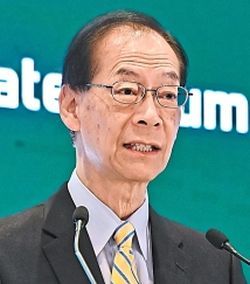
“We try to provide a balance between presenting fundamental work and also translational work,” said Hong Kong Laureate Forum (HKLF) council chairman Prof Timothy Tong Wai-cheung.
Themed “Meeting of Inspirational Minds”, the HKLF, held from Nov 5 to 8, brought together 12 Shaw Laureates from across the world, recognised for their contributions in astronomy, medicine and life sciences, and mathematical sciences.
It also drew 210 outstanding young scientists from over 20 countries and regions, and nearly 900 secondary students.
Programmes included keynote speeches by the Shaw Laureates, plenary and breakout sessions, and flash and poster presentations by the young scientists.
Prof Tong said the forum’s mission was to sustain sparks of curiosity by connecting world-class scientists with aspiring young minds.
“What we are doing in the HKLF is to make use of the resources made up of such a high-level group of scientists so that they come back to Hong Kong and encourage our younger generations to take an interest in science.
“In order to have successful people now, you also need to have younger people who will be coming up,” he said.
He added that the forum’s focus is not just Hong Kong.
“Many participants are also from other countries, and we are promoting science not only locally but also within the international community,” he said.
Established in 2019, the HKLF is fully sponsored by the Lee Shau Kee Foundation. The Shaw Prize Foundation, which organises The Shaw Prize, an annual renowned international award, is a major partner of the HKLF.
How it all began for star duo
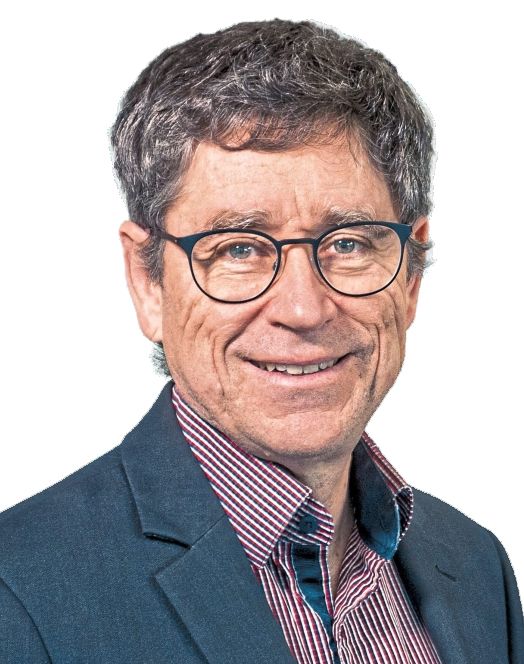
no idea it would lead to lifelong employment – let alone winning major international prizes! The award i received was for a serendipitous discovery of a fast radio burst, about a trillion times brighter than any radio burst we had seen in our galaxy. Scientists didn’t have the vision or even hope that such things existed, so it was a complete shock when we found one. The training i received from my mentors meant i could recognise evidence and tell the difference between a spurious discovery and a real one.
Training by experienced mentors is very important. The day i learnt that force equals mass times acceleration, i went home and dismantled my bicycle, stripping excess mass so it would be easier to ride to school. i enjoyed connecting mathematical relationships to how things work in the real universe, and i still find that satisfying 40 years later. There’s a saying that fortune favours the prepared mind, and whether i liked it or not, my advisers insisted i do good science and correct my mistakes. That training and discipline are what allow you to recognise a new phenomenon when you finally see it.
Australian Research Council Centre of Excellence for Gravitational Wave Discovery director Prof Matthew Bailes Prof Bailes was jointly awarded the Shaw
Prize in Astronomy in 2023 for the discovery of fast radio bursts. His co-recipients were Duncan Lorimer and Maura Mclaughlin.
For school kids struggling with maths, it may be a question of inclination. not everyone is naturally inclined to it. Sometimes, people point to a bad teacher, but that’s not necessarily true. Some students might simply be better suited to other paths. Maths is important, and certain careers require it, but students can reflect on whether it’s the path they want to take.
i was good at maths in school, but also good at other subjects. initially, i thought i’d study engineering, but i became more interested in maths because it allowed me to go deeper. instead of taking a given equation, i wanted to understand why it worked and what the genuine underlying formula was. That curiosity led me to study maths at university.
it wasn’t always easy. in my first year of research, my master’s year, i struggled to find a subject i was interested in or could make progress on. i even considered leaving for a job i had been offered at an engineering company, but i eventually found a problem that made sense, and that kept me going. For younger students, a lot depends on the teaching method. encouragement matters. Teachers are under pressure, and students are expected to deliver results, but guidance is key to prevent maths from feeling like a nightmare. Solving problems gives students a sense of accomplishment, while being blocked can feel discouraging. But we can teach them that struggling means they just need more information or a different approach, and they should seek guidance from teachers or other sources. in research, if you hit an obstacle, you might check to see if there was a mistake earlier, search the literature, or step away for a while, take a walk, sleep on it, and return with a fresh perspective. Sometimes, the problem persists for a long time, and that’s when the challenge
of completing a thesis becomes real. At that level, commitment is key, and you need different ways to overcome the obstacle.
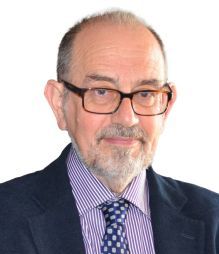
University of Oxford Savilian Prof of Geometry Nigel J.Hitchin
Prof Hitchin was awarded the Shaw Prize in Mathematical Sciences in 2016 for his far-reaching contributions to geometry, representation theory and theoretical physics. The concepts and techniques that he introduced have had wide impact and are of lasting importance.