From unearthing Malaysia’s oldest human skeleton to establishing archaeology as a recognised discipline, Universiti Sains Malaysia (USM) Emerita Prof Dr Siti Zuraina Abdul Majid has spent nearly five decades uncovering the stories buried beneath our soil.
This year, the Academy of Sciences Malaysia (ASM) fellow’s lifelong dedication to preserving Malaysia’s earliest history was honoured when she was named the National Academic Figure at the 16th National Academic Awards (AAN) – a recognition that marks another milestone for the nation’s first archaeologist.
Taking home a cash prize of RM200,000, along with a trophy and a certificate, she said the award came as a surprise at the end of her career.
“It’s a wonderful feeling to be recognised for something I truly wanted to do for my country: to uncover its early history and establish archaeology as a discipline,” she told StarEdu.
When Prof Siti Zuraina first began her work, Malaysia was not on the world’s archaeological map.
“Unlike Indonesia and Thailand, which had already attracted international attention, we were regarded as archaeologically barren and uninteresting,” she recalled.
Determined to prove otherwise, she and her husband – the late Datuk Dr Vincent Salih Lowe, founding dean of the USM Institute of Postgraduate Studies – used their own savings to fund early fieldwork in Lenggong, Perak, an area she believed held promise.
That leap of faith led to the discovery of the 74,000-year-old Palaeolithic stone tool site in Lenggong, alongside the world-famous 11,000-year-old Perak Man.
Prof Siti Zuraina’s pioneering work also led her to found the Centre for Global Archaeological Research Malaysia at USM in 1995.
Emphasising the importance of archaeology, she noted that it helps uncover and preserve evidence of the past, not just of human history, but also of all living things.
“Our data lies in the ground.
“Archaeology is not just about history; it connects to all other disciplines. That’s why it’s so important for us to protect what lies in the ground,” she said.
Looking back on her journey, Prof Siti Zuraina credited her success to the collective support of the university, government, and private sector, acknowledging that their contributions were instrumental in her achievements.
The other AAN winners were: Prof Dr Norhayati Mohd Noor (Book Publication Award), Assoc Prof Dr See Kok Fong (Journal Paper Publication Award in the Social Sciences and Literature Category) and Assoc Prof Dr Muhammad Firdaus Akbar Jalaludin Khan (Innovation and Product Commercialisation Award) from USM; Dr Manraj Singh Cheema (Teaching Award in the Health Sciences category) and Dr Rahimah Jamaluddin (Teaching Award in the Applied Literature and Applied Social Science category) from Universiti Putra Malaysia; Dr Haslinda Ibrahim (Teaching Award in the Pure Sciences category) and Dr Mohamad Fitri Mohamad Haris (Arts and Creativity Award for the Performing Arts category) from Universiti Utara Malaysia; and Assoc Prof Dr Gan Wee Chen (Journal Article Publication Award in the Science category) from Xiamen University Malaysia.
The eight received a cash prize of RM50,000 each, along with a trophy and a certificate.
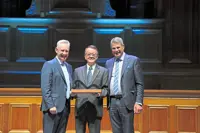
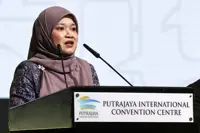
The awards were presented by Higher Education Minister Datuk Seri Dr Zambry Abdul Kadir, who represented Prime Minister Datuk Seri Anwar Ibrahim, in Subang Jaya on Oct 24.
In his speech, Zambry said the nation’s progress and development would not have been possible without the invaluable contributions of its academic community, whose efforts continue to shape Malaysia today.
“I am grateful to our scholars and academics who are committed to ensuring that the major shift (in the Higher Education Blueprint) can be realised over the next 10 years,” he said.
Established in 2006, the AAN, which is open to both public and private higher education institutions (HEIs), is the highest recognition bestowed by the Higher Education Ministry, specifically for academics, in recognition of their excellence and contributions to promoting the name of HEIs at the national and international levels.
All winners are selected based on the applications or nominations submitted by their universities, as well as the candidates’ achievements.
Winners speak
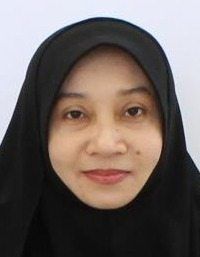
Prof Norhayati’s book, Traumatic Childbirth: Near Miss and Morbidities, sheds light on women who experienced severe childbirth complications but survived – stories often underrepresented in data, policy and public awareness. Drawing from extensive clinical fieldwork, she spent a year independently tracking childbirth and delivery outcomes – a process that required both precision and perseverance. Moving forward, she plans to expand her work on maternal near-miss experiences through educational materials, policy dialogues, community-focused health initiatives, and produce academic work that shapes clinical practice and maternal health policy.
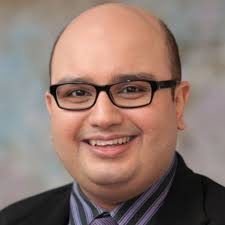
Recognising the challenge of engaging students in an age of short attention spans and digital overload, Manraj, whose work reimagined how science is taught, experienced and felt, chose to make knowledge come alive by embracing technology not as a distraction, but as a bridge. The Young Scientists Network-ASM member’s gamified and artificial intelligence (AI)-driven teaching framework managed to transform classrooms into investigative quests, encouraging students to explore, collaborate and think critically. Part of the cash prize will be used to expand Manraj’s ongoing projects, which focus on enhancing AI-enabled adaptive learning prototypes that integrate gamification, analytics and student feedback to create more personalised and engaging learning experiences.
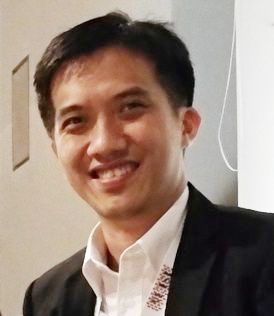
Gan and his team’s award-winning research began during the height of the Covid-19 pandemic, inspired by the sacrifices of frontliners and the dire shortage of protective equipment. They developed an innovative face mask capable of instantly neutralising pathogens upon contact, harnessing the natural breathing mechanism to generate electrostatic charges. The pathogens are drawn to the nano-tips embedded in the mask’s outer layer, which greatly amplifies the electric field. When they come into contact with these nano-tips, the strong electric charge instantly deactivates them – much like how an electric mosquito swatter works. With limited research facilities and no immediate access to testing equipment, Gan’s team had to outsource sample analyses. The pressure of meeting tight deadlines while upholding scientific standards often led to many sleepless nights. Nevertheless, teamwork and determination carried the group through.