Malaysia and China reaffirm shared commitment to education, culture, and sustainable growth
THE Belt and Road Initiative carries forward the Silk Road legacy, creating new opportunities for education, science, technology, and sustainable development, say the country’s leaders.
The Silk Road, said the Science, Technology and Innovation Minister Chang Lih Kang, is not only a trade route but also a channel for the exchange of knowledge, where Chinese and Arab scholars advanced mathematics, astronomy, medicine and technology.
“By learning from one another, we can foster cooperation, mutual growth, and a more harmonious and sustainable future,” he said in a video address at the Dialogue Between Islamic Civilisation and Confucian Civilisation & Meeting on Belt and Road Cooperation.
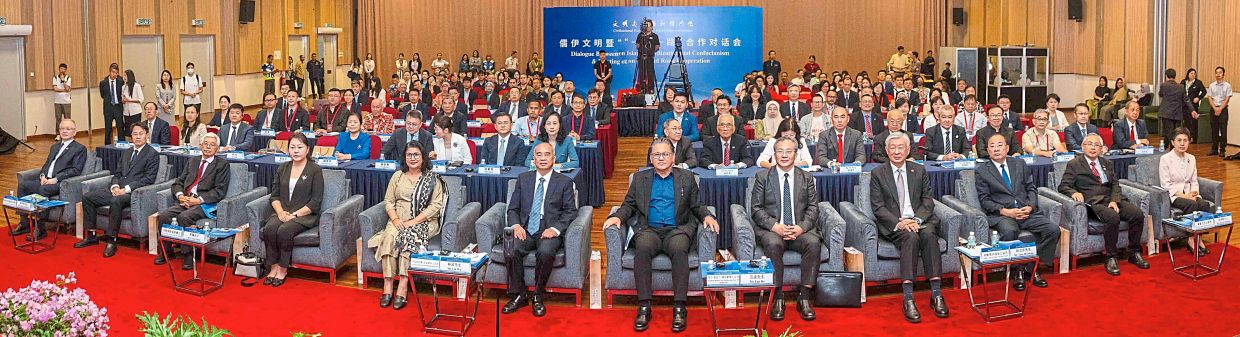
Hosted by Universiti Tunku Abdul Rahman (UTAR) at its Sungai Long Campus in Selangor on Sept 23, the event gathered distinguished leaders, diplomats, academics and scholars from Malaysia and China to explore historical exchanges, contemporary roles, and future collaborations under the Belt and Road framework.
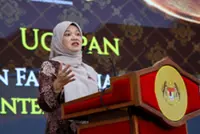
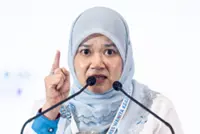
Highlighting Malaysia’s strength in diversity, Deputy National Unity Minister Saraswathy Kandasami stressed that unity is built on respect, dialogue and inclusiveness.
The Silk Road, she remarked, was historically a bridge of knowledge and culture, and that the Belt and Road Initiative continues this legacy by bringing people and traditions closer together.
“Harmony in diversity is not just a vision but a framework of action.
“By embracing dialogue, mutual respect, and the values enshrined in our Rukun Negara, we can build a more just, inclusive and sustainable future,” she said.
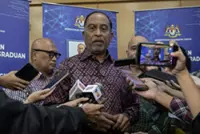
Malaysia-China Business Council chairman Senator Tan Sri Low Kian Chuan shared that relations between the two countries have been rooted in trade since the Han Dynasty, gradually evolving into cultural exchange, migration and trust.
“The Belt & Road should be guided by ethics, not just profit; by sustainability, not just speed; and by inclusion, not only efficiency.
“Through such cooperation, Malaysia and China can continue to prosper together in peace and mutual respect,” he said.
In his speech, CPC Shandong Provincial Committee secretary Lin Wu conveyed China’s commitment to advancing cultural and academic exchanges with Malaysia.
Sharing how the travels of monk Yijing and Admiral Zheng He had laid a strong foundation for cooperation, he said the dialogue served as a concrete step to deepen exchanges and build a high-level Malaysia-China community with a shared future.
Describing the event as another milestone for the varsity following its appointment by China’s Education Ministry as the fourth branch-centre of the Nishan World Center for Confucian Studies, UTAR Council chairman Tan Sri Dr Ting Chew Peh stressed that education is not only about knowledge creation, but also about building bridges of understanding between peoples.
“UTAR is honoured to be entrusted with this role, and we will continue to nurture global perspectives among our students and contribute to Malaysia-China relations, Belt and Road cooperation, and the broader dialogue between civilisations,” he said.
Also present were MCA president Datuk Seri Dr Wee Ka Siong, UTAR president Prof Datuk Dr Ewe Hong Tat, CPC Shandong Provincial Committee representatives Zhang Zuoting and Zhang Shumin, Dezhou Municipal People’s Congress representative Tian Weidong and Embassy of the People’s Republic of China in Malaysia representative Chang Shan.
During the event, several key agreements to strengthen academic collaboration, cultural dialogue, and research partnerships between Malaysia and China were signed by UTAR with parties like the Nishan World Center for Confucian Studies, the Dezhou Municipal People’s Government and the Asean Research Center of Dezhou University.
Discussions featuring 16 renowned scholars – from Nishan World Center for Confucian Studies, China Confucius Research Institute, Universiti Malaya, Universiti Kebangsaan Malaysia, Universiti Islam Antarabangsa Malaysia, Dezhou University, the Chinese Academy of Social Sciences, Academy of Engineering and Technology of the Developing World, Sunway University, Institute of Strategic Analysis and Policy Research and UTAR – were also held to highlight the shared heritage of Confucian and Islamic values, their relevance in addressing modern global challenges, and the promise of deeper cooperation under the Belt and Road Initiative.