SOUTH Korea – the producer of K-pop and K-dramas loved around the globe – is also a giant in technological innovation, with automobiles, smartphones and digital appliances becoming household names worldwide.
At the heart of its success is a strong national interest in pioneering innovation, with most students keen to pursue science, technology, engineering and mathematics (STEM), according to its experts.
The experts stressed that for a country to achieve developed-nation status, priority must be given to boosting student participation in STEM education.
This is an area Malaysia has been struggling with, as the country faces challenges in meeting the 60:40 target ratio of STEM to non-STEM students in upper secondary schools.
Earlier this year, Prime Minister Datuk Seri Anwar Ibrahim addressed the issue by proposing that 70 per cent of students in fully residential schools opt for STEM stream starting next year, in a bid to strengthen expertise in these critical fields.
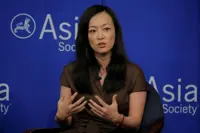
Emphasising that science and technology should be every country’s foundation, Korea Institute of Science and Technology Information (KISTI) Science Data Education Center principal researcher Dr Bu Young Ahn said it is one’s duty to learn STEM for the future of one’s country.
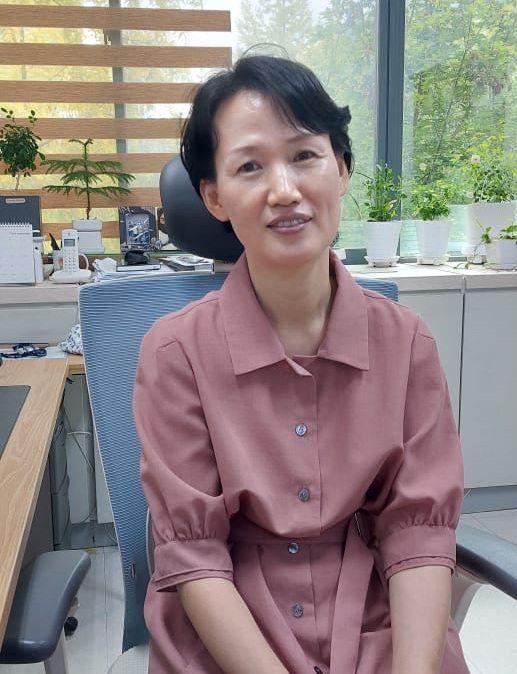
“Moreover, with artificial intelligence (AI), we can now learn science in a fun way,” she told StarEdu.
Highlighting that STEM is no longer a “specialised track”, she said it has become the common language of progress.
“In addition, it has expanded into STEAM education by integrating the arts.
“From healthcare and agriculture to finance and the creative industries, every sector now runs on data, algorithms, and interconnected systems.
“For young people, that means three competencies are becoming foundational: computational thinking, data literacy, and ethical reasoning about technology’s impact,” she said.
She added that STEM education trains students to frame problems clearly, test ideas with evidence, and build solutions that can scale.
This, she noted, is crucial in the face of urgent, complex challenges – climate adaptation, energy transition, food security, cyber safety – that can’t be solved by one discipline alone.
Agreeing, Korea Research Institute of Bioscience and Biotechnology (KRIBB) Aging Convergence Research Center principal investigator Prof Dr Mirang Kim affirmed that science and engineering professionals are indispensable assets that determine the trajectory of a nation’s future.
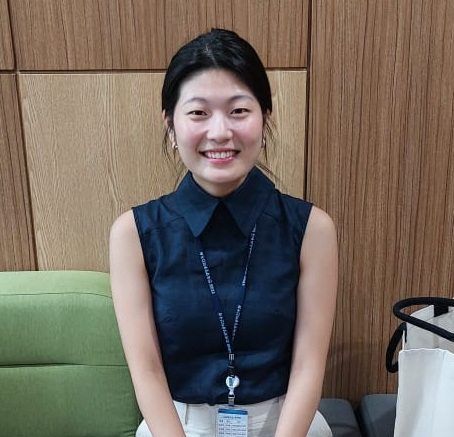
“After the Korean War, we were left with few resources and widespread poverty. With talent as the country’s most valuable asset, the government focused on nurturing students in science and engineering,” she said.
KRIBB postgraduate researcher Park Eun Bin said science will only grow stronger, and anyone can thrive by adapting to AI and the changing world.
“Students who are afraid of science should not be, because it is what they will need in the future,” she said.
She added that internal motivation is the most important factor for students to learn.
“It is a high priority for them to know why it is important, why they need to study it, and at the end of the day, to be motivated to learn something from it,” she said.
Electronics and Telecommunications Research Institute (ETRI) Public Relations Section administrative staff member Lee Seoyeon said exposing young children to STEM activities is one way to nurture their love for the fields.
“The government needs to empower the science industry; that’s important. If the government pays attention to science and highlights the advantages of being scientists, more people would want to become scientists,” she suggested.
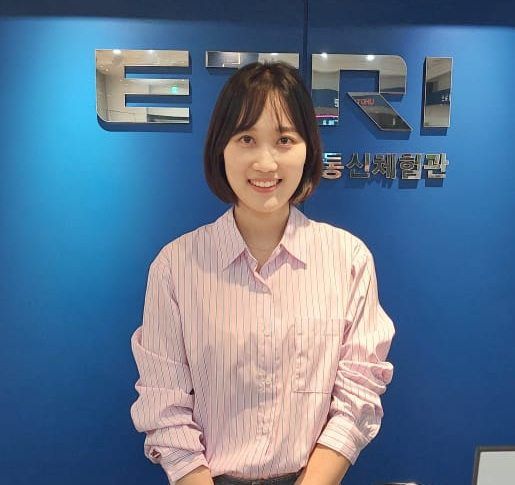
She added that at ETRI, the focus is on being a “pioneer, not a follower” in science and technology.
“Countries move very fast. If you want your country to be a pioneer or a developed nation, your students need to study science,” she said.
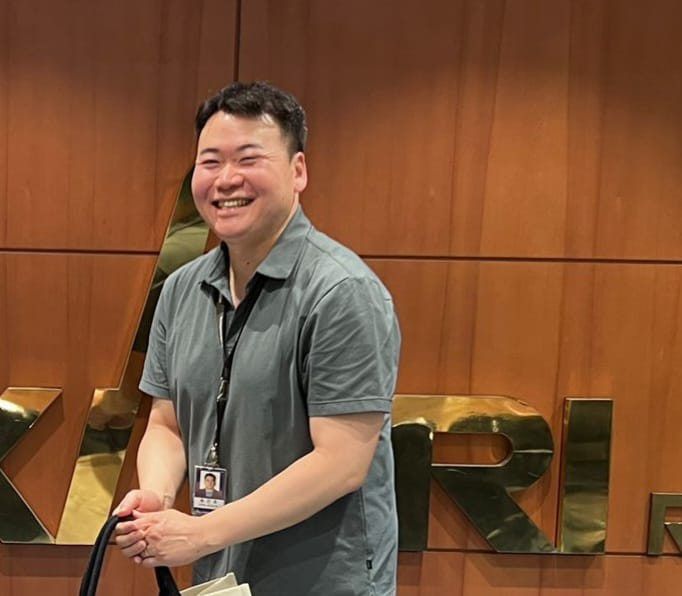
Korea Aerospace Research Institute (KARI) space education researcher Dr Song Geun Ho emphasised the importance of both the government and parents in giving students more opportunities to experience STEM.
“It is the government’s role to focus on science education, including fostering international cooperation.
“Parents and the government can show space education as one of the students’ options, for example. Show them space history, new technologies, and different space fields,” he offered.
Best practices
With South Korea emerging as a forerunner in innovation, it serves as an example Malaysia can learn from.
Ahn pointed to several key factors behind the country’s STEM success.
“We have sustained substantial national investment in research and development and in digital infrastructure, with government, universities and industry pulling in the same direction.
“We also have strong fundamentals in mathematics and science, plus a builder’s mindset. Students are trained to persist, iterate, and turn ideas from the whiteboard into working prototypes.
“In addition, there are fast feedback loops between the lab and the factory. Dense supply chains and testbeds enable rapid prototyping in semiconductors, batteries, displays, biotechnology and AI, so research translates into products quickly,” she shared.
She added that open collaboration is another factor, with Korean labs and companies increasingly contributing to and adopting global standards and open-source ecosystems, which accelerates learning and diffusion.
“We also compute and process data at scale. National supercomputing resources and high-speed networks let researchers and students tackle problems that require real scale, not just laptop simulations,” she said.
Ahn stressed that education must remain hands-on and mission-driven.
“We design learning around real datasets and high-performance computing so learners can practise the end-to-end workflow. We also emphasise responsible AI, reproducibility, and open science practices – skills that employers and research labs expect,” she said.
She called on Malaysian ministries, universities and schools to co-create with their South Korean counterparts.
“STEAM is about solving meaningful problems with integrity and teamwork. If we give learners access, mentorship and purpose, they will surprise us with what they can achieve,” she said.
Adding to the discourse, Prof Kim said women’s potential in science and engineering must not be overlooked, although the path can be demanding.
“Women bring a spirit of altruism and a deep sense of responsibility in nurturing harmony between people and nature, ensuring a better future for generations to come,” she said.
The interviewees welcomed a Malaysian delegation to their respective institutes in Daejeon, South Korea, during the 2025 Education Familiarisation Trip for Malaysian Schools. The trip was co-organised by the Korea Tourism Organization (KTO), Gyeonggi Tourism Organization (GTO) and Japan Travel Bureau (JTB) from Sept 15 to 20. The delegation comprised representatives from the Education Ministry, government and international schools, as well as media organisations.
Message to M’sians
For high school students, first decide on an issue you’re interested in. Use issues you care about, such as flood prediction, safe roads, better crops or clean energy, as your learning compass. Master the basics: algebra, statistics, physics, and programming in Python. Build a portfolio by publishing small projects on GitHub, joining robotics or coding clubs, trying a Kaggle dataset, or contributing to open source. Learn to explain your work – clear writing and visualisation are superpowers in STEM. Use AI wisely; let it help with drafts and code scaffolding, but always verify and understand the result.
For adults, it’s not too late. Your domain knowledge is an asset. Start with a focused, applied question in your field and upskill around it. Make active use of AI. Stack your learning and consistently release small deliverables. It’s important to build on short courses and micro-certifications, and consistently produce results like short papers and open datasets. Find a mentor and a community by joining a lab, a reading group or an online forum where feedback is part of the culture.
Ahn
Be better every day. You can be the best in any area, not only in science. Having a good attitude and mindset is important.
Prof Kim
It is important to follow your passion but if the result of your passion is something that society doesn’t need, then it is not practical. Follow your passion but use it in a way that benefits society.
Park