TO familiarise soon-to-be graduates with the demanding schedule of a house officer, including night shifts and on-call responsibilities, final-year medical students at Universiti Malaya (UM) are placed in clinical units where they participate in shift work.
This forms part of their mandatory eight-week placement under the Pre-Internship (PRINT) programme at the University Malaya Medical Centre (UMMC), which they must complete to fulfil the requirements of the Bachelor in Medicine and Bachelor in Surgery (MBBS) programme.
PRINT programme coordinator Prof Dr Lim Shen-Yang said on-call work is particularly valuable for learning emergency and procedural skills, as it often involves dealing with acute cases that require prompt action and efficient decision-making.“Students participate in these shifts to gain exposure to a range of clinical scenarios, enabling them to develop a strong work ethic, learn how to collaborate with co-workers, build resilience, and understand the physical and mental demands of hospital-based practice,” he told StarEdu.
Under the PRINT programme, students are prepared for their roles as first-year house officers by simulating real-world clinical responsibilities and environments, with a focus on core duties, patient management, and procedural skills under guided supervision.
According to Prof Lim, students are required to clerk patients (perform history-taking and physical examination), document differential diagnoses, and develop management plans.
“They engage in procedural tasks under supervision, such as venepuncture, IV cannulation, ECG interpretation, and urinary catheter insertion, gaining experience in real-life clinical environments to contextualise and refine the knowledge and skills they have learnt during their medical studies,” he said.
Although pre-interns have more responsibilities than typical senior medical students, Prof Lim explained that they are still subject to strict limitations, given their junior status and the fact that they are not registered practitioners.
“PRINT students must identify themselves as medical students and cannot make treatment decisions, prescribe medications, discharge or admit patients, or arrange investigations, without supervision and approval from a registered medical practitioner.
“Supervisors provide regular feedback, especially if deficiencies are identified, giving students a chance to address these areas well before the end of the programme. This allows students to develop independence safely, with the supervisor or a designated medical officer ensuring oversight of all patient interactions and clinical decisions,” he said.
As a clinician, Prof Lim noted that one of the biggest challenges that doctors continually face in clinical practice is time constraints.
“Limited time and high patient volumes, particularly in under-resourced health systems, often result in well-intentioned doctors not being able to spend sufficient time with their patients, and sometimes ‘cutting corners’, for example, with respect to infection control practices.
“The PRINT programme hopefully helps to set our budding doctors on the right path, but broader structural issues, such as staffing and access to essential resources, also need to be addressed at a systemic level,” he said.
Prof Lim added that the programme has been a success due to strong support and collaboration from staff across key clinical departments, as well as leadership from the UM Faculty of Medicine dean and deputy dean for undergraduate studies.
‘It truly helps to be prepared’
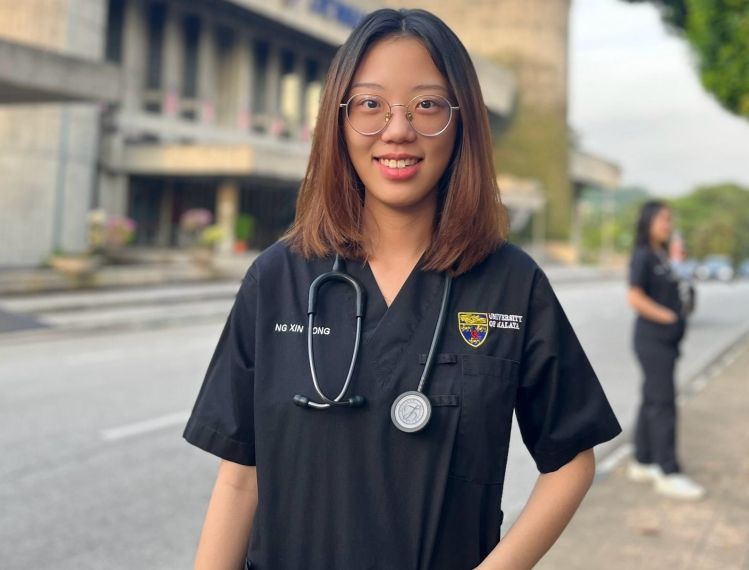
“PRINT was invaluable in preparing me to step into the role of a house officer. Over two months, we shadowed house officers, gaining hands-on experience with procedures like nasogastric tube insertion, venepuncture, arterial blood gas sampling and catheter insertion. Tasks that once felt theoretical became practical skills I could perform with growing confidence. I also gained exposure to patient care, observing how senior doctors balance medical needs with patient preferences and quality of life. I engaged closely with patients’ families, ensuring they felt reassured and supported. I realised our role extends beyond treatment to bringing comfort and clarity to those in our care.” – Dr Ng Xin Tong, 24
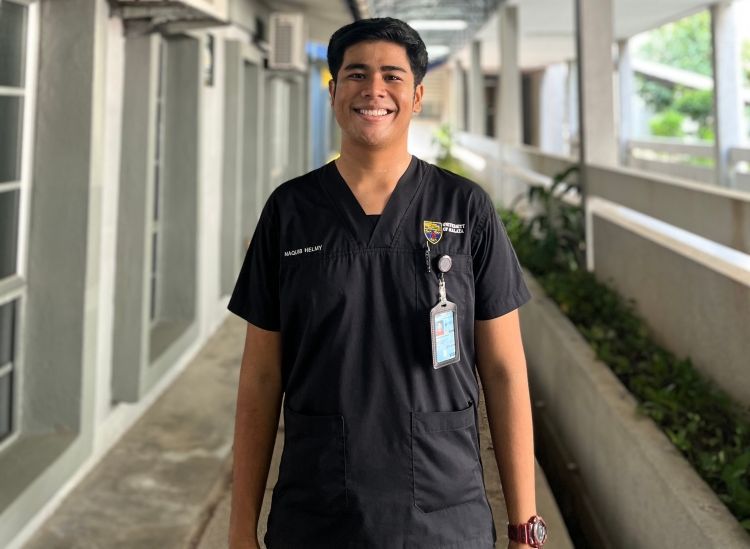
“One of the most important lessons I learnt during PRINT was effective interpersonal communication. The programme emphasised collaboration with various healthcare professionals, such as nurses and physiotherapists, strengthening my ability to work cohesively in a clinical setting. I also gained hands-on experience with skills like suturing and taking blood. I realised that while clinical knowledge is crucial, the ability to connect with patients on a personal level is equally important. The programme focused on patient counselling and empathetic communication, helping me build rapport with patients and thus improving overall care. These experiences will ease my transition into the role of a house officer and enhance my competency as a junior doctor, ensuring I can provide compassionate care from the start.” – Dr Muhammad Naquib Helmy, 24
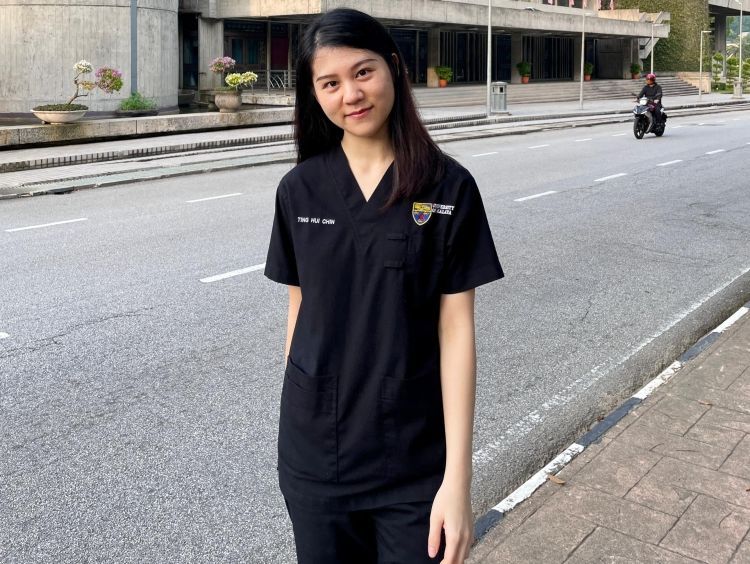
“During my two months in PRINT, I acquired essential real-world skills not fully covered in medical school. For instance, while I had learnt the technical steps for inserting an intravenous cannula, PRINT taught me to perform the procedure neatly to avoid blood spillage, engage patients to distract them from pain, and understand real-world risks like needle-stick injuries. Managing on-call shifts further honed my ability to prioritise tasks and adapt to high-pressure situations. I grew more confident in communicating effectively with colleagues, particularly during patient handovers, where clarity is paramount. Most importantly, this experience instilled a deep understanding of the realities of being a medical professional – where weekends and public holidays are not guaranteed rest days. If assigned a shift, any absence places additional strain on colleagues and patients. This sense of responsibility and teamwork was the most significant lesson of my posting.” – Dr Ting Hui Chin, 24