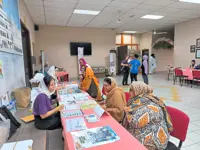
IT is essential to provide the youth with safe spaces to ensure a high quality of life and meaningful career opportunities for them.
By being actively engaged in these spaces, students can become invested in their communities and develop a strong sense of belonging in society.
As an emotional intelligence coach who teaches life skills at Taylor’s University, I have observed the value of building an environment for growth.
Students often consult me after class about matters beyond assignments, such as time management tips, relationship advice, mental health issues, life purposes, and even how to handle family conflicts.
Worldwide, we have entered the Fourth Industrial Revolution powered by the development of virtual systems and artificial intelligence that has brought vast technological advancements.
Despite this, have we considered whether our “Emotional Revolution” is equally up to date?
According to Malaysia’s 2017 Health and Morbidity Survey, mental health issues affected one in three individuals, the highest being among teenagers.
Almost daily, the media highlights news of full-grown adults in regrettable situations, including at star-studded events such as the Oscars ceremony early this year where in a fit of anger, actor Will Smith publicly slapped comedian Chris Rock for joking about his wife.
Additionally, we see viral videos of dissatisfied shoppers arguing with shopping mall security over the wearing of masks.
In a multicultural society, even having discussions can feel like walking into the lion’s den.
Modern phrases such as “You’re just triggered” are used flippantly, as if to equate having any differing view to being mentally traumatised.
Such responses can, unfortunately, shut down complex, meaningful conversations.
The question thus arises: what can we do to improve those situations, and where can we create opportunities to do so?
The culture of safe spaces serves as an underrated but powerful concept to fuel change in the long run and significantly improve our citizens.
With there being a gap in education for emotional intelligence, the younger generation can benefit greatly from the proactive implementation of safe spaces in schools and universities.
A safe space is defined as an intentional time for participants in a group to engage with each other. It is usually guided by a facilitator, where clear ground rules are set at the beginning, to protect everyone’s experience.
A safe space is established when these agreements are honoured and actively practised by all participants.
These can include agreements to be respectful and open to differing opinions, to listen actively, to reply kindly and non-judgmentally, and to maintain the confidentiality of private discussions.
Safe spaces could also be carried out implicitly, for instance, in an academic lecture that welcomes open discussions or actively upholds a respectful classroom culture.
While a common format is to encourage the sharing of thoughts on guided topics, using hands-on activities can also make an impact.
For example, invite participants to form a circle and take one step forward if they relate to the statements shared.
Easing them in with sentences like “I enjoy ice cream” in the beginning, participants would by the end of the activity openly respond to statements of emotional vulnerability like “I am afraid to cry in front of others”.
A sense of safety, solidarity and trust will be formed once participants see each other step into the circle to acknowledge their struggles.
In the aftermath of studying online during a prolonged Covid-19 pandemic, tertiary students may also require support as they face the uncertainty of transitioning from the safety of their screens back to physical classes.
What are the benefits of creating safe spaces for them?
On an individual level, it provides opportunities for wider emotional development.
Many children in our society isolate their feelings – without lessons for emotional intelligence, they are ill-equipped to manage life’s challenges as adults.
By engaging in safe spaces, students can build better personal and social competencies, while reducing counterproductive habits.
This is extremely important for young adults who are beginning to make sense of the world independently. The skills built can become lifelong strengths.
Moreover, students can be released from the fear of making mistakes and embrace them as learning moments, instead.
Academic staff trained to facilitate such learning environments and mutually follow the rules benefit as secondary recipients who improve internally. Incredibly, this can improve academic performance, as well.
According to recent research in Malaysia, elements of emotional intelligence could positively predict students’ grades. This validates a multidisciplinary and holistic education approach as one of the keys to an improved society.
Let us consider the simple, incredible value of safe spaces being integrated into education, to create a positive societal impact, both in the present and in the future.
Ultimately, the greatest hope is to create a generational ripple effect – as more adults become emotionally intelligent, the skills can be passed down to their children and social circles for successful life management.
Jolene Chong, who holds an MSc in Mental Health Studies from King’s College London in the United Kingdom, is a life skills facilitator in student development at Taylor’s University. She is a co-lead of Own Your Story, a community-driven initiative for authentic self-discovery and connection via experiential events.
The views expressed here are the writer’s own.
Already a subscriber? Log in
Get 20% OFF The Star Digital Access
Cancel anytime. Ad-free. Unlimited access with perks.