HANOI (The Straits Times/ANN): Moscow and Hanoi are once again drawing closer, after a brief cooling of ties following Russia’s invasion of Ukraine in 2022.
A flurry of high-level visits in recent years – including Russian President Vladimir Putin’s stop in Hanoi in June 2024 and Vietnamese Communist Party chief To Lam’s trip to Moscow in May 2025 – has reaffirmed a decades-old partnership with its highs and lows, one that even the Ukraine war could not fully derail.
For Vietnam, Russia remains an old friend and a useful balancer. For Moscow, Hanoi remains its most important partner in South-East Asia.
This longstanding and complex bond is most visible in Cam Ranh Bay, a jewel on Vietnam’s coastline that is still instrumental in shaping Russia-Vietnam ties today.
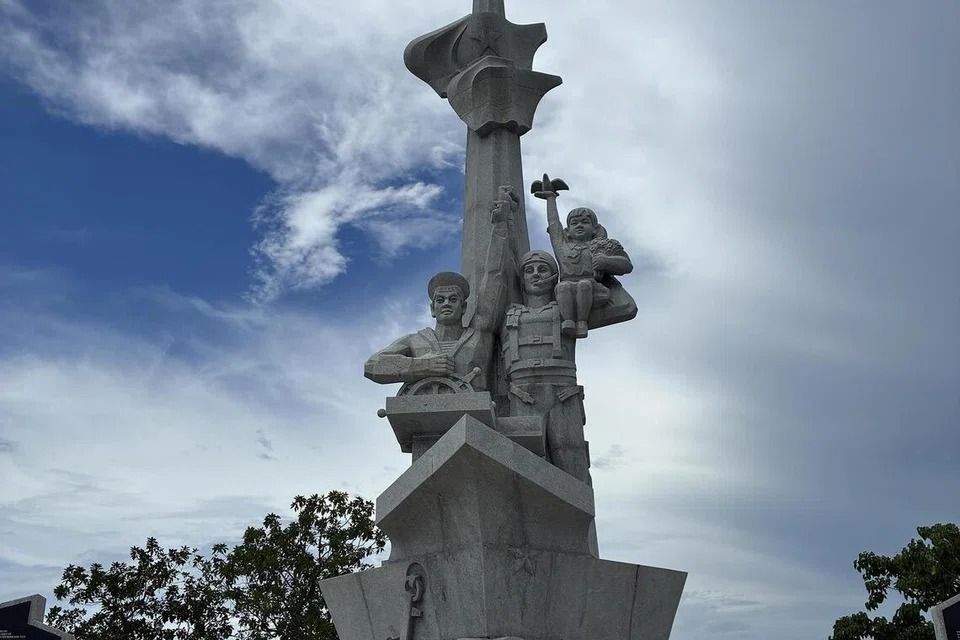
Just outside the bay’s new international airport, a modest hilltop memorial offers a mute reminder of Moscow’s once-vast military presence here.
Half-hidden by tropical greenery and largely ignored by passing vehicles whizzing by on the sun-scorched highway connecting Cam Ranh Peninsula in central Vietnam to the beaches of Nha Trang 30km away stands the Russia-Vietnam Friendship Memorial, which was completed in 2009.
The 21m monument honours 44 Soviet and Russian servicemen who never made it home, along with 176 Vietnamese personnel who died in the line of duty in Khanh Hoa region, in the peacetime years after the Vietnam War (1955-1975).
The names – “Lt-Col Alexandrov I.N., Capt Demidov B.A., Capt Zinchenko V.P. ...” – on the black granite memorial plaque include dozens killed in three separate air crashes in Cam Ranh Bay in 1985, 1989 and 1995.
Obscure though it may be, the monument nevertheless signals the depth of Moscow’s footprint in this bay.
From US stronghold to Soviet lifeline
Cam Ranh Bay, located in Khanh Hoa province and less than 300km from Ho Chi Minh City, is one of the finest deep-water ports in Asia.
The US used it as a major naval and air hub during the Vietnam War. But in 1979, as relations between Vietnam and China sharply deteriorated, Hanoi turned to its other major wartime ally: the Soviet Union, as it was known before its dissolution in 1991.
Moscow saw an opportunity. The Soviet fleet was then a formidable force of submarines, carriers and long-range bombers. Cam Ranh Bay offered the Kremlin a critical logistics base just 2,500 nautical miles from home – near key shipping lanes threading through the South China Sea.
“Back then, the Soviet Union was still a great maritime power, whose ships and aircraft plied the world’s oceans,” recalled former soldier Shamil Talgatovich Galyaudinov, one of the many Russian “military specialists” stationed at the base during the 1980s. “We were proud of our country, our strength and our importance,” wrote Mr Shamil in 2010, in a public forum dedicated to Russians who had served in Vietnam, and their friends.
Around the late 1970s, relations between Vietnam and China – its neighbour and former close ally – deteriorated sharply, with Hanoi increasingly aligning itself with the Soviet Union.
The Chinese invasion of Vietnam in February 1979 accelerated negotiations on establishing the logistics base and its joint use, allowing Soviet warships to enter and moor at the port and Soviet military aircraft to land in Cam Ranh airfield.
Under a 1979 treaty with Vietnam, the Soviet Union was granted rent-free access to the naval facilities in Cam Ranh Bay for 25 years. This facility became Moscow’s largest naval base outside the Soviet Union during the Cold War (1947-1991).
“It allowed the Kremlin to protect naval and air power throughout Asia,” said Dr Ian Storey, senior fellow at Singapore’s ISEAS – Yusof Ishak Institute and author of the book Putin’s Russia And Southeast Asia: The Kremlin’s Pivot To Asia And The Impact Of The Russia-Ukraine War.
The Cam Ranh base could “simultaneously accommodate 10 surface ships, eight submarines... and 14 to 16 missile-carrying aircraft”, said Russian Cold War history researcher Alexander Rozin in his blog.
Friction beneath the surface
As Moscow developed the base, the number of service personnel living in the bay area rose sharply – reaching up to 6,000 around 1986 or 1987, according to local media reports.
Yet even at its peak, the partnership was not without friction.
“Relations at the political leadership level between our countries were already frosty,” Mr Shamil recalled of his 1984 arrival. Both nations were entering periods of domestic transition – perestroika, or economic “restructuring”, in the Soviet Union would kick off in 1985, while Vietnam’s “doi moi” economic reforms would take off in 1986 – and the atmosphere in Cam Ranh reflected the prevailing uncertainty.
Mr Shamil described finding listening devices on dial-up lines at the base and Vietnamese corps stationed nearby, “designated for covert photography and video recording” of their Soviet counterparts. He noted what he viewed as “the atmosphere of mistrust that was beginning to emerge in relations” between the two countries.
By the late 1980s, with the Cold War waning, Moscow began reassessing its commitments in Asia.
“Once the Soviet Union collapsed (in 1991), and Vietnam began demanding a high rent for the Cam Ranh base, a cash-strapped Kremlin withdrew in 2002 before the lease expired, as it was nice to have but not essential, since Russia no longer perceived any threats in Asia,” Dr Storey told The Straits Times.
Towards the end of the Cold War, Vietnam’s importance to Moscow was reduced to a “mere bargaining chip in (late Soviet and Russian leader Mikhail) Gorbachev’s bid to achieve reconciliation with both Beijing and Washington”, he added.
What had once been Moscow’s proud outpost in South-East Asia suddenly became a relic.
Russia’s ‘Turn to the East’ – and another chill
But Cam Ranh never fully disappeared from Russia’s orbit.
In 2014, Hanoi signed an agreement giving Russian warships and aircraft regular access to Vietnamese military facilities in the port.
“It’s unclear whether Russia asked for access or Vietnam offered it, but it coincided with Russia’s ‘Turn to the East’ policy,” said Dr Storey. He added that the policy reflects Mr Putin’s aspirations for Russia to “play a more proactive role in international affairs and re-energise relations with its Cold War partners in Asia”.
Under this arrangement, Moscow stationed IL-78 tanker aircraft that refuelled nuclear-capable Tu-95 bombers flying near US military bases in Japan and Guam.
Despite the US administration’s objections the following year, the flights continued intermittently, with Hanoi saying little in public.
The Moscow-Hanoi relationship continued to solidify in the coming years.
“In the face of China’s growing assertiveness in the South China Sea, Hanoi looked to Moscow to help modernise its armed forces, particularly its air force and navy,” said Dr Storey. Between 2000 and 2021, Vietnam took delivery of US$6.6 billion (S$8.5 billion) worth of military hardware from Russia.
Then came Russia’s invasion of Ukraine in February 2022, and Moscow-Hanoi relations turned chilly again.
Even though Vietnam abstained from UN votes condemning Moscow’s actions, “Hanoi was wary of drawing Western ire and significantly scaled back its ties with Moscow”, said Professor Artyom Lukin of Russia’s Far Eastern Federal University in Vladivostok, where the Russian Pacific Fleet is headquartered.
“Air routes between Vietnam and Russia were also suspended.”
Russia’s invasion of Ukraine, branded by the Kremlin as a “special military operation”, has until now remained a divisive issue in Vietnam.
The Ukraine war is a sensitive and complex matter for Hanoi, given its strong historical ties with Moscow vis-a-vis its growing relationships with Western powers.
Still, “Vietnam needs Russia as an extra balancer (to China and the US) in South-east Asia”, Prof Lukin asserted.
Ties warm again
But as geopolitical competition stirs in the region, relations between Vietnam and Russia are warming again. Vietnam sees value in diversity and balance, while Russia remains a longstanding security partner and crucial supplier of arms and technical expertise.
Mr Putin’s visit to Hanoi in June 2024 marked a turning point. By mid-2025, bilateral contact had surged. During Mr Lam’s Moscow trip in May, both sides emphasised the importance of the UN Convention on the Law of the Sea in maritime disputes – a subtle nod to Hanoi’s concerns over China’s growing assertiveness.
“It indicates that Moscow is attentive to Hanoi’s concerns about the South China Sea,” Prof Lukin noted.
Defence links, which were never severed, continue to grow.
Hanoi remains Russia’s biggest arms customer in South-East Asia. According to the Stockholm International Peace Research Institute, between 1995 and 2021, Vietnam imported US$9.1 billion worth of weapons and military equipment, of which Russia accounted for US$7.4 billion, or nearly 82 per cent.
Vietnam’s submarine fleet, the region’s largest, consists entirely of Russian-made vessels.
Hanoi has indicated its interest in further large-scale military procurement from Moscow. Prime Minister Pham Minh Chinh on May 27, 2023, signed an official document, seen by The Straits Times, informing the Russian government of Vietnam’s interest in “a new loan from the government of the Russian Federation for Vietnam to purchase Russian-produced weapons and military equipment”.
An October 2025 investigative report by The New York Times, based on leaked Russian defence documents, revealed that Vietnam is secretly pursuing a US$8 billion arms deal with Russia that includes approximately 40 new Su-35 and Su-30 fighter jets and nine electronic warfare systems.
However, the South-East Asian nation has also begun to diversify its military procurement sources, and has said it plans to gradually wean itself off its traditional supplier. The shift mirrors a broader trend within Asia, where many countries are seeking to reduce dependency on traditional foreign suppliers and enhance domestic defence capabilities.
Vietnam has insisted it will not host foreign military bases.
Today, the bay is home to a modernised Vietnamese navy outfitted with new ship-repair facilities, and is open to foreign naval visits – underlining Vietnam’s “bamboo diplomacy” of maintaining relations with all major powers while preserving its strategic autonomy.
Yet the shadows of the past are evident.
Deep inside the sheltered harbour, six Russian submarines sit silently at the dock, signalling continuity – a visible reminder that while the Cold War is long over, the close alliance built then is still finding momentum.
As Moscow and Hanoi recalibrate their ties, the quiet hilltop memorial continues to stand watch over the evolving relationship.