
The usually serene limestone hills of Batu Caves in Gombak, Selangor, is set to attract its largest-ever crowd for Thaipusam, which falls on Feb 1.
With a replacement public holiday on Feb 2 in several states, and Thaipusam and Federal Territory Day fall on the same day on Feb 1 creating an extended weekend, the landmark is preparing to receive millions of devotees and tourists for the festival.
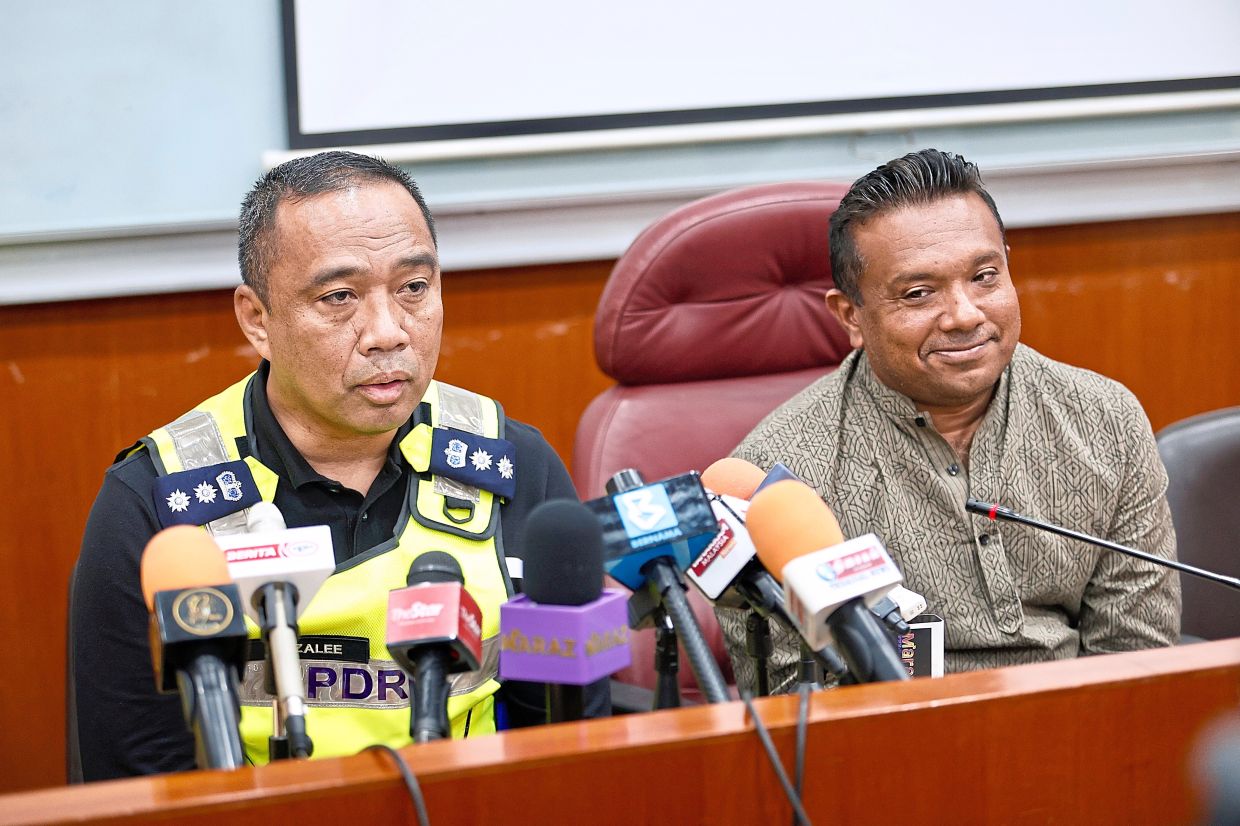
Kuala Lumpur Sri Maha Mariamman Temple Devasthanam trustee Datuk Sivakumar Nadarajah said 3.5 million people were expected to visit the site during the four-day festival which starts today.
The estimate has grown from a projection of over 2.5 million announced last week, as many have already been making their way to Batu Caves ahead of the celebrations.
“Last year, we saw about 2.5 million visitors,” he said during a press conference held at Batu Caves management office.
He added that this year, the numbers would be significantly higher with the long break.
According to the Malaysia Hindu Sangam, the festival commemorates the time Goddess Parvati presented her son, Lord Muruga, with a vel (divine spear) to defeat the demon Surapadman.
At the centre of the celebrations here is Sri Subramaniar Swamy Devasthanam cave temple, which is reached via 272 vibrant steps.
Thaipusam, a Hindu festival, falls on the full moon day in the Tamil month of Thai.
During this period, devotees perform acts of penance, bearing paal kudam (milk pot) or carrying kavadi – a structure borne on the shoulders typically decorated with flowers and peacock feathers – to fulfil vows or seek blessings.
Simple origin
While the cave temple is popular today, its beginnings some 135 years ago were humble.
Sivakumar, who is also Malaysia Council of Hindu Temples and Hindu Associations president, said it was believed that Kayaroganam Pillay, the father of Sri Maha Mariamman Temple founder K. Thamboo-samy Pillay, had a divine calling to build a temple for Lord Muruga.
“Unfortunately, Kayaroganam died in 1886 while travelling in India to source materials for the temple.
“His son took over the task and found a suitable site in the main cave of Batu Caves.
“In 1891, he consecrated the Lord Muruga idol, marking the first Thaipusam festival there, which become an annual event,” said Sivakumar.
He said the temple had also faced challenges that threatened its closure.
“In 1916, during the British occupation of Malaya, the authorities ordered prayers to cease.
“However, the temple committee secured a victory in court, defending the rights of Hindus to worship at Batu Caves and welcoming more devotees to the site.
“By 1929, the festival was drawing at least 50,000 people annually, so the temple committee built wooden steps to make the climb safer, as the ascent was rugged and slippery.”
The same year, Sivakumar said, a case was filed by individuals dissatisfied with the temple’s management.
“However, the court dismissed the case in 1930 and declared that the properties and funds of three temples, including Sri Subramaniar Swamy Temple in Batu Caves, must be held as a charitable trust.
“The temples continue to operate under the terms of the court order to this day,” he said.
Other improvements, Sivakumar said, included the wooden steps being upgraded to concrete in 1940 and the 42.7m Lord Muruga statue built at the foot of the steps between 2002 and 2006.
Procession and obligations
According to Sivakumar, the chariot procession departs from Sri Maha Mariamman Temple in Kuala Lumpur at 9pm today and is expected to arrive at Batu Caves by 5.30pm tomorrow.
Once the chariot reaches Batu Caves, he said the annual flag-raising ceremony would be conducted by Batu Caves Sri Subramaniar Swamy Temple chairman Tan Sri R. Nadarajah, signalling the official start of Thaipusam.
“Devotees carrying milk pots are advised to use the left lane of the stairs, while kavadi bearers are designated the middle lane.
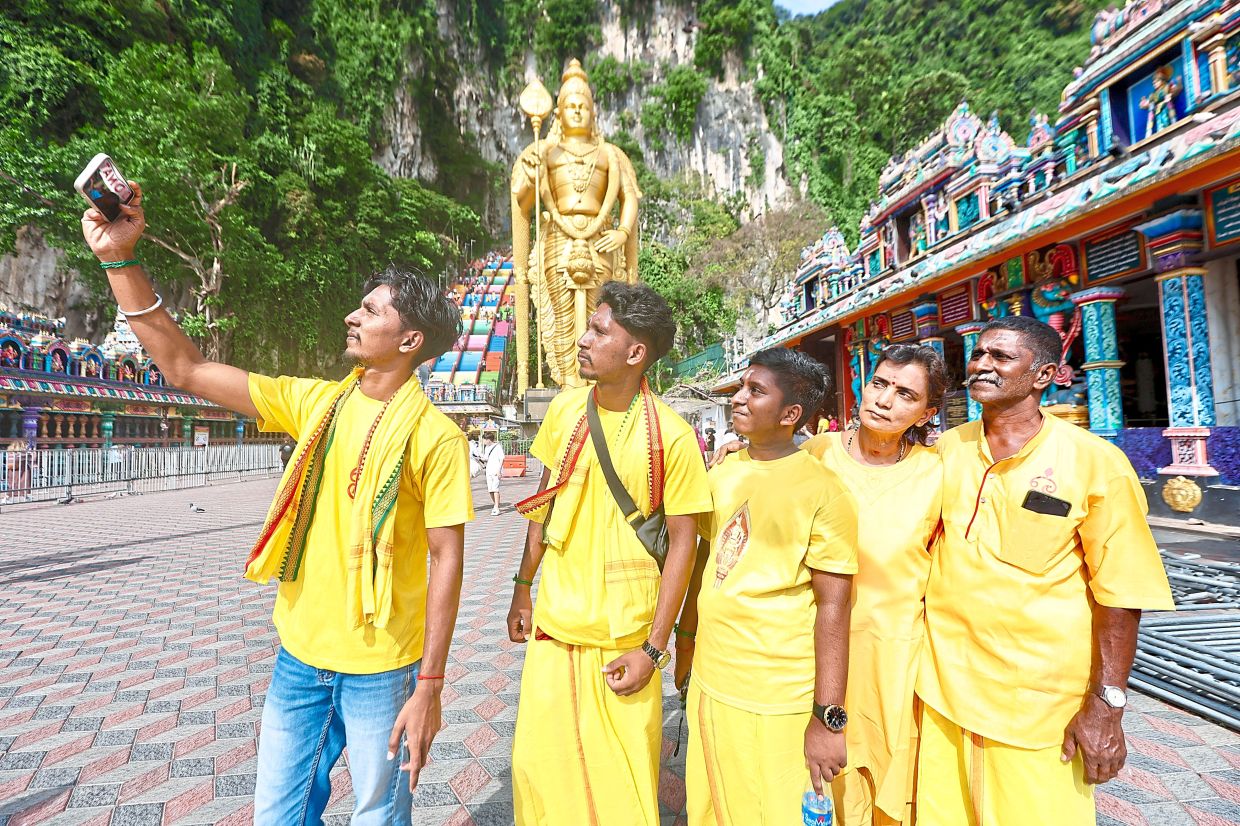
“The urumi, or music processions for kavadis, will only be allowed up to the foot of the steps to avoid congestion,” Sivakumar said, advising devotees were to wear yellow.
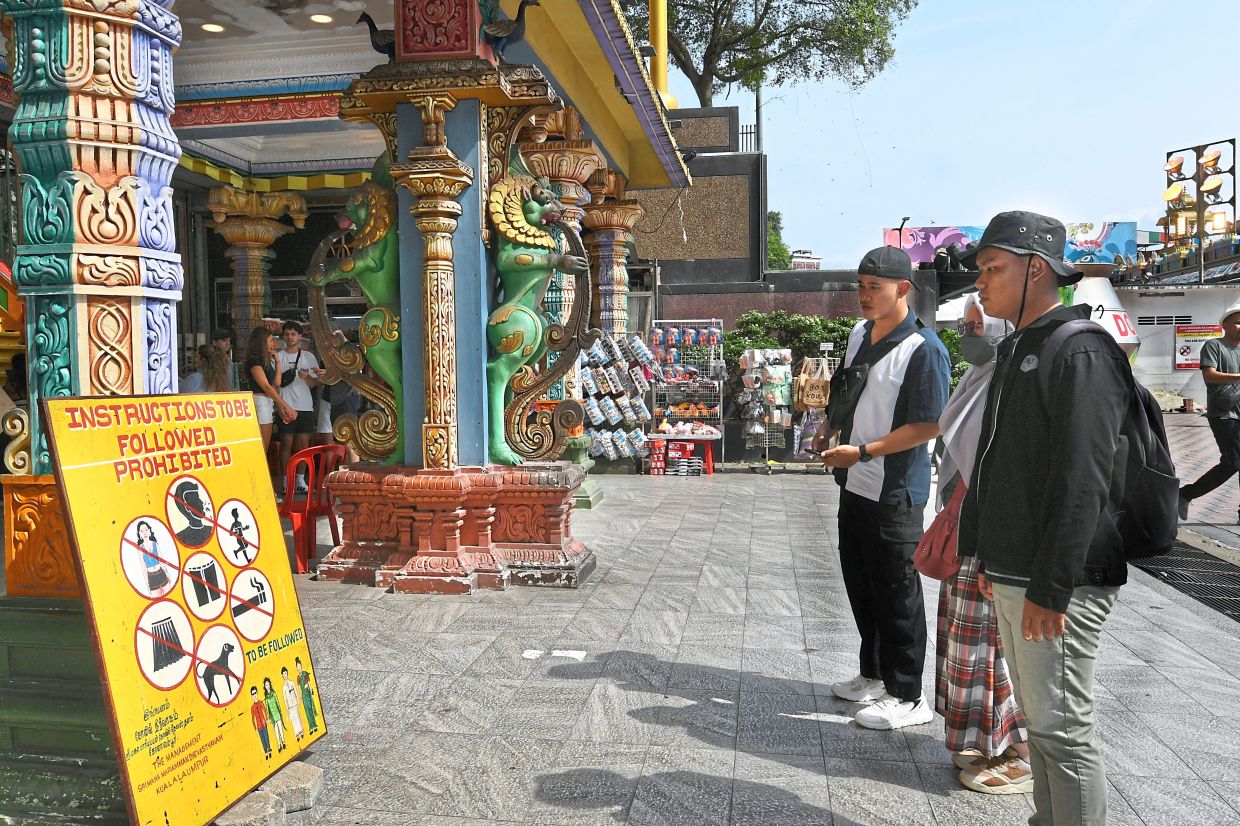
To those not familiar with the temple rules, especially tourists, he said the management would not allow inappropriate attire or footwear in the temples and on the steps.
He reminded visitors to dress appropriately.
“As for footwear, bring along a bag to carry them with you.
“Every year, we dispose of tonnes of shoes because many find it difficult to retrieve them.
“Last year, we threw away three tonnes of shoes,” he said.
Sivakumar advised visitors to take public transport and those travelling in private vehicles to park in designated areas.
On the security front, Dang Wangi OCPD Asst Comm Sazalee Adam warned that strict action would be taken against those who disrupt the peace.
“Dangerous items such as knives, machetes and fireworks are strictly prohibited,” he said.
Early devotion
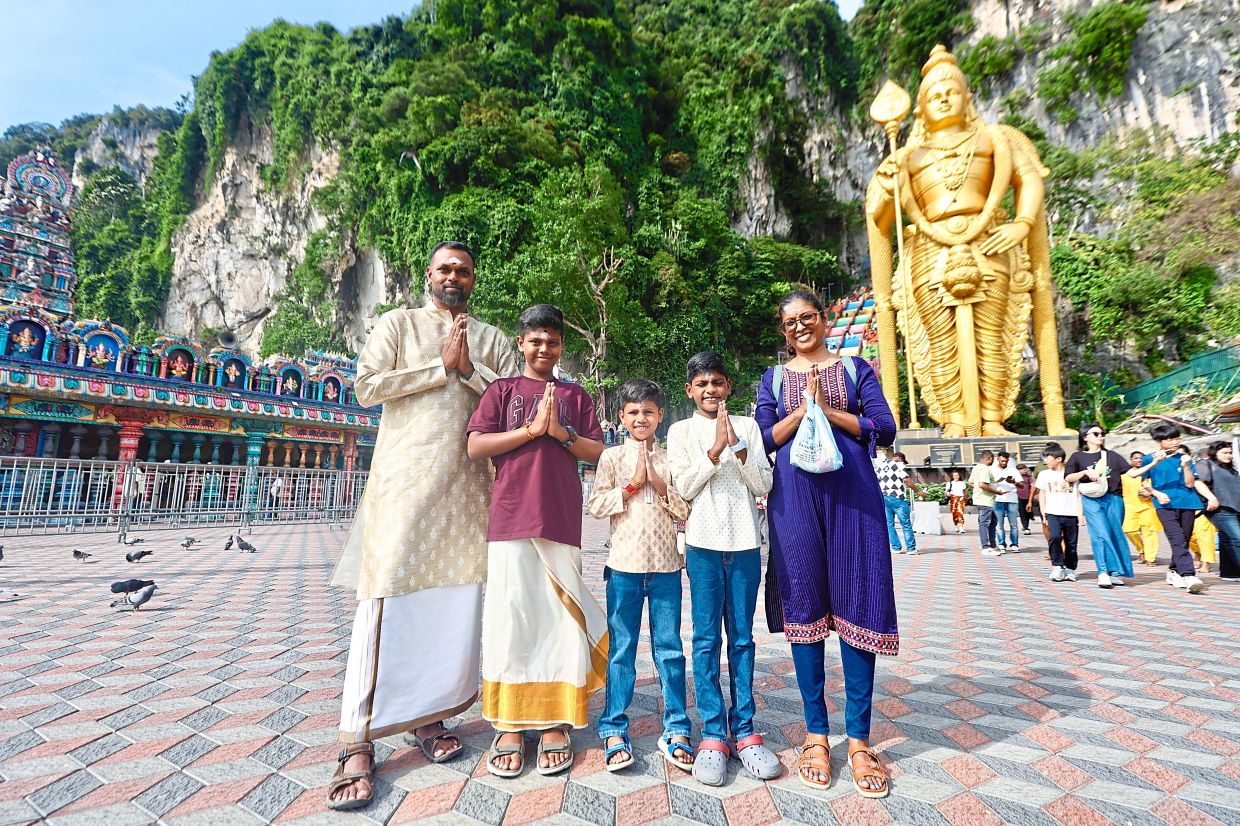
Many devotees have started fulfilling their vows to avoid the huge crowd expected at Batu Caves on Thaipusam day.
Among them was Letchumanan Perumal, 58, with wife Mahaletchumy Rengasamy, 54, and three sons – Thanesh, 25, Darwin, 19, and Deevesh, 16 – from Labu, Negri Sembilan.
Letchumanan said it was the family’s first time carrying the paal kudam and visiting Batu Caves.
“We wanted to show gratitude for the blessings of the past year.
“We run a family business dealing with recyclables, which my older son intends to take over.
“My two younger sons did well in their studies last year,” he said, adding that the family prayed for continued prosperity.
Similarly, G. Thurai Singam, 43, visited with wife P. Judy Maria, 41, and sons Theiiveeghan, 10, Joshuant, eight, and Addhavan, six, from Subang Jaya early to soak in the atmosphere before heading to a less crowded temple in Kuala Selangor to take the paal kudam.
“Batu Caves becomes very crowded on Thaipusam day and I want to leave space for those who truly need to be here,” he said.
When asked the reason for taking the paal kudam this year, he said his eldest child Theiiveeghan felt the urge to do so.
“We decided to take the paal kudam as a simple act of devotion to Lord Muruga,” he said.