QUIET corners of Johor are slowly shedding their sleepy image, with the Electric Train Service (ETS) drawing people, businesses and weekend activity into former pass-through towns.
StarMetro visited three towns with stations along the route and talked to locals to see how life has changed for them.
Kluang rising
In Kluang, coffeeshop owner Lim Jit Chew said the ETS was bringing more life to the town.
“Even before the ETS, we had noticed a gradual increase in visitors, mainly locals, who wanted to travel again after being stuck at home for months during the Covid-19 pandemic.
“Places that were often overlooked, like Kluang, began to gain popularity.
“The introduction of the ETS has been timely, as it gave those keen to explore their own backyard the convenience of using affordable public transport,” he said when met at his coffeeshop.
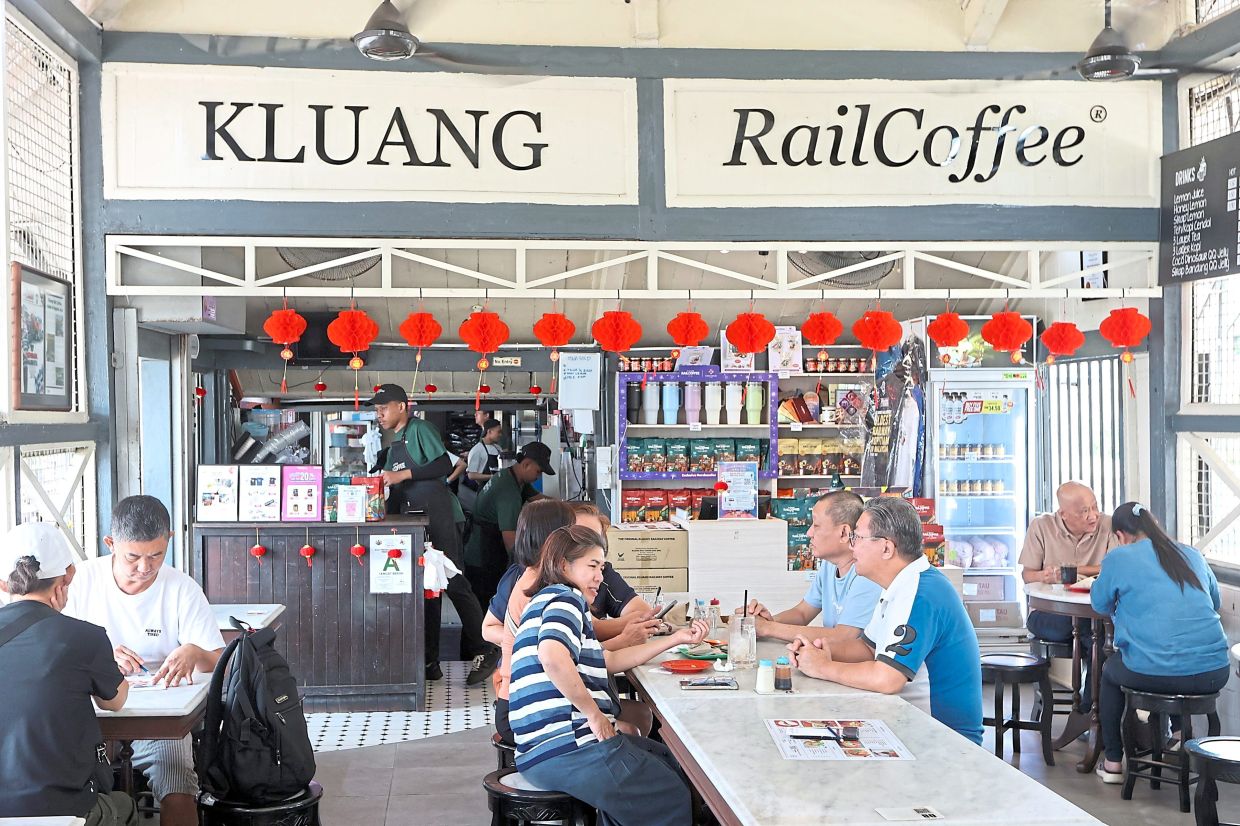
Lim is the third-generation owner of the 80-year-old outlet located at the former Keretapi Tanah Melayu (KTM) station.
The station has since been replaced with a newer and bigger building located right next to it.
Although his kopitiam (traditional coffeeshop) is now a bit of a walk from the station, Lim said it did not deter customers from making a stop at his family’s shop.
“Even though Kluang has had a train station for years, the service was not as fast and reliable as the ETS.
“The ETS is a lot more punctual, allowing passengers to plan their journey better.
“It is also more comfortable compared to the old train service, the Southern Express.
“For now, a majority of those visiting Kluang are locals or people working in Singapore.
“I believe more people will visit once the frequency of the train service is increased,” he said.
Echoing his sentiments is Dahlan Lokna, a front desk executive at a hotel in Kluang.
“While there has not been a significant spike in the hotel’s occupancy rate, you can see more people in Kluang.
“I believe most of those travelling here, whether by car or train, take day trips instead of staying the night.
“Perhaps the trend may change, but this is what I have noticed since starting to work here about three years ago,” he said.
Dahlan said the increase in visitors had brought positive economic spillovers to locals, especially those operating eateries.
“For hotels, it may take some time.
“I see the potential in Kluang, but there is a need for more activities to be organised here,” he added.
Renggam set to roar
In Renggam, Atikah Ishak said the increase in foot traffic was slow but visible.
Renggam is a town under Kluang district, located about 80km from Johor Baru.
“I wouldn’t say the increase has been significant, but I do see more new faces here.
“It is still too early to tell, but I think we will see more people coming in the next two to three months.
“I think many people, especially those outside Johor, are still not aware of the small towns that ETS passes through,” she said.
Atikah, who works as a cook at a food court near the Renggam KTM station, echoed Dahlan’s view on the need for more tourism activities in small towns.
“There is nothing much to offer visitors other than the charm of a quiet old town, which may not appeal to everyone,” she said.
“If there are more places to visit, maybe we will see a greater number of people travelling here,” she added.
Kuih maker Fatimah Ibrahim is also happy to see a gradual increase in people visiting the town.
“In a small town like this, we can easily tell whether a person is from here or not.
“The rise is not so obvious, but that is okay, as we may not be able to cope if there is a sudden influx.
“The important thing is that locals can enjoy the convenience of a faster train service, especially those living in nearby towns.”
She said a majority of young people from Renggam were living in cities such as Johor Baru and Singapore.
“The service will make it easier for them to visit their hometowns, and this will also help foster closer bonds among families,” said Fatimah.
Better for Bekok
In Bekok, a small town in Segamat district, Tan Tok Ha sells asam laksa just a few metres away from the train station.
“Business has improved, especially on weekends, but there is not much difference on weekdays though,” she said.
“Normally, business is slow at the beginning of the year, especially with the start of school and Chinese New Year around the corner.
“I hope to see a spike in sales during and after Chinese New Year,” she said, adding that most of her customers are locals.

“We have yet to see large crowds from Singapore,” said Tan.
“Hopefully, they will make their way here in the months to come.
“Bekok is a nice place to take a break from the hustle and bustle of big cities.”
Not far from Tan’s stall, trader Kamisan Zakaria could be seen attending to customers.
Kamisan, who has been selling satay in Bekok and Chaah for over 40 years, said he was confident in the potential of ETS to bring economic spillovers to locals.
“Recently, a new Indian Muslim shop opened here and to me, that is a positive move as we did not have such a restaurant in Bekok before.
“It means they have confidence in the town’s potential when the increase in visitors is not really apparent yet.”

Kamisan said the durian season in a month or two would likely bring more visitors, especially from Singapore.
“Bekok is famous for its durian and you can see dozens of Singaporeans coming here to enjoy the fruit.
“Most come on tour buses while some drive.
“Now that the ETS is here, they have another way to travel,” he noted.
Service improvement
The ETS3 between Johor Baru and Kuala Lumpur began operations on Dec 12.
The 192km Gemas-Johor Baru Electrified Double-Tracking Project has 16 stops, including 11 new stations such as Kluang, Renggam and Bekok.
The other stations in Johor are JB Sentral, Kempas Baru, Kulai, Layang-Layang, Paloh, Labis, Mengkibol, Genuang and Segamat.
It has a maximum capacity of 312 passengers per six-coach train.
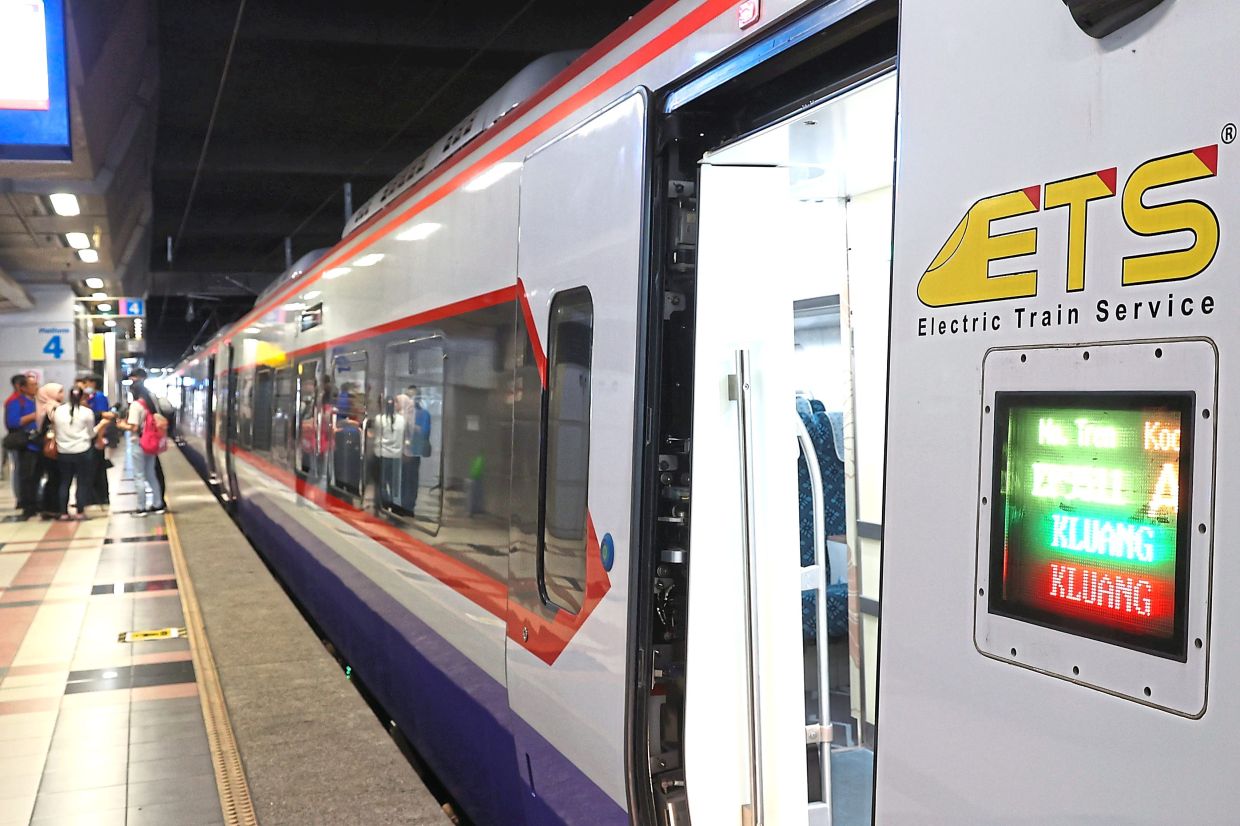
Each seat comes fitted with plug points, with passengers enjoying ample leg room and individual seat-tables.
The train also stops at Bandar Tasik Selatan, Kajang, Seremban, Pulau Sebang and Batang Melaka.
With speeds of up to 140km/h, travel time between Johor Baru and Kuala Lumpur is about four-and-a-half hours.
Currently, there are a total of eight trips between Johor Baru and Kuala Lumpur, with four trips in each direction.
On Jan 20, Transport Minister Anthony Loke said KTMB would increase the frequency to 10 trips per day from Feb 13 to 22 for Chinese New Year, as well as from March 13 to 29 for Hari Raya Aidilfitri.