
Pulau Bum Bum is a place one must visit to enjoy the traditional attire of the Bajau Semporna, Sabah’s famous sea gypsies, in its full glory.
In a fishing village called Look Melalom, just a short hop over water from Semporna on the mainland, sounds of traditional instruments accompanying the “Ratu Lepa” as she performs the igal-igal dance, mesmerises visitors.
The pageant queen is in full Ala Bimbang regalia, with crown (jabang), bangles and nail extensions.
The prestigious Ratu Lepa title is awarded to a native during an Igal-Igal competition related to the annual Sambulayang Festival otherwise known as Regatta Lepa.
“It’s so beautiful. I want to try it on and dance too.
“I’ve never seen such a stunning costume,” said Dr Ekaterina Rashidin, a Russian living in Malaysia who was part of a Kraftangan Malaysia tour to Semporna.
After the igal-igal performance, Ekaterina took a closer look at the costume and its details, taking the opportunity to don the Ala Bimbang.
She also said she wanted to showcase it on social media to attract tourists.
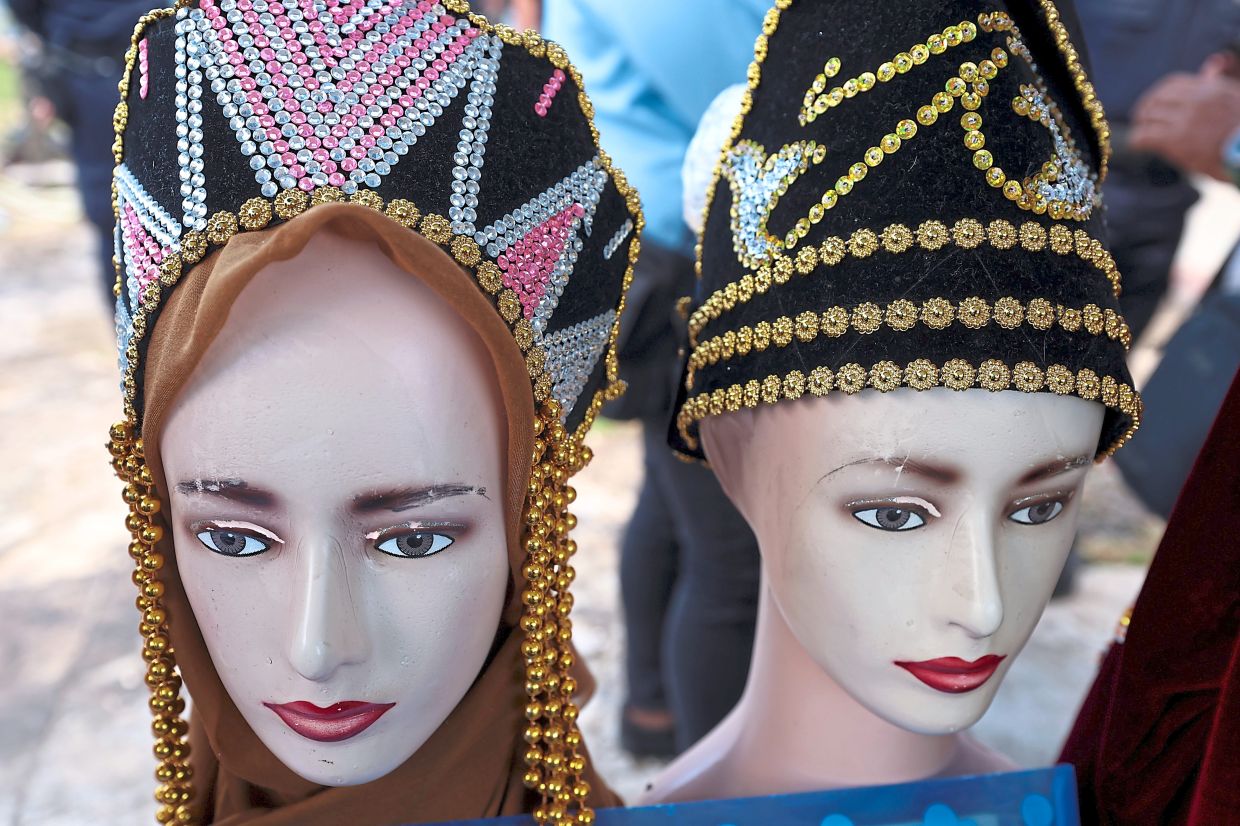
Chuffed by her enthusiasm, traditional clothing tailor Narimah Tamjiji, 47, said the Ala Bimbang had a distinct charm achieved through its kelolok (pattern on the Bajau lepa, or single-mast sailboat), seaweed and floral bead motifs.
“Like many traditional Bornean costumes, it is predominantly black but it now comes in a variety of colours to suit current times.
“But black is the classic choice.
“Besides the bright bead embellishments, the costume is typically worn with bungkah (gold bangles) and saling (long nail extensions) to help enhance the elegance of the dancer.
“The men wear a tanjak (traditional headgear),” she told Bernama.
The mother of five said the garment was traditionally worn during special occasions like the Regatta Lepa.
“Over time, its fame has grown beyond Sabah. I now receive orders from Peninsular Malaysia, too.
“While I’m excited by the increased interest, I’m also worried about its over-modernisation, especially since there are only a few of us still making it.”
Narimah, who has over a decade of experience, said there were fewer than 20 tailors left in her village, most of them elderly.
They are dedicated to preserving authenticity but fear its traditional identity is fading away.
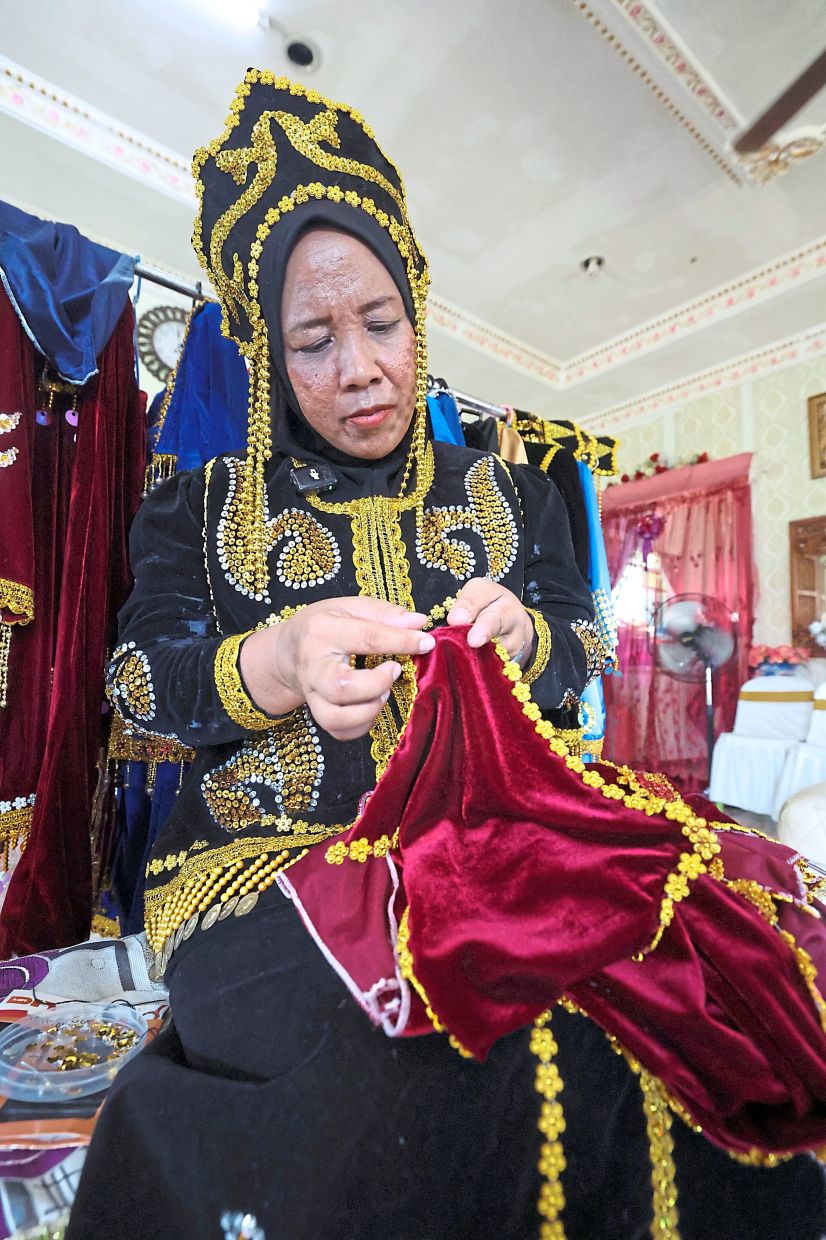
“The design is flexible, but we still maintain the traditional motifs.
“It doesn’t mean I reject modernity. For instance, the Ala Bimbang is no longer limited to velvet, so I use other fabrics according to the customer’s budget.”
Narimah, the second of nine siblings who learned her craft from her grandmother, said every aspect of the garment held deep meaning and represented the Bajau Semporna people.
She feels that the over- modernisation, which started creeping in two years ago during the Regatta Lepa, must be addressed tactfully.
“We are worried that it will make it hard for future generations to distinguish between the original and modern versions.
“I’ve seen it turned into gowns with exaggerated folds.
“They should actually be neatly tucked in on the sides, called lipatan tak jadi.
“Traditional tailors should be cultural ambassadors and guide their clients.”
However, Narimah is grateful that most of her clients, young and old, preferred the original design which is deemed to enhance one’s beauty and charm.
Since 2019, demand started growing after a university student wearing Ala Bimbang made the attire go viral.
“Initially, I only received orders from Pulau Bum Bum, Tawau, Semporna and Kota Kinabalu (in Sabah).
“But since the video came out and after joining Kraftangan Malaysia events in 2020, orders started pouring in.
“I couldn’t handle them alone, and only my eldest daughter had an interest, so I asked some villagers – single mothers and fishermen’s wives – to join me.”
Now with 12 people working from her 800sq ft living room, she is able to make at least 10 garments per month priced between RM1,000 and RM1,500 depending on their complexity.
“Many love my garments because the motifs appear alive and the stitching is fine.

“This involves combining different types, colours and sizes of beads.
“Some tailors use only large beads to save time,” said Narimah, whose dream is for a bigger space for her operations.
Meanwhile, Tourism, Arts and Culture Ministry (Motac) secretary general Datuk Shaharuddin Abu Sohot said Kraftangan Malaysia would continue to support craft entrepreneurs via training and promotions.
He said no matter their remoteness, Motac was committed to preserving their cultural heritage.
“These crafts are valuable tourism assets, attracting people to come see and buy them.
“That’s why it’s crucial to protect and promote them in line with Visit Malaysia 2026.”