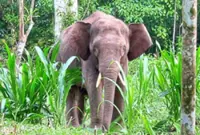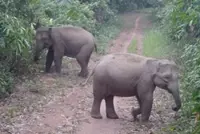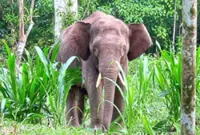
For the past five years, Chee Ming Tam has lost hundreds of thousands of ringgit as wild elephants repeatedly ravaged his fruit plantation along Jalan Renggam in Kluang, threatening his livelihood.
The elephants would enter his farm two to three times a year, destroying fruit trees, crops and fencing, with losses ranging from RM50,000 to RM100,000 each time.
Chee, 56, said the most recent incident occurred early last year, when a herd of elephants damaged his electric fence to gain access to his guava trees, despite him taking various measures to keep them out.
“This has been going on for years. Each time it happens, I suffer losses of at least RM50,000. Sometimes it can go up to RM100,000,” he said.
Chee lamented that the problem was not limited to his current plantation, saying he had previously experienced similar incidents at his farm in Kahang.
“It didn’t just happen at one place. When I was in Kahang, the elephants frequently came into the farm,” he said, adding that he eventually moved his operations after repeated losses.
Chee planted bananas previously, which resulted in even heavier damage when elephants entered his plantation.
“They don’t just eat the fruits. They destroy the trees as well. When I was planting bananas, my losses were higher,” he said.
Although he had electric fences and gates installed around his plantation, the elephants were still able to force their way in.
“They would push down the fence and gates. Every time that happened, I had to repair everything again, and that required more money,” he said.
The repeated damage and repair works became financially draining for Chee, with little guarantee that the measures would hold up during the next visit by the elephants.
“In the past, it was losses after losses. Even when we fixed the fence, they would come back and break it again,” he said.
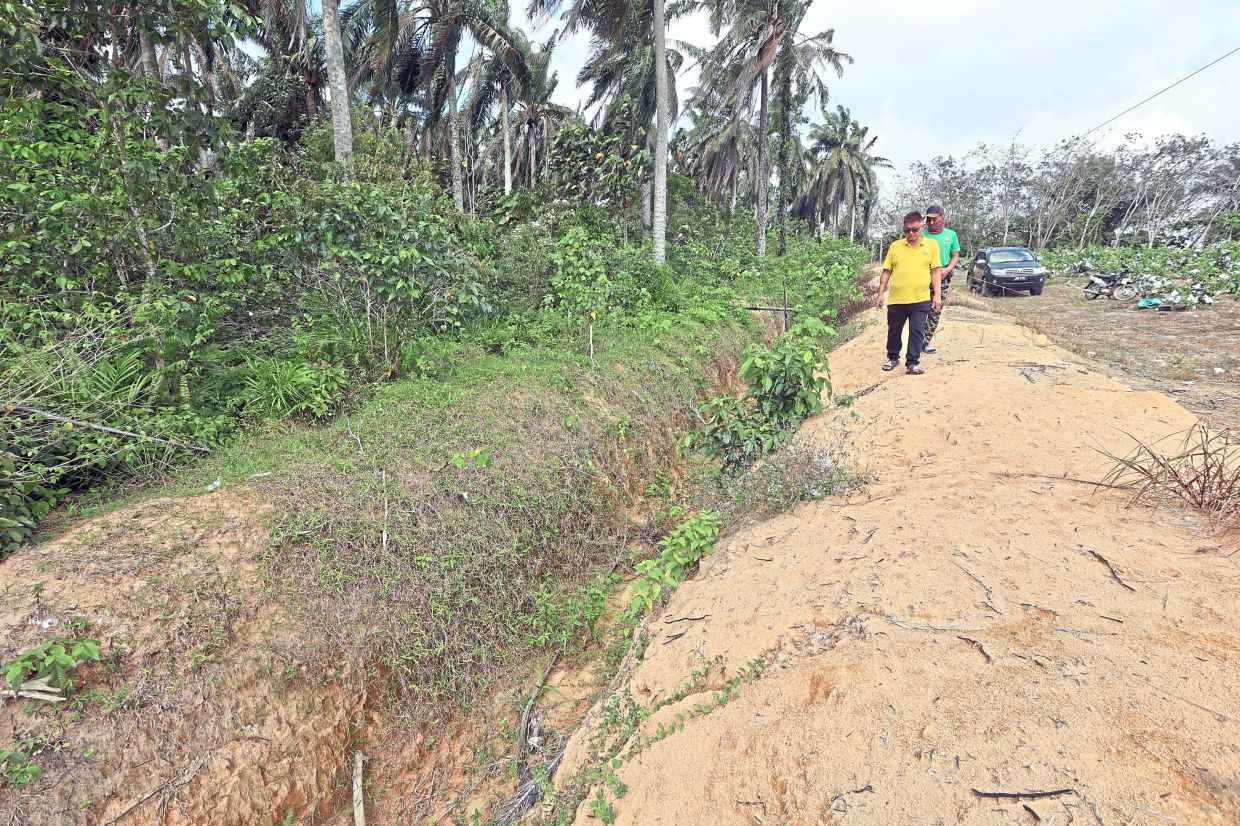
Early last year, Chee decided to take a different approach by digging a drain around the fence after discussions within his team and observing similar methods used by others who faced the same issue.
“Since then, the elephants have not entered, as they are afraid to go down into the drain,” he said.
He found the measure effective because there had been no further incidents since the drain was constructed.
“For now, it is working. There have been no new incidents so far,” he added.
Facing a similar plight is smallholder Mohamad Isa Murah, who suffered thousands of ringgit in losses due to the presence of a group of elephants at Felda Bukit Tongkat in Kluang.
The 66-year-old said the elephants destroyed at least 300 oil palm trees, leaving him with about 120 trees on his 4.05ha plantation.
“This is my livelihood and losing 300 oil palm trees is a lot.
“Elephants have roamed around this area for many years but they never really caused much trouble before,” he said.
Mohamad Isa said the situation changed towards the end of 2022.
“Since about three years ago, they have been seen more often and have started destroying our crops,” he said.
The elephants have not returned to his plantation for several months, but Mohamad Isa believes they are still nearby as other smallholders continue to suffer losses.
“Other people in the area are still seeing their trees destroyed, so I believe the elephants are still around,” he said.
To avoid further losses, he decided not to plant new trees for the time being.
“There is no point planting new trees only for them to be destroyed later.
“I have considered installing an electric fence to prevent elephants from entering, but the cost is beyond my means.
“I will need to spend at least RM30,000 to fence the area, I cannot afford it,” he said.
For safety reasons, Mohamad Isa has also stopped visiting his plantation at night, as elephants are difficult to spot in the dark.
“They are not very visible at night, and since the elephants are still lingering around, it is safer for me to stay away from anything that can put me in danger,” he said.
He hopes more can be done to lessen his hardship without harming the animals. — By MOHD FARHAAN SHAH and VENESA DEVI