FOR Romle Yak Ali, a 44-year-old fisherman in Penang, the household income is entirely at the mercy of the elements.
There are weeks when the father of four manages to head out to sea only three or four times, leaving the family without any earnings on the remaining days.

His wife, 40-year-old Rosnani Hamid, contributes to the household through a modest income earned at a local market in Balik Pulau.
Together, they struggle to support four children. Three are currently in school, while their youngest requires specialised care and attention.
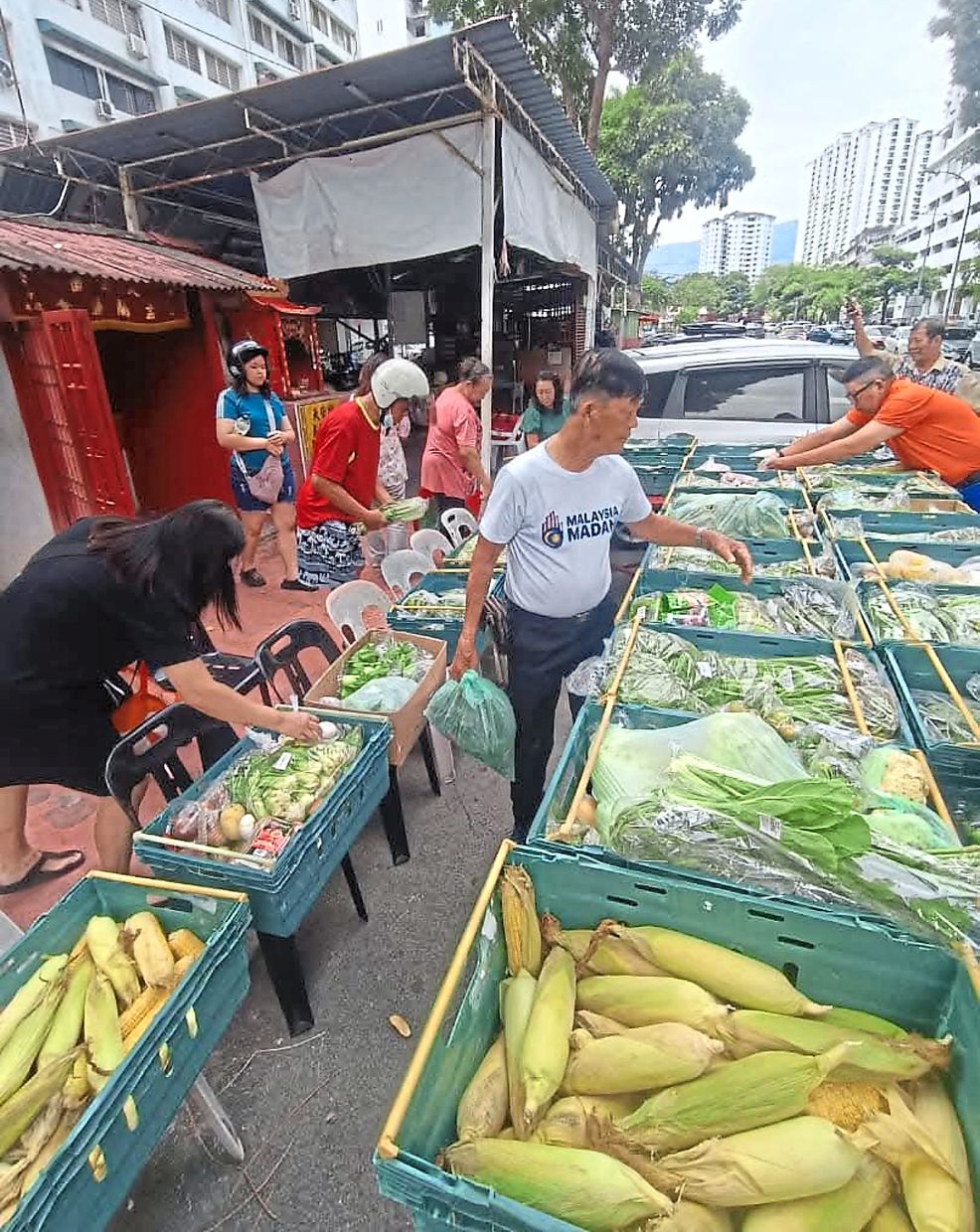
For this family, the monthly food rations provided by Penang’s Mutiara Food Bank have transitioned from helpful supplement to essential lifeline.
The food bank is a programme where food surplus is collected and channelled to the needy for free.
“As my income fluctuates, the assistance helps us stay afloat, especially during months when bad weather prevents me from going out to sea,” Romle said.
“We receive essentials such as rice, cooking oil, vegetables, and even coffee and biscuits. These are important because our children are at an age where biscuits are a common tea-time snack.”
The family structure adds significant financial weight to their situation. Their eldest daughter, now in her 20s, is married and has started her own life, but the three younger children aged five, nine, and 11 remain dependants.
The youngest child attends a special needs kindergarten, which adds a heavy burden to their monthly expenses.
The pressure has been compounded by the global rise in food prices, meaning every ringgit must now stretch further than before.
“As parents, we want our children to have a balanced diet, and this assistance helps reduce some of our monthly burden,” said Romle, who has been a recipient of the Mutiara Food Bank aid for about a year.
Rosnani said the monthly supplies allowed the family to save several hundred ringgit that would otherwise be spent on basic survival.
In a household where cooking happens every day to manage costs, the impact is immediate.
“It cuts down our expenses, especially on items like cooking oil and rice.
“Cooking at home helps us to manage costs when raising young children,” added Rosnani.
However, the nature of the aid requires careful management.
Rosnani said while the vegetables provided usually only last about a week, she was adept at stretching the dry goods throughout the entire month.
By having the staples covered by the food bank, the couple could reallocate their limited cash.
“We prioritise spending on poultry, eggs and meat to ensure the children have a balanced diet.”
Living in a traditional village setting has also provided a social safety net that supplements the formal aid.
Rosnani often turns to her neighbours when times are particularly lean, demonstrating the community resilience found in Penang’s rural pockets.
“Many of them grow vegetables, and we ask if they can spare some,” she said.
“It’s like going on a hunt to see who has planted what. The neighbours are kind and always willing to share,” she said.
Every sen saved is invested in the future of their children, particularly the youngest.
“He has learning difficulties, and we want to give him a good head start. That means saving every sen for his education. The food bank helps ensure our children receive proper nutrition, even during tough times.”
Stretching budgets
The story is similar for K. Vimala, a 45-year-old single mother living in the Rifle Range flats in Air Itam.
Her primary focus is the well-being of her two sons, N. Naresh, 16 and 14-year-old Navenesh. However, providing a stable environment is a constant challenge.
Vimala works as a part-time cleaner, but her ability to work is restricted by chronic health issues.
“I have thyroid problems and an irregular heartbeat, which prevent me from holding down a full-time job,” she said.
“That means my income is not fixed. As a single parent, I must ensure there is food on the table, and the only way to manage on a tight budget is to cook every day.”
The sharp increase in the cost of living has hit Vimala’s household hard.
She expressed a deep desire to provide healthy meals, but the price of fresh produce at the market was often beyond her reach.
Through the Mutiara Food Bank, she receives monthly rations delivered directly to her housing area, including vegetables, fruits and occasional snacks.
“I usually stock up on essentials like onions and potatoes. The fruits are a bonus and sometimes there are buns, which my sons enjoy,” Vimala said.
“Although the rations are given once a month, they can be stretched and help me budget better as prices continue to rise.”
Because the food bank covers the base of her pantry, Vimala can focus her earnings on protein. She makes an effort to ensure her children do not feel the weight of their poverty through the variety of her cooking.
“I cook Indian curries and sometimes Chinese-style stir-fried dishes to give my children some variety. While we don’t have much, it’s my responsibility to ensure my children don’t feel the pinch, especially when it comes to meals.”
Vimala has been a recipient of food assistance for more than five years, and she credits the programme with keeping her household finances from collapsing.
The two-week buffer provided by each distribution allows her to redirect funds toward her children’s tuition.
As a survivor of domestic violence, her motivation is rooted in a desire to see her sons break the cycle of poverty through education.
“Everything I earn goes towards their education. I want them to succeed in life,” she said.
In the same block of flats, the aid reaches the elderly.
Retired office cleaner Ching Chai Lee, 68, and her husband Loh Leong Kim, 78, use the rations to maintain their health.
Loh continues to work at a petrol station, earning about RM1,800 a month, an amount that barely covers their utility bills and basic needs.
“We usually look forward to rice, onions, garlic and vegetables,” Ching said.
“We only take what we need since it’s just the two of us, but having fresh items helps us have a more balanced diet.”
For them, the food bank is a way to ensure they have savings for medical emergencies in their later years.
Mechanics of food rescue
The Mutiara Food Bank was established by the Penang government in 2017 as a response to both poverty and food waste.
By November last year, the programme reached a significant milestone, benefitting 135,598 households across the state.
The operation relies on a “food rescue” model. It collects surplus food, including vegetables, pastries and canned goods that are nearing their expiry dates or are considered less “aesthetic” than newer stock.
These items are donated by a broad coalition of partners, including hypermarkets, supermarkets, hotels, restaurants and wholesale markets.
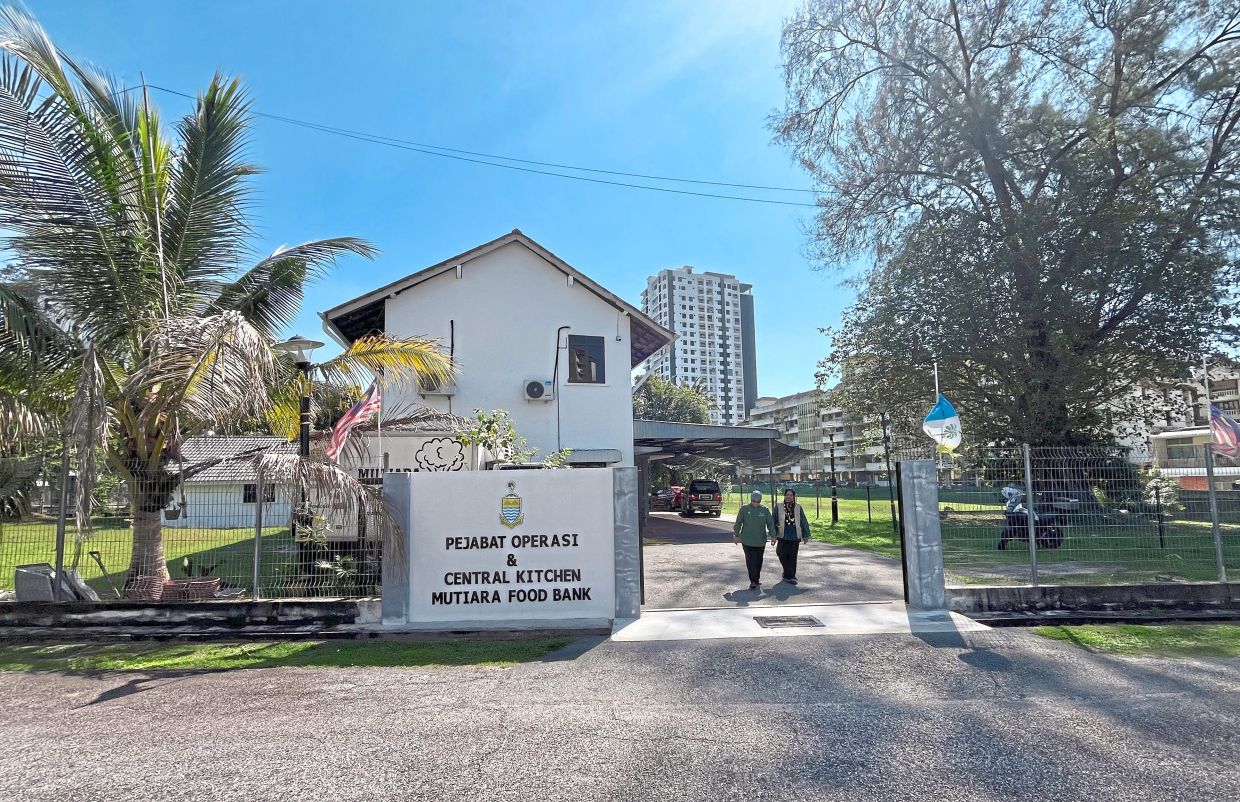
Originally operating from the Caring Society Complex, the food bank headquarters has since moved to a more robust facility in Jalan Lahat, George Town.
This centre is equipped with two industrial-grade cold rooms –one acting as a freezer and the other as a chiller – ensuring that perishable food is stored safely before being dispatched to various constituencies.
The facility also contains a large-scale kitchen, allowing the team to prepare warm, cooked meals when large donations of raw ingredients arrive.
Penang welfare and social development committee chairman Lim Siew Khim said the state government has been allocating about RM600,000 annually to keep the initiative running.
She noted that the programme worked in tandem with other state welfare efforts, such as the Equitable Economic Agenda (AES) and i-Sejahtera.
“The programme is based on a food rescue concept, where surplus but still safe-to-consume food is collected,” Lim told StarMetro.
“Because the core concept is food rescue, strict dietary guidelines are not prioritised. The primary focus is on ensuring all food distributed is safe for consumption while minimising food wastage.”
Future challenges
Despite its success, the programme faces logistical hurdles. It operates daily, with distributions rotating across different areas of Penang.
Coordination is a complex web involving state assemblymen, constituency officers, Village Community Management Councils (MPKK) and volunteers.

Lim acknowledged that relying on surplus donations means the supply can be inconsistent.
“The absence of a dedicated surplus food policy and tax incentives for donors affects sustained private-sector engagement.”
To combat these issues, the state is looking to diversify its food sources and introduce a ‘Sponsor a Meal’ programme to attract fixed contributions from corporations and individuals.
Plans are also underway to bolster the fleet of operational vehicles and introduce mobile cold storage units to reach rural communities more effectively.
Beyond mere nutrition, the food bank is evolving into a centre for skills development.
Lim said new initiatives such as bakery classes designed for single mothers and youths.
The goal is to move beyond temporary relief and provide recipients with the tools to generate their own additional income.
“In the current socio-economic climate, food banks play a crucial role,” Lim said.
“The programme connects food wastage with social justice, fostering an inclusive, resilient, and compassionate society.”