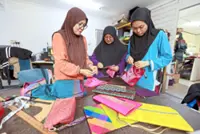
Participants of the Mama Jahit dari Rumah (Mums Sew from Home or Mama JaRum) programme not only have the opportunity to increase their income, but also learn about the many unique ethnic patterns of Sabah’s indigenous communities.
The Mama JaRum project is part of the Inclusive Business Value Chain Development Initiative led by SME Corporation Malaysia.
It trains women in the state to sew outfits with Sabah’s ethnic motifs.
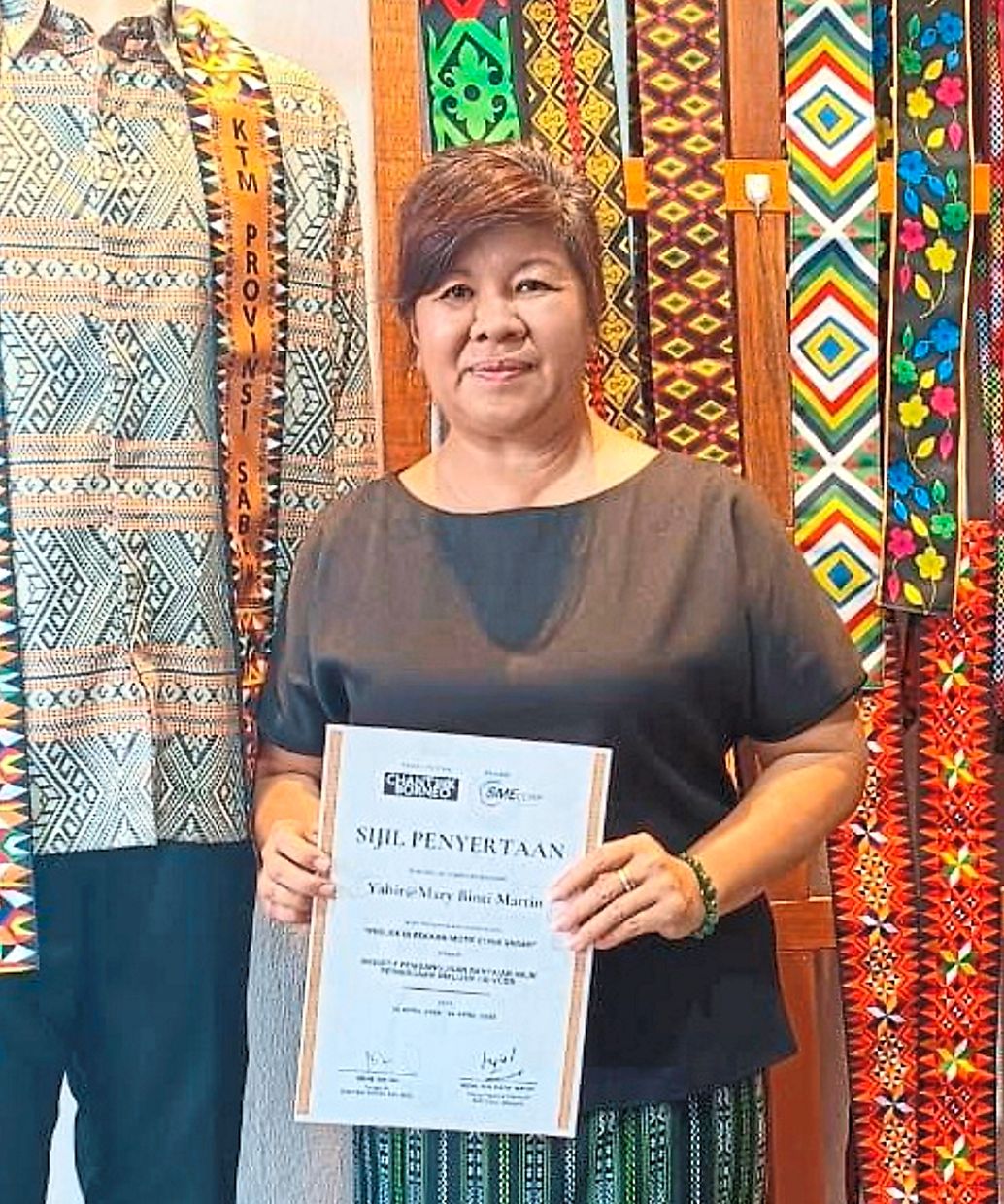
The handcrafted products of the trained participants are later marketed by Chanteek Borneo.
For Syarifah Majunting Abdullah, 38, who joined Mama JaRum last April, the programme has enabled her to learn about patterns such as the momogun from the Rungus tribe.
“In addition, the Bajau Samah (or Bajau Sama) have many patterns, as do the Dusun Suang Lotud from the Tuaran area,” said Syarifah, who is a fourth-batch Mama JaRum participant.
The mother-of-three told Bernama that she was confident that the handcrafted products produced under the guidance of Chanteek Borneo would introduce Sabah’s ethnic patterns to the global stage, while creating tailoring opportunities for housewives.
She said that in the Sabah Ethnic Design Inclusive Business Project under Chanteek Borneo, participants were trained in fabric finishing and sewing standards to ensure product quality.
“Sabah has a wide variety of very attractive and distinctive ethnic patterns that need to be highlighted, so that they can be more widely recognised.”
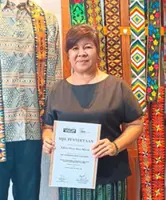
Yahira @ Mary Martin, 51, a single mother from Tamparuli who took part in a seven-day Mama JaRum workshop in 2022, said the programme gave her in-depth exposure to the diversity of ethnic patterns in Sabah.
Having been involved in sewing since 2009, she described her participation in Mama JaRum as very meaningful, as it opened up opportunities to learn about local ethnic patterns.
She added that demand from out-of-state customers was also increasing.
“At Chanteek Borneo, we learned about Sabah ethnic patterns of groups such as the Murut, Dusun Lotud and Rungus,” said Yahira, adding she was now earning enough to support herself.
Rubiah Rubin, 48, a first-batch Mama JaRum participant, said orders for sewn clothes increased especially during festive seasons such as the Kaamatan Festival, with Kadazan Dusun ethnic patterns among the most popular.
Before joining Mama JaRum, she had learned sewing at an academy in Tuaran and became a Mama JaRum participant in 2019.
“At Chanteek Borneo, we are taught to sew neatly.
“But most importantly, we learn to sew the ethnic patterns on the fabric,” Rubiah said, adding that orders were usually completed within a week.