AS KUALA Lumpur intensifies enforcement against littering in conjunction with Visit Malaysia 2026 (VM2026), city folk are questioning why another form of pollution continues to escape the net.
Illegal banners and bunting, strung on lamp posts, trees and road dividers without approval, have become a common eyesore marring the capital’s image and cluttering public spaces.
For years, successive Kuala Lumpur mayors have pledged to tighten the law and raise penalties for illegal advertisements, with figures as high as RM50,000 floated as a deterrent.
Yet despite the tough talk, little has changed.
The maximum fine remains a paltry RM2,000 under the 1982 Advertisement By-laws and 1991 Vandalism By-laws, prompting questions over whether Kuala Lumpur City Hall (DBKL) is serious about enforcement against such offences.
The leniency toward “visual litter” contrasts sharply with the crackdown on physical waste.
Starting from Jan 1, courts are empowered to impose fines of up to RM2,000 and mandatory community service for minor littering offences.
Repeat offenders may be fined up to RM3,000.
SWCorp had already issued 42 notices for offences such as discarding cigarette butts and food wrappers, stressing that these operations are vital for fostering civic responsibility ahead of VM2026.
Residents argue that visual litter is just as damaging as rubbish dumped on the streets and should be treated with the same seriousness.

Brickfields resident Dr Christopher Nicholas noted that while DBKL had employed various tactics, from phone number “wars” to chemical deterrents, the problem persisted.
“When residents are fined for dropping rubbish, they will ask why banner operators enjoy such remarkable immunity.
“If enforcement is to mean anything, it should hurt where it matters most – their pockets,” Nicholas said.
Architect Anand Krishnan warned that unregulated signage would create a “visual cacophony” that degrade the urban experience.
“Can such signage be considered ‘littering’?
“Perhaps not directly, but both stem from the same problem: a lack of consideration.
“If people are allowed to do whatever they want, visual litter will only increase.

“Littering is a civic crime and so is illegal signage,” said Anand.
The implications for tourism are significant.
Senior tourist guide Jane Rai warned that visitors often form impressions within minutes of arrival and the clutter of illegal banners showed weak enforcement.
“That first impression of disorder is hard to undo, regardless of what the city has to offer.
“It ultimately affects the city’s reputation, tourism appeal, and sense of civic pride,” she said.
This sentiment is shared by the business community.
Datuk Alagarsamy Kumar of the Brickfields Business Community Society noted that unchecked banners had eroded the distinct character of Little India.
“Excessive signage overwhelms shopfronts, obscures existing signboards and creates a cluttered streetscape,” he noted.
“Businesses that comply with DBKL regulations hope for consistent enforcement so that everyone operates under the same rules, especially with 2026 being Visit Malaysia year,” he said.
Beyond aesthetics, the banners pose physical risks.
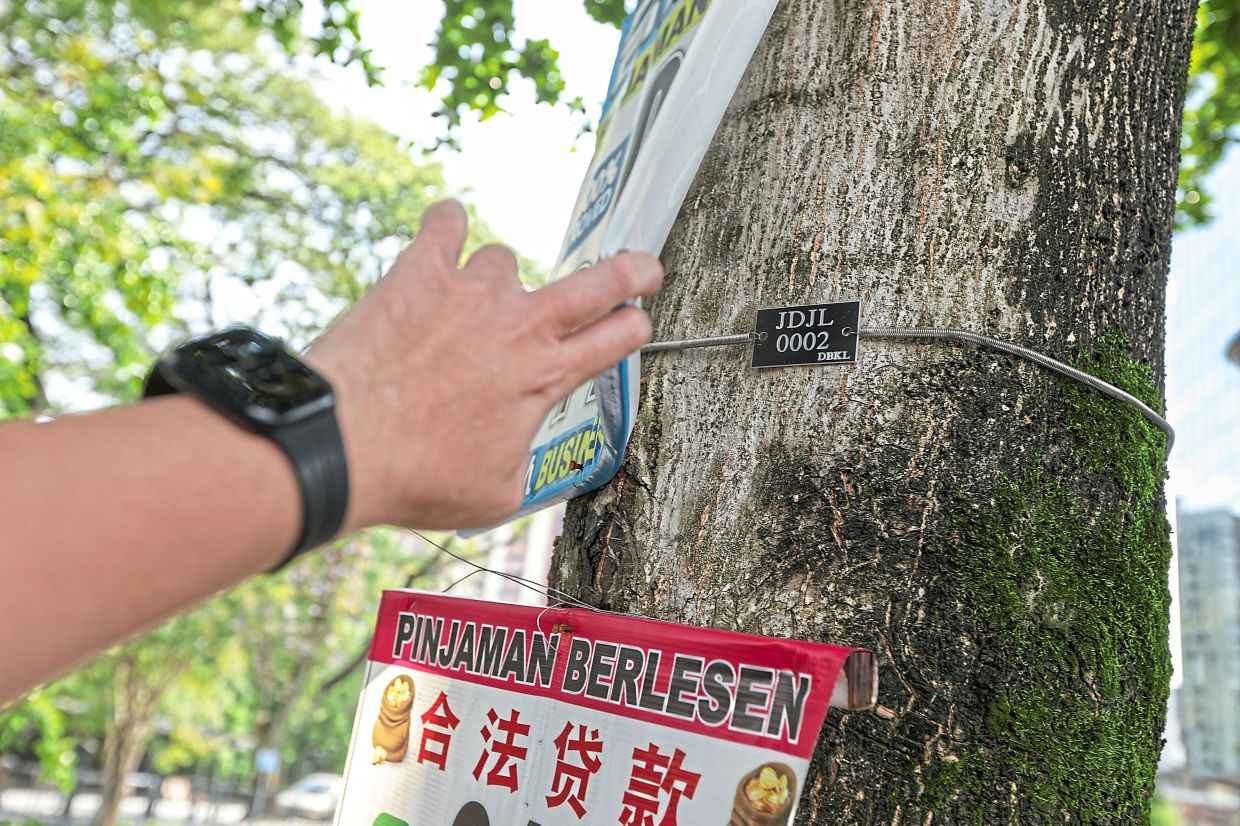
Taman Desa Residents Association chairman Wong Chan Choy said banners tied to trees often cover tags used for tree safety assessments.
“This delays inspections and follow-up work, increases risks during storms and drives up maintenance costs for City Hall,” he pointed out.
Businessman Datuk Pardip Kumar Kukreja questioned why the city was slow to act against this commercial nuisance.
A former co-chair of DBKL’s Illegal Advertisement Taskforce, Pardip highlighted that illegal ads ranked among the top three concerns for foreign investors.
“Ministries and city councils often resort to knee-jerk, piecemeal solutions instead of long-term strategies, with little engagement with industry players, residents’ associations or civil society,” he said.
He added that the problem persisted because current penalties were too low to be effective.
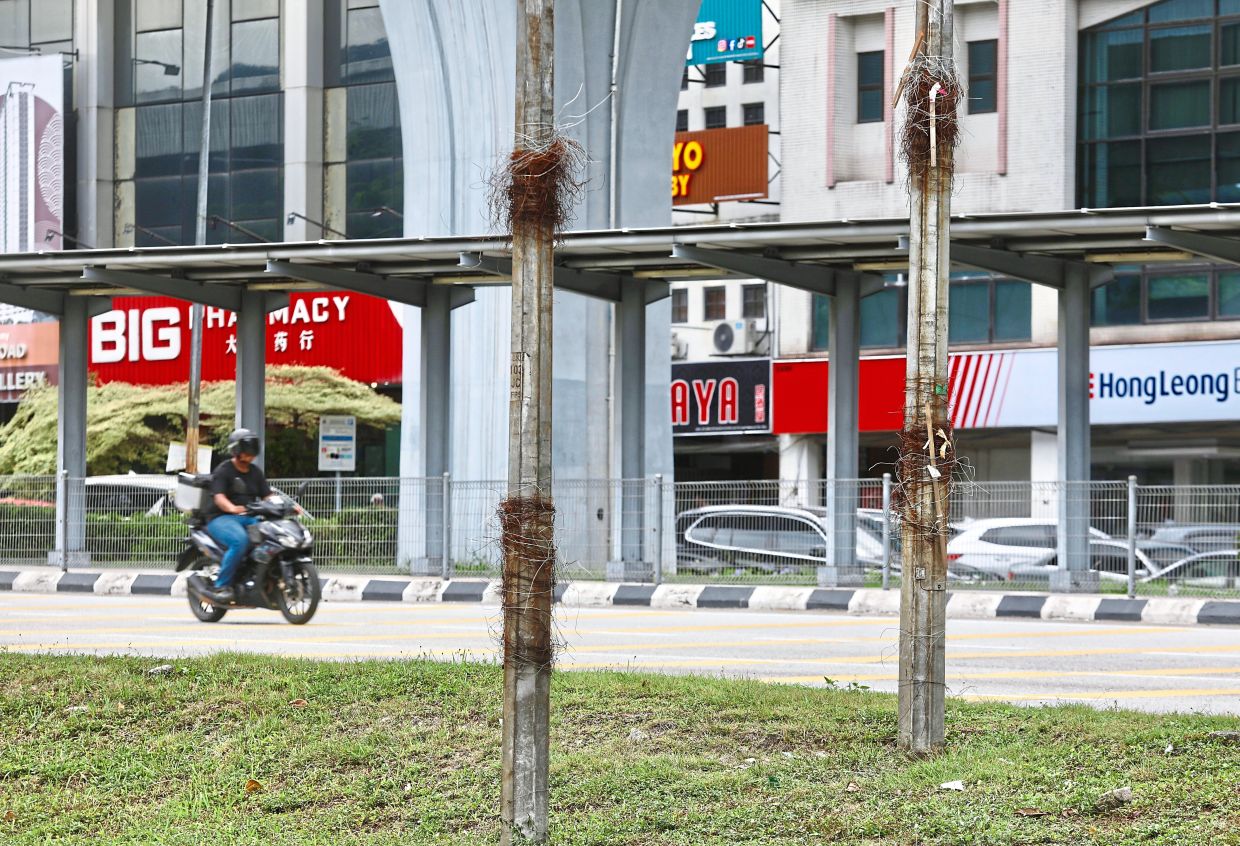



‘Nests’ of steel wiring left on roadside poles after illegal banners are removed. — Photos: Chan Tak KonG, Low Lay Phon/The star and courtesy photos
Wong pulling up a banner that is covering a tree tagged by DBKL in Taman Desa. At right is TDRA treasurer Koh Swee Hyong.
Jane: Tourists form impressions within minutes of arrival, and the clutter of illegal banners shows weak enforcement.
Anand says littering is a civic crime and so is illegal signage.
Nicholas says enforcement should hurt the offenders’ pockets.
Pardip says the problem of illegal banners persists because current penalties are too low to be effective.
A resident showing the DBKL tree tag that was hidden behind an illegal banner.
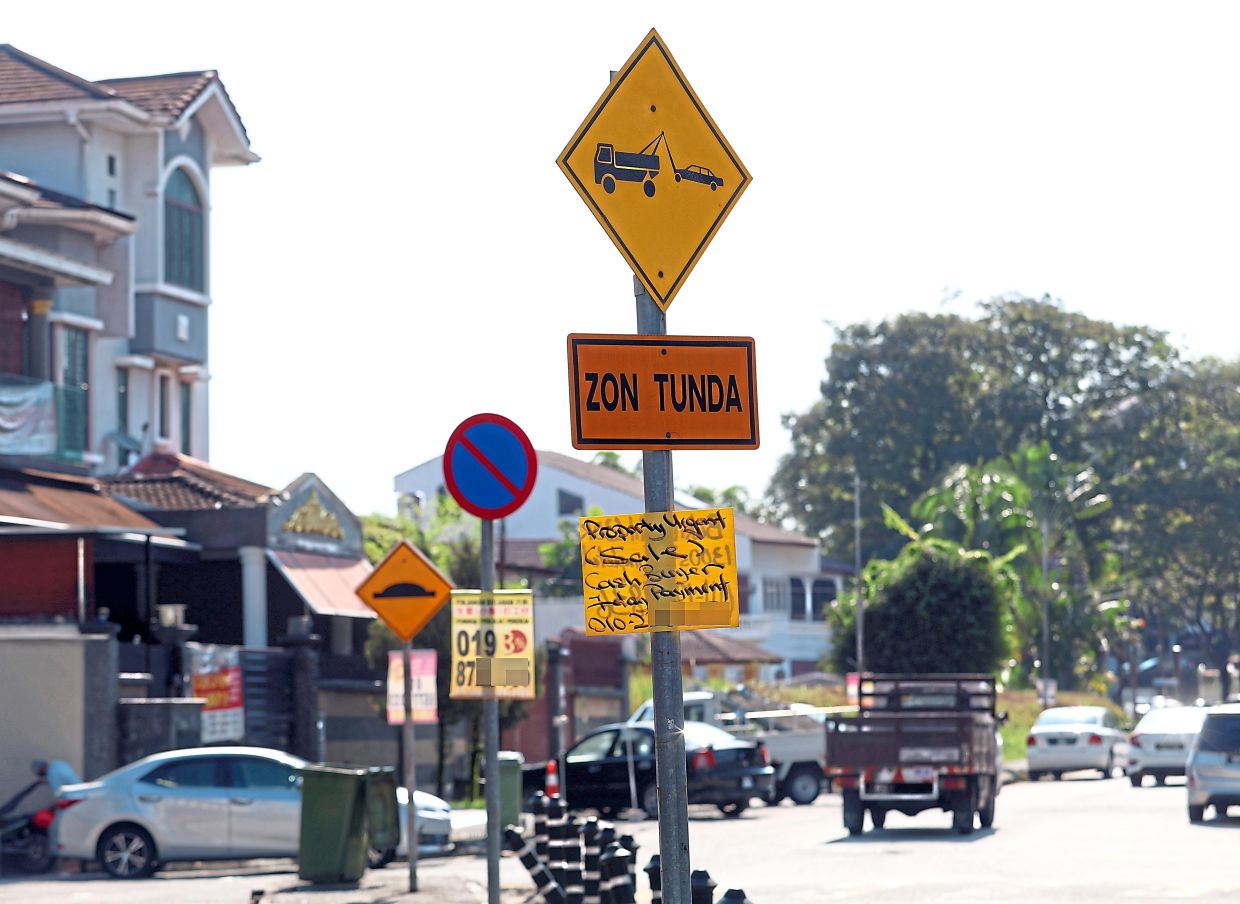
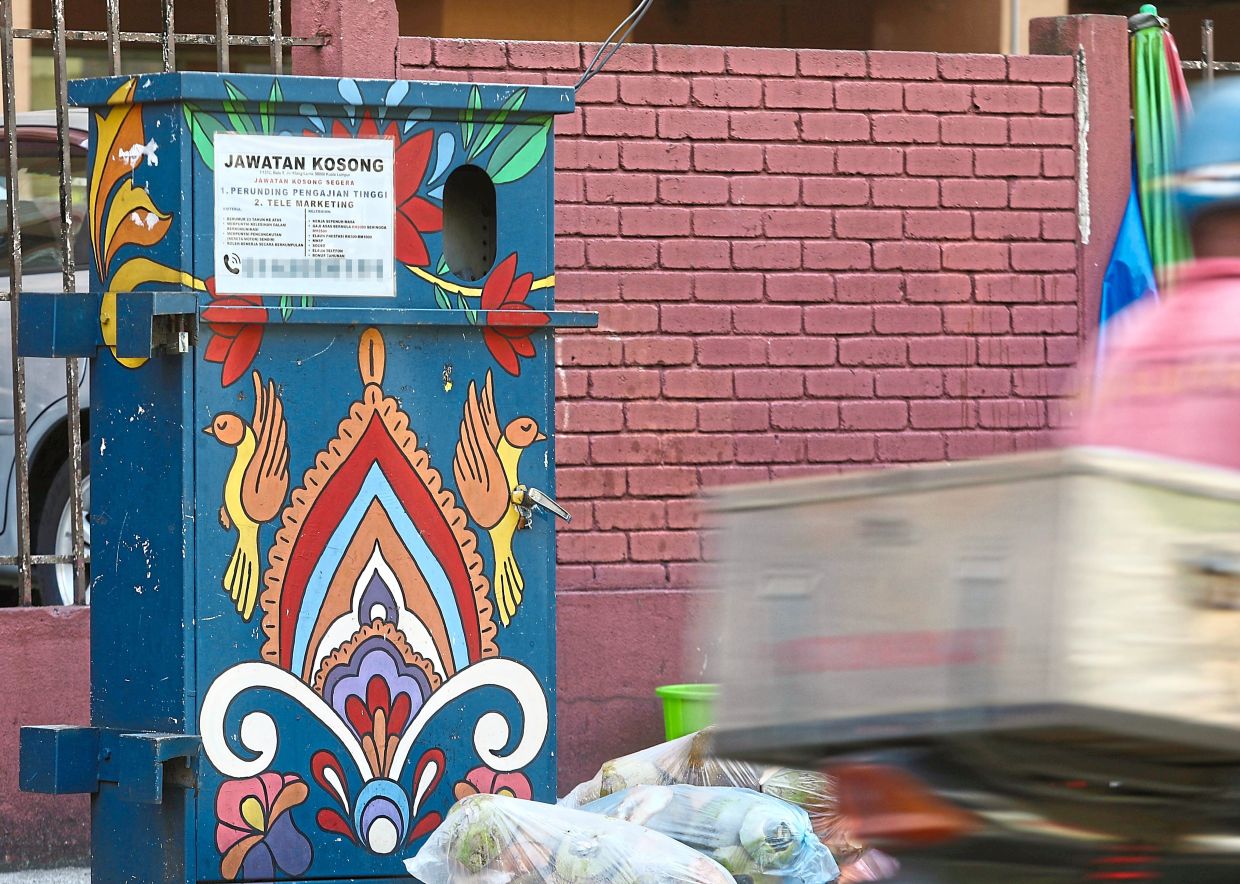
Illegal notices contributing to the visual clutter at a residential area.
Beautification art on an electrical feeder pillar marred by an illegal advertisement.
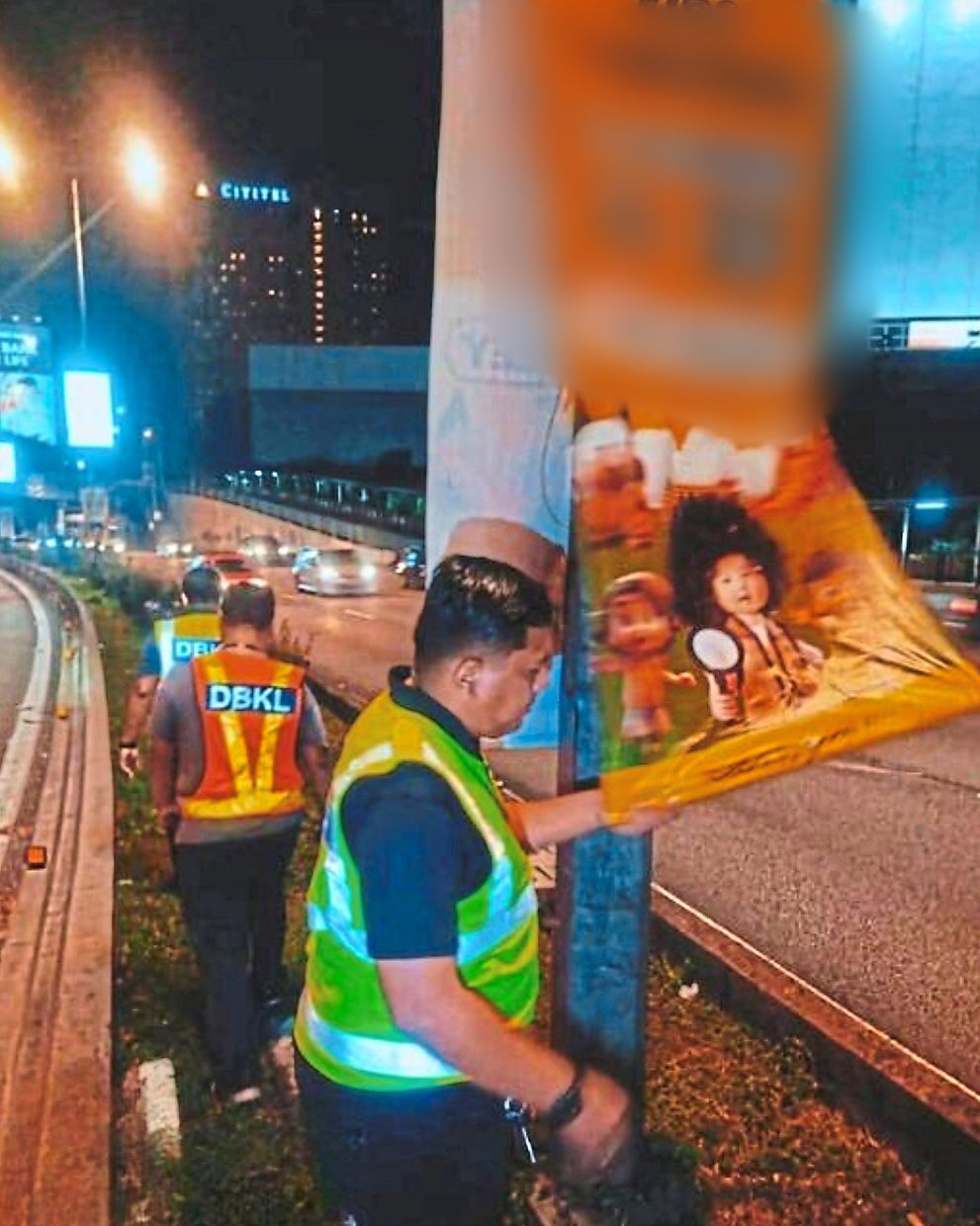
A DBKL officer removing a banner tied to a lamp post.