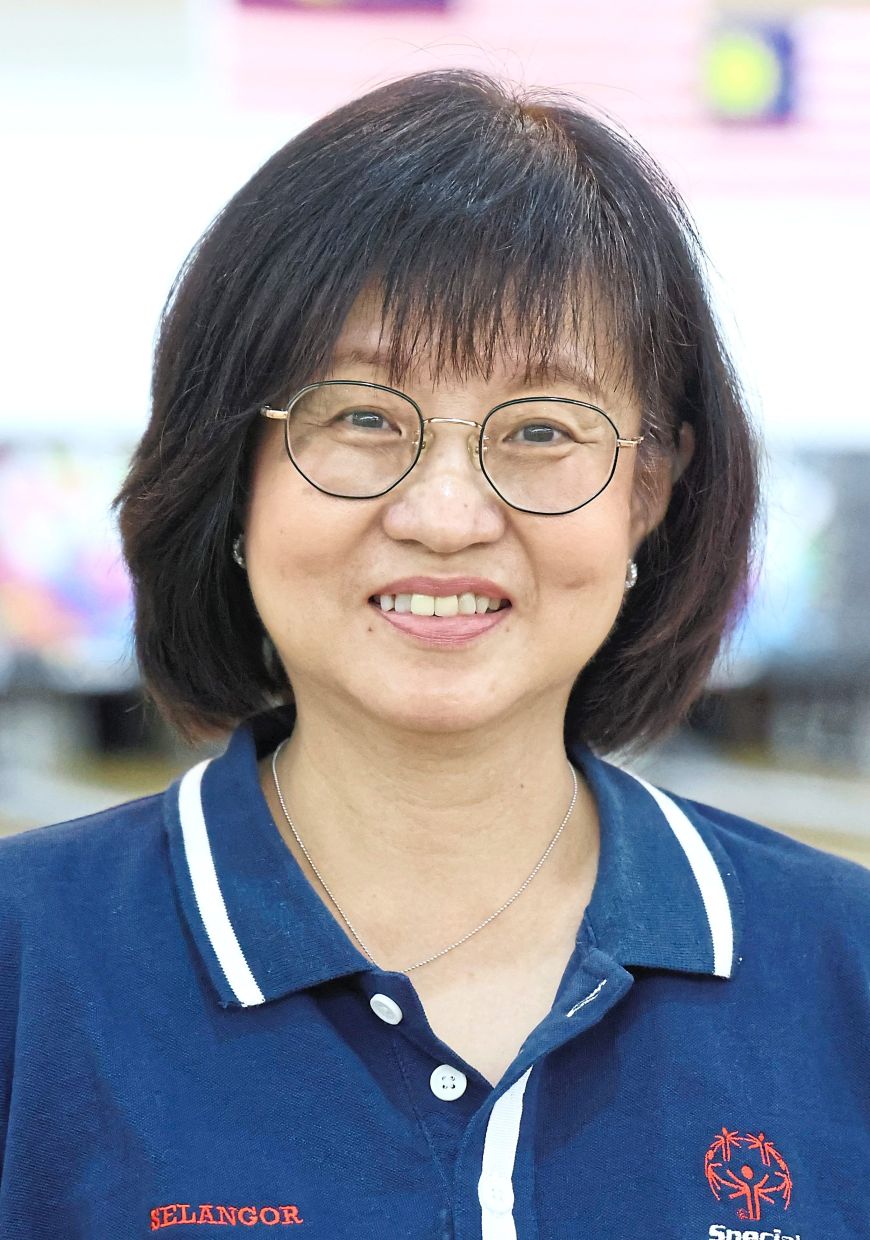
WHEN Ow Yin Yee learned that her newborn and youngest daughter was diagnosed with Down syndrome, she felt her whole world fall apart.
“I was completely devastated. It was something that I had heard about but never thought of having to deal with it myself.
“But as a Buddhist, I tried looking at the positive side.
“Maybe there’s meaning behind all of this,” said Ow who hails from Klang, Selangor.
“Part of me expected it because Down syndrome often comes with other medical issues.
“Days prior to the diagnosis, Amelia appeared pale and physically weak. I knew something was amiss,” she said.
Two decades have passed since those tense early moments and Amelia is doing well.
Last year, the 21-year-old joined the Special Olympics Malaysia (SOM) – a non-profit organisation set up to identify and nurture athletes with intellectual and developmental disabilities including autism, attention deficit hyperactivity disorder (ADHD) and Down syndrome.
Its Selangor chapter has been holding regular training sessions to prepare its athletes for the national games taking place in Bintulu, Sarawak in April.
A former accountant turned part-time lecturer, Ow said she was grateful to her sister-in-law, who has a son with autism, for introducing her to SOM.
She said Amelia now looked forward to her weekly bowling sessions where she trains and meets with friends and her coach.
“Amelia has faced so many hurdles in life that I had my doubts initially if she could do this, but she has proven herself.
“Through SOM, I befriended many mothers who advise me to look at everything that has happened as rezeki,” she said.
Nurturing talents
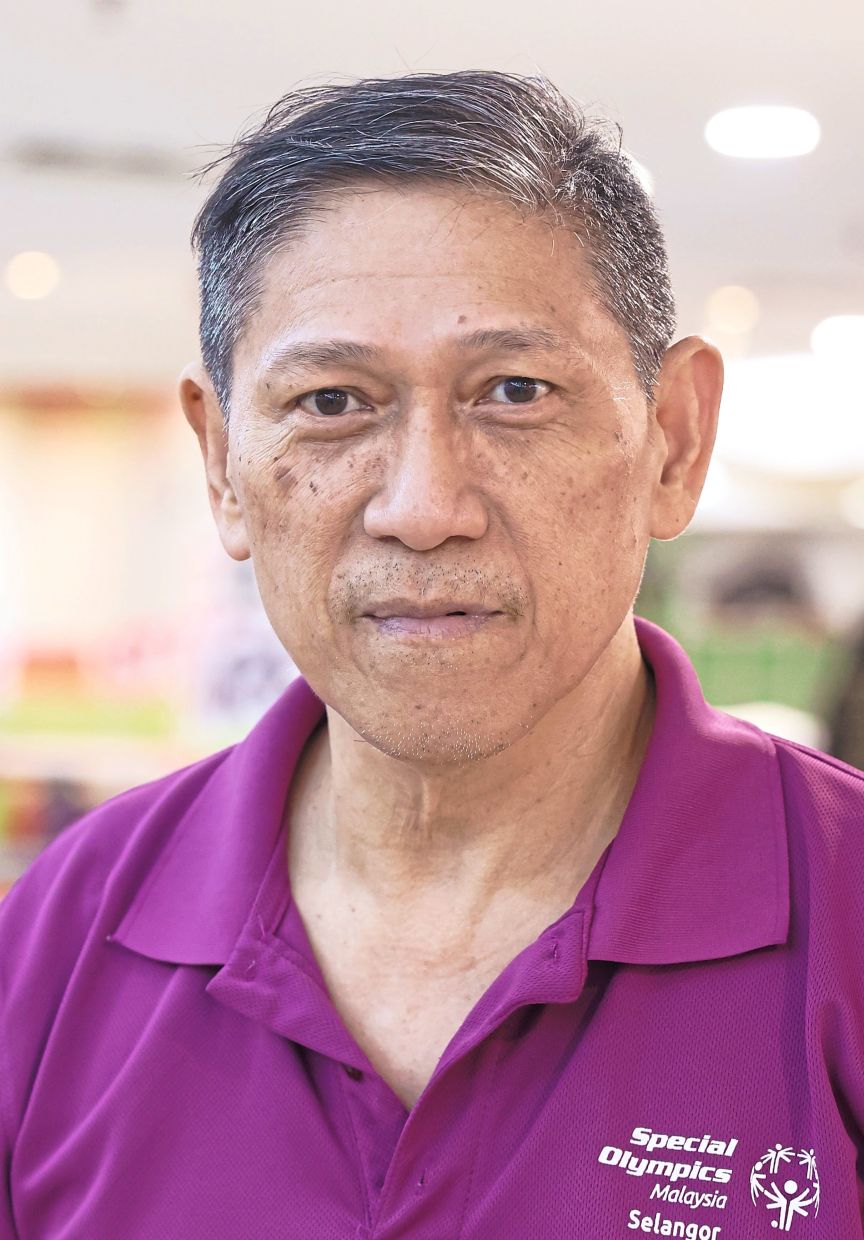
Besides bowling, it regularly organises training for swimming, table tennis, pickleball and bocce ball as well as track and field events.
“Our programmes run throughout the year.
“Apart from nurturing talents, the programmes are aimed at helping the intellectually-disabled build character,” he said.
Foo, whose involvement with SOM began as a bowling instructor, said all of its coaches were volunteers.
He said the coaches also carried out assessments to identify the abilities and suitable sports for its members.
“We’ve had parents come to us crying for help.
“We assured them by explaining how our programmes would benefit their children,” he said.
Unlike the Paralympics which caters to athletes with physical disabilities, the Special Olympics is for those with intellectual and developmental disabilities.
The Malaysian Special Olympics contingent, Foo said, had shown remarkable achievements, evident by its performance at the 2023 Special Olympics World Summer Games in Berlin, Germany.
According to reports, the national team, comprising 16 athletes, had a medal haul of four gold, five silver and nine bronze.
The gold medals were for mixed doubles bowling, women’s individual bowling, shot put and unified bocce doubles.
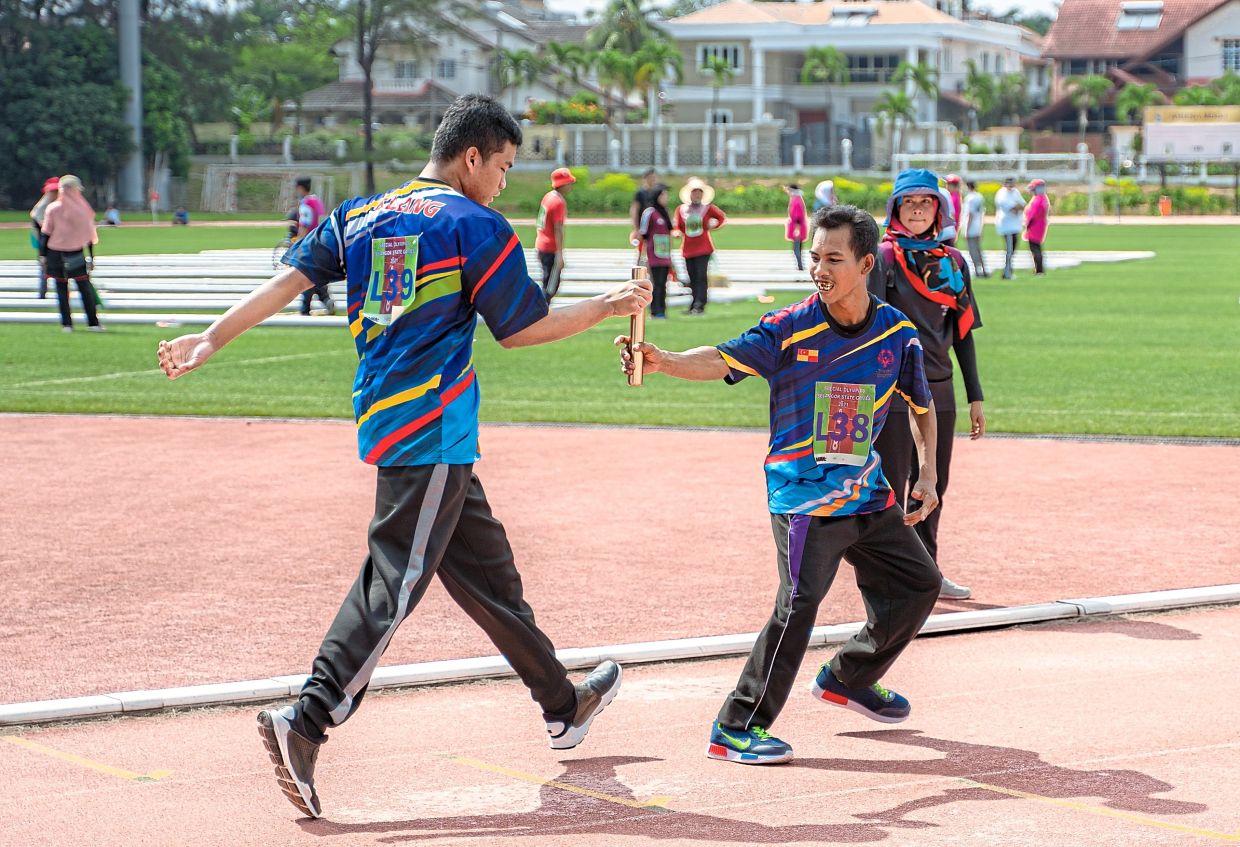
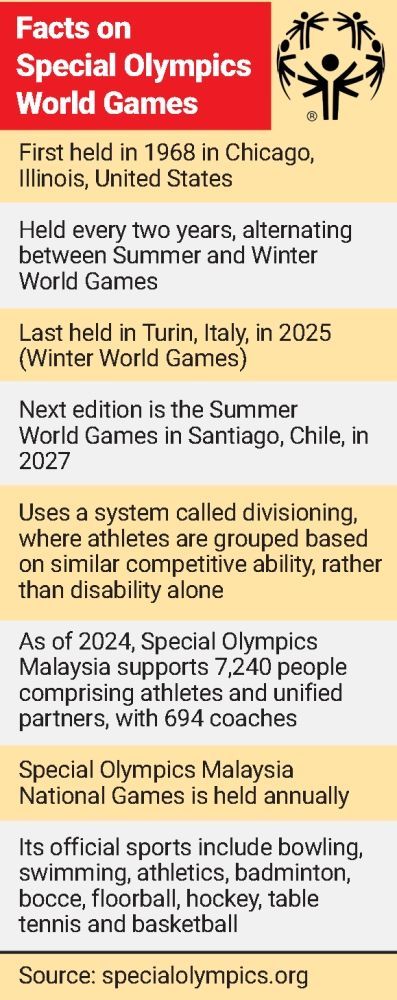
Foo said those who perform well in Bintulu would be selected to represent Malaysia at the next Special Olympics World Games in Santiago, Chile, in 2027.
Although lacking the popularity of the regular Olympics and Paralympics, he said the Special Olympics was crucial in uplifting and supporting those with intellectual disabilities to realise their potential.
“Our guiding principle is that every child, regardless of medical condition, deserves an opportunity to shine,” he said.
“Nothing makes me happier than seeing the parents smile, when their children do well in the arena.”
Positive influence
The sporting talents of those with intellectual and developmental disabilities start showing at a young age.
Mother of three Ambikareny Magaswaran, 49, from Puchong, Selangor, said her middle child, Deventhra Kumar Prem Kumar, now aged 22, was diagnosed with mild autism and ADHD.
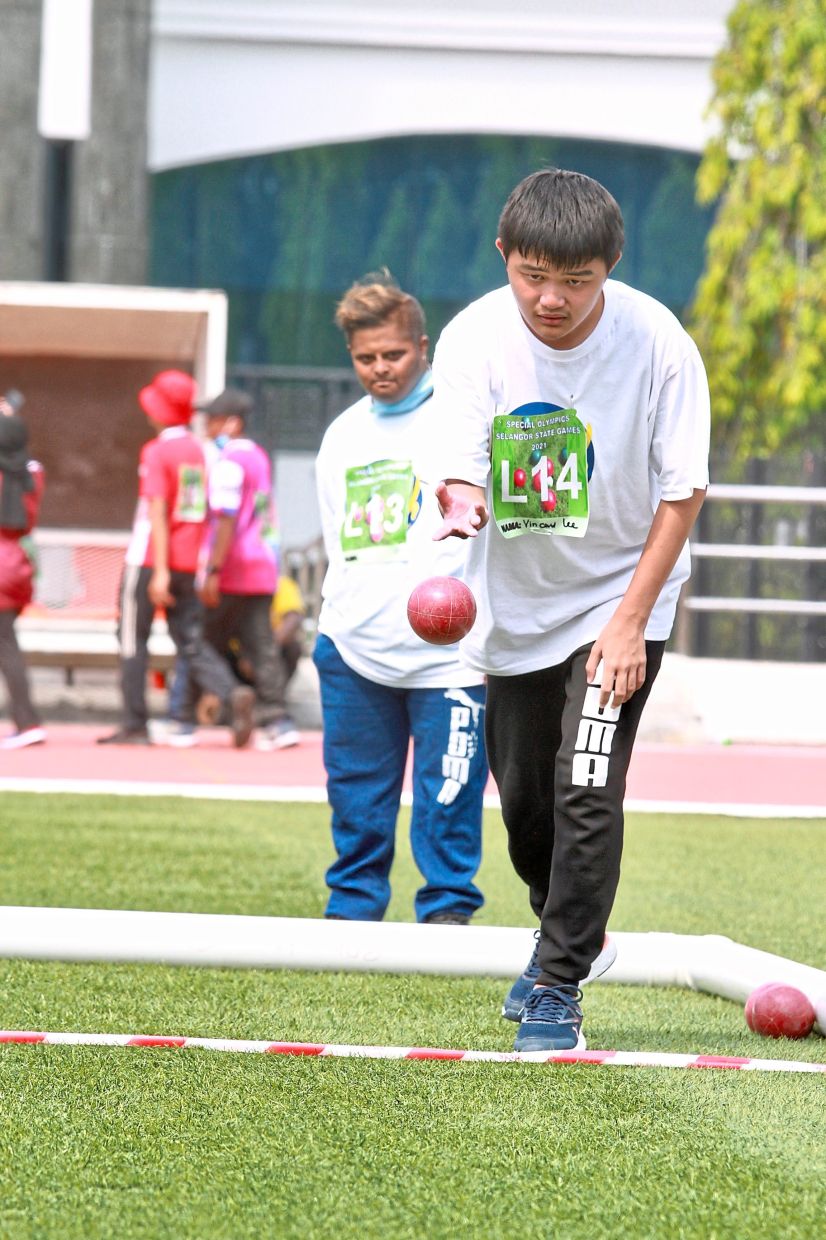
She said he was active in sports during his school years.
“He was regularly selected to take part in badminton, swimming and bowling, which he loved,” she said.
Recalling her experience, Ambikareny said she decided to move from Johor Baru to Klang Valley on doctor’s advice.
“When Deventhra was little, he didn’t speak like other children his age and rarely made eye contact.
“I took him to see a paediatrician, and that was when I got to know about his condition. He was three years old,” she said.
Ambikareny’s concerns were amplified when the kindergarten her son attended offered limited support.
“The school only provided speech therapy.
“That was when I decided to transfer him to another school in Kuala Lumpur which offered more comprehensive assistance.
“A teacher there carried out one-on-one speech therapy with him.
“Within a few months, he began talking,” she said.
Now active in SOM bowling events, Deventhra takes his training seriously, said Ambikareny.
“He doesn’t like being late for training, punctuality is non-negotiable.
“The exposure has been good for him.
“He enjoys mingling with his friends and even loves spending time with their parents.
“My advice to other parents in a similar situation is to find what your child enjoys and invest in that,” she added.
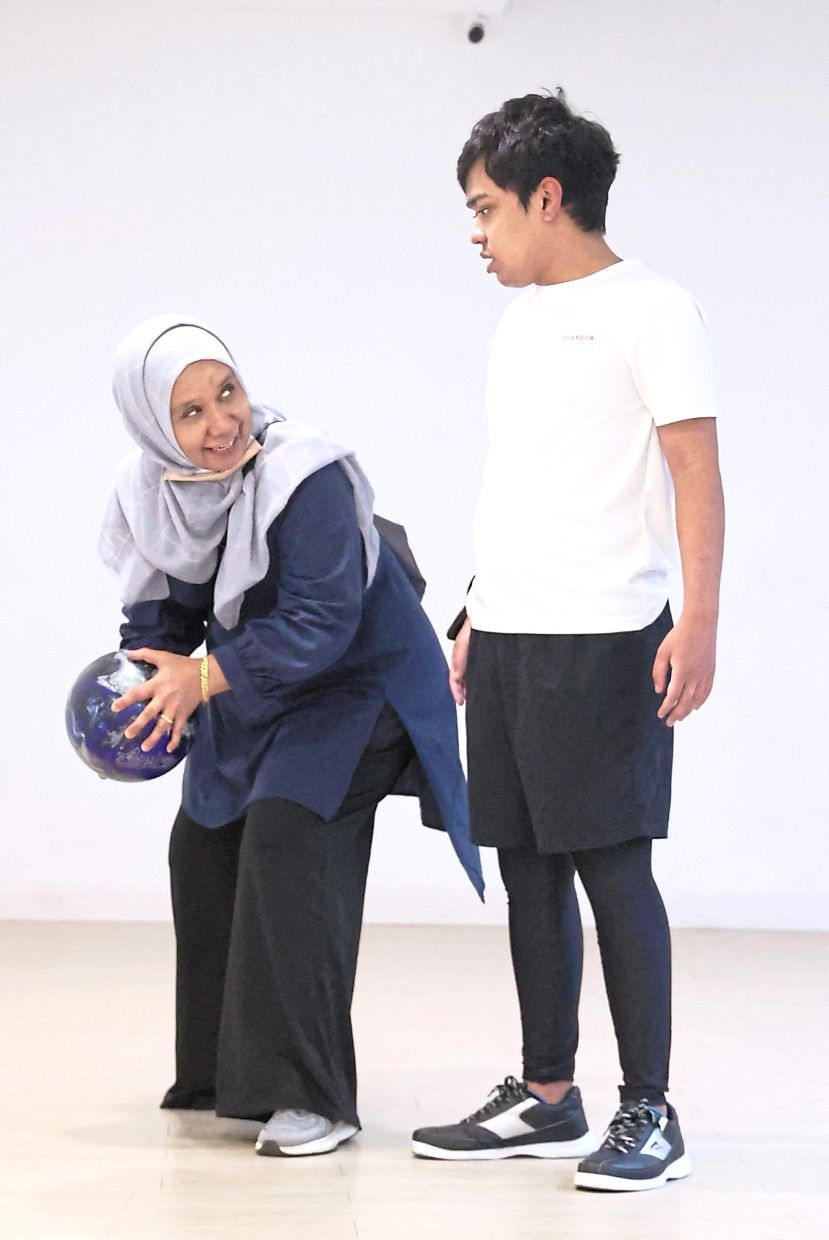
Parents of two from Cheras, Kuala Lumpur, Lalith Shamshir Shamsul, 54, and his wife Zaliah Ismail, 55, said they had high hopes for their youngest, Omar, who has autism.
Zaliah left her job years ago to care for their son full-time.
Today, the 19-year-old is among a group of people attending weekly bowling training with SOM.
Lalith Shamshir said last year, he approached the Paralympic Council Malaysia in search of suitable programmes for his son.
“However, they advised me to contact SOM instead.
“That was when I got in touch with Foo, who explained the association’s scope,” he said.
Omar has since shown steady progress in the bowling alley, even managing to score strikes – the term used when a player knocks down all the pins in a single delivery.
“He is determined. He now has a goal to work towards every week and has even been watching videos on YouTube to learn more about bowling,” Lalith Shamshir added.
He recalled the emotional roller-coaster that he and his wife went through after their son’s diagnosis.
“When we first learned that Omar was autistic, my wife and I panicked.
“Autism was still relatively unfamiliar then and our knowledge was limited.
“We sent Omar to the National Autism Society of Malaysia for assessment, as he was non-verbal until he was three,” he said.
For Lalith Shamshir, getting Omar involved in sporting activities was one of several ways to prepare him for the future.
“I want him to have access to as many opportunities as possible,” he said.
“My wife and I won’t be around forever.
“We want to ensure that when we are gone, he will be able to stand on his own feet.”