State hits 78% housing goal, delivers over 170,700 affordable homes
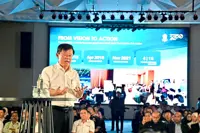
PENANG will continue to tackle housing affordability and supply challenges while ensuring sustainable and balanced growth in its property sector, says Datuk Seri S. Sundarajoo.
The state housing and environment committee chairman said Penang had delivered 170,706 affordable housing units, achieving nearly 78% of its 2030 target of 220,000 homes.
This progress is spearheaded by the Penang Housing Board (LPNPP) under the Penang2030 Vision, focusing on supply, rent-to-own (RTO) opportunities, and urban regeneration.
Sundarajoo said all affordable initiatives were now streamlined under the Rumah MutiaraKu (RMKu) branding.

He said the RTO scheme would be expanded to include M40 households, to widen access to homeownership.
Urban regeneration has also gained momentum, with 6,837 units identified across six projects.
“These projects form part of a broader urban renewal strategy to upgrade ageing public housing and improve liveability, particularly in older townships and high-density areas,” he said.
Key sites include PSB Mahsuri and PSB Padang Tembak, with completion timelines stretching between 2028 and 2038.
A critical focus for 2026 is the “Zero Squatters” mission. The state aims to rehouse residents of long-established settlements into modern developments.
“The state will prioritise the redevelopment of long-established squatter areas into modern housing, with existing residents rehoused in new units,” Sundarajoo explained.
Pilot projects include RMKu Ujung Batu and Kampung Manis, where residents have already agreed to redevelopment plans.

Penang Real Estate and Housing Developers Association (Rehda) chairman Datuk Khoo Teck Chong expects the sector to remain resilient in 2026, underpinned by infrastructure development.
While buyers are becoming more selective, Khoo noted that the market remains sound for well-located projects.
“Overall, the outlook remains positive,” he said, citing stable interest rates as a favourable factor for both owner-occupiers and investors.
Major projects under the Penang Transport Master Plan, such as the Air Itam Bypass and the Penang Hill cable car, are expected to influence development patterns.
“Historically, infrastructure acts as a catalyst for development and value appreciation,” Khoo shared.
He observed that buyer behaviour had evolved, with purchasers now prioritising practical considerations.
“Buyers today want developments that make sense in terms of liveability, connectivity and future prospects,” he added.
Khoo expects growth to be led by corridors aligned with transit-oriented development (TOD) concepts, which suit modern lifestyles and retain long-term value.