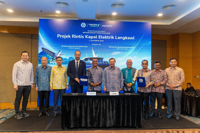
Rapid Bus has launched a proof-of-concept (POC) project to convert four diesel buses into electric vehicles.
Partnering with two local firms, the operator is testing whether retrofitting can offer a viable alternative to buying a new fleet.
The trial involves buses with an average age of 11 years. If successful, the initiative could extend the service life of older vehicles by up to seven years while accelerating the company’s transition to a fully electric fleet.
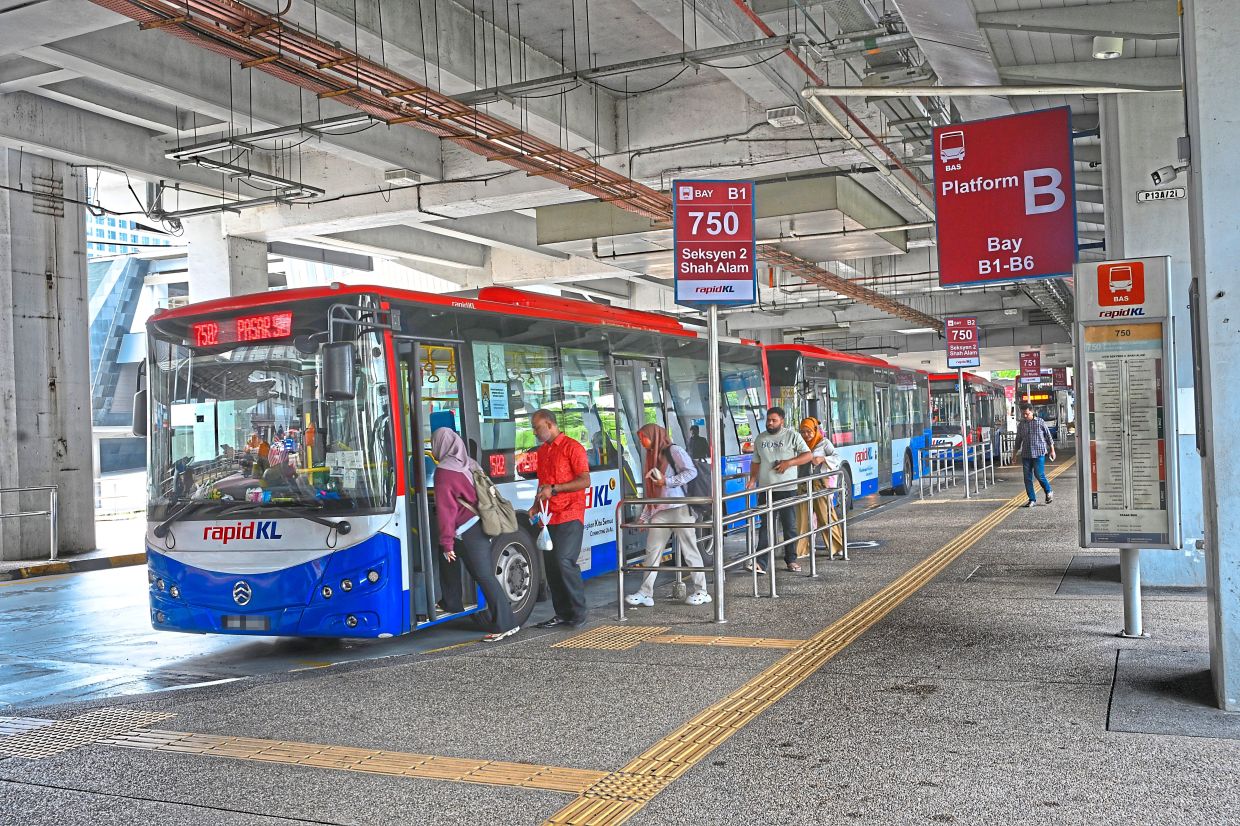
Rapid Bus, which operates Rapid KL, Rapid Penang and Rapid Kuantan, in a statement, said the conversion process aimed to reduce capital expenditure and lower carbon emissions. The POC is scheduled for completion by the end of this year.
Industry experts supporting the project noted that retrofitting would provide a “new lease of life” for ageing assets, offering a cost-effective route to fleet modernisation.
New heart for buses
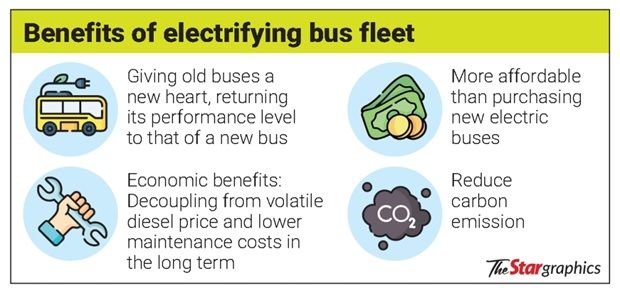
Automotive engineer Haidee Che Rizmin likened the retrofitting plan to giving old diesel buses “a new heart” by allowing them to operate at a performance level close to that of a new vehicle.
“There are no issues with the buses’ chassis in terms of long-term service, but the powertrain systems will wear out over time and require a major overhaul after a certain mileage, and that will incur substantial costs.

“For Rapid Bus, this overhaul typically occurs at around 1,000,000km or about 10 years of bus operation,” said Haidee, who is also a senior specialist in the automotive engineering section of Universiti Kuala Lumpur-Malaysia France Institute.
While a new diesel engine might match the performance of an electric conversion, he said the latter would offer significantly lower fuel and maintenance costs over time.
Though Rapid Bus has not given any estimate for the pilot project’s conversion cost, Haidee said an electric powertrain would be more favourable when fleet-wide operational cost savings and potential government incentives were to be considered over the long term.
“Electrifying old diesel buses is a strategic approach for Rapid Bus, as it is about 30% to 50% cheaper than acquiring new electric buses,” he said.
“In addition, modern buses using Euro 5 diesel engines require more chemicals for exhaust after treatment, which increases operational costs. Electric motors are also more environmentally-friendly than diesel engines.”
Regarding range concerns, Haidee suggested adopting the modular battery designs common in most commercial electric vehicles.
“The design allows the manufacturers to adjust the batteries’ capacity based on their clients’ requirements,” he said.
“I believe Rapid Bus requires about 250km per charge to cover daily operations, which is comparable to a diesel-powered bus.”
Haidee added that electric buses generally have lower maintenance costs because they have fewer moving and mechanical parts, reducing the degree of wear and tear and the need for lubricants such as engine oil.
“The cost of electricity is also usually lower, or at least comparable to that of diesel fuel, since Rapid Bus will likely be charged commercial electricity tariff rates,” he said.
Accelerating electric transition
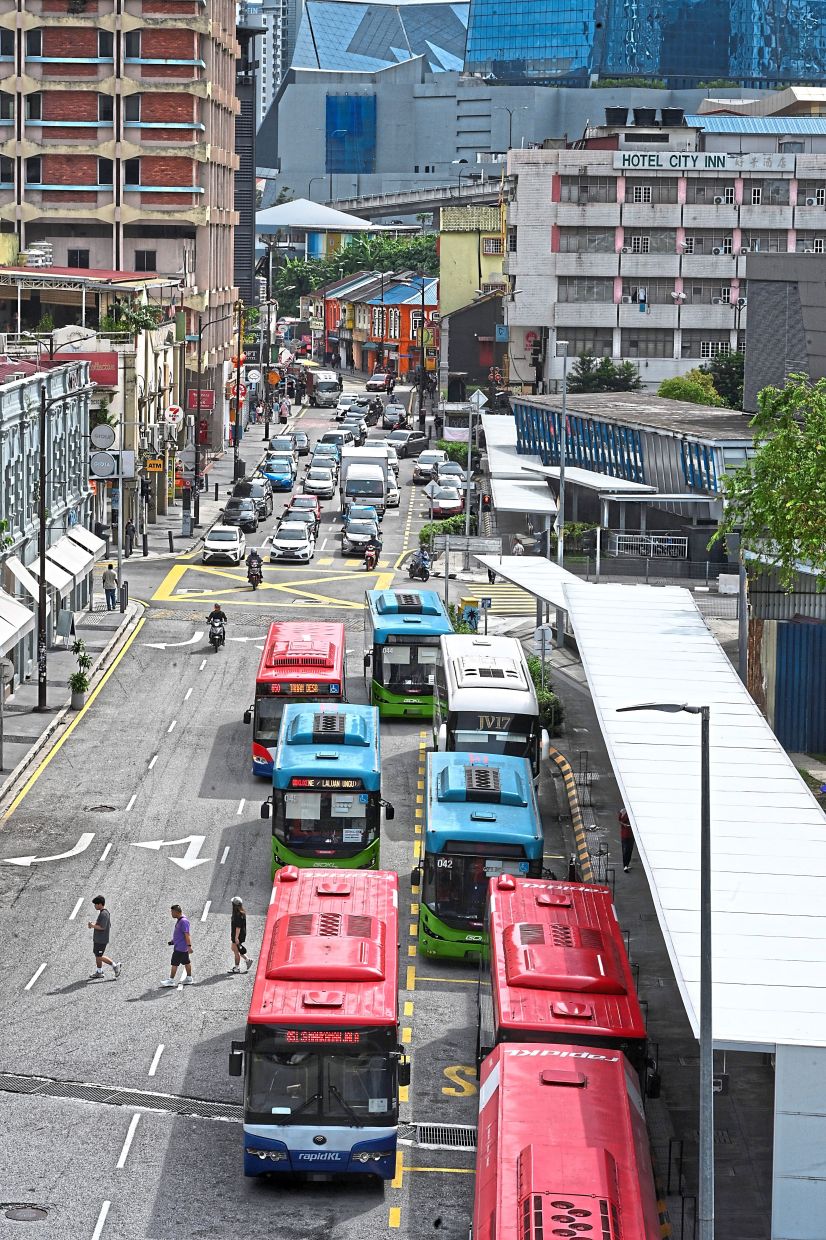
Malaysian Land Public Transport Fans chairman Zac Cheong said the retrofitting scheme would accelerate Rapid Bus’ transition to a zero-emission fleet, helping Malaysia meet its climate targets ahead of schedule.
“Waiting for diesel buses to reach the end of their life before replacing them with electric buses would take at least 15 years, given the regulations set by the Land Public Transport Agency (Apad),” he said.
According to Apad’s 2007 circular, stage buses reaching the 15-year age limit are eligible for up to two one-year extensions, capping their operational lifespan at 17 years.
Applications for the second extension must be substantiated by documents from bus manufacturers, financial institutions or Puspakom.
Cheong noted that retrofitting diesel buses would offer immediate environmental and public health gains by eliminating tailpipe emissions.
“This reduces smog and respiratory risks while cutting noise pollution, making urban areas significantly more liveable,” he said.
The move addresses a major source of pollution; according to a 2024 Asian Transport Observatory report, heavy-duty vehicles accounted for 56% of Malaysia’s total road transport carbon emissions in 2022.
Transitioning to electric power can significantly curb this impact, with previous data suggesting EVs reduce carbon dioxide emissions by 30% to 50% while improving fuel efficiency by up to 60%.

Cheong said retrofitting would be a fiscally smart move as it would extend the service life of Rapid Bus’ assets, generating more returns on investment.
“While the retrofitting cost is a factor, it is likely far lower than purchasing a brand-new electric bus, allowing for a more rapid and cost-effective electrification of the entire fleet.”
Cheong said the primary financial benefit of electrification was the decoupling from volatile diesel fuel prices, as electricity costs were generally more stable and predictable.
“The government should also provide subsidies to help operators absorb the initial retrofitting costs, preventing them from being passed on to commuters,” he said.
Cheong urged the government and Rapid Bus to explore all other avenues to keep public transport affordable, as it is an essential service.
“However, a modest and justified fare increase would be acceptable if there are tangible improvements to the bus service.
“A more reliable bus system, the health benefits from cleaner air and the collective benefit of contributing to a greener city are worth a small premium,” he said.
Global parallels
Malaysia is not the only country electrifying its old diesel buses.
Bus operators in China and Australia have succeeded in electrifying their bus fleets with the support of their respective governments.
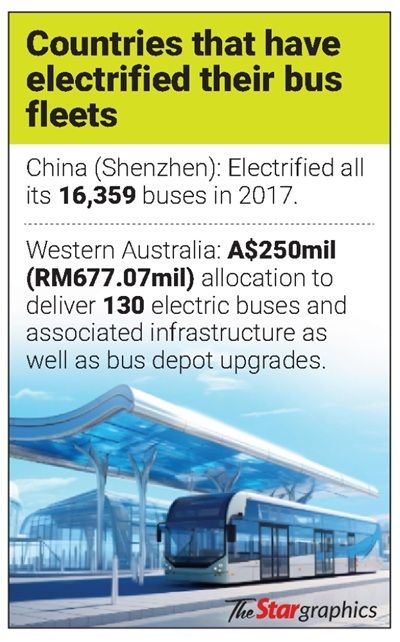
Shenzhen, a southeastern city in China, announced in 2017 that all of its 16,359 buses went electric, making it the world’s first 100% electrified bus fleet, according to the World Resources Institute.
National and local subsidies have played a major role in bridging the cost gap between electric and diesel buses.
Prior to that, a 12m-long electric bus in Shenzhen received a US$150,000 (about RM645,000) government subsidy – more than half of the vehicle’s price.
The city also adopted a type of electric bus where a five-hour charge could support 250km of driving, sustaining almost a full day of operation, to optimise the buses’ operations and charging.
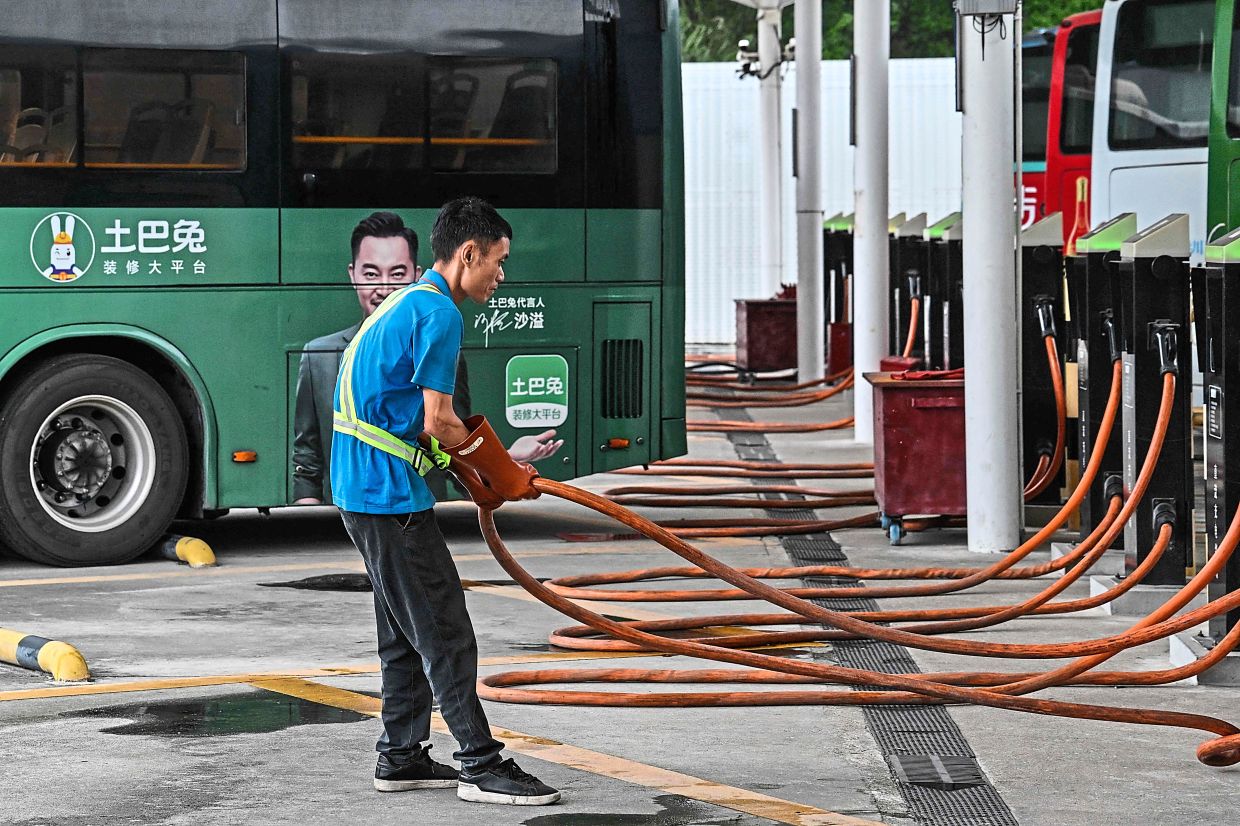
To ensure recharging does not disrupt bus services, bus operators there collaborated with charging infrastructure providers to furnish most of the bus routes with charging facilities.
These facilities are also open to private cars to improve their financial performance.
Operators coordinate charging schedules with bus operations, ensuring vehicles are fully charged overnight to capitalise on lower electricity tariffs and topped up at city terminals during off-peak hours.
The Western Australia state government together with Australian Federal Government allocated A$250mil (RM677.07mil) to deliver 130 electric buses, associated infrastructure and bus depot upgrades, it said in a statement.
In line with the programme, the Western Australian government said all new buses manufactured for public transport in the state would be electric-based, starting late May last year.
“Each electric bus can travel up to 300km on a single charge, saving about 40 tonnes of carbon dioxide emissions a year.
“The state government will allocate an additional A$61.9mil (RM167.6mil) in the 2026 state budget to shift bus manufacturing to fully electric.
“While the upfront cost is more than a diesel bus, electric buses are cheaper to run and maintain in the long term,” it added.