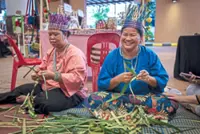
With practised ease, the deft fingers of Linda Angik weaved coconut leaves into a traditional headgear worn by the Orang Asli.
Within 10 minutes, the 50-year-old Temiar woman had completed making the intricate tempok, much to the delight of visitors at the Festival Irama Asli & Asal 2025 at Berjaya Times Square in Kuala Lumpur.
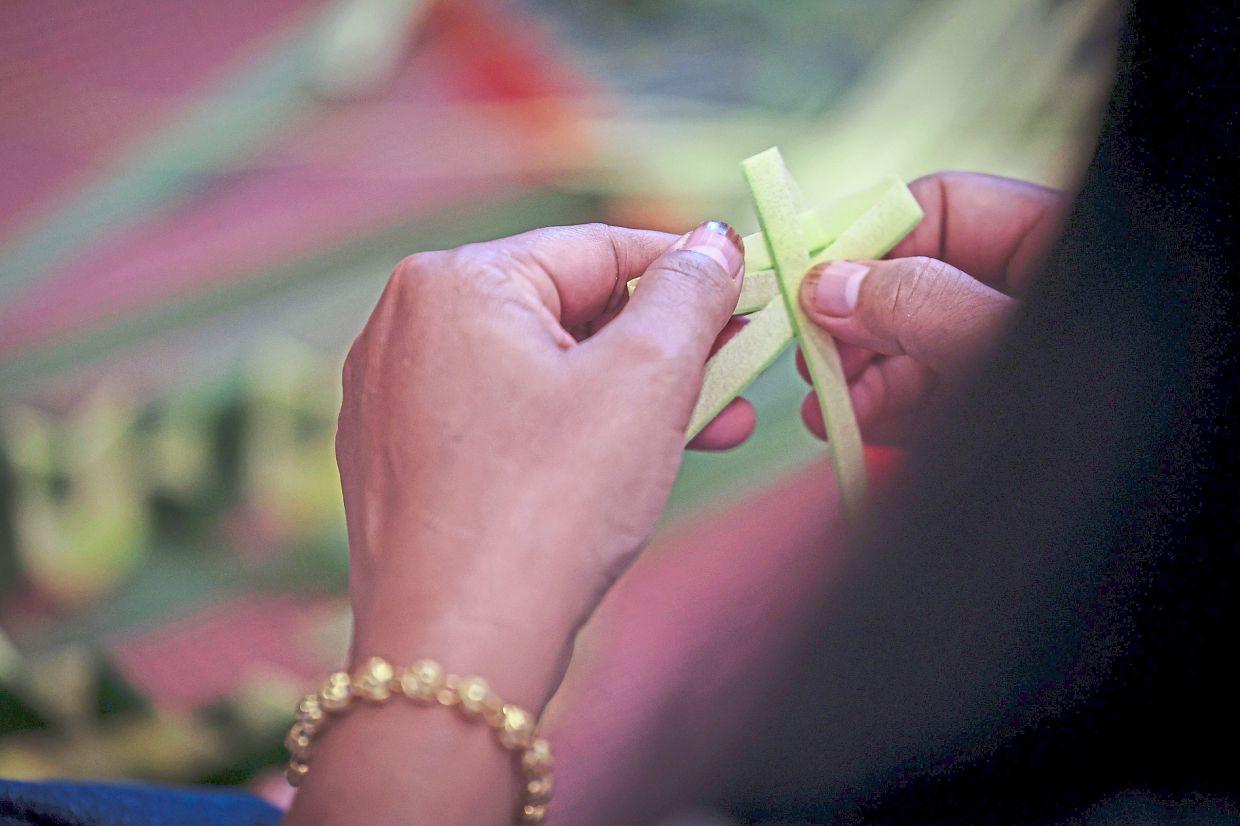
Linda used a simple weaving technique that began by crossing two leaves into an “X” shape.
The leaves were then folded into a “V”, tucked into the centre and joined leaf by leaf until a circular band took shape.
She said the orderly, repetitive movements reflected the precision of the traditional weaving art still practised within her community.
Having picked up the skill at the age of 20, Linda said the accessory could be produced using various natural materials, such as coconut leaves and mengkuang, depending on the desired durability and design.
“Each leaf is selected, trimmed and cleaned to ensure the wearer does not experience itchiness.
“It is easier to teach others the simple tempok designs, while more intricate patterns require a higher level of skill,” she told Bernama.
However, the tempok is more than an accessory.
“It serves as an identity marker for the Orang Asli of peninsular Malaysia, whose traditions and customs are increasingly eroded by modernisation,” said Linda.
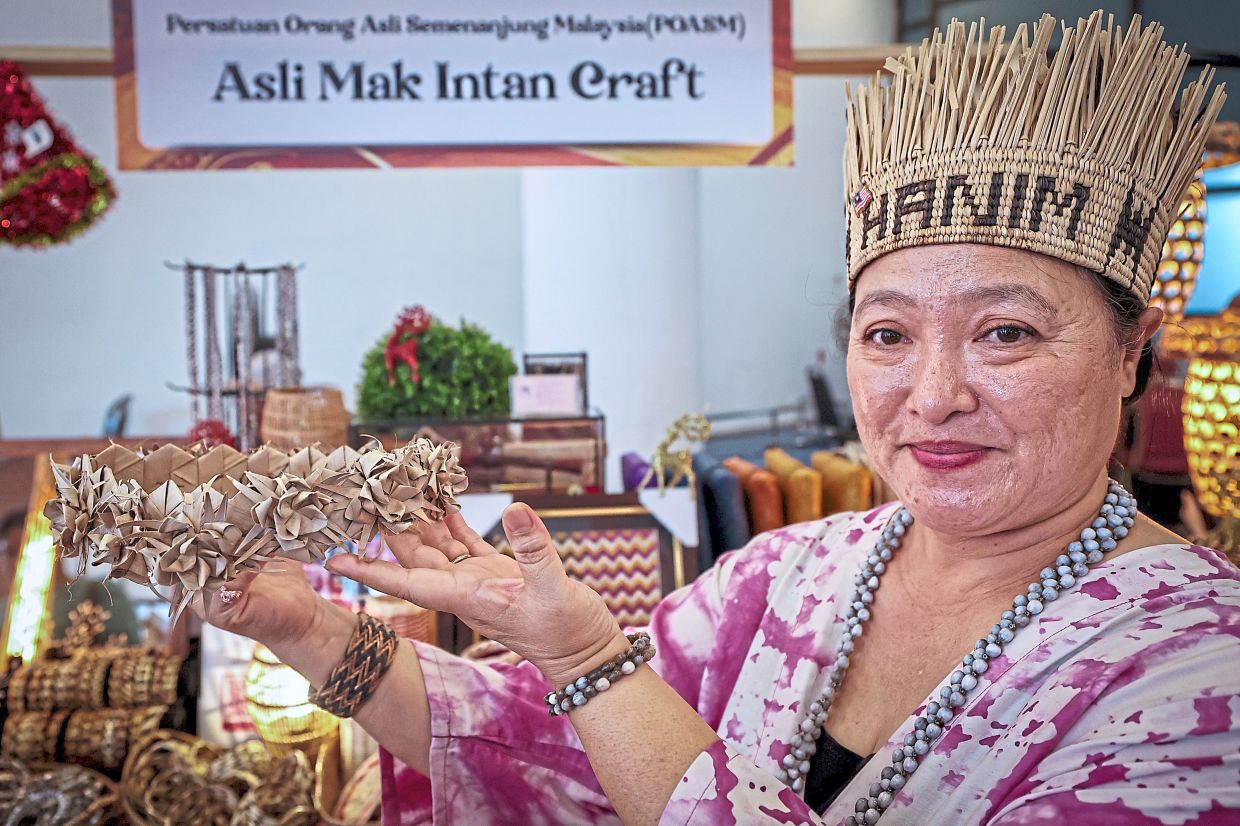
Native Allies Society of Malaysia vice-president Hanim Apeng affirmed that the tempok distinguished the Orang Asli community from the wider society, while reflecting the diversity of the 18 tribes in the peninsula.
“This is our identity. We carry it by wearing the tempok, which is symbolic regardless of its design.
“The style depends on individual creativity, the customs of each tribe and forest materials available,” she said.
Hanim, a handicraft entrepreneur, said traditional practice once dictated that wearing the tempok was considered essential when outside the home.
“In the past, village heads would only remove theirs when it was time to sleep.”
She said changing times had made the practice increasingly rare, especially among the younger generation.
“Many of our young people no longer wear this headgear.
“That is why we must constantly remind ourselves; it is what sets us apart,” said Hanim, who is also the founder of Asli Mak Intan Enterprise.
Hanim said that every member of the community should know the basics of making a tempok, even in its simplest form, to ensure the heritage survives.
“We try to encourage the young people to keep learning these skills, otherwise this art may disappear,” she said.
She also hopes that more youths will think about venturing into handicraft entrepreneurship.