
MORE communities including schools in Johor are set to implement smart hydroponic and solar system farming to strengthen renewable energy adoption and urban agriculture.
The Universiti Teknologi Malaysia (UTM) initiative uses a vertically designed hydroponics structure integrated with solar energy and Internet of Things (IoT).
It was first adopted at the Jasa Apartment in Mutiara Rini, Johor Baru in 2023, said project leader Associate Professor Dr Dalila Mat Said.
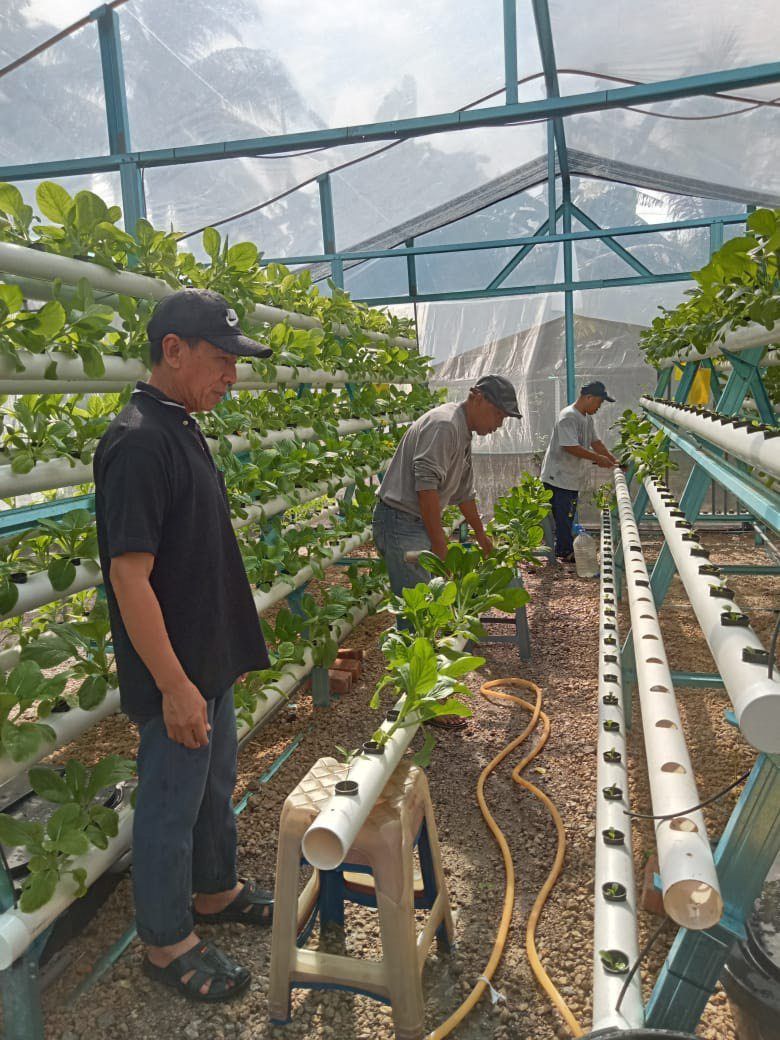
She said the vertical structure could accommodate up to 1,008 plants at a time, allowing for efficient use of limited space.
“Among the vegetables grown are mustard greens, local spinach, kailan, siew pak choy and kangkung.
“At the Jasa Apartment, each system has six levels and can accommodate 336 planting holes, depending on pipe configuration and crop type,” she told StarMetro.
She added that the system was equipped with an IoT technology-based app that enabled remote nutrient mixing and farm monitoring via smartphones and laptops.
“Most of the crops take between 30 and 35 days to mature,” she said.
“The process begins with seed germination for up to five days, followed by six to 14 days in the nursery.
“The plants are then transferred to the main grow house and can be harvested in 30 days.”
Dalila added that the project was currently being introduced on a smaller scale at SMK Mutiara Rini, where teachers and students had begun learning it.
“This exposes students to modern, soilless farming techniques, preparing them for future opportunities in sustainable agriculture,” she said.
“At the Jasa Apartment, the hydroponic unit is operated by local residents including housewives, youths and community members who earn supplemental income by selling the harvested vegetables.”
Assoc Prof Dalila said the project had strong potential to be developed as an urban farming model because the system was compact, clean, community-friendly and easy to maintain.
“It is suitable for flats, schools, villages and urban areas with limited space,” she said, adding that several communities had expressed interest in adopting the model.
Solar system project head Dr Siti Maherah Hussin said six solar photovoltaic (solar PV) were installed to power the water pumps used in the hydroponic setup at Jusa Apartment.
“We installed solar PV with a total capacity of 1kW to help reduce electricity costs, as solar provides a clean and sustainable energy source,” she said.
“The hydroponic house is located in an open area with strong sunlight, making it an ideal site for solar installation.”
Although she was not involved with the hydroponic project at SMK Mutiara Rini, Siti Maherah said various solar initiatives had been carried out at schools and Orang Asli communities through community service programmes, applied research and industry collaboration.
“These efforts include small scale PV installations, green energy demonstration modules and training in the operation and maintenance of solar systems.
“This initiative demonstrates our commitment to expanding renewable energy technology to various community groups to enhance long-term well-being and sustainability,” Siti Maherah said.