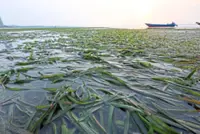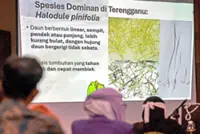
THE Bajau Samah community in Tuaran, Sabah, has been wading into shallow water with scientists to replant seagrass along the Teluk Sulaman coastline.
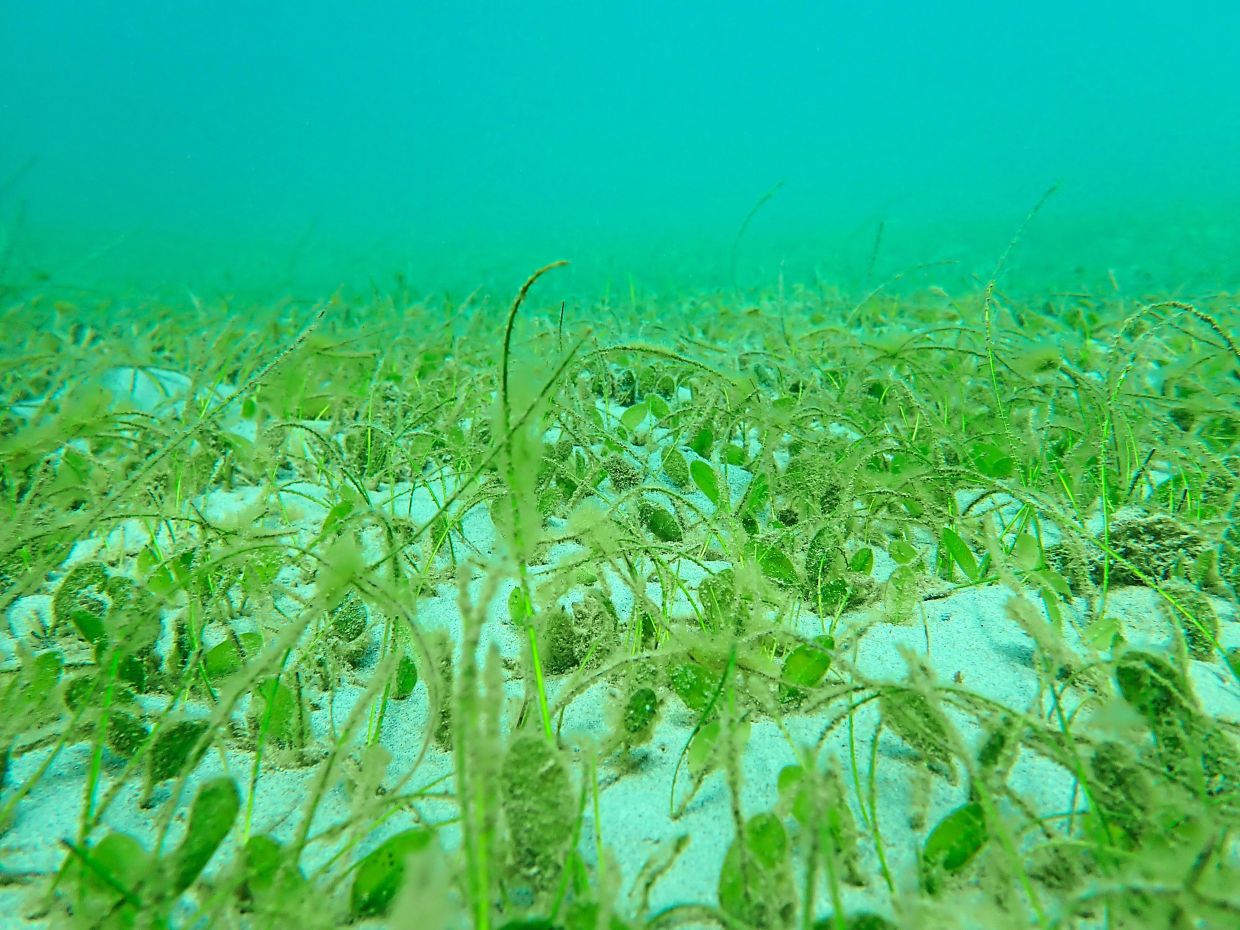
A priceless natural flora, seagrass can only be seen during low tide when the water recedes, revealing a green field below.
Apart from acting as a natural biological filter, seagrass helps to clear the water and create a suitable environment for various marine species.
It stabilises sediment, reduces erosion, provides feeding and nursery grounds for young fish, serves as a breeding area for marine organisms, and plays a vital role in regulating the nitrogen cycle.
A media trip was recently organised to observe the seagrass replanting activity in Kampung Penimbawan.
This initiative is carried out with the support of Yayasan PETRONAS, Fisheries Department, Sabah Biodiversity Centre and Universiti Malaysia Sabah (UMS) – combining scientific mapping with community participation and education.
After about an hour’s drive from Kota Kinabalu to Kampung Serusup Jetty, the journey continued by boat, travelling along the coast of Teluk Sulaman for about 20 minutes before arriving at Kampung Penimbawan.
It is a traditional fishing settlement which is home to around 3,000 residents, mostly from the Bajau Samah ethnic group.
Nearly three decades ago, the area was surrounded by lush, green seagrass meadows that attracted turtles and other marine species that fed on them.
Residents say they have not seen turtles for a long time, coinciding with the disappearance of seagrass meadows due to human activities, including coastal development.
“When there was still plenty of seagrass in the area, we used to see turtles and many fish would lay eggs among the seagrass because it was their food source.
“But as the seagrass started to disappear (for about 10 years), turtles have become a rare sight,” said Kampung Penimbawan Village Development and Security Committee (JKKK) chairman Jaukal Badak.
The situation has affected the villagers’ livelihoods as they depend on fishing to sustain their families.
“The sea is our source of livelihood. If the fish are gone, how will we eat?
“That’s why we want to replant the seagrass so that the fish will return,” he said.
For nearly a year now, Jaukal and the fishermen of Kampung Penimbawan have been trained by experts from UMS to protect and replant seagrass.
A five-member research team led by Assoc Prof Dr Ejria Saleh from UMS’ Borneo Marine Research Institute focused on two key areas: seagrass mapping and carbon quantification and a community-based education and public awareness programme.
Ejria said seagrass served as the first line of defence against coastal erosion, preceding coral reefs in protecting the seabed and providing a safe nursery ground for juvenile fish in shallow waters.
“Seagrass is vital in sustaining marine biodiversity and coastal ecosystems, while also supporting the livelihoods of coastal communities,” she told Bernama.
She said the seagrass mapping programme in Sabah integrated drone technology, satellite imagery, and field dives to document Malaysia’s seagrass ecosystems.
“Our main goals are to establish baseline data on seagrass distribution in shallow coastal waters, empower local communities through training and hands-on conservation activities, and raise awareness of the ecological significance of seagrass habitats.
“So far, we have identified more than 20 newly documented seagrass meadows, marking the first comprehensive mapping of seagrass in Malaysia’s history.”
Dr Wahidatul Husna Zuldin, a marine scientist overseeing seagrass conservation and community engagement under the programme, said 19 local residents have been appointed as “seagrass champions” to continue safeguarding and monitoring habitats along the coastline.
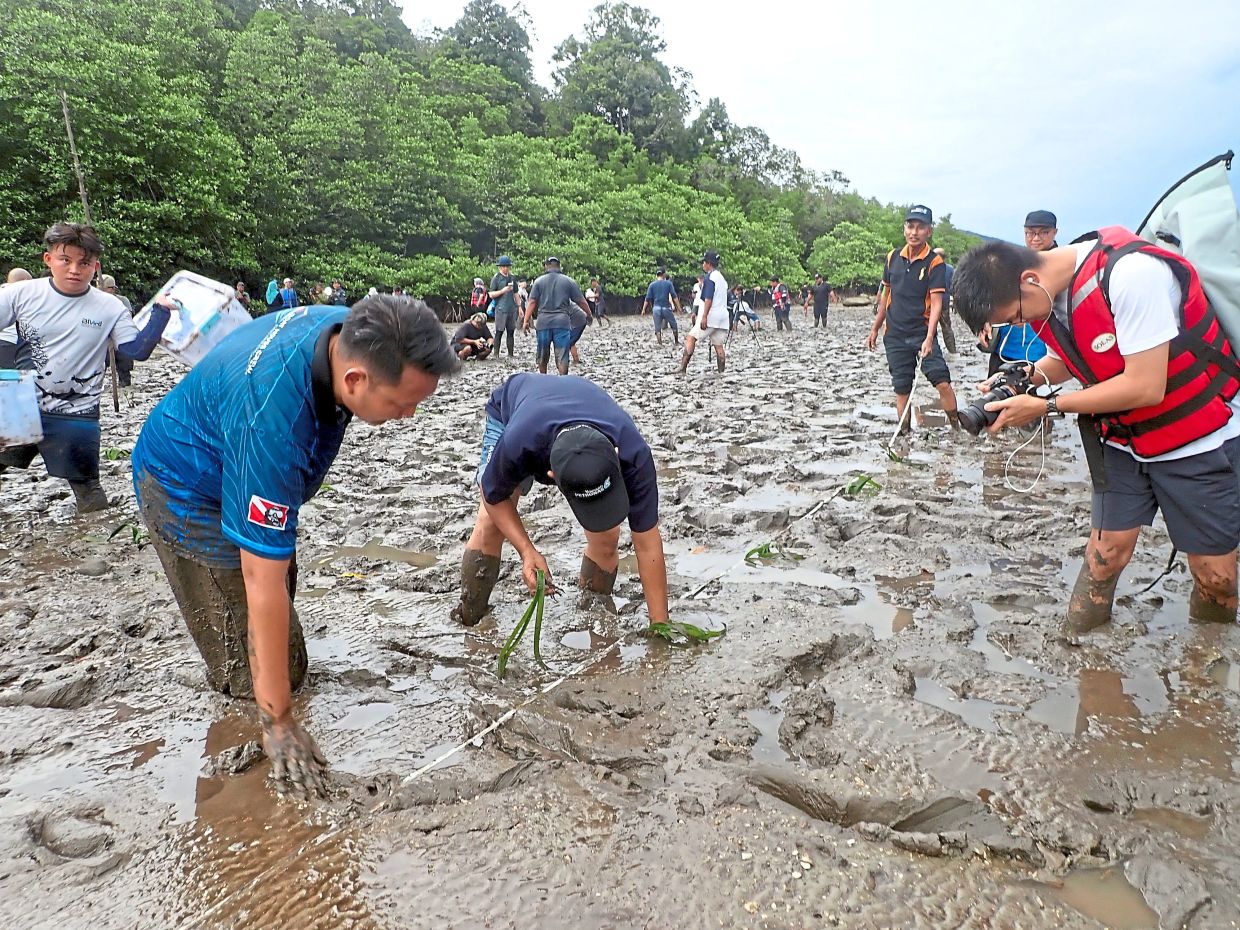
After a briefing and the presentation of appointment letters to the newly designated “seagrass champions” in Kampung Penimbawan, journalists were taken to the mangrove area – the designated site for seagrass replanting – about a 10-minute boat ride from the village jetty.
Ejria said the selected mangrove site near the village experienced minimal boat traffic and fishing activity.
“In Malaysia, there are 17 species of seagrass, and the choice of species for replanting depends on the native and dominant species found in that area – usually those with hardy characteristics and strong root systems.
“In Kampung Penimbawan, we selected the Enhalus acoroides species, which dominates about 40% of the Kota Kinabalu coastal zone,” said Ejria.
This species has leaves measuring 1m to 2m making it the largest seagrass species in Asia, and produced round, coconut-like fruits filled with starchy seeds.
“It usually grows in muddy and sandy areas and is resilient even in turbid waters,” she added.
The programme’s designated “champions” were seen preparing seagrass seedlings and tools such as small trowels and long rulers to measure the planting spots for the chosen species.
“We use seedlings collected from the Sabah Ports Sdn Bhd coastal waters and bring them here for replanting,” she said.
Apart from being trained in seagrass replanting techniques, participants were also taught how to monitor seagrass growth and track the presence of marine life.
“Among the monitoring methods are measuring water parameters such as temperature, salinity (salt concentration), dissolved oxygen and turbidity; analysing epiphytes or algae growing on seagrass leaves (an indicator of ecological stress); recording the presence of indicator species like snails and crabs and documenting changes through repeat photography at fixed monitoring stations.
“More detailed monitoring is also carried out periodically, including assessments of seagrass coverage area, shoot density, leaf length and width, sediment stability, biomass (leaf weight), as well as drone-based surveys,” she added.
Yayasan PETRONAS chief executive officer Shariah Nelly Francis said Malaysia was recognised as one of the world’s seagrass hotspots.
However, many of these seagrass meadows remain unmapped and unprotected.
“In Sabah, coastal development, destructive fishing practices, and pollution continue to erode these fragile ecosystems.
“New mapping and restoration efforts are helping to turn the tide. Seagrass mapping is only one part of the programme.
“The other involves nurturing stewardship, instilling a sense of responsibility and empowering the communities living along seagrass meadows to protect this crucial habitat,” she said.