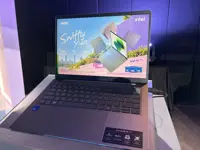
ORANG Asli parents in Kulai, Johor, are determined to ensure their children use the laptops they received responsibly and only for learning.

Housewife Rashidah Abdullah, 34, whose 10-year-old daughter, Nur Dania Khalishah, received a unit, said the child would be closely monitored to ensure the laptop was used wisely.
“My daughter and I are very grateful for this contribution. The laptop will help her with school work, especially in learning basic computer skills.
“I will supervise her usage to make sure the laptop is not misused for entertainment.
“At home, I always control her screen time as she is only allowed to use the phone after she finishes her homework, and even then, just for a short while.”
She said her 11-year-old son, Azroy Nur Qary Hamka, is only allowed to use the laptop for school-related tasks.
“The laptop will mainly be used for studying. Once he is done, I will keep it because I worry he might be exposed to inappropriate content online.
“Sometimes I tell him to go outside, ride his bicycle or play with his friends at the park instead of playing with the phone.”
State education and information committee chairman Aznan Tamin said the laptops were distributed under a corporate social responsibility initiative by Yayasan Johor Corporation (JCorp), in collaboration with the Johor State Education Department (JPNJ) and Affin Islamic Bank Bhd.
“Three schools with low student enrolment namely SK Sayong Pinang, SK Sikijang and SK Belokok were selected under the Digital Literacy Education: Building a Future-Ready Generation programme.
“Each school received 20 laptops and one interactive smartboard, bringing the total allocation to RM84,000,” he said, adding that the initiative aimed to bridge the digital gap among pupils in rural areas.
Yayasan JCorp chief executive officer Zaidatul Zurita Abdul Rahman said JPNJ would also develop a customised digital literacy module tailored to pupils’ learning needs to maximise the programme’s impact.
“Digital literacy education is about opening doors of hope for children in rural schools, especially those from B40 families who often face challenges accessing technology and digital opportunities.
“When a child from a small rural school learns to code, explore or express through technology, that is not just digital literacy – that is transformation,” she said.