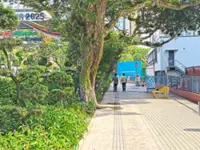
WALKING and cycling safely and comfortably often feels impossible in Kuala Lumpur, especially with the city’s high volume of traffic.
A potential solution lies in the building of green connectors, designed to link residential areas with public spaces such as parks, urban forests and nature reserves.
Kuala Lumpur City Hall (DBKL) Landscape and Recreational Development Department director Puteri Khairul Fathiah Fahimudin said these green corridors were aimed at encouraging residents to walk, cycle and use public transport.
She said while greenery and planting trees were major components, green connectors were more than just about beautification.
“Walking and cycling are green transport methods as we reduce carbon emissions.
“Covered walkways equipped with solar-powered lights can also be considered ‘green’ due to their use of clean technology,” she said during a meeting at Menara DBKL 3 in Kuala Lumpur.
Puteri added that the implementation of green connectors would first be rolled out in the city centre before expanding to five other zones in Kuala Lumpur.
“The green corridors to be established in the city centre are also in line with the ‘Warisan KL’ initiative launched in April.
“We have identified three corridors under Warisan KL’s green connector project, covering a total of 33.7km.”
Warisan KL is an effort to develop the nation’s capital into a city embracing modernity while honouring its historical roots, worked on by DBKL alongside urban regeneration organisation Think City and the United Nations Human Settlements Programme.
“We are still analysing the proposals submitted to us and studying the modes of collaboration,” said Puteri.
Although each zone had its own unique features, she said the implementation model adopted in the city centre could still serve as a benchmark for other zones to replicate.
Selected locations
The three green corridors identified in the city centre are Perdana Botanical Garden to Kuala Lumpur City Centre (KLCC) and Tun Razak Exchange (TRX) (12.9km), Merdeka 118 to TRX Park (9.7km) and Jalan Raja Laut to Titiwangsa Lake Gardens (11.1km).
Puteri said the outer zones were Upper Sanctuary (Menjalara-Sentul), North East Loop (Wangsa Maju-Maluri), South Suburb Loop (Bandar Tun Razak-Sungai Besi), West Urban Loop (Bukit Jalil-Seputeh) and West Hill Loop (Damansara-Penchala). (See graphic.)

“DBKL is targeting a total of 290km of green connectors across the city by 2040,” she added.
Various efforts have been made, she said, to improve pedestrian-friendliness on streets such as Jalan Ampang, Jalan Tuanku Abdul Rahman (TAR) and Jalan Raja Laut, in line with the initiative.
“Green connectors are not completely new. We have been planting trees and building walkways throughout the years.
“The initiative aims to make the city’s greenery and walkability efforts more organised.”
On Jalan Ampang, Puteri said construction was underway around Wisma MCA and Ampang Park to provide updated street designs that cater to the needs of all users, including those with disabilities and the visually impaired.
“Work scopes include improving the lights and landscape as well as streetscapes such as the placement of benches.
“We are also beautifying pedestrian walkways and crossings.
“All these efforts will allow pedestrians to walk in a pleasant environment from KLCC to nearby train stations and other destinations,” she said.
During a recent site visit, StarMetro found the pedestrian walkway between Ampang Park LRT station and Wisma MCA was already equipped with installations showcasing the history of Jalan Ampang.
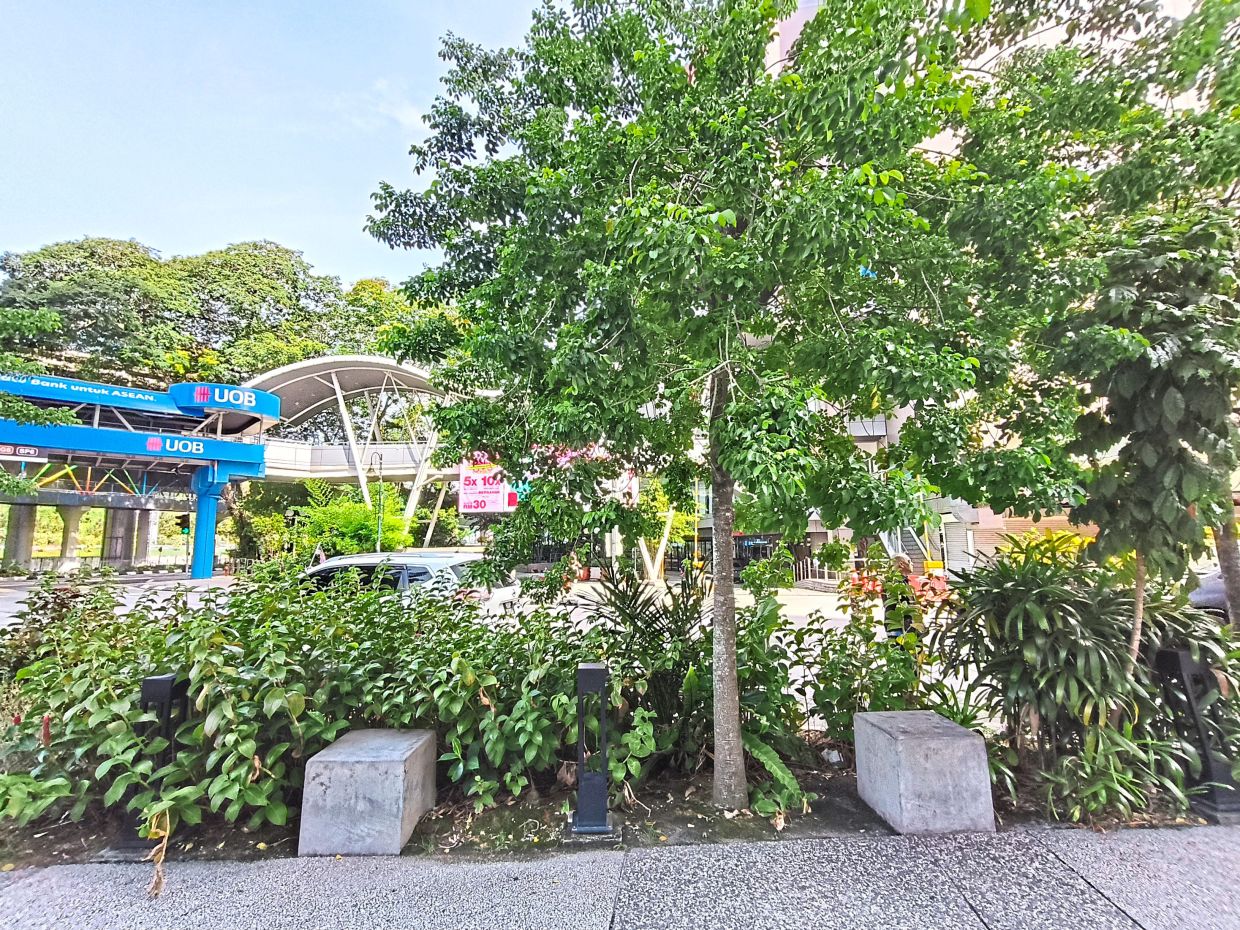
Benches were shaded by trees and surrounded by greenery, and were available for pedestrians to take a respite.
Construction was also ongoing in front of Wisma MCA, although DBKL did not confirm its relation to walkway upgrades.

For Jalan Raja Laut and Jalan TAR, Puteri said various pedestrian-friendly infrastructure have been built.
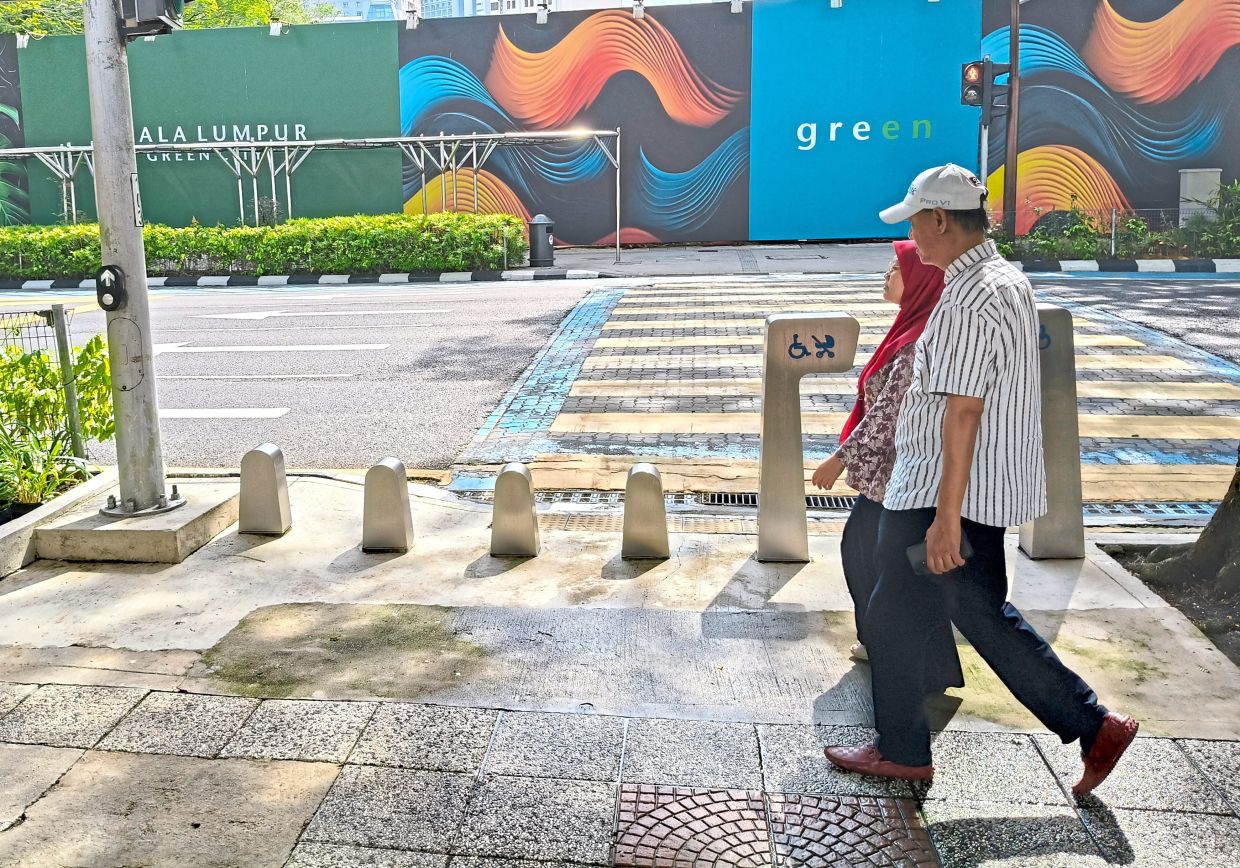
“For example, bollards were installed to prevent motorcycle encroachment onto walkways.
“The road medians and sidewalks were also lined with green verges.
“These features ensure pedestrian safety by separating them from traffic, while the trees’ shade keeps them comfortable.”
Puteri said another key feature was raised kerbs, which provided seamless connection for pedestrians.
“The kerbs of some pedestrian walkways in Jalan Raja Laut, Jalan TAR, Jalan Ampang and Jalan Dang Wangi were designed to be at the same level as the roads to provide seamless connectivity,” she added.
An essential role of green connectors is to boost public transport use by enhancing connectivity to transit stations.
“The key is to make it easier for commuters to walk or cycle to LRT and MRT stations.
“For example, pedestrian walkways and bicycle lanes are currently being developed around Taman Metropolitan Batu in Sentul to improve connectivity to the Jalan Ipoh MRT station,” she said.

Puteri added that the green connector project would also be integrated with several broader DBKL urban strategies, including Kuala Lumpur Pedestrian and Cycling Masterplan, Warisan Kuala Lumpur Plan, Kuala Lumpur Low Carbon Society 2030 Action Plan and Kuala Lumpur Landscape Masterplan 2040.
It is also part of the Kuala Lumpur Local Plan 2040, which was gazetted in June.
Long-term benefits
In the long term, Puteri said green connectors not only enhances accessibility and encouraged active mobility, but also improved air quality by reducing the number of cars on the road and cutting urban heat.
“Green connectors provide shade, which is also crucial for stormwater management and flood mitigation.
“The ideal achievement would be to lower the overall temperature of the city,” she added.
Puteri also said green connectors could increase the city’s biodiversity as well as the local community’s health.
“For example, having ample green spaces in residential areas will decrease residents’ stress levels,” she said.
Regarding maintenance, Puteri said the city’s landscape and park maintenance was divided into four zones, each with its own team.
“We outsource the maintenance of some zones to contractors who we supervise.
“Our own personnel maintains the rest.
“DBKL has also established an endowment fund to allow interested agencies and companies to contribute to the initiative with incentives,” she said.
Puteri said DBKL also encouraged agencies, companies and local communities to adopt a green area or a green connector route as part of an “adopted park” scheme.
Through the programme, they care for and maintain a designated area under an agreement with DBKL for a specific period.
To promote the initiative and encourage more people to leave their cars behind, DBKL has carried out various efforts and events, said Puteri.
“Some examples are the Kuala Lumpur car-free morning on Sundays, Malaysia Sarong Music Run as well as GoKL buses, which provide first- and last-mile connectivity to suburban areas and train stations.
“The Kuala Lumpur Parks Festival, held at Titiwangsa Lake Gardens this year, is another promotional initiative.
“The main goal is to encourage more people to walk and cycle to reduce their reliance on cars.
“Through the green connector initiative, we are providing pedestrians with a good walking experience in the city.
“There will always be resting points and something nice to view, such as pocket parks, along the routes,” she added.
One such pocket park is Laman Esfahan, along the city centre’s Jalan Esfahan, equipped with benches and greenery, allowing pedestrians to catch their breath or simply enjoy the view.