KUALA Lumpur City Hall (DBKL) celebrated its inaugural World Town Planning Day during the Kuala Lumpur Park Festival (KLPF) at Taman Tasik Titiwangsa.
Mayor Datuk Seri Maimunah Mohd Sharif said the celebration was an appreciation of everyone involved in planning and developing Kuala Lumpur towards a sustainable, resilient and liveable city.
As a town planner herself, she said planning was not merely about drawing maps or setting development zones, but about shaping the direction of urban community living.
“I started my career over three decades ago as a town planner at Penang Municipal Council and later served as an executive director at UN-Habitat headquartered in Nairobi, Kenya, for six years with operations in more than 193 countries.
“My experience at both local and global levels has strengthened my conviction that the success of a city is not measured by its skyscrapers, but by the daily lives of its people.
“Today, as the mayor of Kuala Lumpur, I uphold the same principle that every policy, plan and urban project must be centred around the people and community’s well-being,” she said when launching the event themed “Bandar Untuk Semua: Kuala Lumpur – Inklusif, Sejahtera dan Disayangi”.
She said Kuala Lumpur was entering a new phase of development guided by policy and data.
Through the Kuala Lumpur Structure Plan 2040 and the Kuala Lumpur Local Plan 2040, DBKL has established six strategic goals to make the capital city innovative, inclusive, green, productive, smart and resilient.
“This approach can be implemented through the 4P concept of Public, Private, People and Partnerships that combines the expertise and responsibilities of the government, private sector, professionals and the community.
“This ensures that every development is carried out with a spirit of collaboration, so that no one is left behind in the city’s progress,” said Maimunah.
In the context of global climate change, she said future urban planning must align with low-carbon development principles.
“Through the Kuala Lumpur Climate Action Plan 2050, DBKL aims to achieve carbon neutrality by 2050, implementing key initiatives including a 254km green-and-blue network that connects parks, rivers and pedestrian pathways, namely 20sqm of green space per resident and 70% public transport usage by 2040.
“These measures are not only for environmental sustainability but also to make Kuala Lumpur healthier, more accessible and better prepared to face future challenges.”
The event also saw the launch of KL Dulu, a book by DBKL under the Kuala Lumpur Heritage Trail Master Plan initiative.
It brings together the history, architecture and heritage stories of 18 major heritage trails in Kuala Lumpur, including Kampung Baru, Brickfields and Pudu.
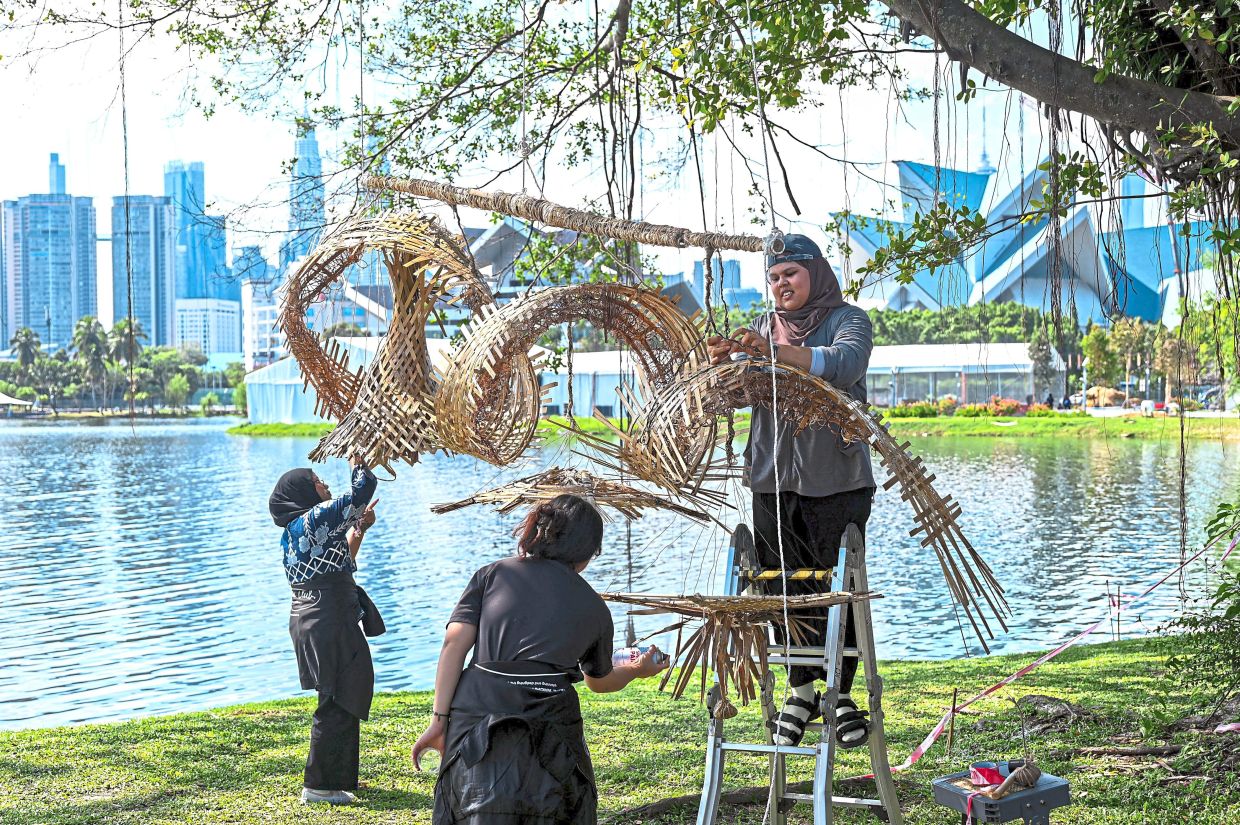
Meanwhile, the 10-day KLPF 2025 achieved three Malaysia Book of Records entries for the “Largest Floating Garden in a Festival”, “Most Art Installations in a Park Festival” and “First Immersive Plant Showcase”.
Themed “Asean Unity in Diversity”, KLPF featured a variety of unique segments like Mystical Titiwangsa which offered immersive experiences based on Malaysian folklore such as Puteri Gunung Ledang and Si Tanggang, as well as drum and dance performances and a food fiesta.