
Cyclists want clearer signage, better access and safety from speeding motorcyclists on Federal Highway
Mention the Federal Highway bike lane, and many assume that it is a protected route separating motorcyclists from the highway’s high-speed traffic.
The lane was envisioned as a shared space for both cyclists and motorcyclists when it was constructed in the late 1970s.
However, over the years, the lane has become heavily dominated by motorcycles, leaving little room for cyclists.
Cyclists say the lane has become hazardous due to speeding motorcycles and reckless riders.
To gain perspective, StarMetro spoke to several cyclists to learn their concerns.
According to them, some parts of the lane are also obstructed by obstacles, further endangering their safety.
Built as shared space
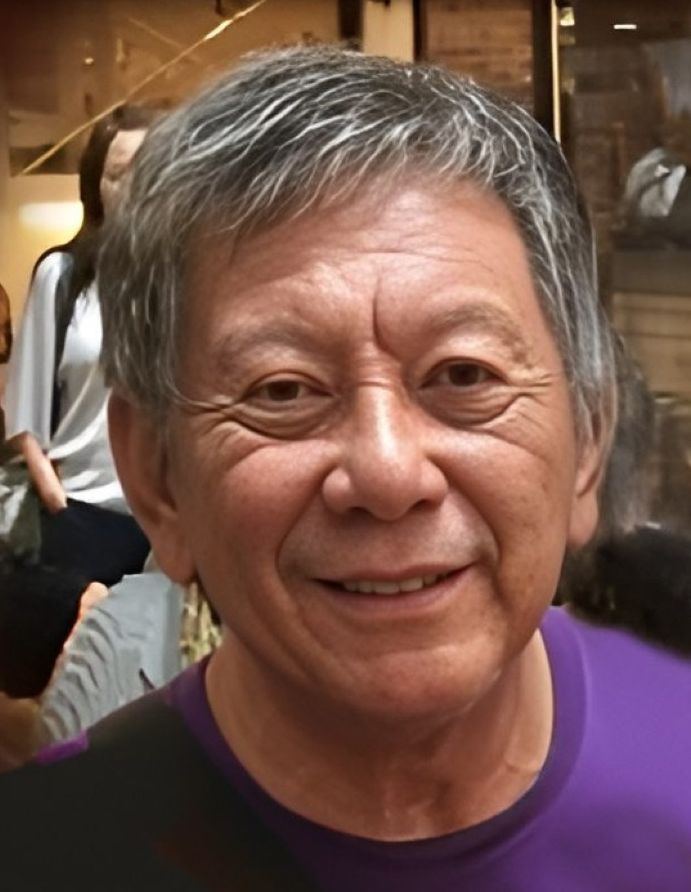
Engineer Tan Seng Khoon, who was in charge of Federal Highway’s construction between 1974 and 1977, confirmed that the bike lane was designed to be shared by cyclists and motorcyclists.
“Such a design is to keep motorcycles and bicycles, which are considered slow-moving vehicles, away from Federal Highway’s main road which often see high-speed traffic.
“When using the lane, bicycles should keep left because they are slower than motorcycles,” said Tan, who is also Institute of Engineers Malaysia past chairman and Information and Communications Technology Special Interest Group advisor.
A 2009 article published by a local daily also quoted Federal Highway project’s deputy resident engineer G. Ramasamy as saying, “To keep cyclists off the highway’s carriageway, we built cycle tracks but I see they are now used by motorcyclists.”
However, StarMetro found inconsistencies in the signage indicating that cyclists are allowed to use the lane.
A report in The Star on Jan 14, titled “Cycling to work in Malaysia is a challenge that is not for the fainthearted,” featured a photo showing a bicycle road sign at the highway’s bike lane entrance near Empire Subang in Subang Jaya, Selangor.
However, when StarMetro visited the same site on Aug 20, the sign was no longer there.

Meanwhile, the part of the bike lane near Universiti LRT station in Kuala Lumpur only displayed motorcycle road signs.
Likewise, the entrance near UOA Business Park, opposite Empire Subang, featured only motorcycle signage, with no indication that cyclists could use the lane.
Cyclist Eugene Lai said bicycle signs could be seen along some parts of the highway’s bike lane.
“I saw such markings near the construction site of the UiTM Shah Alam LRT station in March last year,” he said.
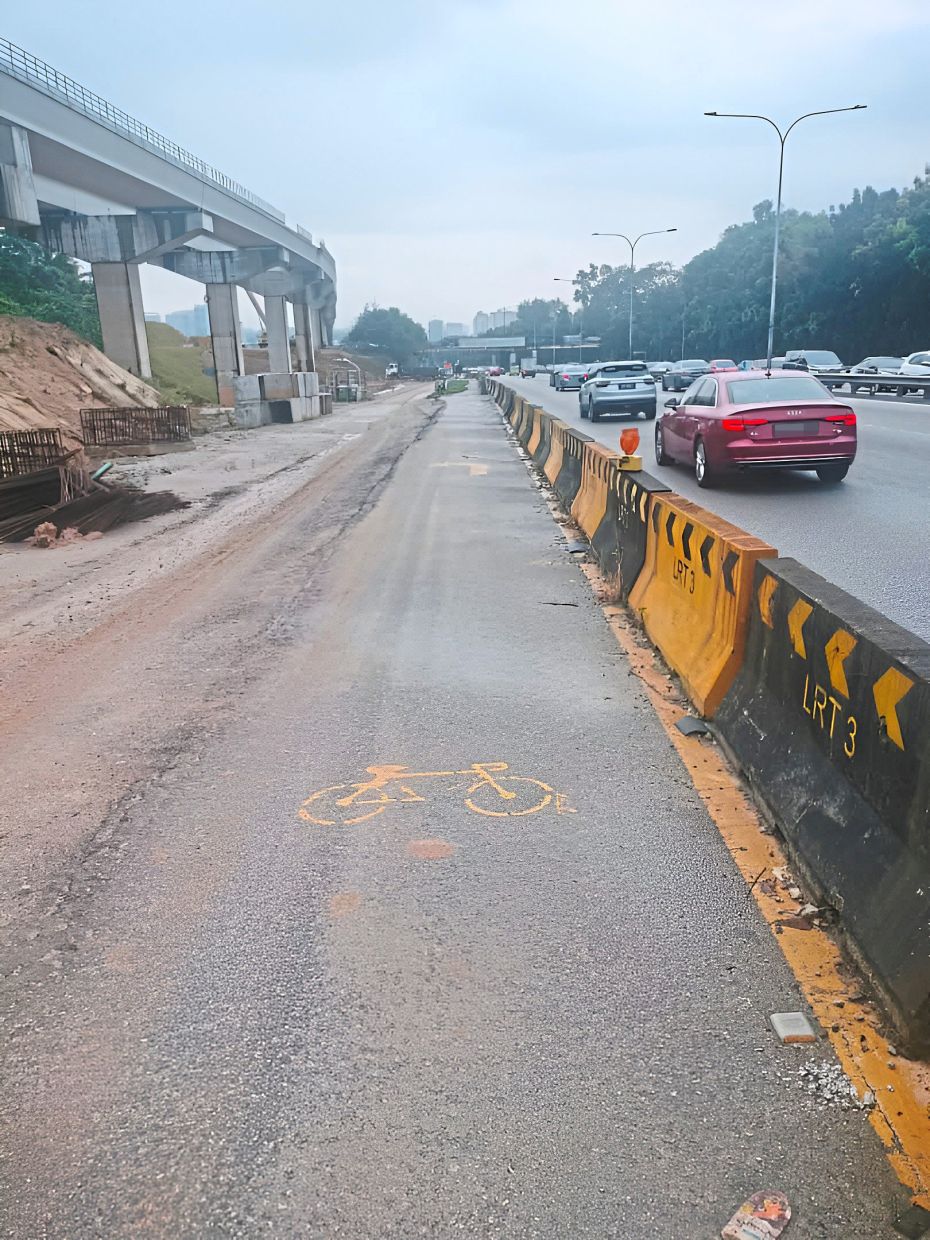
“However, the markings have since disappeared after the construction was completed.”
He also said a bicycle sign was visible at the highway’s Sungai Way exit (Kuala Lumpur-bound) as of Aug 22.
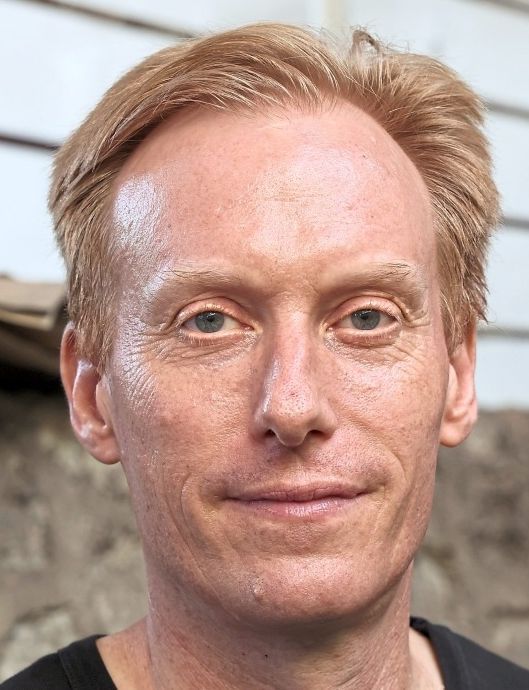
Cyclist Gregers Reimann, 50, suggested placing cycling logos every 100m along the left side of the bike lane to remind users that it is a shared route.
“Besides labels such as logos and signboards, bicycle markings could also be placed on the left part of the lane to indicate that it is a shared lane.
“If necessary, speed bumps could be installed along the lane to slow down motorcycles and create a safer environment,” he said.
Lane obstructions
Cyclists also shared their experiences of navigating obstructions, high-speed motorcycles and the occasional hostility from some motorcyclists while using the lane.
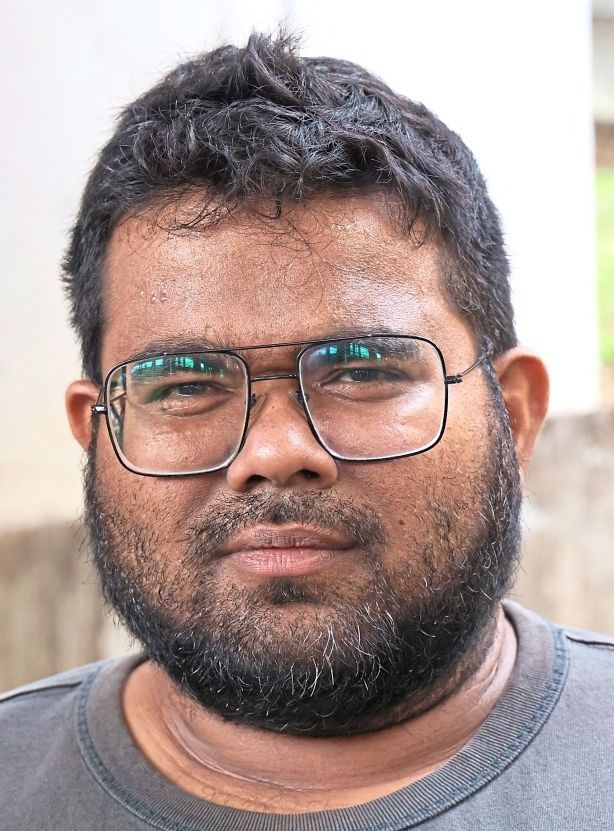
Reimann pointed to a tunnel in the bike lane (Klang-bound) near Universiti LRT station which was flooded with water and rubbish.
“The situation at the tunnel has persisted for nine years.
“The Federal Highway bike lane is a very important passage for cyclists travelling from Kuala Lumpur to Klang as it keeps us safe from heavy traffic on the main road.
“With this part of the lane inaccessible for almost a decade, cyclists have to find alternative routes which are not necessarily safe,” he said.
Akmal Azfar Abdul Mutalib, 37, said that out of necessity, cyclists travelling from Kuala Lumpur to Petaling Jaya (the Universiti Malaya area) resorted to using Jalan Bangsar and Jalan Pantai Baru where traffic was heavy.
“We cyclists understand that there are dedicated facilities designed for us.
“However, we have no choice but to risk our lives on the highways or artery roads when these facilities are not maintained well,” he pointed out.
Further down, the stretch of road opposite Bangsar Trade Centre is uneven due to ongoing construction.
Cyclists have to navigate through construction materials and machinery when using this stretch.
Near Wisma TV Angkasapuri, the bike lane is obstructed by large pipes, while the tunnel remains flooded.
Reimann said the pipes had been there for some time.
“I am not exactly sure how long the pipes have been there.
“However, they would have been there for a very long time, judging from their mouldy surface,” he said.
During a site visit in early September, Lembah Pantai MP Datuk Fahmi Fadzil’s special officer Abdullah Izar Mohamed Yusof said about 2.2km stretch of the bike lane from the Federal Highway’s Mid Valley exit to the Universiti LRT station was being upgraded.
The project is expected to be completed by the end of this year.
“Motorcyclists and cyclists will be able to access the stretch safely starting next year,” he said in a video posted by a local daily.
Meanwhile, Lai raised his concern about the danger that cyclists faced when exiting the bike lane at some areas.
“For example, at the Jalan Templer exit (Kuala Lumpur-bound), cyclists have to stop and wait for an opportunity to ride on when exiting the Federal Highway as the vehicles go at high speeds,” he said.
“Another area is the Asia Jaya exit (Kuala Lumpur-bound).
“At these points, the lane could be extended further to ensure the cyclists’ safety.”

Meanwhile, cyclist Sumes Toh spent four weeks in the hospital after being involved in an accident with a motorcycle at the lane 10 years ago.
“The accident happened when I entered the bike lane near Amcorp Mall at Jalan Barat in Petaling Jaya.
“As I exited a tunnel, I was side-swiped by a fast-moving motorcycle and I went unconscious,” she said.
“I sustained serious traumatic brain injury and it took me years to fully recover.”
Avid cyclist Patrick Lee also shared his experience of dangerous encounters with motorcycles.
“My friends and I once encountered a motorcyclist who didn’t use his horn to alert us that he was coming.
“He skirted really close to me and swerved around my bicycle, while jeering at me.
“Though this doesn’t happen very often, you always have to be careful,” he said.
Restoring cycling access
Bike Commute Malaysia director Justin Lee urged the authorities to work collaboratively toward a solution that prioritises accessibility and safety for all road users.
“Restoring cyclists’ access to the route is an important step toward reconnecting communities that aligns with broader goals of safer, healthier and more sustainable cities across the Klang Valley,” he said.
Petaling Jaya MP Lee Chean Chung also suggested that the bike lane be widened to accommodate both bicycles and motorcycles.
“However, there needs to be some form of separation between the cyclists and motorcyclists to ensure the former’s safety.
“We need to tap on existing infrastructure, rather than reconstructing the whole thing, to save costs,” he said.
Both Public Works Department (JKR) and the Malaysian Highway Authority declined to comment on queries regarding the issues raised by the cyclists.
As of press time, Works Ministry, too, has not responded to requests for comments.