



ONCE a proud symbol of culture and craftsmanship, the Malay traditional ceramics business is now often described as a “sunset industry”.
Perak Ceramic Art Association (Persera) chairman Mohd Shukri Hashim said that at its peak, artisans could earn up to RM40,000 a month in the 1980s and 1990s.
But the market has dwindled in recent decades, he said, with declining student enrolment in ceramics courses, lack of innovation, slow production and other factors contributing to the decline.
He noted annual sales revenue recorded by Kraftangan Malaysia was on a downward trend while the number of entrepreneurs had also declined.
“From around 300 active entrepreneurs in the 1990s, there may be only about 60 left now in Perak.
“There are fewer new entrepreneurs from the younger generation, and those with higher qualifications tend to focus more on academics or become artists outside the ceramics field,” he added.
Strong competition from Indonesia, Vietnam, India and China has also affected the local ceramics industry.
“Higher production costs, lack of product creativity, rising material and labour costs and inconsistent supply chains have affected the industry,” said Mohd Shukri.
“The ceramics craft process is relatively complicated, leading to limited interest among the younger generation.
“More focus is put on creative arts such as batik and woodcarving but as a result, players in the ceramics industry lag behind,” Mohd Shukri told StarMetro during an interview at the association’s premises in Jalan Taman Meru, Ipoh.
Persera is on a mission to reconnect people with clay, and to breathe new life into an art form deeply rooted in Malay tradition.
“The way forward is not to treat ceramics as a dying art, but as something we can nurture through education, innovation and community.” he said.
Adapting to survive
It is not all doom and gloom, as some ceramics enterpreneurs are moving with the times to infuse new techniques and marketing strategies.
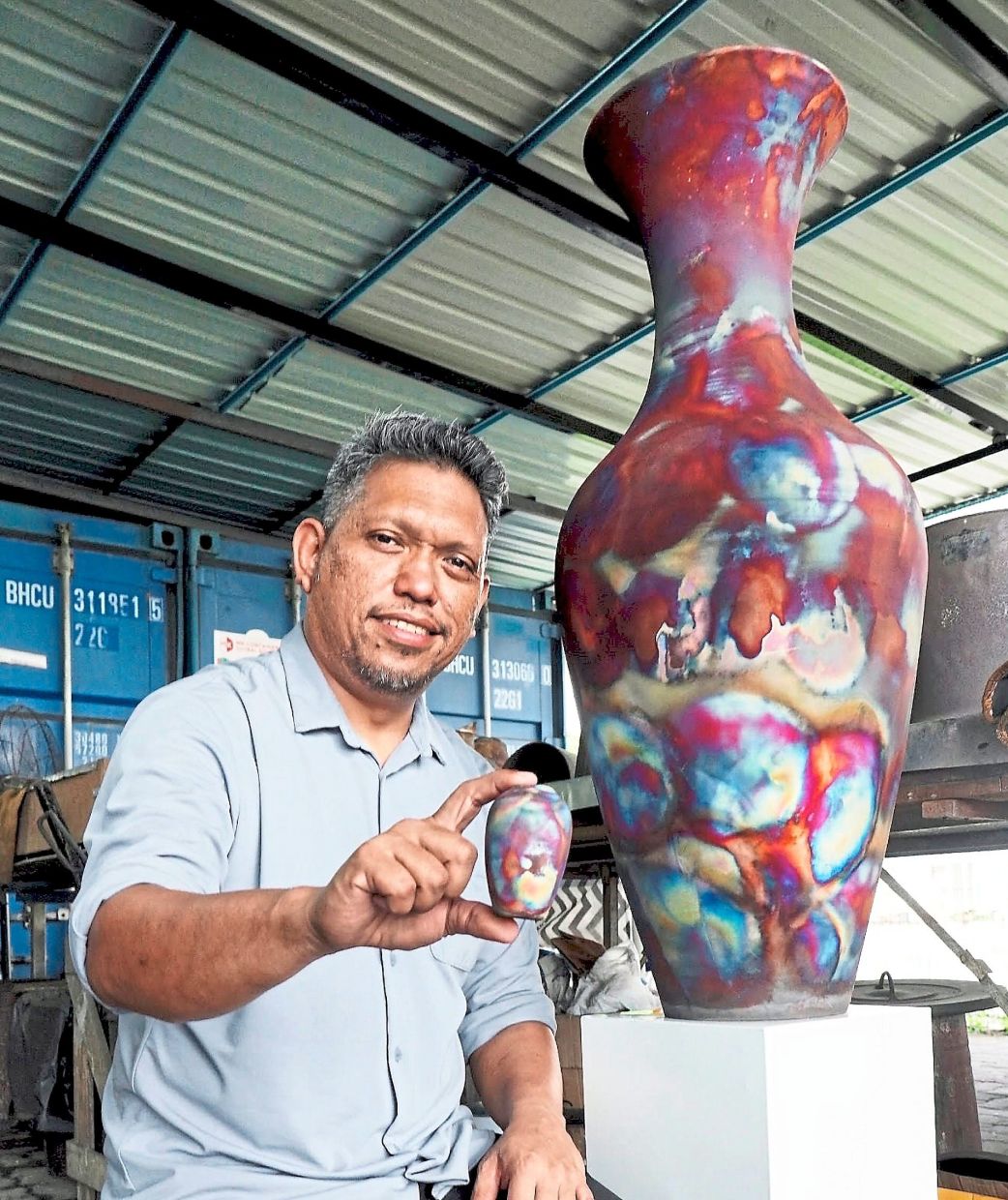
One of them is artist and entrepreneur Adil Abdul Ghani, originally from Kuala Kangsar, who aims to preserve Malay traditional ceramics while giving them a contemporary twist.
Having graduated in ceramics arts from Universiti Teknologi Mara (UiTM) in Seri Iskandar in 2002, Adil honed his craft through years of experience in ceramic factories in Petaling Jaya (Selangor) and Chemor before being sent by the Perak State Development Corporation (PKNP) to Japan in 2006 for a six-month training programme.
“There, I was introduced to the Japanese raku firing technique, which later shaped my artistic direction.
“I studied porcelain technology in Japan, but I was inspired by raku so I began fusing both,” he said.
He marries Malay traditional ceramics techniques with Japanese influences and contemporary methods.
In 2022, he set up his workshop in Ara Damansara, Petaling Jaya, focusing primarily on e-commerce.
His creations under the brand “Raaquu” are now sold worldwide through platforms such as Amazon, eBay and his own website, alongside local retail and commissioned work.
Adil also participates in exhibitions and conducts workshops for those keen to learn the craft, including the younger generation.
“I want to keep Malay traditional ceramics alive, but to do that, we need to adapt.
“It must have a traditional touch, but also something new that appeals to a wider audience,” he opined.
For nearly three decades, Mazlan Ahmad too has dedicated his life to preserving the art of traditional Malay ceramics, ensuring the centuries-old craft does not fade away.
Graduating in 1996 from the then Perbadanan Kemajuan Kraftangan Malaysia, now known as Institut Kraf Negara (IKN), he began his career a year later, specialising in modular ceramics and mould-making.
In 2014, he took the leap to set up his own workshop in Taiping, the only one of its kind in the town.
“Before this, I worked in Kuala Kangsar, following their traditional craft methods.
“But when I started in Taiping, I wanted to bring in my own designs while still using Sayong clay,” he said.
Mazlan produces a wide range of items, including lamps, wedding souvenirs, traditional decorative vases and even customised moulds for factories producing flower pots and gardening products.
His youngest child has shown interest in carrying on the craft, often helping him with designs and patterns.
“I hope more young people will take up ceramic art, and I also give talks and workshops in schools to spark interest among students.
“My goal is to find a new generation of artisans who can keep this heritage alive,” he added.
Role of education
Mohd Shukri said the number of new students taking up ceramics had dropped significantly in institutions like UiTM and IKN.
He noted that the Ceramics Department at the Industrial Training Institute (ILP) in Ipoh had also closed.
He said as the number of graduates in ceramics decreased, the future of the industry would be affected due to a lack of talent.
“UiTM offers ceramics studies up to PhD level, but that caters mainly to those interested in an academic pathway.
“For aspiring entrepreneurs, IKN in Rawang provides a more practical route with certificate and diploma programmes.”
He said the association was also working with the Minerals and Geoscience Department (JMG), Sirim Bhd, UiTM Seri Iskandar, and Universiti Pendidikan Sultan Idris (UPSI) to strengthen industry standards and research.
On Oct 12, Persera will be signing a memorandum of understanding with UiTM for strategic cooperation, joint initiatives, intellectual property sharing, joint product development, teamwork as welll as research and development.
Several other MOUs are in the pipeline with agencies such as Tourism, Arts and Culture Ministry (Motac), JMG, Tourism Perak, IKN, National Art Gallery and PORT (People of Remarkable Talents), said Mohd Shukri.
There are also plans to set up the Persera Academy by the end of this year, offering structured training modules and recognised certification.
Mohd Shukri added that the concept paper was being prepared and would be launched on Oct 12 as well.
“The academy will operate under the association and is expected to collaborate with institutions such as UiTM, IKN and several other government agencies.
“Its programmes will be designed according to the Malaysian Skills Certificate (SKM) standards, with the aim of producing certified artisans through technical and vocational education and training (TVET) programmes,” he added.
In line with this expansion, the group will be relocating from its current premises in Jalan Taman Meru to a two-storey building at Taman Herba in Gopeng serving as its new headquarters.
Popularising ceramics
Mohd Shukri said the Perak Ceramic Art Festival would be held from Oct 9 to 12 at Artworks Hotel in Ipoh.
“The four-day event supported by Motac and other agencies, will feature 24 booths with five dedicated solely to ceramics.
“Visitors can expect live demonstrations, exhibitions and Perak traditional arts displays ranging from batik clay, ceramics to tekat (gold thread) embroidery.
“Seminars and presentations, organised in collaboration with UiTM, will bring together more than 30 international and local speakers to discuss the future of the industry.
“Cultural performances, traditional games, and workshops will also run daily,” he said.
Mohd Shukri said children would be invited to basic ceramic classes at the association premises during school holidays.
“This gives them an opportunity to mould, shape and play with clay.
“They are introduced to the joy of working with real clay, unlike Play-Doh that they are familiar with,” said Mohd Shukri.
“Natural clay feels different and often takes some getting used to.
“The first 30 minutes are spent simply allowing them to feel and explore the clay in their hands.
“Once they get comfortable, instructors guide them through a few simple techniques.
“They then spend two hours to create their own pieces,” he added.
Classes are also held for kindergarten, tahfiz schools, special education centres, and homes for the elderly.
“For senior citizens, ceramics has been introduced as therapy for motor skills, while for special children, clay activities help with concentration,” said Mohd Shukri.
“We have seen special needs children usually losing focus after five minutes.
“But through clay therapy, they stay engaged for 20 to 30 minutes. That is a huge success,” he said.
During one of the recent school holiday programmes, children aged between four and 10 participated in a ceramic workshop.
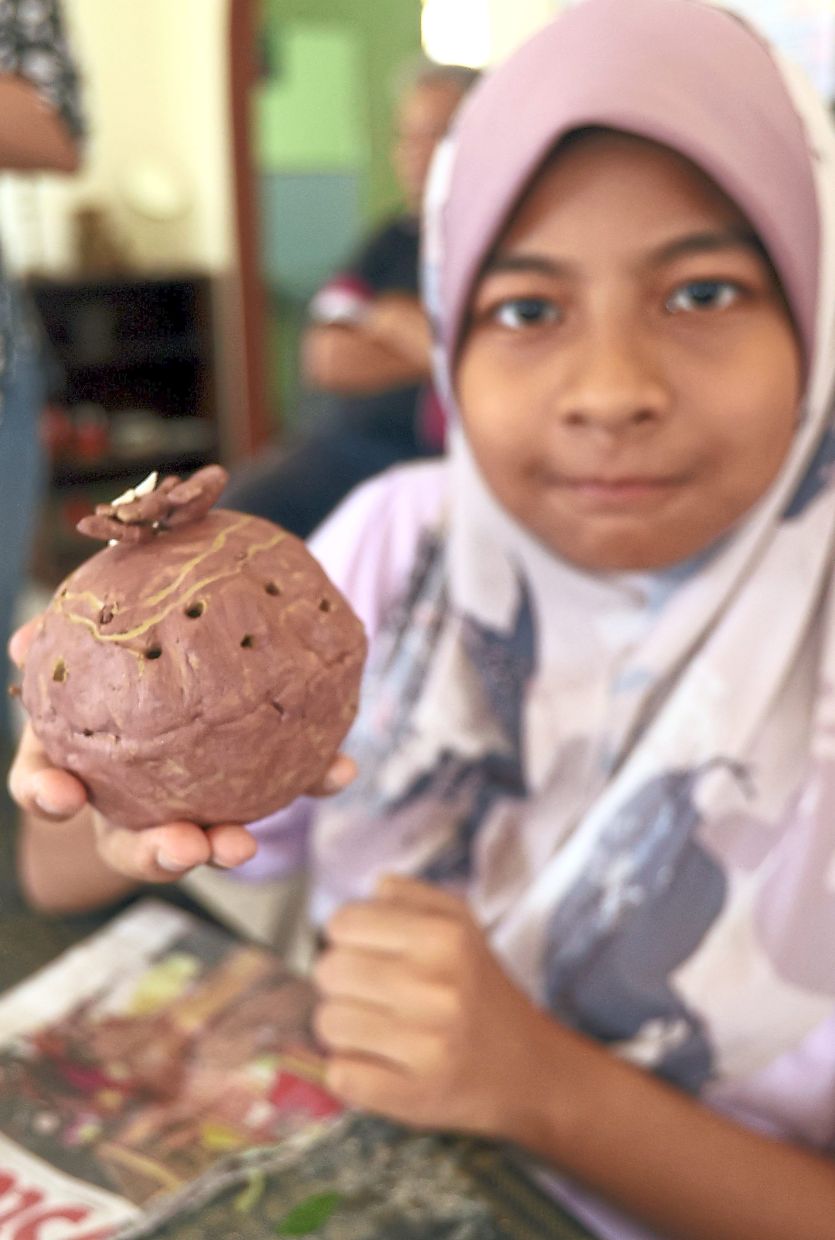
Nur Eryna Darwisyah Mohamed Ashraf, from Ipoh, said she was fascinated by the feel of clay.
“At first I was not sure if I could shape it, but soon I discovered how calming it was to press and mold the soft material.
“I made a diffuser and several small wall decorations,” she said.
Muhammad Mohd Zahid Afifi from Gunung Rapat, made a doughnut, sushi and keychain in his first attempt.
“I usually make these items using Play-Doh at home, so it was quite easy for me to make them here,” he said.
Luna Mohd Norhayat, from Chemor, was in the class with her four-year-old sister Nuh.
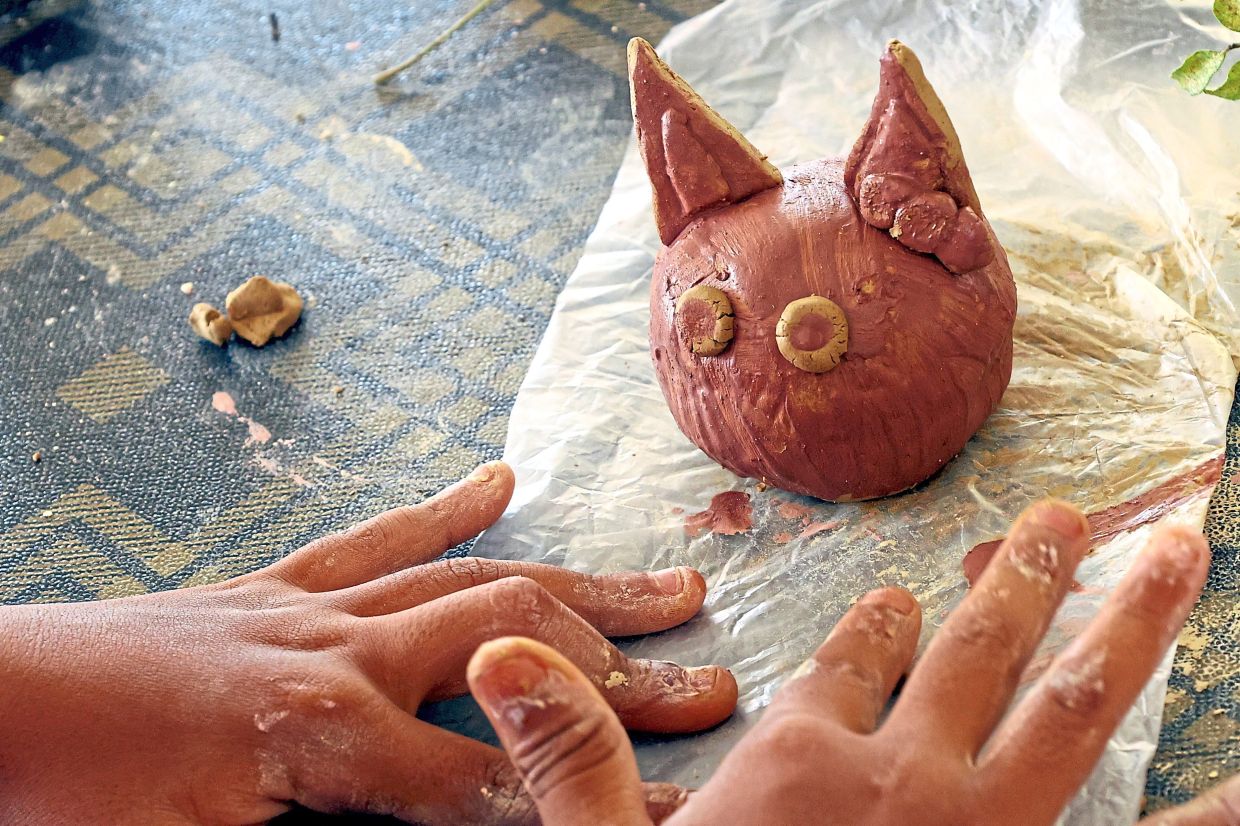
“I made a cat, while my sister made small balls,” said Luna.
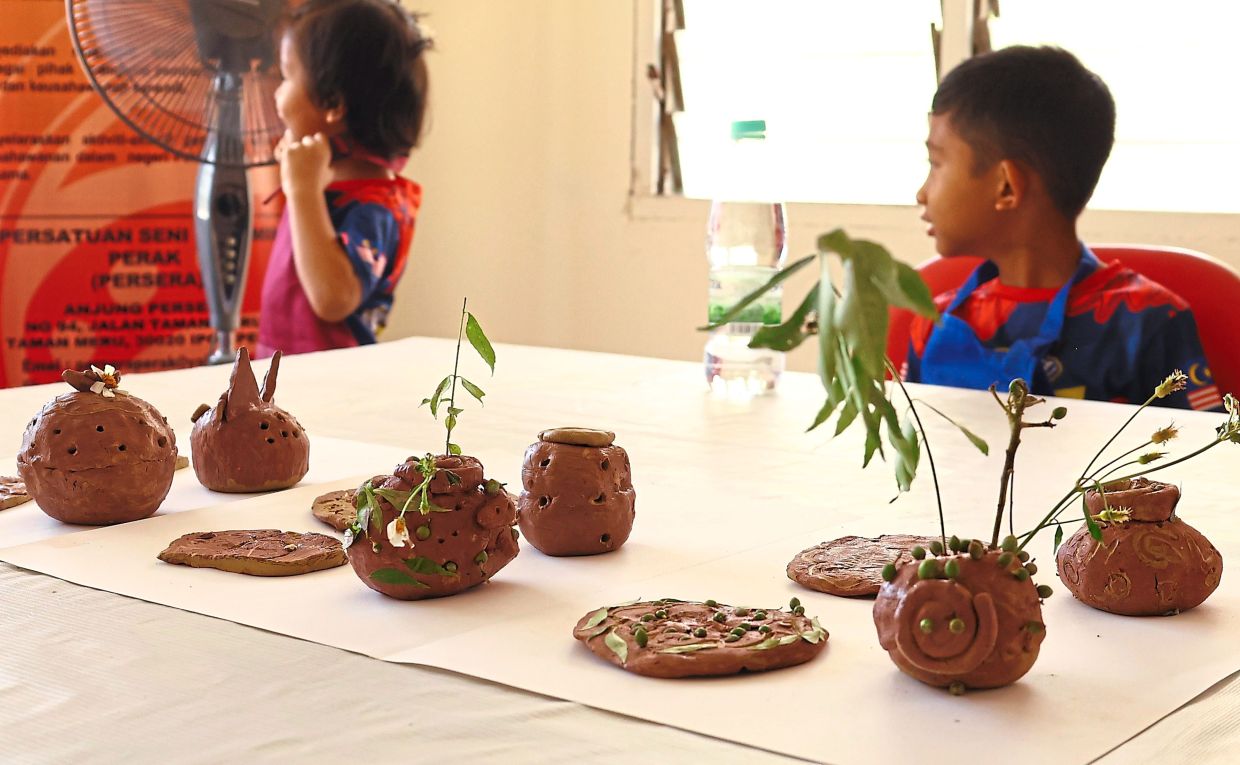
Muhammad Ammar Adwa Mohd Razani, from Kamunting, said he loved experimenting with textures and using leaves, as he pressed patterns onto the clay.
Mohd Shukri said that by the end of the class, the children had not only learned basic ceramic techniques but also gained lessons in patience, creativity and teamwork.
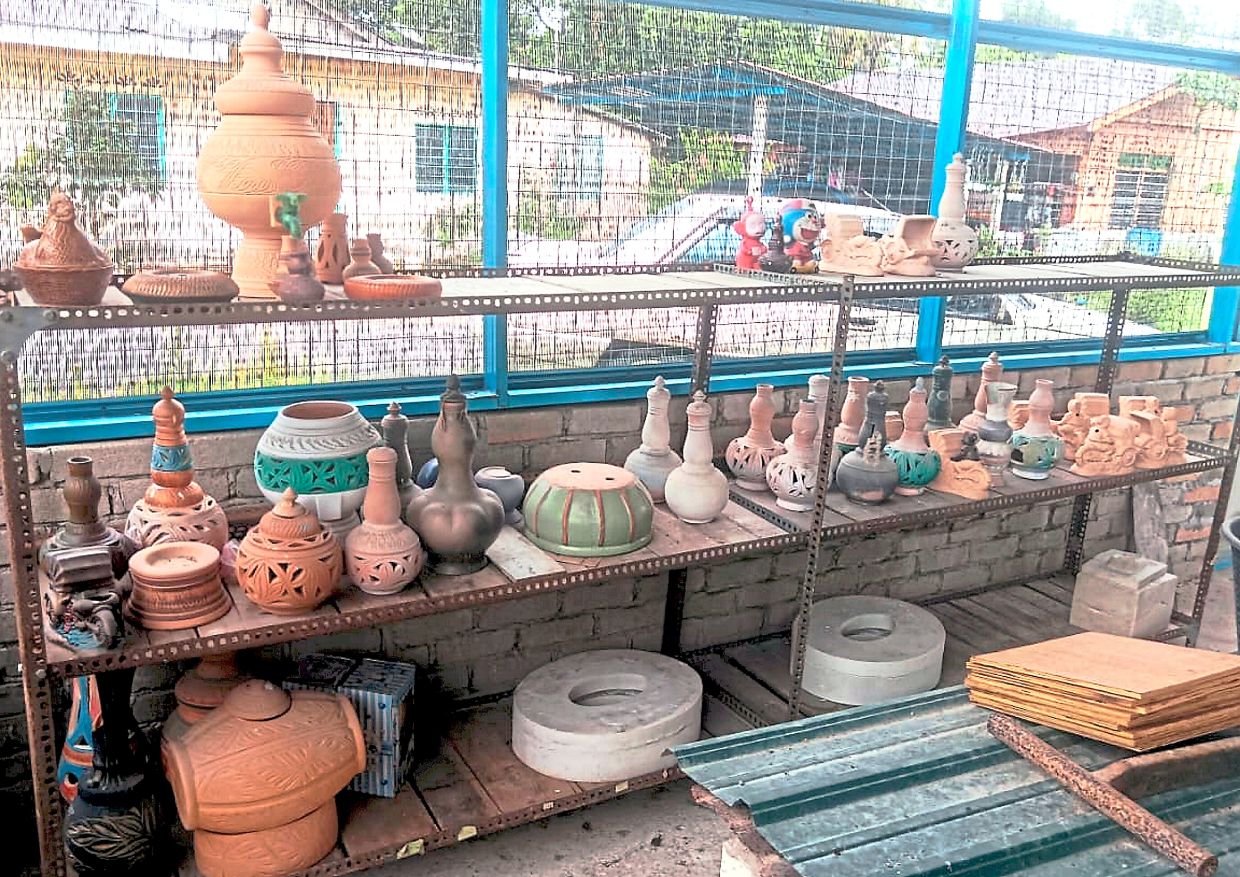
Some of the products made by Mazlan at his workshop in Taiping.
Adil showing vases made using the raku firing technique.
Nur Eryna with her ceramic diffuser.
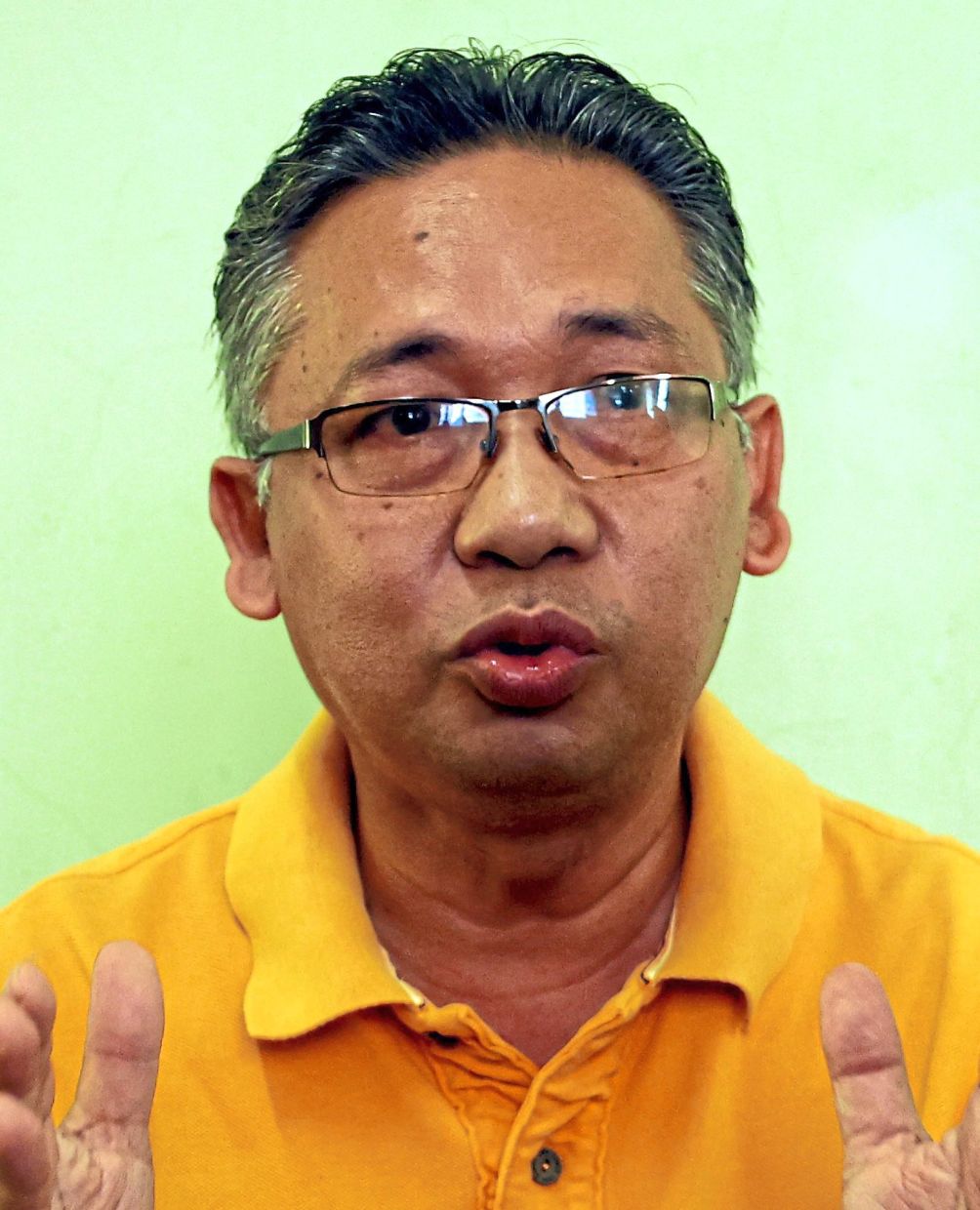
Mohd Shukri: There may only be 60 active ceramics entrepreneurs in Perak.
A participant making a ceramic cat during the workshop at Persera.
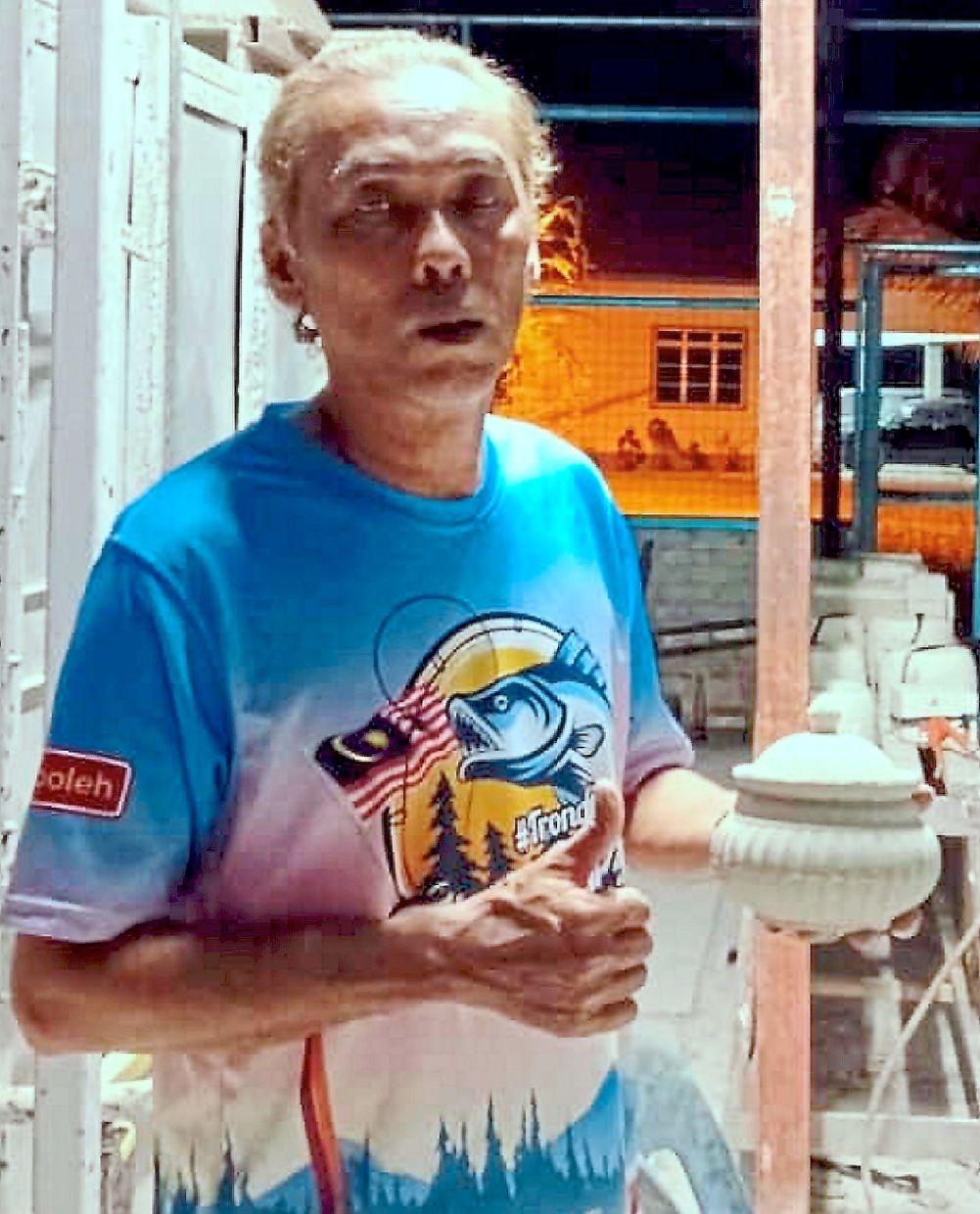
Mazlan showing one of the products he made.
Some of the ceramics products made by the children at the Persera workshop in Ipoh during the school holidays. — Photos: RONNIE CHIN and courtesy pix
