JALAN Tan Hiok Nee in Johor Baru carries the name of one of Johor’s most influential Chinese leaders.
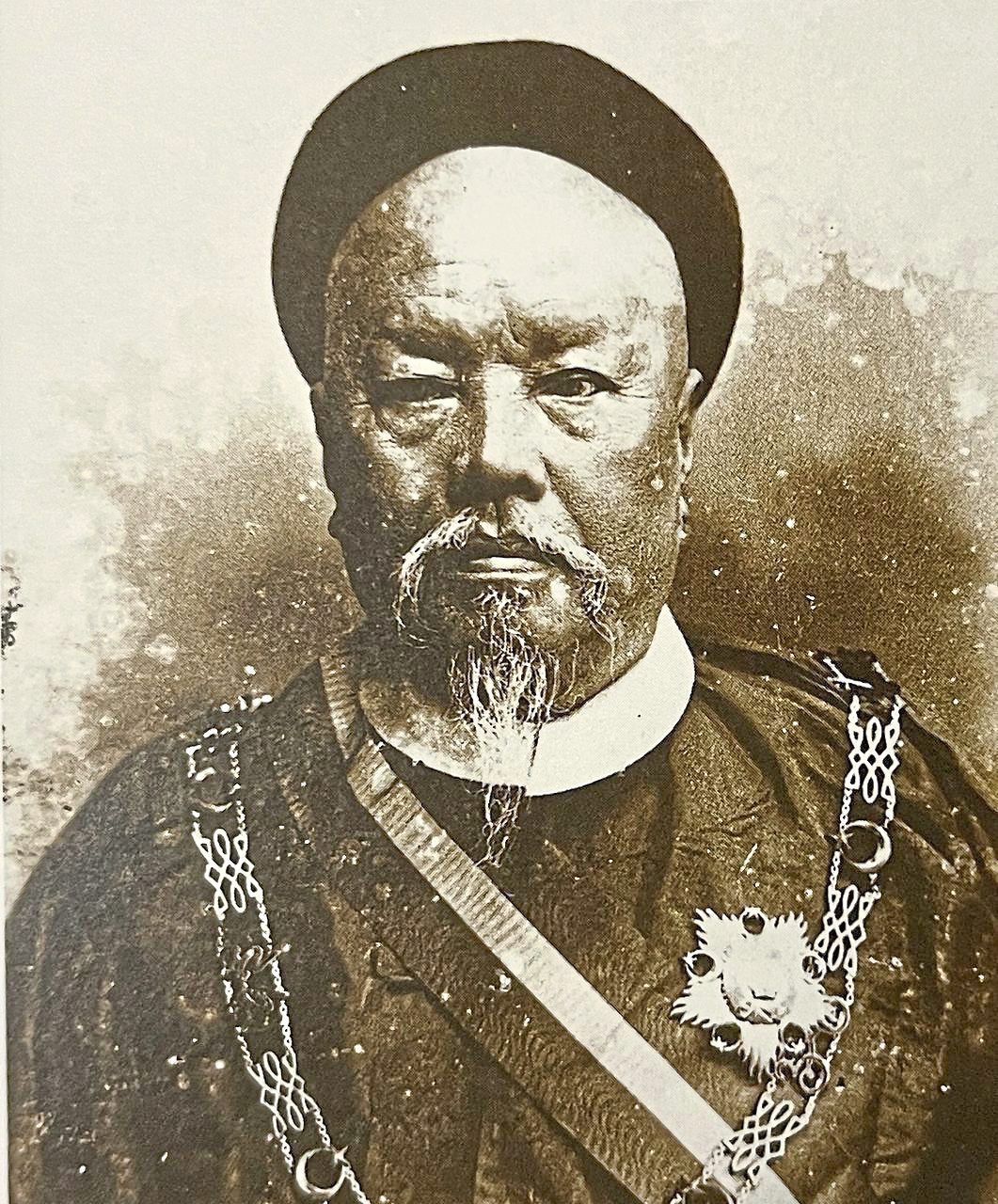
Born in 1810 in Chaozhou, China, Tan Hiok Nee arrived in South-East Asia at the age of 17.
He first worked in Pahang before venturing into textile trading in Singapore, where his clientele included Temenggong Daeng Ibrahim, the then sovereign Ruler of Johor, and his heir Tun Abu Bakar, who later became Sultan Abu Bakar.
Recognising the potential of Chinese settlers in agriculture, Temenggong Daeng Ibrahim introduced the kangchu system, which granted permits to cultivate pepper and gambier along Johor’s rivers.
Permit holders, known as kangchu, also collected taxes and oversaw their communities.
With the Ruler’s support, Tan relocated to Johor from Singapore and continued his business in Sungai Segget.
He later secured kangchu permits, granting him authority from southern Kota Tinggi to Pulau Ubin.
When Tun Abu Bakar ascended the throne in 1868, Tan was appointed the first Mejar Cina – the highest position accorded to a Chinese leader in Johor’s administration.
The title symbolised the trust between Johor royalty and the Chinese community.
Tan also served as one of two Chinese representatives in the Johor state assembly in 1874 and was conferred the Sri Paduka Mahkota Johor award, which carried the title Datuk.
More than a century later, the 250m street named after Tan remains and is lined with traditional and modern businesses.
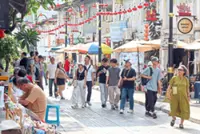
The street − decorated with colourful lanterns and murals − is usually packed with locals and tourists, especially on weekends.

Jalan Tan Hiok Nee Cultural Street committee chairman Jacky Lee said the weekend market was part of efforts to keep the historic stretch relevant.
“For years, our committee −which is under Johor Baru Tiong Hua Association − has worked hard to shape the cultural street into what it is today.
“We are glad that the street was declared a cultural street by the state government in 2009.
“And three years ago, Johor Baru City Council (MBJB) allowed the market to operate here every Saturday.
“But we still see room for improvement as it is our dream to make this a must-visit area for all tourists coming to Johor Baru, just like Melaka’s Jonker Street,” he told StarMetro.
Lee hopes that one day, the cultural street can run from morning until night, instead of only for a few hours on Saturdays.
He noted that the committee had also been restoring the Johor Baru Chinese Heritage Museum, located along the street, to enhance the area’s appeal.
“Renovations, including the installation of a lift for senior visitors, are expected to be completed by November,” he added.

Meanwhile, the committee’s secretary Loo Lip Ming said the street market, with 25 stalls currently, was sustained through perseverance and community support since its early days.
“When the street market first started after the Covid-19 travel restrictions lifted, we only had one or two stalls, and in some weeks, the vendors barely made any sales.
“However, we pushed on because we wanted to preserve this historic street,” he said.
Loo said long-time stallholders such as the rojak seller had remained loyal despite slow beginnings, while young entrepreneurs were now using the platform to showcase crafts and handmade products.
“We do not want to commercialise the street completely, because it will lose its identity then.
“Our aim is to also give youths a chance to learn entrepreneurship and highlight handmade goods that reflect culture and creativity,” he said.
Loo said the committee was hoping too that the market could be extended to Sundays in future to cater to growing demand.
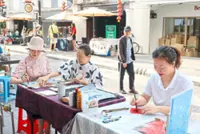
The street market also incorporates fun activities for the young and old to enjoy, including traditional and childhood games, Chinese calligraphy writing, traditional Chinese medicine consultation as well as activities in conjunction with occasions such as Parent’s Day and National Day.
More than just a weekend attraction, Lee said Jalan Tan Hiok Nee represented a bridge between Johor’s past and its future.
“We have to face the reality that heritage alone cannot sustain a street.
“There has to be a balance with commerce and attractions to keep it lively.
“At its core, this place is about remembering our roots and giving visitors a glimpse into Johor’s rich multicultural story,” he said. — By YEE XIANG YUN