



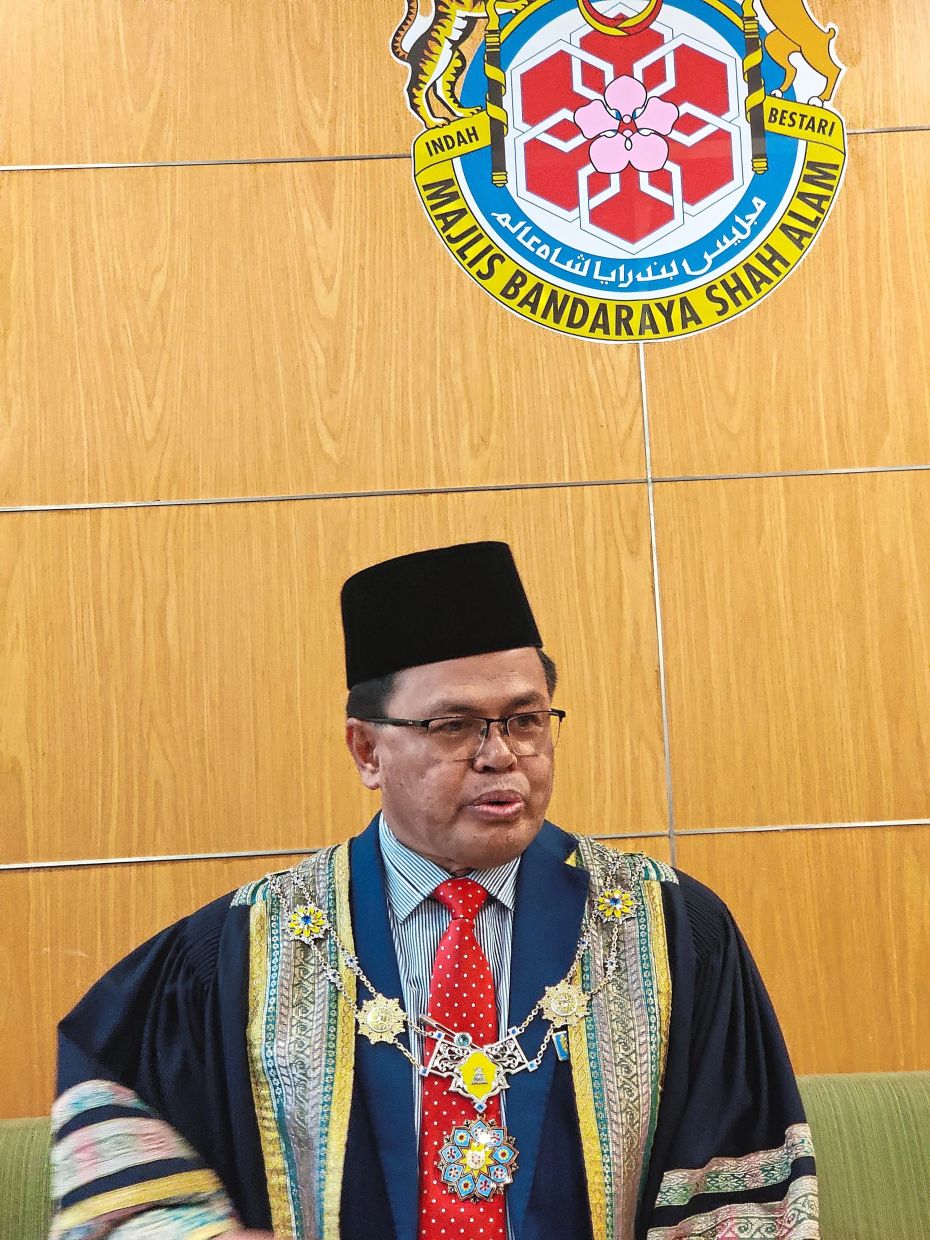
SHAH Alam City Council (MBSA) will take over maintenance of neglected drains, due to overlapping or unclear responsibility of federal or state authorities in the city.
Mayor Datuk Mohd Fauzi Mohd Yatim said these include secondary ditches and urban water channels which had not been maintained regularly.
He said Selangor government had decided in June that all such drainage assets must be formally managed by the right bodies.
The move is part of a statewide exercise to resolve long-standing issues of responsibility.
Mohd Fauzi also noted that main drains flowing directly into rivers, along with those in agricultural areas, would be maintained by the Drainage and Irrigation Department (DID).
Meanwhile drains located within Public Works Department (JKR) land reserves would continue to be managed by the department if they were 1.2m wide or less, he said.
“Larger drains in the same category will be handled by the state’s infrastructure arm Infrasel,” said Mohd Fauzi.
He added MBSA had started the transfer process, which includes drains previously listed under district-level Malaysian Road Records Information System (Marris) records.
“Once they are registered under MBSA, we will be responsible for their upkeep and budgeting,” he said.
He added that the largest addition of newly assigned drains were located in the Petaling district around Sungai Buloh and Kampung Baru Sungai Buloh.
“In total, around 12km of drains are involved from both Petaling and Klang districts, but Petaling accounts for the majority,” he said.
Mohd Fauzi added that MBSA had factored the additional infrastructure into its upcoming 2026 budget.
“MBSA’s priorities will be cleaning and vegetation removal first, followed by structural repairs at high-risk hotspots,” he said.
“By next year, the issue of jurisdictional confusion over drains should be resolved.”
He said many of the affected drains were clogged or damaged by tree roots.
Meanwhile, he said MBSA would be stepping up enforcement on the use and maintenance of grease traps at eateries.
He said new federal guidelines were being finalised by the Housing and Local Government Ministry, which would replace the 2018 version.
“The goal is to standardise the design, installation and maintenance of grease traps in eateries according to the size of the premises and their waste output.”
He added that the updated guidelines would also include a compulsory cleaning schedule and would be part of MBSA’s business licensing conditions.
“In the past, some premises had grease traps but didn’t maintain them properly, causing oil and food waste to clog drains and pollute rivers,” he said.
“Proper maintenance is the key part of the new guidelines.”
Fauzi said MBSA would begin enforcing the new licensing conditions once they are formally endorsed.
