
Parking schemes without clear rules and consistent enforcement are destined for failure, experts warn.
In Malaysia, parking stands out as one of the worst failures.
The experts say that despite introducing flexible payment methods, parking policies remain outdated.

The problem is magnified by millions of vehicles, each competing for limited parking bays.
In May, Deputy Prime Minister Datuk Seri Dr Ahmad Zahid Hamidi said there were 38.7 million registered vehicles in Malaysia for a population of 34.1 million, or 4.6 million more cars than people.
The trend has been growing for years, accelerated by record sales of 816,747 vehicles in 2024 alone.
Policy shortfalls
Experts said that without land-use data, demand patterns and a clear strategy, every new parking plan would be destined to repeat past failures.
Despite introducing scheme after scheme, local councils end up losing money.
ALSO READ: Pros and cons of two-hour parking system in Klang Valley
“We must acknowledge two things – we do not have competent, proven parking operators,” said transport expert Goh Bok Yen.
“Second, we lack an effective, implementable and foolproof system to manage parking.

“This stems largely from the absence of sound policies and clear management guidelines.”
He said weak policies and lack of a structured parking system left local councils vulnerable.
“Without a well-designed framework tailored to land use and demand dictating allocation of bays, how long the bays can be occupied and how enforcement must be carried out, the door is left wide open for concessionaires to dictate terms,” he said.
Goh said the problem went beyond policy gaps, extending to how parking was designed and priced.
“There is no clear structure. Some areas have time-limited bays, others allow all-day parking and enforcement is inconsistent at best,” he noted.
Goh opined that local councils had not managed or made full use of parking bays.
“In central business districts, short-term turnover should be encouraged so that a motorist does not hog a bay all day,” he said.
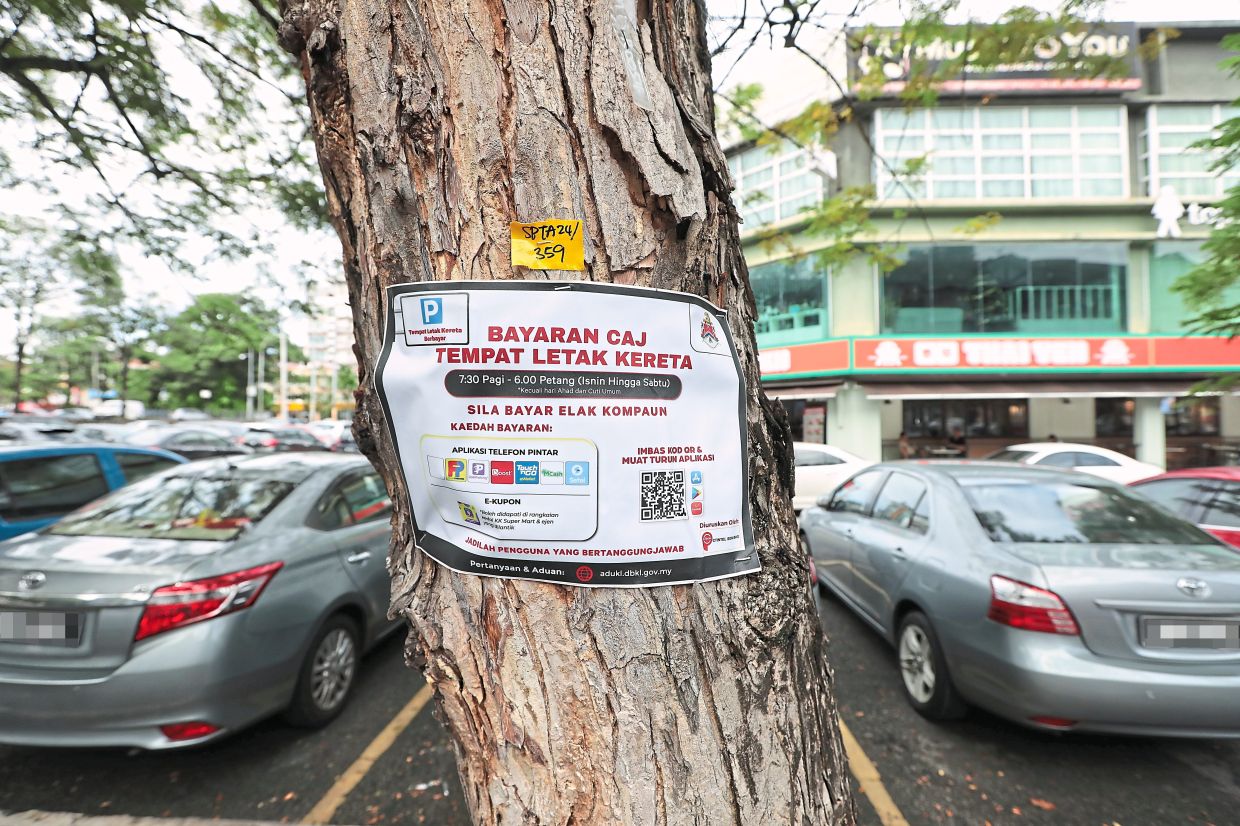
“You need a parking system where the first hour is cheaper and subsequent hours, the price goes up.
“This ensures availability and discourages long-term occupation in prime spots.
“But in Malaysia, these methods are poorly defined, inconsistent from one local council to another and rarely enforced.”
Goh said that with each local council operating its own system, the rules were not detailed enough for effective parking management.
“Most local authorities settle for a flat rate. Cheap, simple but poorly suited to different land-use needs,” he said.
“Compliance depends on motorists choosing to pay. Some do, many do not.”
He said enforcement was stretched thin.
“It is impossible to deploy hundreds of officers across vast areas where bays are badly defined and systems are inconsistent.
“Even where frameworks exist, they are not executed properly, leaving loopholes for abuse and evasion,” he added.
Against this backdrop, parking concessionaires were almost always set up to fail, said Goh.
“Many lack experience running complex parking operations, but even the best operator struggles without a clear policy and detailed guidelines,” he said.
“Instead, local councils keep switching from one company to another, each time expecting better results but handing them the same incomplete playbook.”
Selangor’s SIP plan
The recent furore over Selangor’s parking deal is a case in point.
Despite the outcry from motorists and parliamentarians, the state government pressed on with the Selangor Intelligent Parking (SIP) system in Subang Jaya, Selayang and Shah Alam.
Petaling Jaya is expected to be next in line to adopt the system.
The SIP project is run by Rantaian Mesra Sdn Bhd – a wholly-owned subsidiary of Menteri Besar Selangor Incorporated (MBI) – together with Selmax Sdn Bhd, in managing gazetted bays.
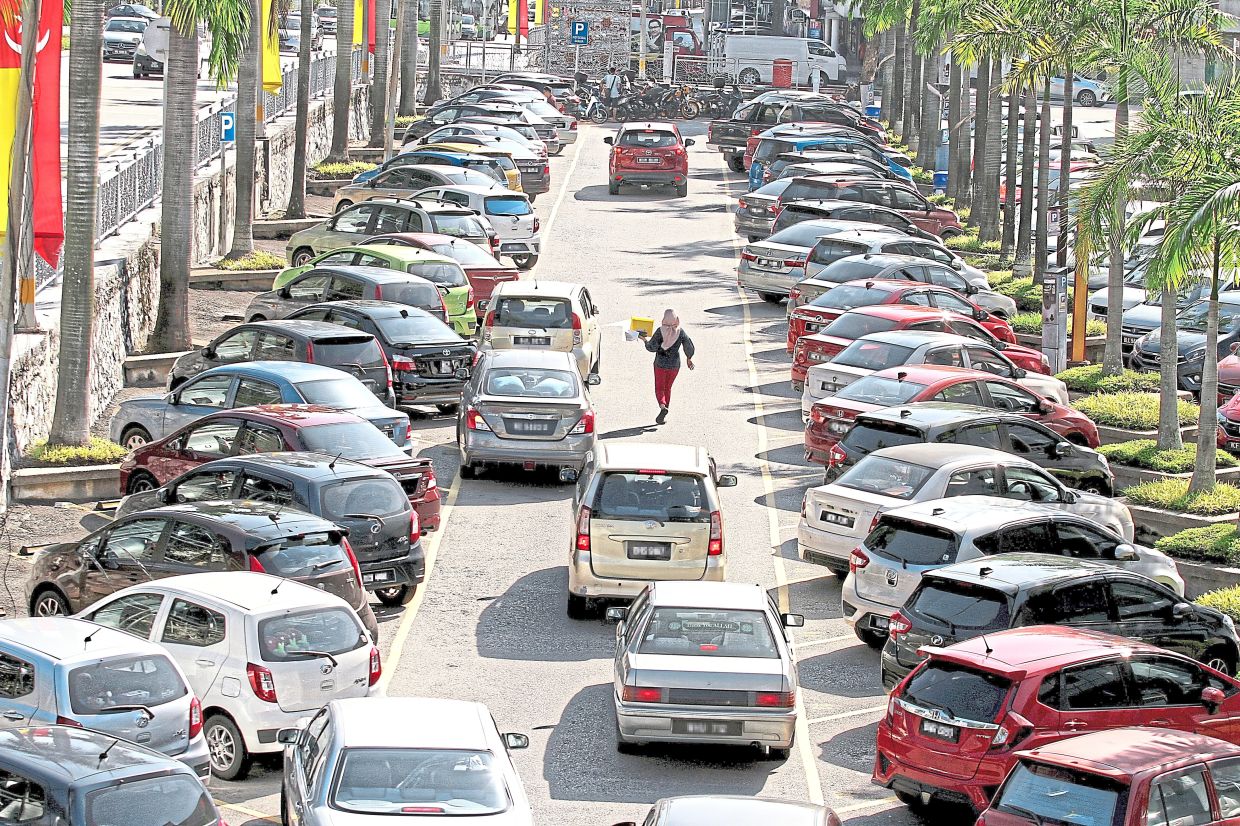
Revenue is now split 50% to the concessionaire, 40% to local councils and 10% to MBI.
A private parking operator will handle day-to-day operations and fee collection, while enforcement remains with the local councils.
State local government and tourism committee chairman Datuk Ng Suee Lim was reported as saying that the move was aimed at “streamlining and centralising” services and doubling collection from 30% to 60%.
Selmax, the concessionaire, is expected to inject RM200mil for infrastructure, including some 1,800 CCTV cameras, across the four jurisdictions.
Giving away golden goose
A specialist in transport, mobility and logistics, MDS Consultancy Group managing director Dr Rosli Azad Khan cautioned that putting parking operations in private hands was akin to “handing the city’s golden goose to a third party.”
“Private parking operators bear no cost as they do not own the bays.
“Left entirely to them, the only way they can make money is through enforcement or by creating more parking spaces.
“That means every possible spot will be taken up by vehicles simply because they need to collect revenue.
“Cities should not be crammed with cars but designed for people to move around freely, to cycle and to walk,” he said.

Rosli, who has experience in transportation economics and planning, also questioned the value of the CCTV system under Selangor’s SIP contracts.
“Does the operator’s CCTV ease congestion? No.
“Just look at Kuala Lumpur City Hall’s (DBKL) Itis system that was a colossal failure.
“DBKL claimed it would cut congestion by 35%, but it did not help at all.
“CCTV doesn’t even solve basic issues like rubbish disposal, let alone parking,” he said, adding that outsourcing operations had brought no real improvement.
Rosli said a solution could be seen in Singapore, where car ownership was deliberately kept low through high prices and a reliable public transport system.
He said the island republic used measures such as the certificate of entitlement, electronic road pricing and steep vehicle taxes to control demand while generating revenue.
Even foreign vehicles were subject to strict rules, requiring a Vehicle Entry Permit, valid insurance and Autopass card to enter Singapore, he added.
Contract in question
Malaysian Land Public Trans-port Fans representative Zac Cheong raised concerns about the SIP contract model, warning it could expose the public to risks rather than benefits.
“We have seen similar arrangements previously where companies are guaranteed payouts regardless of performance.
“It is essentially treating parking as a profit-making venture,” said Cheong.
He said parking should not be seen as a profit venture, and revenue should fund better public transport to reduce car dependence and demand for parking bays.

He cautioned that if parking operators failed to turn a profit and costs outweighed returns, they might abandon the system thus leaving the public to bear the brunt.
Public transport systems worldwide rarely generate profits, hence governments typically absorb the costs, he noted.
Buses, for instance, are run by Prasarana Malaysia Bhd and Rapid Bus Sdn Bhd – if they lose money, the government steps in, he said.
“Parking should be treated the same way – as a social service, not a cash cow.
“If private firms want in, let them be operators earning a fixed fee.
“Contracts should have clear clauses, proper safety nets and exit mechanisms to protect taxpayers,” Cheong emphasised.
Look out for Part 2 in StarMetro tomorrow.