FOR years, the history of Sungai Juru in Penang has been tied to the lives of surrounding communities.
Fishermen would return at dawn with baskets of prawns, cockles and fish from the river, located about 12km south-east of Butterworth somewhere between the Penang Bridge and Sultan Abdul Halim Muadzam Shah Bridge (second Penang bridge).
Families also harvested mangrove wood for charcoal while children played along muddy areas near the estuary.
Older villagers remember nights when fireflies lit up the mangroves like fairy lights.
But this lifeline began to fade as Penang’s industrial estates expanded in the 1970s and 1980s.
Factories around Perai, Juru and Bukit Minyak began discharing effluents into Sungai Juru, while unregulated waste from settlements started piling up.
By the late 1980s, the once-thriving river had lost its charm, turning into air hitam or black water.
The unbearable smell, dwindling fish stocks and hardship drove fishermen to abandon their nets.
By the 1990s and early 2000s, Sungai Juru had become infamous as Malaysia’s dirtiest river.
Classified by Department of Environment as the most polluted river in the country, it was also listed by World Health Organisation in its report as the dirtiest in South-East Asia.
The report said the water in Sungai Juru was classified as Class V – so toxic that it was unsafe for drinking even after boiling.
Class I is for very good water quality, running to Class II (good), Class III (average), Class IV (slightly polluted) and Class V (polluted).
Turning tides together
Today, however, Sungai Juru is no longer a tale of shame but one of renewal.
What was once declared a dead river is now showing signs of life, thanks to the dogged efforts of non-governmental organisations (NGOs), Seberang Perai City Council (MBSP) and Penang Drainage and Irrigation Department (DID).
It has improved to a Class III.
MBSP councillor Rachel Teh said when she first turned her attention to Sungai Juru, she was met with disbelief.
Teh, who is also president of WonderWorks, a people-powered initiative supported by DID and Auto City Group, said, “People told us we were crazy.
“They said the river was too dirty and no one could ever make a difference.
“But we believed that with persistence and education, things could improve.”
WonderWorks has taken on the role as anchor and lead coordinator of Sungai Juru River Restoration Project – a flagship environmental and community empowerment effort set to redefine how urban rivers are protected, revived and celebrated.
The NGO, which cut its teeth in humanitarian work during the 2021 Taman Sri Muda floods in Shah Alam, Selangor, is used to mobilising communities.
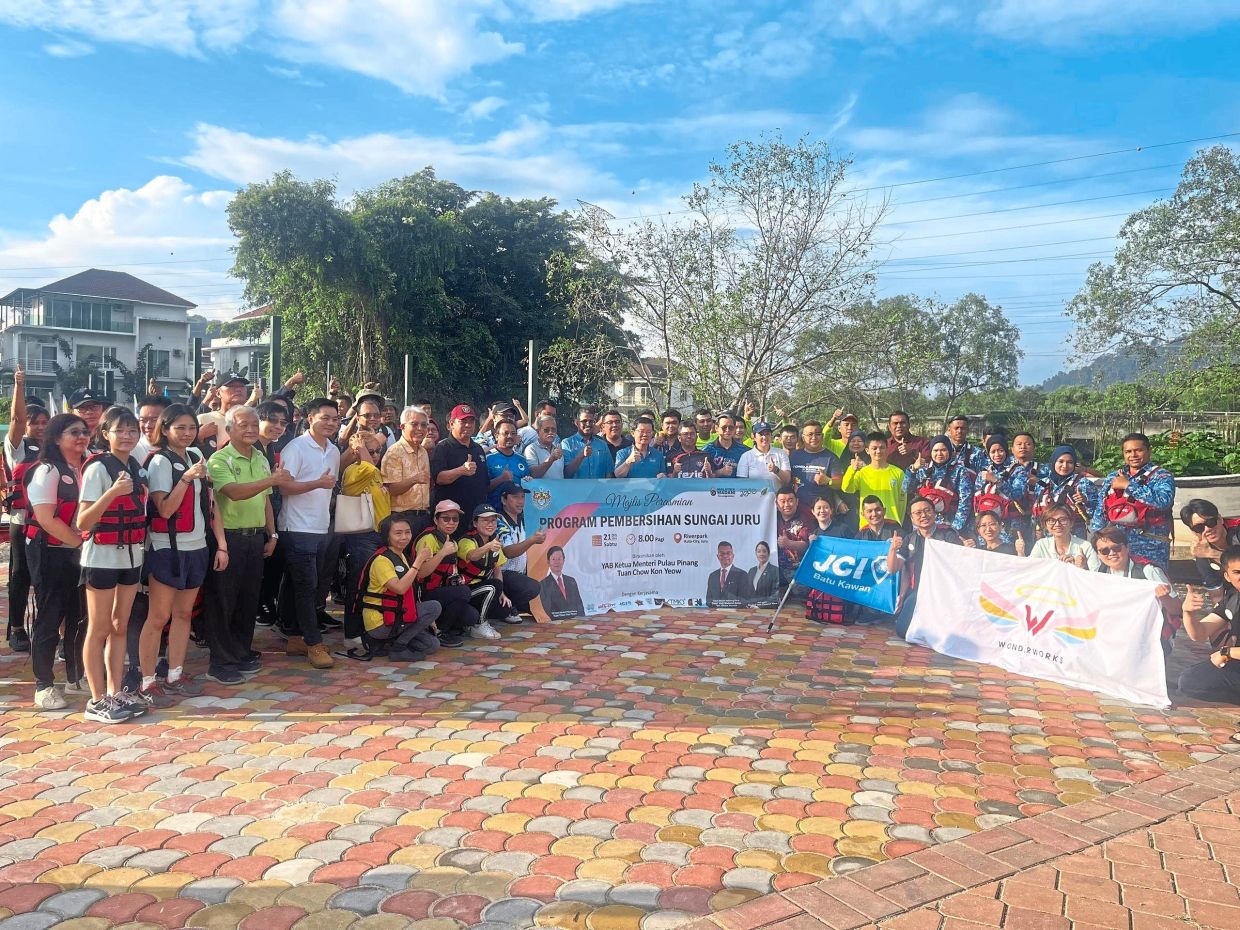
Determined to restore Sungai Juru, WonderWorks organised mass cleanups supported by DID, MBSP, corporate partners and fishermen who provided their boats.
Sungai Juru was divided into 13 checkpoints spanning 6km.
But it was a different challenge altogether, said Teh, recalling her shock during the first Sungai Juru cleanup last November.
“We found tonnes of rubbish – plastic bottles, bags, sofas, mattresses and refrigerators.
“It was like a floating landfill.”
Despite the scale of the problem, the NGOs pressed on, working closely with the authorities.
Their role was clear – clean the river and spark public awareness.
In the first two sessions, over one tonne of rubbish was collected, of which 90% was plastics.
In the third session, 250kg of waste was cleared.
At its peak, 80 participants joined, including corporate volunteers, NGOs such as Junior Chamber International (JCI) and multinational companies.
DID gave baskets, tongs and bins, while roll-on roll-off (RoRo) lorries hauled away waste.
Teh said the tide worked like a pendulum, as the waste did not just disappear.
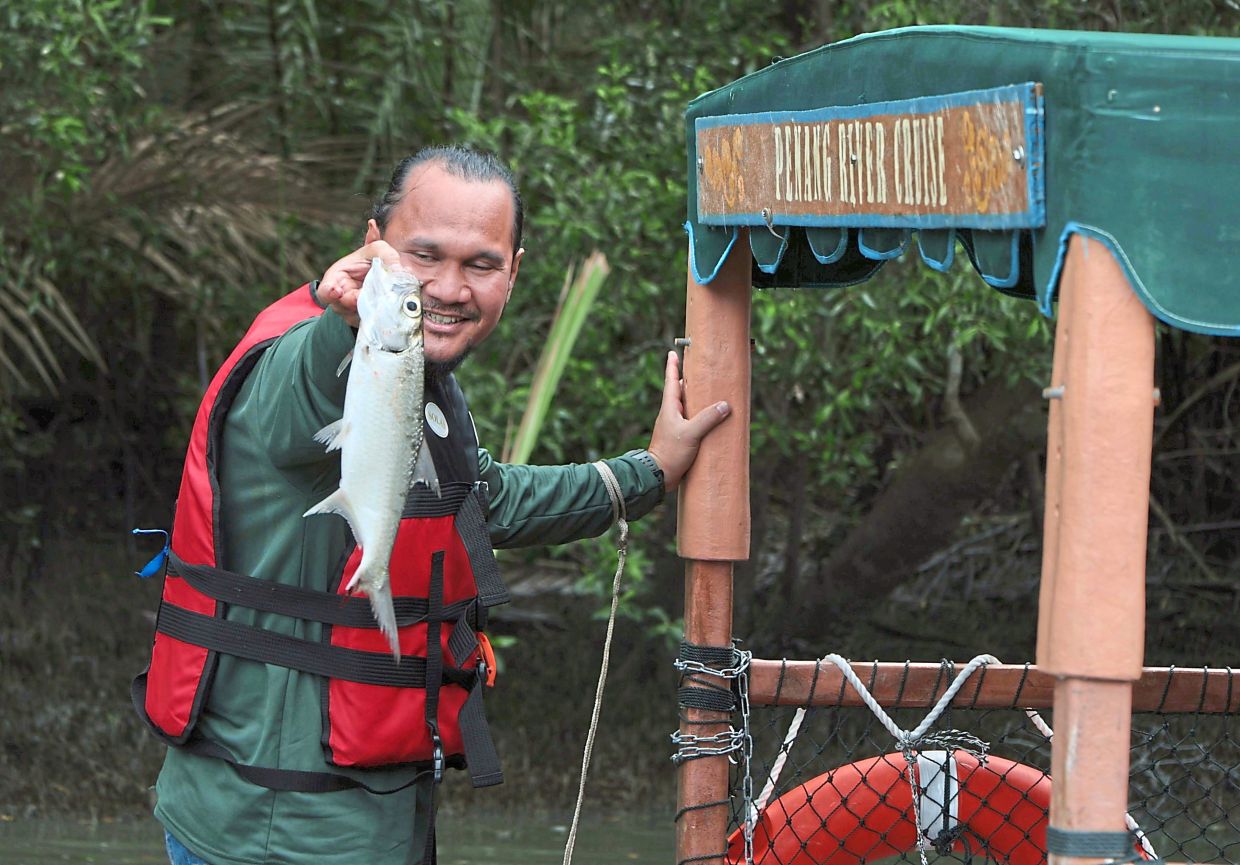
“It flowed out to sea and came back in again caught in nipah palms and tree trunks. Manual cleaning is not sustainable.
“It is hard, dirty work. But every volunteer who gets into the river leaves with a new perspective – that’s how culture shifts,” she added.
Alongside the cleanups, scientific research added another layer of optimism.
From November to March, 16 researchers from Universiti Sains Malaysia, Universiti Malaysia Terengganu and Malaysian Nature Society carried out studies.
Their findings were sobering, but vital.
Only 10 fish species remained from the 200 historically recorded, with water quality standing at Class III, average but not irrecoverable.
Yet, 180 bird species still thrive in the mangroves, said Teh.
Tortoises, among other endangered reptiles, can be found along the riverbanks.
The mangroves, though neglected, remain healthy.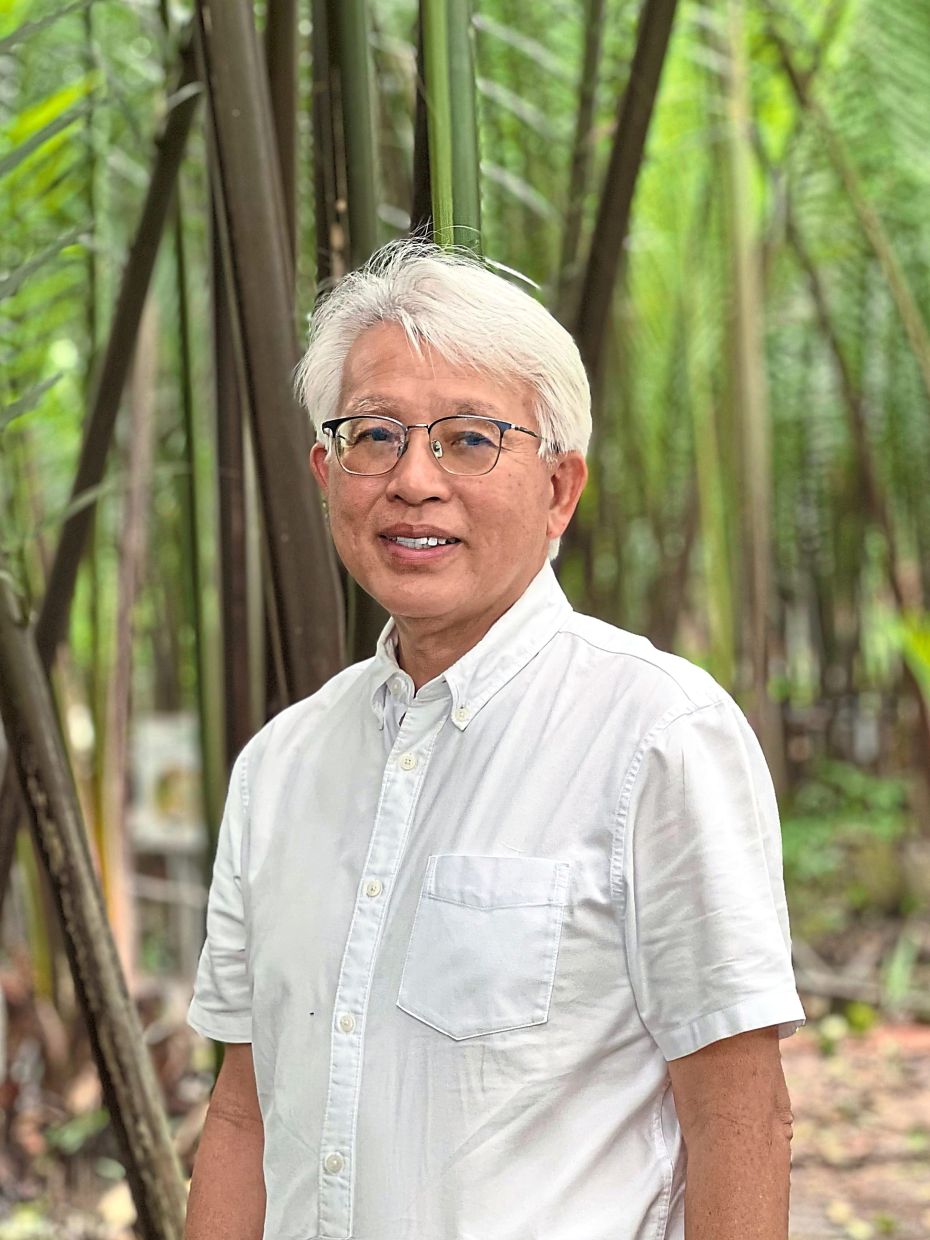
Teh said these studies were crucial as it proved Sungai Juru was not dead.
“It harboured life, and with the right care, the river can recover.
“Older residents spoke of how much had been lost. Nets once full of fish dragged up sludge.
“Families stopped gathering along the riverbanks. Children were warned not to swim in the river.
“These recollections underscored why revival mattered so deeply,” said Teh.
Despite progress, river pollution still remained a concern.
Teh said waste collected during cleanups had grown from 250kg last December to 788kg in May this year.
“The waste is mostly single-use plastics, polystyrene food containers, shoes, metal cans, beverage cartons and glass bottles.
“The trend is alarming and shows the need to educate the community further.”
Nature from the water
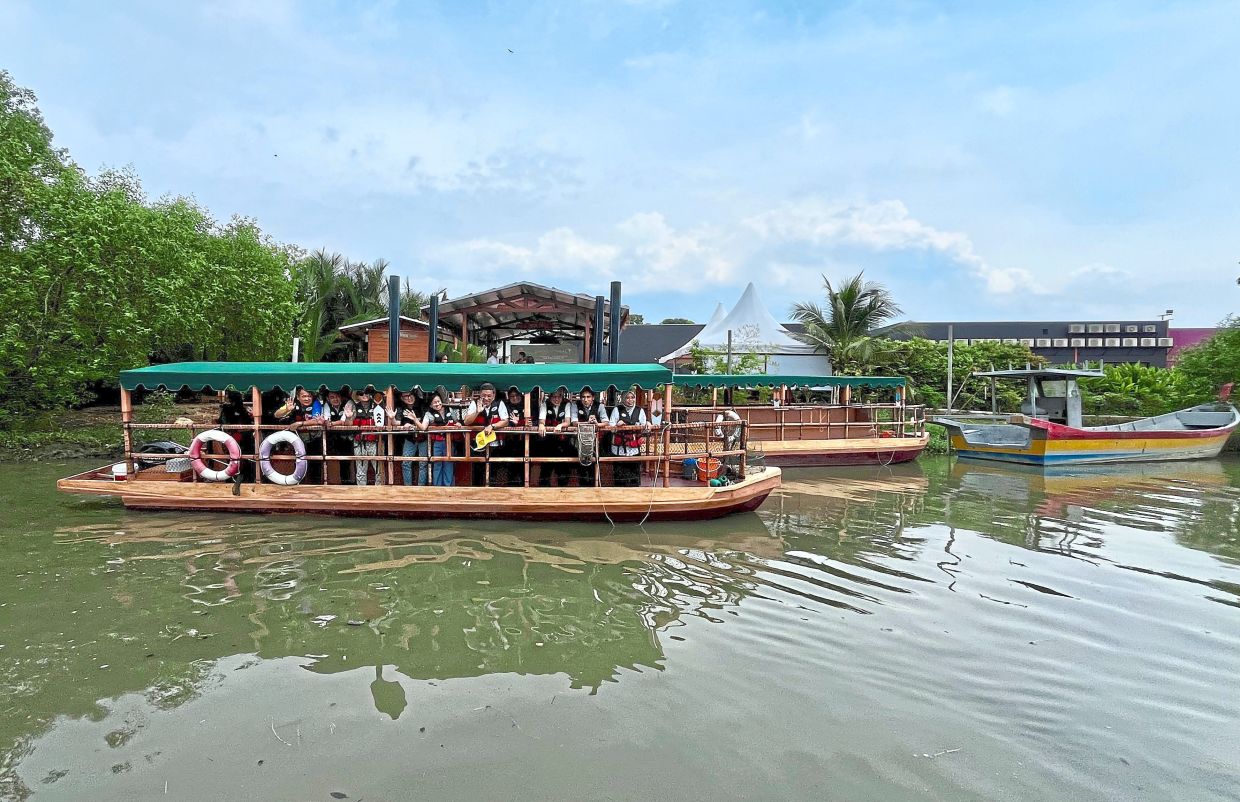
Since April 20, a guided boat tour has been introduced for domestic and international visitors to experience the river’s biodiversity while supporting ongoing cleanup efforts.
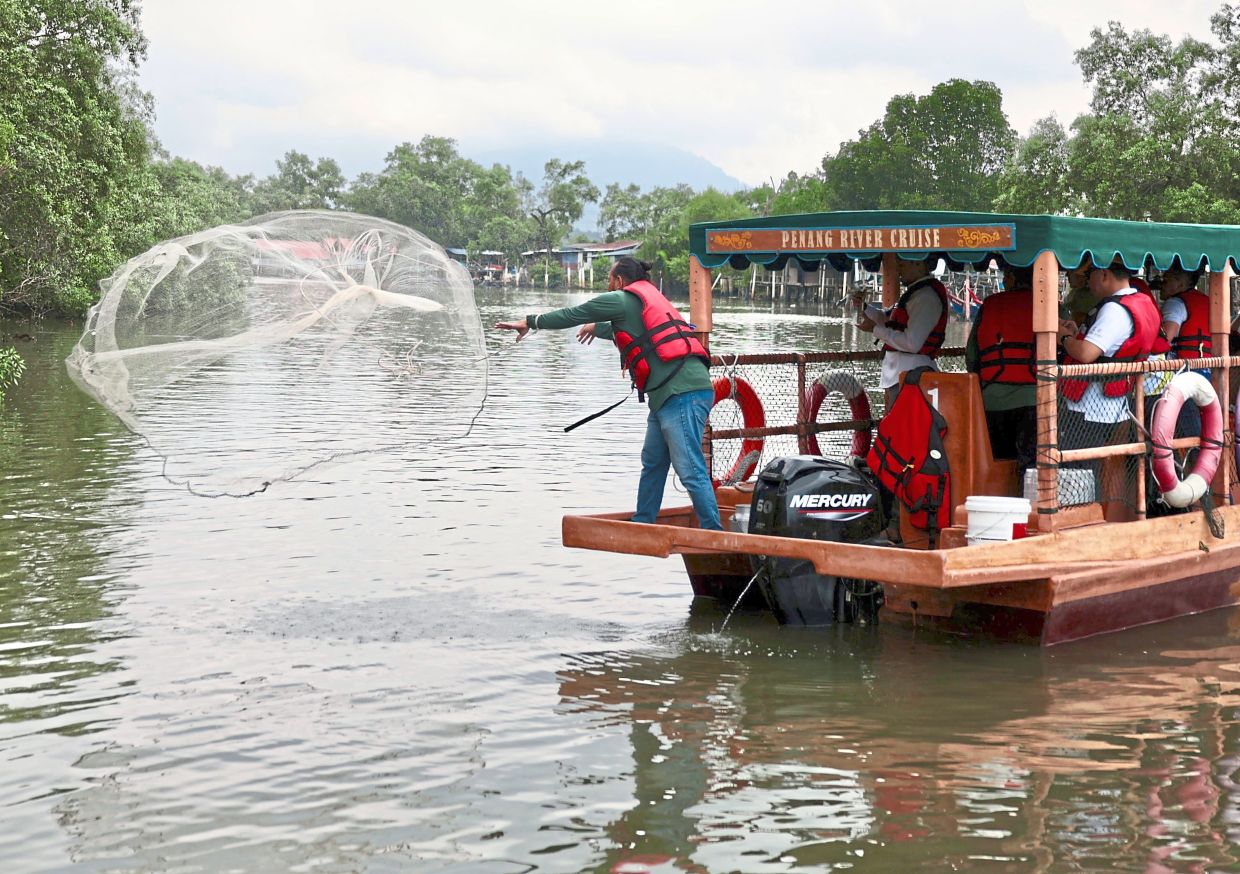
Penang River Cruise is now an eco-adventure where travellers can spot playful otters, silvered leaf monkeys, squirrels, woodpeckers, eagles and migratory shorebirds.
Forest-dwelling reptiles including mangrove snakes, pit vipers and the rare dog-faced water snake gliding past traditional fishing villages and lush mangroves add to the allure.
First setting sail on Sept 9, the cruise traces a 15km scenic route, offering two immersive hours of nature, culture and community.
State tourism and creative economy committee chairman Wong Hon Wai, who launched the tour at Penang River Cruise Jetty in Juru Auto City, said the initiative was designed to showcase Seberang Perai’s vibrant riverine heritage.
“River cruises are a globally recognised tourism experience.
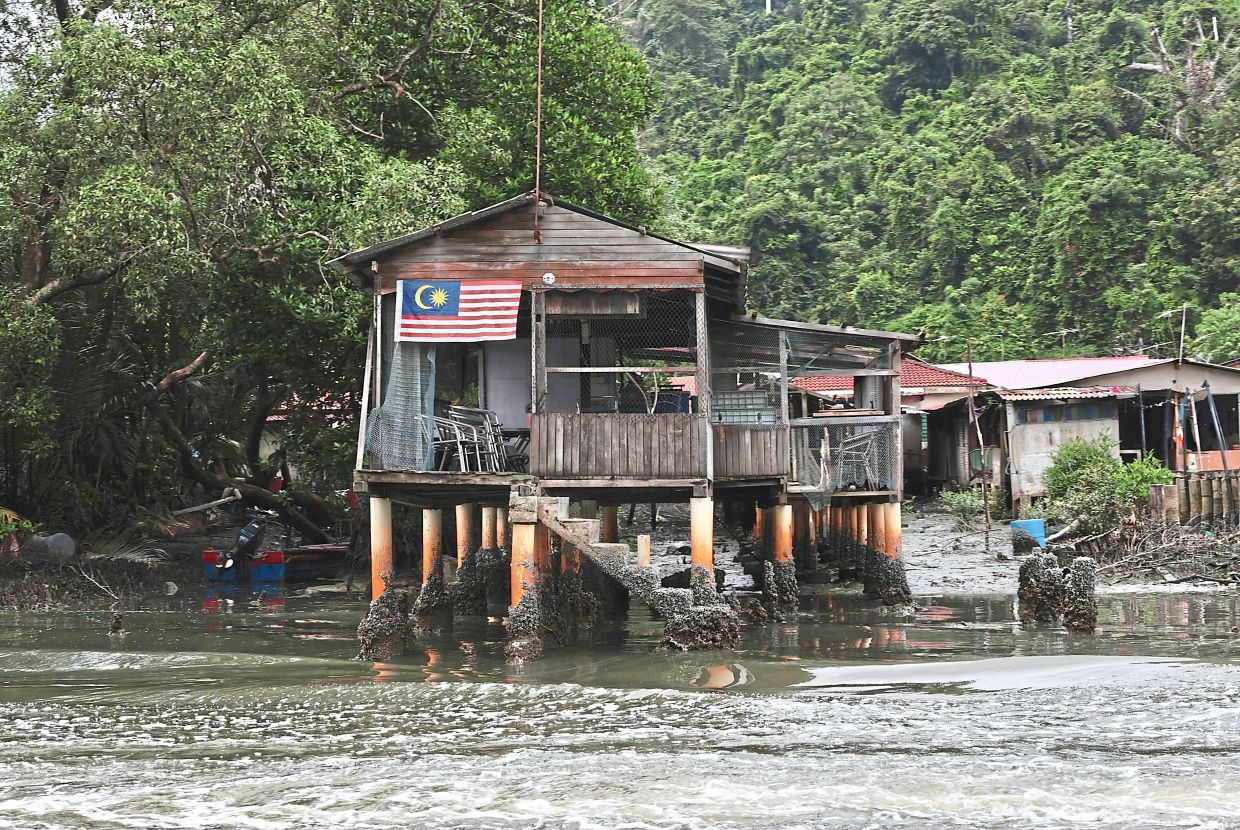
“With Sungai Juru’s thriving wildlife, aquaculture farms, padi fields and cultural sites, the cruise offers visitors a living documentary of Penang’s natural and cultural landscape,” Wong said.
Beyond wildlife, the cruise meanders past fishing villages, clam and cockle farms and stretches of mangrove forest, giving passengers a glimpse of Seberang Perai’s rich traditions and sustainable livelihoods.
“Unlike longer river cruises that take days, the 15km journey can be completed in just two hours, making it ideal for modern travellers with limited time.
“To make the trip more engaging, visitors can try hands-on activities such as crab trapping, net fishing and clam gathering,” said Wong.
“This is more than leisure. It is educational, especially for families.
“In today’s digital age, it’s a chance to reconnect with nature and learn about ecology and conservation in an enjoyable way.”
Wong added that Juru Auto City, known for its food, automotive and entertainment offerings, would benefit greatly from the influx of visitors, strengthening Penang’s position as a diversified tourism hub.
“It’s worth noting that Penang’s three major rivers, Sungai Perai, Sungai Kerian and Sungai Juru ranging from 10 to 25km in length, are located in Seberang Perai,” he said.
“These waterways make the mainland an ideal spot for river cruises compared to the shorter rivers on Penang island.”
River reborn
Juru Auto City founder and general manager Gary Teoh said the cruise service was about changing how people viewed the river, with the goal being cultural change.
“The cruise is not commercial – it’s a tool for education and awareness,” said Teoh.
“It’s basically a corporate social responsibility (CSR) endeavour, as a portion of the receipts from the cruise will go towards cleanup efforts.
“Once people see the wildlife and habitats up close, they will begin to care.
“If Penang educates people not to litter, millions of ringgit can be saved in flood prevention and cleaning.”
The effort, he said, was about building pride in the river as a green lung for the community.
“Already, fishermen report seeing more fish, horseshoe crabs and even sea otters in the waters.
“Cleaner conditions mean better oxygen levels and sunlight penetration, giving aquatic life a fighting chance,” he said.
Teoh said the project was also drawing international attention.
“Through the European Union’s International Urban and Regional Cooperation (IURC) programme, MBSP will present on the river’s revival at Smart City Expo taking place from Nov 3 to 6 in Barcelona, Spain.
“The focus will be on low-carbon cities, sustainable ecotourism and river rejuvenation,” he said.
Teh said the project was about making Sungai Juru a model for Malaysia.
“We want the world to see that a river once called the dirtiest in the country can be revived.
“The plan is to continue with quarterly cleanups and extend awareness programmes to upstream villages starting next year,” she said.
Teh said schools would also be involved through field trips and videos to help young people develop a stronger bond with their environment.
Funding, she said, would come largely from CSR contributions.
Instead of urban farming projects, Teh said companies were encouraged to channel resources into river cleaning.
Once dismissed as hopeless, Sungai Juru now stands as an example of what determination, collaboration and education can achieve.
“Manual cleaning is expensive and temporary.
“The real change must come from people themselves. If we can change habits, the river will stay clean,” she said.
From fishermen’s memories of abundance to decades of neglect, Sungai Juru’s story reminds us that no river is beyond saving.
“We have seen Sungai Juru at its worst. Now, we want the world to see it at its best,” added Teh.
Teoh echoed Teh’s sentiment, adding that Sungai Juru used to be Malaysia’s shame.
“It is now a showcase – a story of what’s possible when industries, communities and government come together,” he said.
Penang River Cruise operates daily at 10.30am, 1.30pm and 4.30pm.