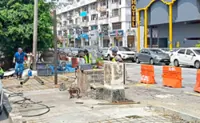
KL’s Happy Garden residents say some parties have been sniffing out development prospect on former sewage plant site
BARELY three months after the gazetting of Kuala Lumpur Local Plan 2040 (KLLP2040) that has reclassified some land for commercial or housing, interested parties have started circling the few open pockets of land left in the city.

A DBKL insider said: “Most are interested in developing either a condo, food court or sports complex.
ALSO READ: KL folk fear green spaces going down the drain (Poll inside)
“Since we have identified some of these areas for commercial projects, we have asked them to engage with residents in the area first.”
In Happy Garden, Jalan Kelang Lama, several people have been said to have gone to the neighbourhood asking the opinion of residents living along Jalan Nyaman 5, 7, 8 and 9 on having a sports complex built on a 0.483ha former sewage treatment plant (STP) site identified as Lot 44432.
It is one of 60 STPs across Kuala Lumpur earmarked for redevelopment under the new KLLP2040.
Residents prefer park
Happy Garden residents are crying foul over the proposal of a sports complex as they have hoped the vacant land will be turned into a public park for their use.
Long-time resident Loke Ah Cheng, 79, said several men went to his house a few weeks ago asking if he was agreeable to the authorities building a sports complex on the land in front of his home.
ALSO READ: Public opinion on developments must be heard, say lawmakers
“It seemed like they wanted my approval. They were asking questions about whether a sports complex would benefit us.
“I didn’t take it seriously then, but it seems people are scouting the area for the project,’’ added Loke.
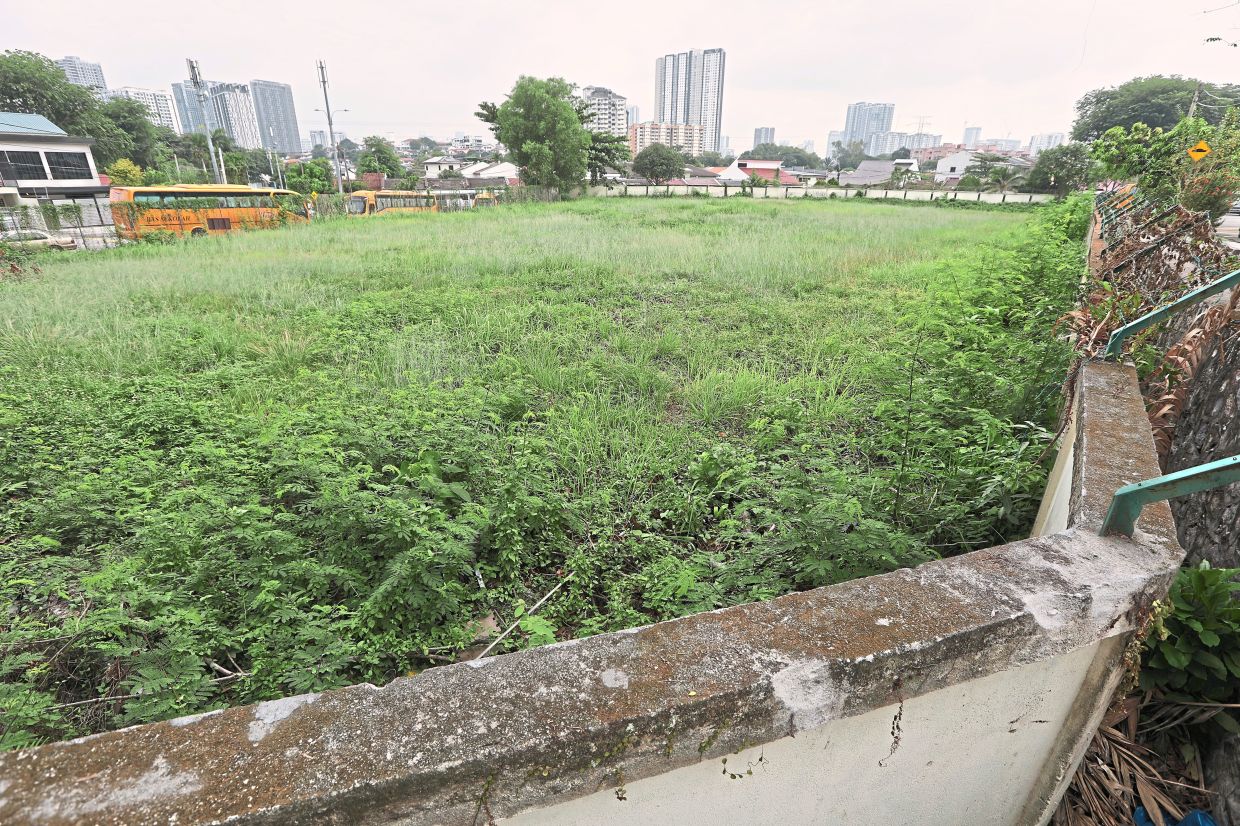
Resident Chin Kok Keong, 70, said he usually went on his morning jog and evening walk around the vacant plot.
He has held hope that the authorities would turn it into a recreational park for the residents’ benefit.
Suresh Raman, 54, said traffic congestion in the area was already a daily ordeal, and a sports complex would bring in more cars thus worsening the gridlock.
He said traffic at Jalan Nyaman and other connecting roads were at a standstill during peak hours currently.
“With traffic already at breaking point and parking spaces scarce here, the development (of a sports complex) would worsen congestion and erode one of our few remaining chances for green space.
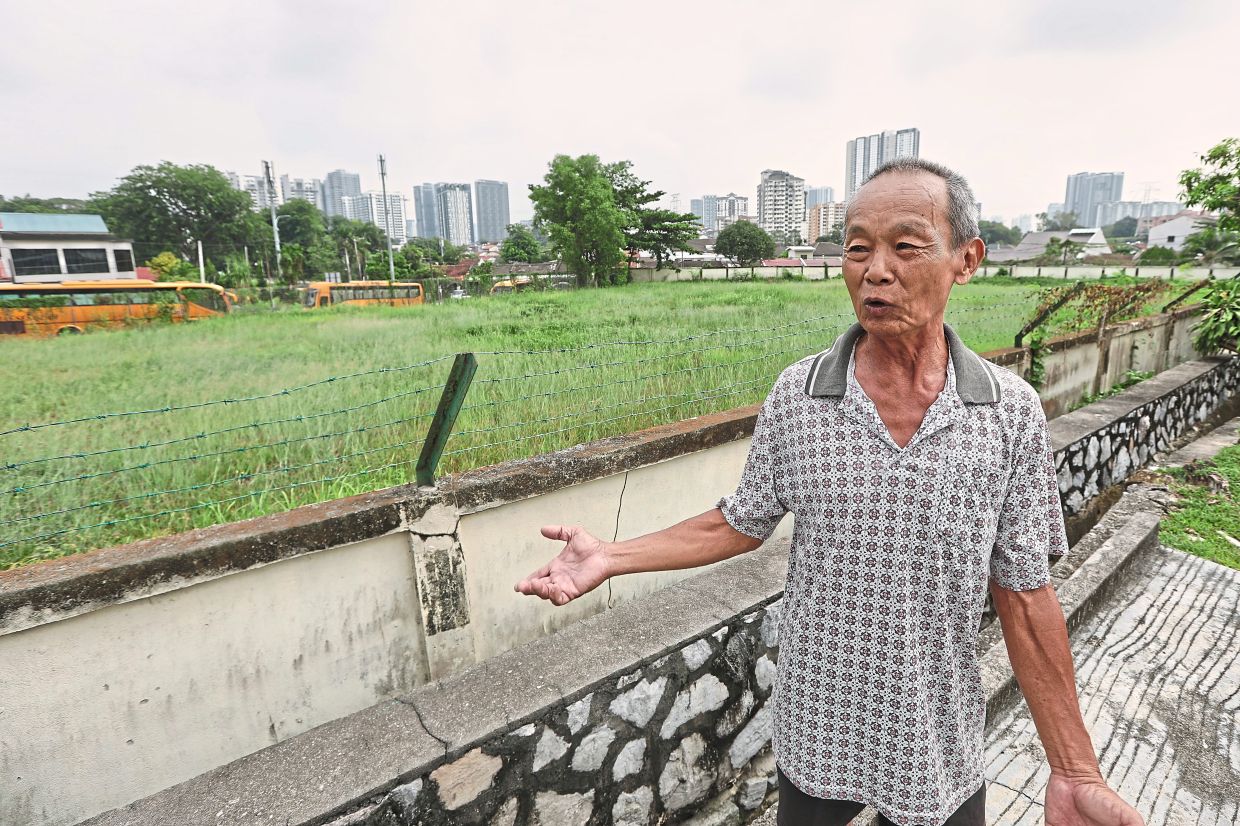
“What we need is a green space to walk, breathe and relax, not another public facility drawing more traffic,” he reiterated.
Fellow resident Tracy Koh said developers often started small to win approval, then would change the development plan later.
“They come in saying it is just a sports centre or community hall, but once the zoning is adjusted, it opens the door to bigger projects.
“A few years down the road, that ‘hall’ can turn into a high-rise.
“Once land use shifts, open space quickly becomes concrete,” she noted.
Happy Garden and Continental Park Residents Association secretary Evelyne Low said the vacant land would be ideal for a public park.
“This is what residents desperately need.
“It should have been reclassified as open space for a green lung, since it belongs to the government anyway, but DBKL did not do so.
“Still, we would rather it remain R1 (low-density residential) than be classified as commercial,” said Low.

“The township is too congested and it is surrounded by residential homes, so it is not conducive for any commercial or another residential project,” she said.
Low revealed that a private company had written to the association seeking its support for a proposed sports complex and community hall on the vacant land.
She said the company explained in the letter that the project would promote a healthy lifestyle, encourage youth participation in sports as well as provide accessible and well-maintained facilities for the residents.
She further said that upon checking with DBKL regarding the letter, it was revealed that the company interested in developing the land had to get the association’s support for the project.
Low also said that DBKL’s planning guidelines required traffic impact assessments for projects expected to generate significant vehicle trips, especially in congested areas.
“Any study for the proposed sports complex will clearly show the roads in the area are operating at capacity, leaving little justification for a development that will draw even more traffic into the neighbourhood,” she added.
KLLP2040
The Happy Garden scenario is not isolated, as discovered by StarMetro.
Across Kuala Lumpur, land use is being reshaped under the new KLLP2040 which covers 60 decommissioned STPs identified for redevelopment.
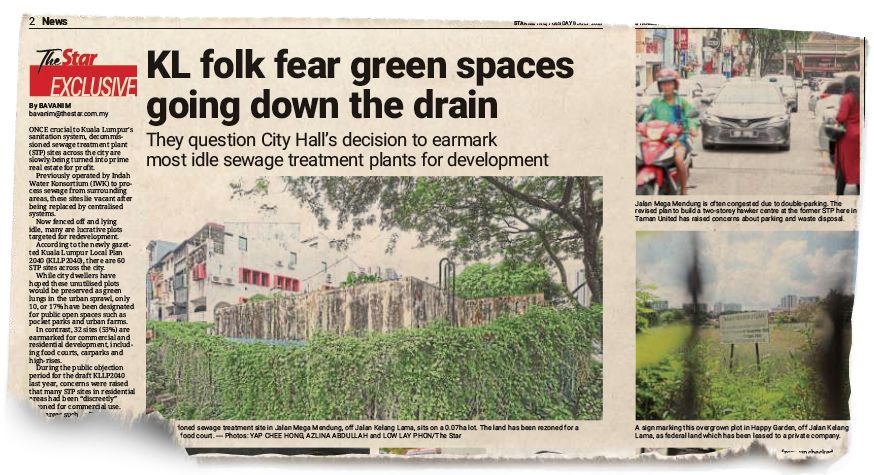
While only 10 of the decommissioned sites have been earmarked for public open spaces such as pocket parks and urban farms, many others − including several in areas along Jalan Kelang Lama − have been rezoned for commercial or residential use, despite residents’ objections.
StarMetro recently reported on former sewage utility sites being repurposed into housing, food courts, carparks, public facilities and green spaces.

About 10 STP sites will be turned into public open spaces, while 26 others have been earmarked for residential projects in neighbourhoods such as Taman Seputeh, Sri Petaling and Wangsa Maju.
DBKL said every proposal falling within the KLLP2040 framework had gone through public consultation with MPs, affected residents, and technical agencies.
However, Seputeh MP Teresa Kok said she was not aware of this issue.
“Any request for development must go through a proper process of discussions and engagement with the community.
“Everyone deserves a say, not just one group.
“When it comes to mature neighbourhoods like Happy Garden, we must take into account traffic impact, the people who have lived there for many years and their right to a quiet and harmonious lifestyle,” she said.
Kok added that the residents’ voices should not be pushed aside at the expense of others.