
They wanted to marry but did not have enough money for a wedding in 2021.
So Hanim Azmi, 29, and her now husband Safwan Zain, 32, set up a coffee stall at Taman Melawati in Ampang, Selangor.
“We started small with a capital of no more than RM600 and made coffees by hand.
“After three months, we figured that if we wanted to increase sales, we would need a machine.
“As luck would have it, I had also made some extra money from designing a website,” said Hanim.
With the money they had saved, the couple was able to invest RM25,000 in a La Marzocco coffee machine.
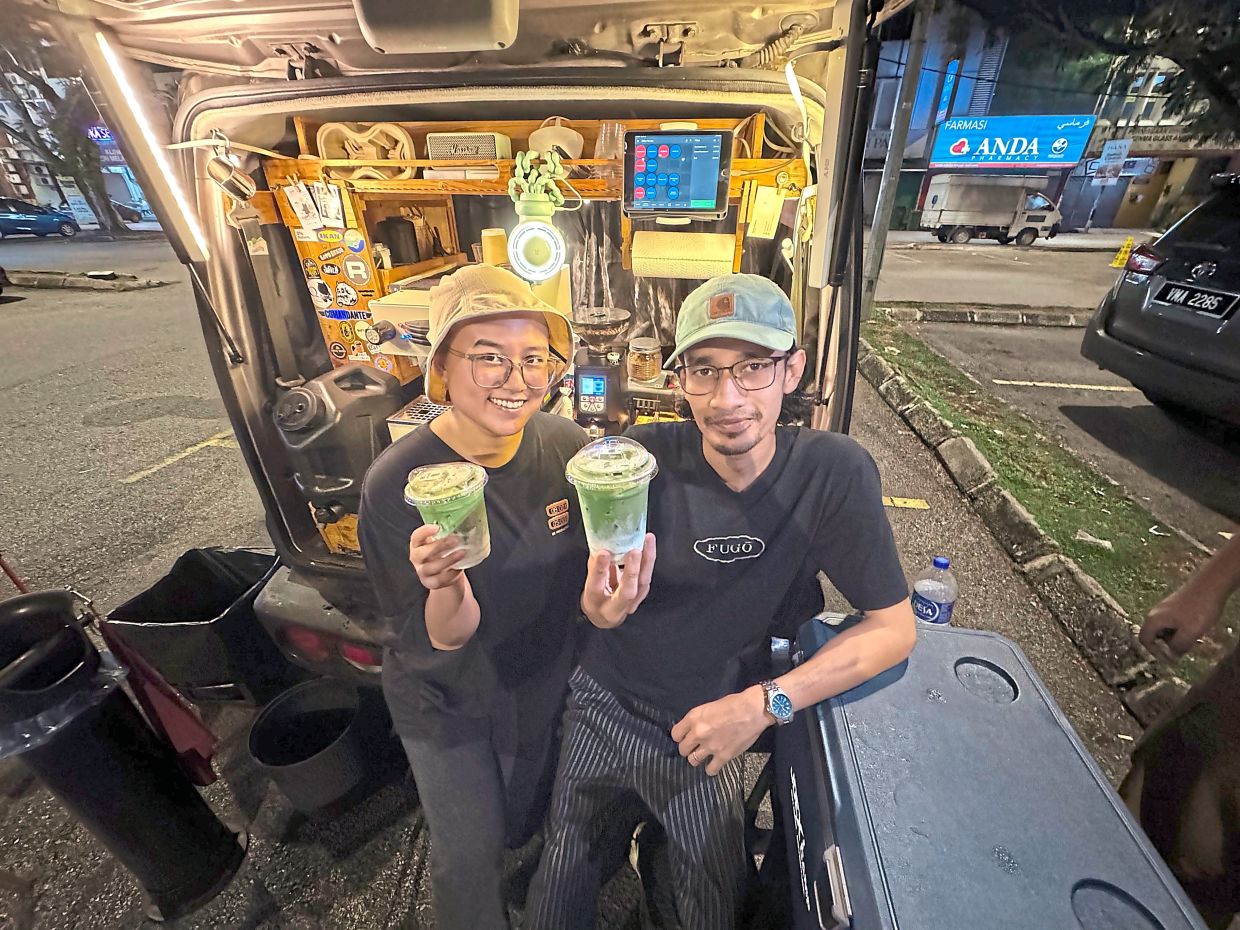
“It was a gamble but it paid off and we were able to get married in 2022,” she added.
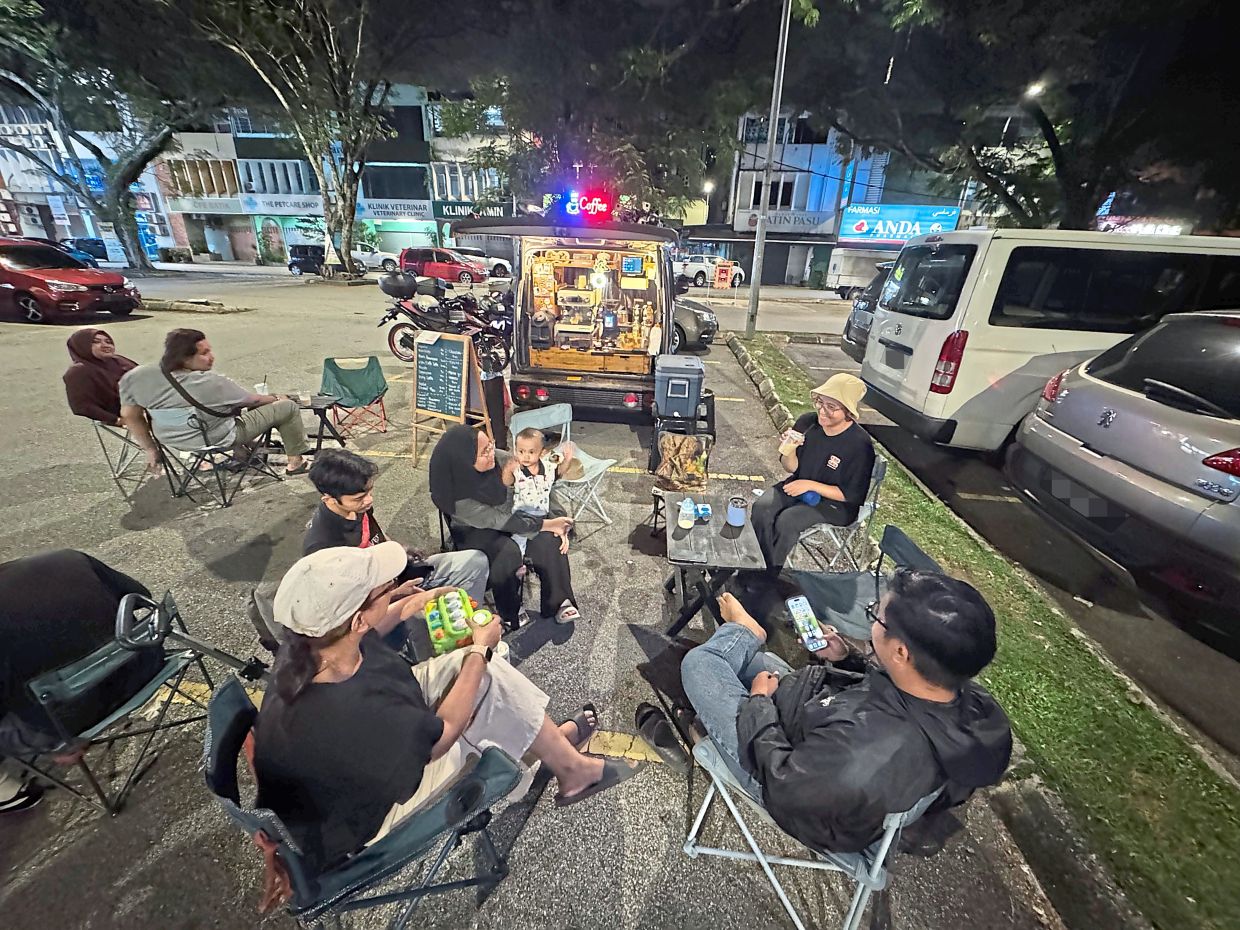
Their beverage menu includes matcha lattes and classic coffees like long black and espresso made from a blend of Guatemalan and Brazillian coffee beans, which customers enjoy while lounging on camping chairs at the stall.
The couple’s pop-up coffee stall, operating out of the back of a van, is just one of many at the neighbourhood’s Saturday car-boot sale.
Taman Melawati is one of several locations in Klang Valley seeing a rising coffee trend of young traders bringing drinks once served only in cafes and big coffee chains, to the streets.
An oral history
The pop-up coffee stall trend is closely tied to Gen Z, according to Hedir Abdul Manan, 38, who has been in the food and beverage industry for seven years.
Hedir, who helps out at his family’s food stall in Medan Selera AU2 in Taman Keramat in Ampang, calls the trend the third wave in local coffee culture.
“The first wave was the kopitiam with their local brews.
“Then came the second in the form of big coffee chains.
“The latest wave would be these street vendors,” he said.
He added that the first time he saw the trend of street vendors setting up small tables to sell coffee and snacks to passers-by was in Manchester, England, while working on his masters thesis in facility management in 2009.
“I also saw this in Perth, Australia, in 2017 during a working trip to do quantity surveying.
“In these countries, these stalls are only open until 11am and their main customers are people looking for a quick drink while on their way to work.
“In Malaysia, many of these coffee stalls only open from evening until as late as 2am,” said Hedir.
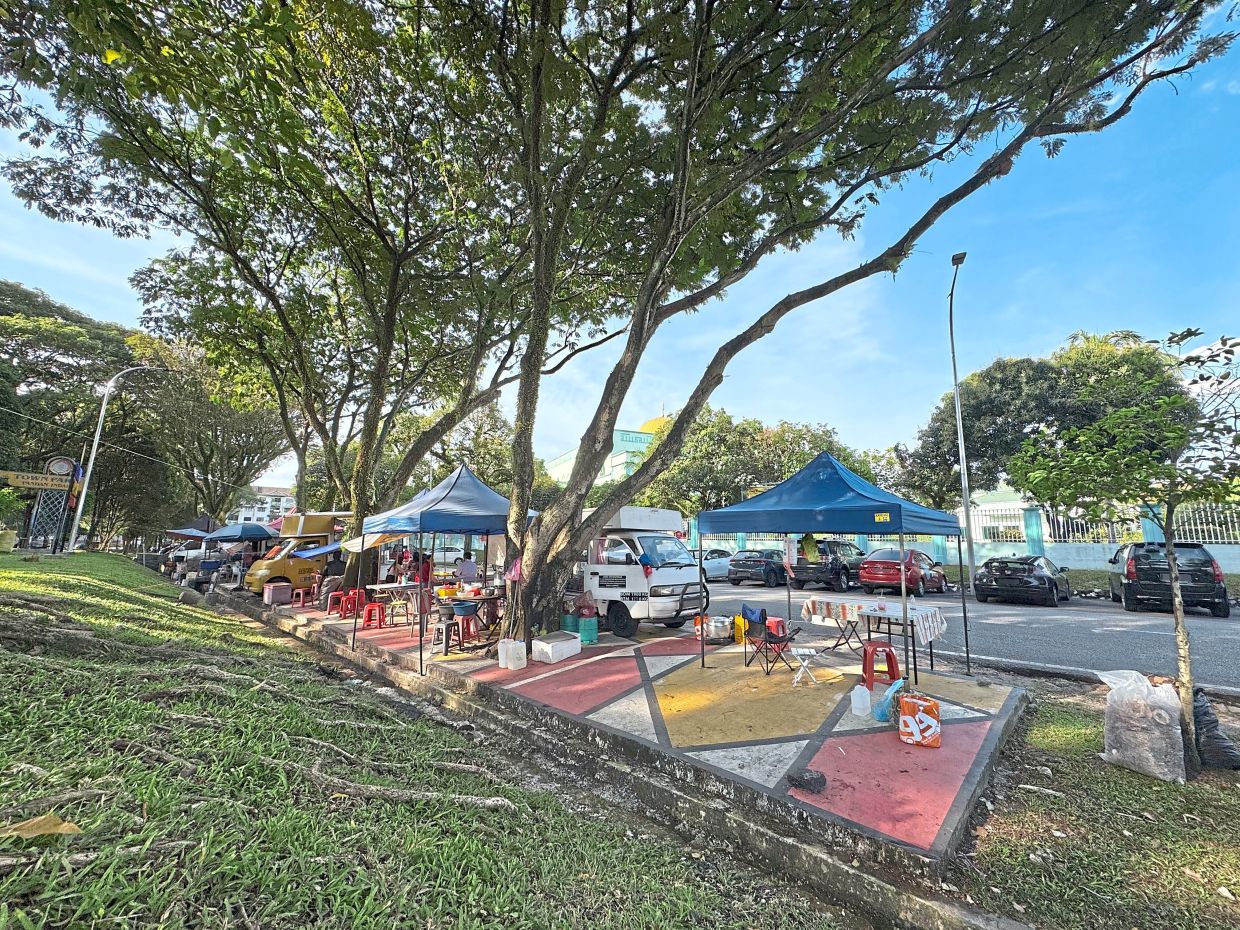
The country’s warm climate, he added, was a factor in operating during later hours.
“While it may be argued that no one would want to drink coffee at night as it will keep them awake, we forget that our evenings are cooler, making it more conducive to hang out, especially since these stalls are usually outdoors,” he said.
The father of three said the genesis of pop-up coffee stalls could be traced back to the movement control order (MCO)era when takeaways became the new norm.
“It started with the air balang sellers who came up with products like kopi ikat tepi, which were selling for below RM5.
“Due to Covid-19 restrictions and need for social distancing, camping and the great outdoors became a trend and this was when collapsible furniture and equipment also became more affordable and easily available.
“The availability of portable generators or batteries, with some models lasting up to three days, allows hawkers to operate their coffee machines and grinders from the trunks of their vehicles,” said Hedir.
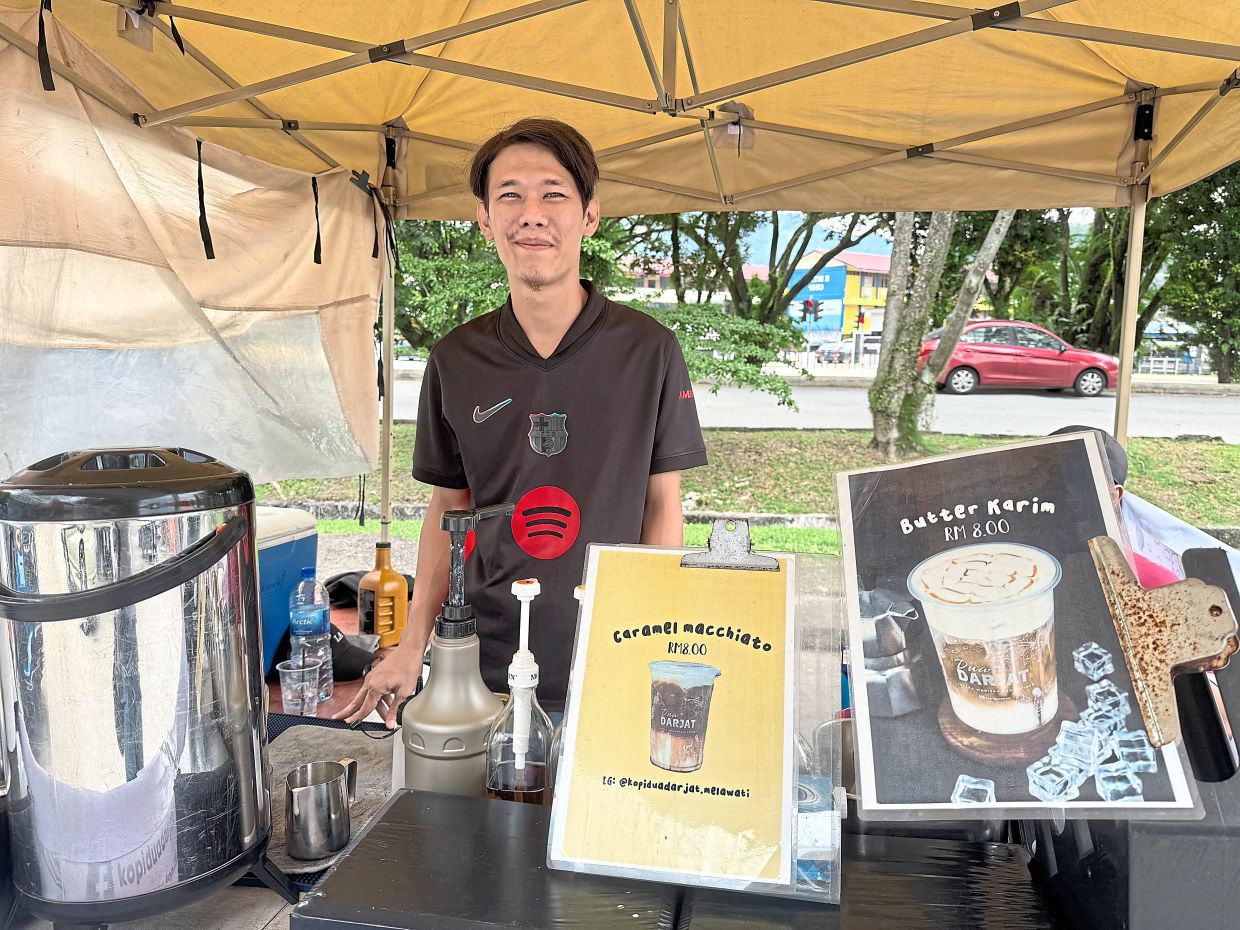
Fuelling the trend, he said were two words – “healing” and “chilling” – buzz words used by Gen Z to denote the need to rest, relax and recharge.
“These pop-up stalls, of which most have a campsite-like set-up, further evoke a hipster feel, quite unlike that of a regular, traditional hawker stall, which is now seen as ‘old school’.
“In a nutshell, even if it’s just a stall, these pop-up coffee stalls are still nice enough for outfit-of-the-day selfies,” he added.
Another crucial element is that these stalls are not just offering cheaper copycat versions of more established cafes; they also have their own products.
“I know of stalls which have kopi kaya in their menu,” he said.
Kopi kaya is coffee that has been flavoured with kaya (coconut jam).
Sustainability factor
On the question of sustainability and revenue viability, Hafiz Haizam, 26, a wedding dais maker who is helping his sister-in-law with a coffee stall franchise she bought in 2020, predicts the coffee trend easily lasting another 10 years.
Hafiz, who also operates a stall at a carpark in Taman Melawati like Hanim and Safwan, said when the franchise first started business after the MCO in 2021, they were later able to expand.
Hafiz’s stall, at Jalan Bandar 4, opens from 11am to 6pm, with daily sales of RM400 to RM600 per day.
The price range for his drinks, using kopi kampung – locally blended roasted coffee usually with sugar and margarine – is between RM6 and RM9.
Two other coffee stall operators opposite Hafiz’s say they can sell between 40 and 60 cups a day, earning a profit of between RM3 and RM5 per cup.
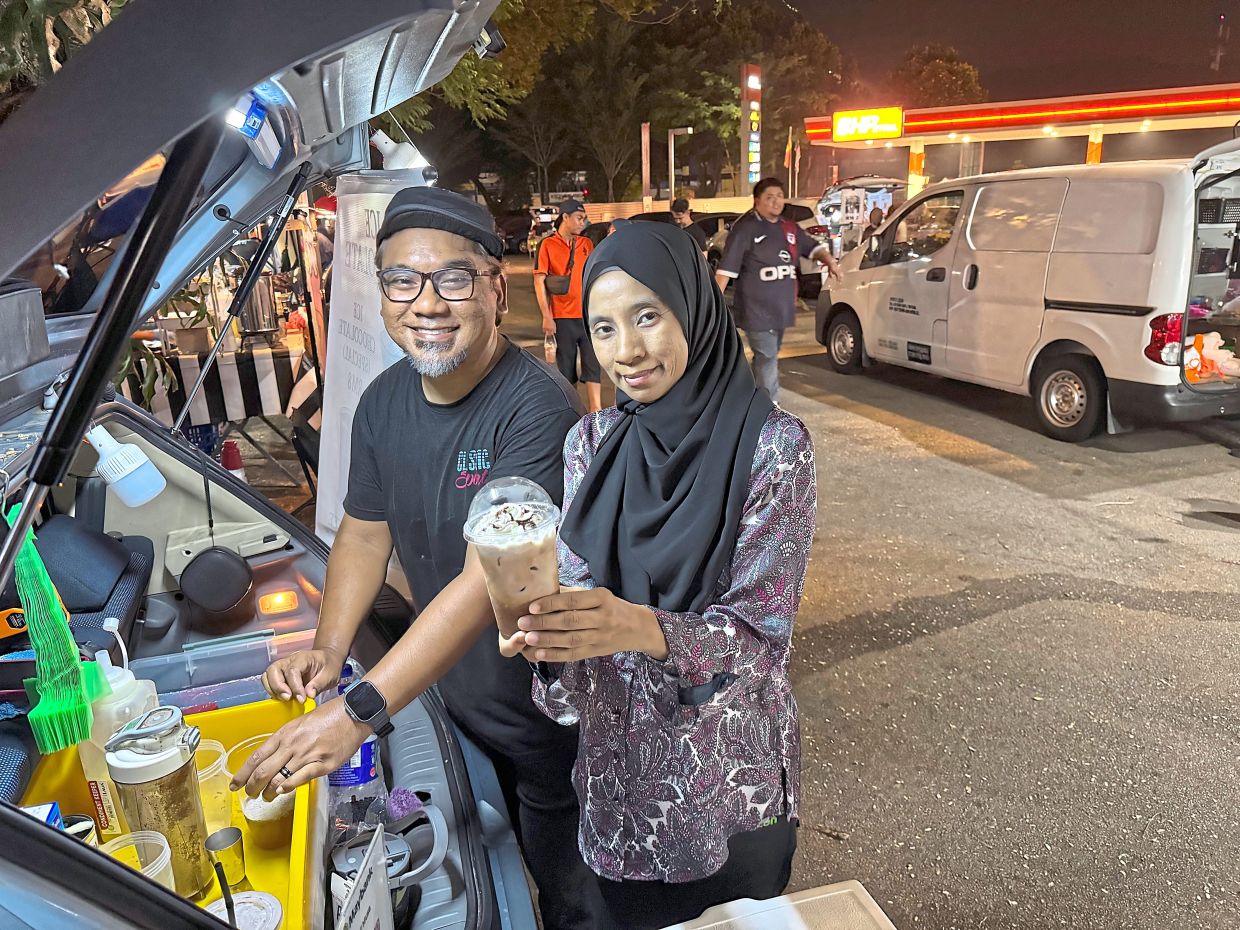
These encouraging figures motivated Shahril Musa, 44, about three months ago to start selling iced coffee and chocolate drinks from the boot of his car while waiting to pick his daughter up from school.
Shahril, a marketer, said he now made it a point to sell his drinks on a more regular basis.
However, the rising trend of pop-up coffee stalls comes with its fair share of social issues.
At a recent MPAJ board meeting, the proliferation of roadside coffee stalls in Taman Keramat was blamed for traffic chaos in the area.
MPAJ deputy president Hasrolnizam Shaari said that while the council supports the coffee culture, operators need to manage their businesses in an orderly fashion.
To tackle this, Hasrolnizam said that MPAJ’s Licensing and Entrepreneurial Development Department director Addy Hissham Elias was currently carrying out an inventory to assist such small businesses.
“Many coffee sellers are youths and MPAJ is keen to help them look for suitable sites to do business without obstructing traffic,” he said.
“Most of the complaints are traffic-related as these coffee businesses are set up by the roadside and under trees.”
Coffee traders who intend to set up stalls are advised that there are 462 temporary hawker sites under MPAJ’s purview.
Hasrolnizam said conditions for application include compulsory attendance of a food handling course and typhoid jab.
The duration for temporary licence is a year whereas static permits are only valid for six months, based on MPAJ’s licensing conditions.
Opening times at the temporary trading sites are divided into three sessions: 7am to noon, noon to 7pm and 7pm to midnight.
Successful applicants may only pick a maximum of two sessions, priced at RM120 per month per session.
Local coffee culture
On Nov 15 last year, during the tabling of Selangor Budget 2025, Mentri Besar Datuk Seri Amirudin Shari announced that RM1mil was allocated towards the organisation of a coffee festival in conjunction with Visit Selangor Year.
Among the goals is to allow emerging baristas to explore the coffee bean industry and corresponding technology.
Last month’s Pesta Kopi Melawati 2025, at Jalan Negara Kita Art Alley in Taman Melawati, saw 15 local coffee entrepreneurs participating in the festival organised by MPAJ and Hulu Kelang state constituency coordinator’s office.
Amirudin, who launched the event, posted on his social media page that local coffee culture had seen an extraordinary transformation in the last 10 to 20 years.
“In the past, coffee was just a drink you order at a warung.
“Today, it is a lifestyle, taking on its own cultural narrative with its diverse flavours and preparation techniques.
“It has also served as a bridge to unite local communities.”
Amirudin also said that Taman Melawati was now known as one of the areas with an active local coffee culture, with more than 30 coffee entrepreneurs operating there.
“With continued support for micro and creative entrepreneurs, I hope that one day Selangor will be able to stand on par with neighbouring countries such as Indonesia and Vietnam in highlighting the local coffee industry at regional and global levels,” he added.